


Forever Perforated Metal
In the realm of industrial engineering and filtration, the term "forever" is rarely used in a literal sense, yet it perfectly encapsulates the design philosophy behind high-performance metal components. Industrial facilities, particularly those in chemical processing, food and beverage, and pharmaceutical manufacturing, require materials that can withstand corrosive environments, high pressures, and extreme temperatures without frequent replacement. This is where the concept of forever perforated metal becomes a critical consideration for engineering teams. It refers to the selection of perforated and expanded metal solutions that offer maximum durability, recyclability, and structural integrity throughout the entire lifecycle of a filtration system.
Selecting the right Perforated & Expanded Metal is not merely a matter of choosing a hole pattern; it is a complex engineering decision that impacts the efficiency, safety, and total cost of ownership (TCO) of industrial equipment. This guide examines the technical specifications, material considerations, and application-specific requirements that define long-lasting metal filtration and support components.
Engineering Fundamentals of Perforated and Expanded Metal
To understand why certain metal components are considered "forever" solutions, one must first distinguish between the two primary manufacturing methods: perforation and expansion.
Perforated Metal
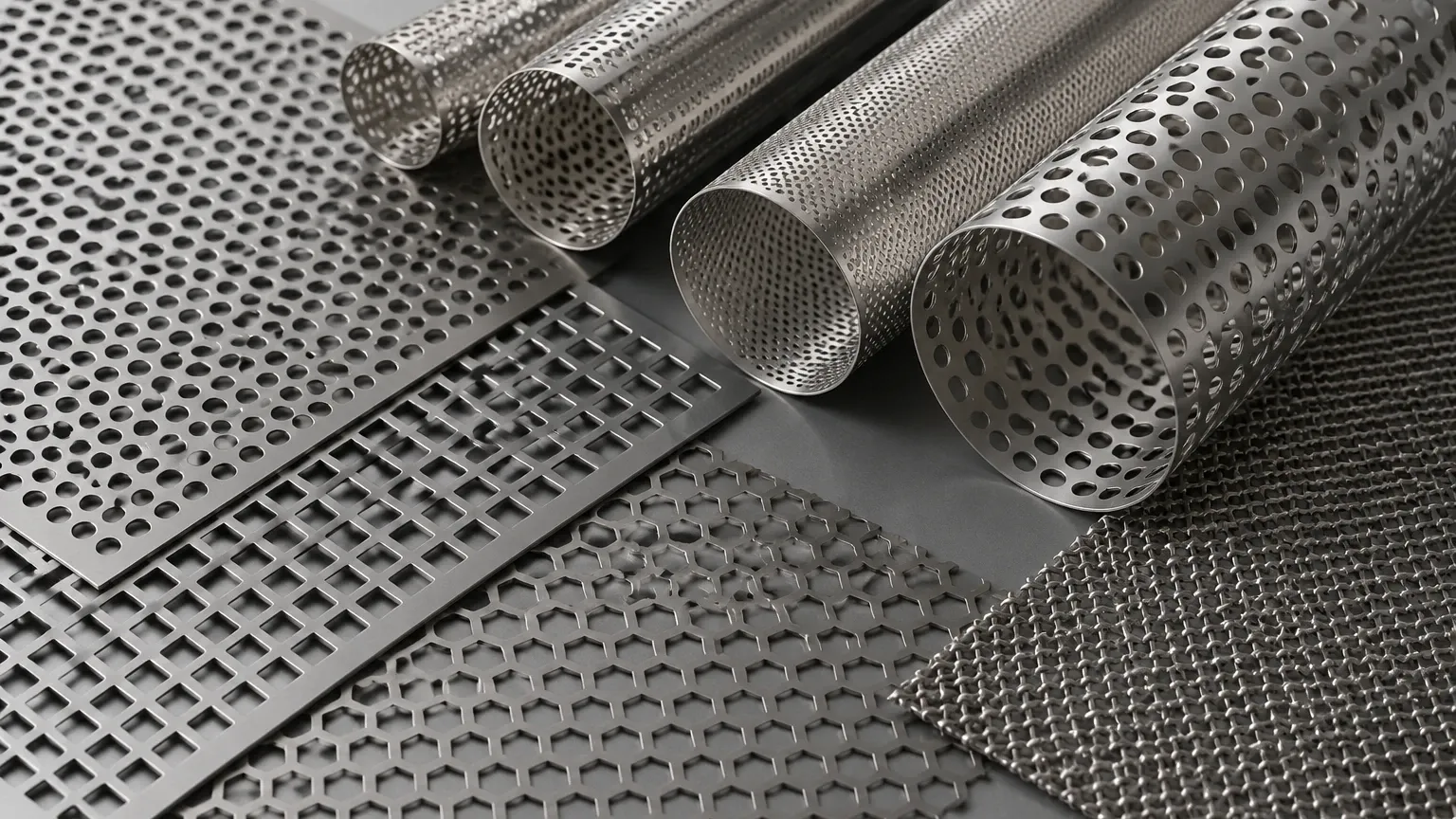
Perforated metal is produced by mechanically punching or laser-cutting holes into a solid metal sheet. This process allows for precise control over the open area, hole shape, and spacing. In industrial filtration, perforated metal often serves as the primary structural support for finer wire mesh layers. The rigidity of the perforated plate ensures that the filter cartridge maintains its shape under high differential pressure.
Key parameters for perforated metal include:
* Hole Shape: Round, square, slotted, or hexagonal. Round holes are the most common for filtration due to their structural stability and ease of cleaning.
* Hole Pattern: Staggered patterns (usually 60 degrees) provide the highest strength-to-weight ratio and maximum open area, while straight patterns are used for specific aesthetic or alignment requirements.
* Pitch: The distance between the centers of adjacent holes. This determines the open area percentage, which directly affects flow rate and pressure drop.
Expanded Metal
Expanded metal is created by simultaneously slitting and stretching a metal sheet. This process creates diamond-shaped openings without any material waste, making it an environmentally sustainable and cost-effective choice. Because the metal is expanded rather than punched, the resulting mesh is composed of interconnected strands that provide excellent structural rigidity and anti-slip properties.
In filtration, expanded metal is frequently used as a pre-filter or a protective outer guard for delicate filter media. Its 3D structure can also help in breaking up fluid flow, which is beneficial in certain hydraulic and water treatment applications.
Material Selection: The Foundation of Longevity
The "forever" nature of a metal component is primarily determined by its material composition. In industrial filtration, stainless steel is the gold standard due to its inherent resistance to oxidation and chemical attack.
Grade 304 Stainless Steel
Grade 304 is the most widely used stainless steel for perforated metal. It offers excellent corrosion resistance in most atmospheric conditions and is highly weldable. It is suitable for applications where the environment is not excessively acidic or saline, such as in general industrial equipment and food processing where standard cleaning agents are used.
Grade 316L Stainless Steel
For more demanding environments, Grade 316L (low carbon) is the preferred choice. The addition of molybdenum enhances its resistance to pitting and crevice corrosion, particularly in chloride-rich environments. This makes 316L the industry standard for pharmaceutical manufacturing, marine applications, and chemical processing where aggressive solvents or acids are present. The "L" designation ensures that the material maintains its corrosion resistance even after welding, preventing carbide precipitation.
Specialty Alloys
In extreme cases involving high temperatures or highly specialized chemical reactions, alloys such as Monel, Inconel, or Hastelloy may be required. These materials provide the ultimate "forever" performance in environments where standard stainless steel would fail within weeks or months.
Durability Factors in Industrial Filtration
When engineers evaluate forever perforated metal for filtration systems, they must look beyond the initial purchase price and consider the factors that contribute to long-term performance.
Structural Integrity and Pressure Resistance
In high-pressure hydraulic systems or deep-well water treatment, the filter media is subjected to significant mechanical stress. A perforated metal core must be engineered to withstand the maximum expected differential pressure without collapsing. Factors such as gauge thickness and the bridge (the metal remaining between the holes) are critical. A thicker bridge increases strength but reduces the open area, requiring a careful balance to optimize both flow and durability.
Corrosion and Erosion Resistance
Filtration often involves the movement of abrasive particles or corrosive fluids at high velocities. Over time, this can lead to erosion-corrosion, where the protective oxide layer of the metal is mechanically stripped away, accelerating chemical attack. High-quality stainless steel perforated sheets with smooth, burr-free hole edges minimize turbulence and reduce the risk of localized erosion.
Thermal Stability
Many industrial processes, such as steam sterilization in the pharmaceutical industry or high-temperature gas filtration in chemical plants, involve significant thermal cycling. The metal must be able to expand and contract without warping or cracking at the weld points. Stainless steel’s thermal properties make it ideal for these "forever" applications, ensuring the filter assembly remains intact through thousands of heat cycles.
Customization and OEM Capabilities
No two industrial applications are identical, which is why customization is a hallmark of high-quality metal filtration components. Manufacturers like Kaifil specialize in providing tailored solutions that meet the exact specifications of an OEM (Original Equipment Manufacturer) or a specific plant upgrade.
Customization options include:
* Precision Dimensions: Custom diameters and lengths for filter cartridges to fit existing housings without bypass leaks.
* End Cap Integration: Welding perforated tubes directly to custom end caps (threaded, flanged, or bayonet) to create a single, robust assembly.
* Surface Finishes: Electropolishing or passivation to enhance corrosion resistance and meet the stringent hygiene standards of the food and pharmaceutical industries.
* Variable Perforation Patterns: Designing sheets with non-perforated margins or varying hole densities to control flow distribution across a large filter surface.
By working closely with a manufacturer that understands the nuances of material science and fluid dynamics, engineers can ensure that their perforated metal components are optimized for their specific operating conditions.
Performance Evaluation: Choosing the Right Specifications
To select the most effective perforated or expanded metal, engineers should follow a systematic evaluation process. This prevents over-engineering (which increases cost) or under-engineering (which leads to premature failure).
1. Define the Filtration Goal
Is the perforated metal the primary filter, or is it a support for a fine mesh? If it is the primary filter, the hole size must be smaller than the smallest particle that needs to be captured. If it is a support core, the open area must be maximized to prevent it from becoming a bottleneck in the system.
2. Calculate the Required Open Area
The open area percentage is calculated using the formula:
* For Round Holes (60° Staggered): (Hole Diameter² × 90.69) / Pitch²
* For Round Holes (Straight Grid): (Hole Diameter² × 78.5) / Pitch²
An open area of 40% to 60% is typical for support cores, providing a balance between flow capacity and structural strength.
3. Assess the Chemical Environment
Consult a corrosion resistance chart to ensure the selected alloy is compatible with the process fluid, including any cleaning chemicals used during maintenance cycles. For example, if a system uses nitric acid for CIP (Clean-In-Place), 316L stainless steel is generally required.
4. Determine Mechanical Loads
Consider the maximum flow rate, viscosity of the fluid, and the potential for pressure spikes. This will dictate the required sheet thickness (gauge) and the necessary reinforcement or welding techniques.
Maintenance, Cleaning, and Total Cost of Ownership
The true value of forever perforated metal is realized through its ease of maintenance and long service life. Unlike disposable synthetic filters, stainless steel perforated and expanded metal can be cleaned and reused multiple times.
Cleaning Methods
* Backwashing: Reversing the flow of fluid to dislodge particles trapped on the surface.
* Ultrasonic Cleaning: Using high-frequency sound waves in a cleaning solvent to remove fine contaminants from within the holes.
* Chemical Cleaning: Using acids or alkalis to dissolve organic or inorganic scaling.
* Mechanical Scrubbing: For large-scale perforated plates, mechanical brushing can be used without damaging the robust metal surface.
Total Cost of Ownership (TCO)
While the initial investment in a high-grade stainless steel perforated filter is higher than that of a plastic or low-grade carbon steel alternative, the TCO is significantly lower. When you factor in the costs of downtime, replacement labor, disposal of used filters, and the risk of system failure, a durable metal solution often pays for itself within the first year of operation. Furthermore, at the end of its multi-decade service life, stainless steel is 100% recyclable, contributing to corporate sustainability goals.
Conclusion: The Strategic Value of Quality Metal Components
In the demanding world of industrial filtration, "forever perforated metal" represents a commitment to quality, reliability, and engineering excellence. By selecting the appropriate material grade, hole pattern, and structural specifications, engineers can create systems that perform consistently under pressure and resist the ravages of corrosion.
Whether used as a standalone strainer or as the backbone of a complex multi-layer filter cartridge, perforated and expanded metal remains an indispensable technology. For purchasing teams and engineers, the key to success lies in partnering with a manufacturer that offers the technical expertise and customization capabilities required to turn a standard metal sheet into a high-performance industrial asset. Investing in the right Perforated & Expanded Metal today ensures operational stability and efficiency for years to come.
