


Galvanized Perforated Metal
In industrial engineering and filtration design, material selection is a critical factor that determines the longevity, efficiency, and cost-effectiveness of a system. Galvanized perforated metal serves as a versatile solution for applications requiring structural integrity and moderate corrosion resistance. While Kaifil specializes in high-performance stainless steel filtration solutions, understanding the technical properties and limitations of galvanized steel is essential for engineers and procurement teams evaluating Perforated & Expanded Metal options for their specific industrial environments.
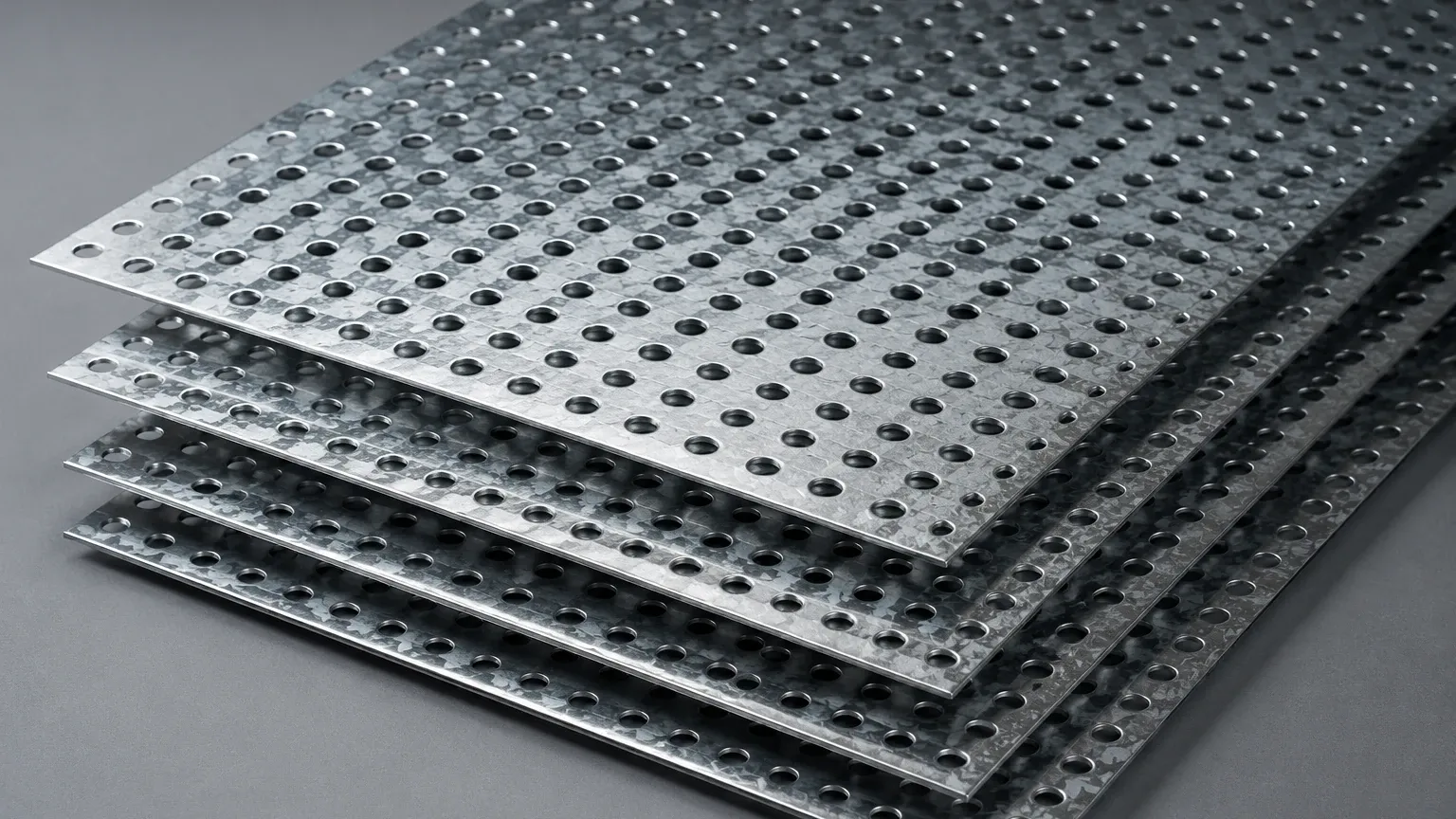
Galvanized perforated metal is essentially carbon steel that has been coated with a protective layer of zinc. This coating acts as a sacrificial anode, protecting the underlying steel from oxidation and moisture. In the context of industrial filtration, this material is frequently employed as support structures, protective guards, and coarse strainers where the extreme chemical resistance of stainless steel may not be strictly necessary, but where raw carbon steel would fail prematurely due to rust.
Understanding Galvanization Methods for Perforated Metal
When specifying galvanized perforated metal, engineers must distinguish between the two primary methods of production: pre-galvanized and post-galvanized (hot-dip). Each method impacts the performance and corrosion resistance of the final component differently.
Pre-Galvanized Perforated Metal
Pre-galvanized steel is manufactured by passing a solid sheet of carbon steel through a molten zinc bath at the mill. The perforated holes are then punched into the already-coated sheet.
* Advantages: This method results in a very smooth, uniform finish and is generally more cost-effective for high-volume production. It offers tighter dimensional tolerances because the coating thickness is precisely controlled at the mill.
* Technical Limitation: Because the holes are punched after the coating is applied, the interior edges of the perforations are left as raw steel. While the surrounding zinc provides some degree of cathodic protection to these edges, they remain the most vulnerable points for localized corrosion, especially in high-moisture or mildly acidic environments.
Post-Galvanized (Hot-Dip) Perforated Metal
In this process, the carbon steel sheet is perforated first and then submerged into a molten zinc bath. This ensures that the entire surface area, including the inner walls of every hole and all sheared edges, is completely encased in zinc.
* Advantages: This provides superior corrosion protection compared to pre-galvanized stock. The zinc-iron alloy layers formed during the dipping process are metallurgical bonds that are highly resistant to abrasion and impact.
* Technical Limitation: Hot-dip galvanization can result in a thicker, less uniform coating. In fine-hole patterns, there is a risk of "zinc bridging," where the molten metal clogs or narrows the perforations. This can significantly alter the calculated open area and flow dynamics of a filter component.
Technical Specifications and Engineering Considerations
Selecting the correct galvanized perforated metal requires a detailed analysis of mechanical and geometric specifications. These factors directly influence the pressure drop, structural load capacity, and filtration efficiency of the component.
Hole Patterns and Pitch
The arrangement of holes is typically categorized into three types:
1. 60-Degree Staggered: The most common industrial pattern, providing the highest open area and structural strength-to-weight ratio. It ensures uniform flow across the surface.
2. 45-Degree Staggered: An alternative staggered pattern used for specific aesthetic or directional flow requirements.
3. Straight Rows: Holes are aligned vertically and horizontally. While simpler to manufacture, this pattern offers lower structural integrity and is more prone to deformation under high-pressure loads.
Calculating Open Area
The open area percentage is a vital metric for filtration engineers. It determines the flow rate and the velocity of the fluid passing through the screen. For a standard 60-degree staggered round hole pattern, the formula is:
Open Area % = (D² × 90.69) / P²
*(Where D = Hole Diameter and P = Center-to-Center Pitch)*
If the application involves high-viscosity fluids or high flow rates, a larger open area is required to prevent excessive pressure differential (ΔP), which could lead to structural failure of the filter element.
The Role of Galvanized Perforated Metal in Filtration Systems
While stainless steel is the standard for pharmaceutical and food-grade applications, galvanized perforated metal finds its niche in heavy industrial and mechanical sectors.
Support Cores and Outer Guards
In many hydraulic and lubrication systems, the primary filtration media (such as wire mesh or synthetic fiber) lacks the rigidity to withstand high differential pressures. Galvanized perforated metal is often fabricated into cylindrical cores or outer wraps to provide the necessary mechanical support. The zinc coating prevents the support structure from introducing rust particles into the clean side of the system, which is a common failure mode for untreated carbon steel cores.
Coarse Pre-Filtration and Intake Screens
For large-scale water treatment or HVAC systems, galvanized screens serve as the first line of defense. They capture large debris—such as gravel, leaves, or industrial waste—before the fluid reaches finer, more expensive filtration stages. The durability of the galvanized coating ensures that these screens can withstand outdoor exposure and turbulent flow conditions without frequent replacement.
Acoustic and Thermal Shielding
Beyond fluid filtration, perforated galvanized sheets are used in industrial silencers and heat shields. The perforations allow for sound wave dissipation or heat radiation while the zinc coating protects the assembly from the corrosive effects of exhaust gases or atmospheric moisture.
Comparing Galvanized Steel with Stainless Steel for Industrial Use
Engineers must weigh the initial cost savings of galvanized perforated metal against the long-term performance benefits of stainless steel. At Kaifil, we often consult with clients to determine if a transition to stainless steel is necessary for their specific operating environment.
| Feature | Galvanized Perforated Metal | Stainless Steel (304/316) |
| :— | :— | :— |
| Corrosion Resistance | Moderate (Sacrificial) | High (Passivated Layer) |
| Initial Cost | Lower | Higher |
| Temperature Limit | Up to 200°C (Zinc starts to peel) | Up to 800°C+ (Depending on grade) |
| Chemical Compatibility | Poor with acids/alkalis | Excellent with most chemicals |
| Maintenance | Requires monitoring for "white rust" | Minimal maintenance required |
| Sanitation | Not suitable for food/pharma | Industry standard for hygiene |
For applications involving high salinity, extreme pH levels, or strict hygienic requirements, stainless steel remains the superior choice. However, for general industrial machinery, agricultural equipment, and structural filtration components in non-corrosive environments, galvanized steel provides an optimal balance of strength and economy.
Quality Evaluation and Procurement Checklist
When sourcing galvanized perforated metal for industrial projects, purchasing teams should confirm several technical parameters to ensure the product meets engineering standards.
1. Coating Weight: Specify the zinc coating thickness (e.g., G60, G90). Higher numbers indicate a thicker coating and longer service life in outdoor or humid environments.
2. Flatness Tolerances: The perforation process can introduce internal stresses that cause the metal to curl or buckle. Ensure the supplier provides leveled sheets that meet industry flatness standards (e.g., IPA standards).
3. Edge Conditions (Margins): Confirm whether the sheet requires "minimum margins" (perforations extending to the edge) or "specified margins" (unperforated borders). Margins are critical for welding and mounting the component into a larger assembly.
4. Burr Removal: Punching holes creates burrs on the exit side of the sheet. For filtration applications, these burrs must be minimized to prevent damage to fine mesh layers or injury during maintenance.
5. Surface Quality: Inspect for "white rust" (zinc carbonate), which appears as a white, powdery substance. This occurs when galvanized metal is stored in poorly ventilated, humid conditions and can compromise the integrity of the coating before the product is even installed.
Risks and Potential Failure Points
Despite its benefits, galvanized perforated metal is not a "set and forget" material. Engineers should be aware of specific risks:
* Galvanic Corrosion: If galvanized steel is placed in direct contact with more noble metals like copper or stainless steel in the presence of an electrolyte (like water), the zinc will corrode at an accelerated rate. Proper insulation or gaskets should be used at connection points.
* Thermal Cycling: Zinc has a different coefficient of thermal expansion than steel. In applications with frequent, extreme temperature fluctuations, the coating may crack or delaminate, exposing the base metal to oxidation.
* Environmental pH: Zinc is amphoteric, meaning it reacts with both acids and strong bases. If the fluid being filtered has a pH below 6 or above 12, the galvanized coating will strip away rapidly, leading to system contamination.
Conclusion
Galvanized perforated metal remains a staple in the industrial sector due to its structural reliability and cost-efficiency. By understanding the nuances between pre-galvanized and post-galvanized options, and by carefully calculating open areas and load requirements, engineers can successfully integrate these components into a wide range of filtration and protective systems.
For more specialized needs, particularly those involving high-precision filtration or aggressive chemical environments, exploring advanced Perforated & Expanded Metal solutions in stainless steel or specialty alloys is recommended. Kaifil continues to support global industries by providing technical expertise and customized manufacturing capabilities to ensure that every filtration component—whether galvanized or stainless—performs to its maximum potential in the field.
