


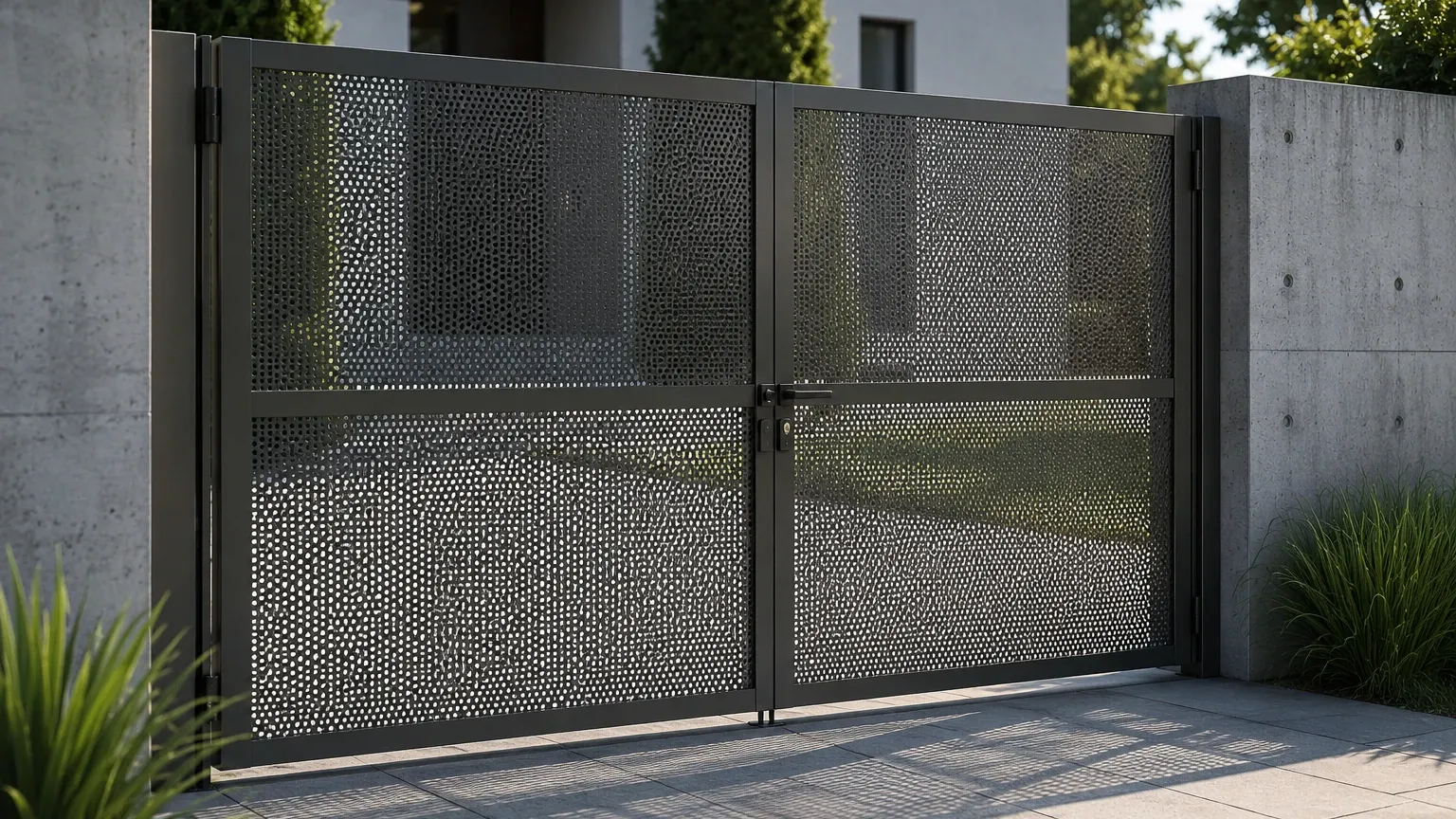
Gate with Perforated Metal
In industrial and commercial facility management, the selection of materials for perimeter security and access control involves a complex balance of structural integrity, environmental resistance, and functional transparency. A gate with perforated metal has become a standard specification for engineers seeking to harmonize security requirements with the need for airflow, visibility, and modern aesthetics. Unlike solid sheet metal or traditional chain-link fencing, perforated panels offer a customizable level of "open area" that can be engineered to meet specific site conditions, from high-wind environments to high-security zones.
As a manufacturer specializing in precision metal components, Kaifil provides the technical foundation for these systems through high-quality Perforated & Expanded Metal solutions. Understanding the engineering variables—such as material grade, hole pattern, and gauge thickness—is essential for procurement teams and project engineers to ensure long-term performance and minimal maintenance costs.
The Engineering Logic Behind Perforated Metal Gates
The primary reason for specifying a gate with perforated metal over alternative materials lies in its versatility. Perforation is the process of punching a specific pattern of holes into a metal sheet, which transforms a heavy, solid plate into a lightweight yet rigid component. For gate applications, this provides several technical advantages:
1. Wind Load Mitigation: Solid gates act like sails in high-wind conditions, exerting massive pressure on hinges, motors, and support posts. Perforated panels allow air to pass through, significantly reducing the lateral force on the gate structure.
2. Controlled Visibility: By adjusting the hole size and pitch (the distance between holes), designers can create a "one-way" visual effect. From a distance, the gate appears solid, providing privacy; from a close range, security personnel can monitor activity on the other side.
3. Ventilation: For gates guarding mechanical rooms, parking structures, or chemical storage areas, airflow is critical to prevent the buildup of heat or hazardous fumes.
4. Weight Reduction: Perforated metal provides a high strength-to-weight ratio. This reduces the wear on automated gate operators and allows for larger gate spans without the need for excessive structural reinforcement.
Material Selection: Stainless Steel vs. Alternatives
When specifying a gate with perforated metal, the choice of material is the most significant factor in determining the product's lifespan and total cost of ownership. While aluminum and galvanized steel are common, stainless steel remains the gold standard for industrial environments.
Stainless Steel (Grade 304 and 316)
Stainless steel is preferred for its exceptional corrosion resistance. In coastal areas or industrial zones with chemical exposure, Grade 316 stainless steel—which contains molybdenum—is recommended to prevent pitting and "tea staining." For standard outdoor applications, Grade 304 provides sufficient protection against oxidation. Stainless steel’s inherent strength also allows for thinner gauges to be used while maintaining the same impact resistance as thicker, softer metals.
Carbon Steel and Galvanized Options
Carbon steel is often chosen for its cost-effectiveness in large-scale projects. However, it requires a protective coating, such as hot-dip galvanization or powder coating, to prevent rust. If the coating is scratched during the gate's operation, the underlying metal is susceptible to rapid corrosion. Engineers must weigh the lower initial cost against the higher long-term maintenance requirements.
Aluminum
Aluminum is valued for its lightweight properties and natural resistance to corrosion. However, it has a lower tensile strength than steel, meaning thicker sheets or more robust framing may be required to prevent the perforated panels from warping or denting under impact.
Technical Specifications: Hole Patterns and Open Area
The performance of a gate with perforated metal is largely defined by its geometric configuration. The "open area" percentage is the ratio of the total area of the holes to the total area of the sheet. This metric dictates both the transparency and the physical strength of the panel.
Round Holes
Round holes are the most common and cost-effective pattern. They offer the best structural stability because the stresses are distributed evenly across the metal "bridges" (the space between holes). A 60-degree staggered pattern is the industry standard, providing high strength and a uniform appearance.
Square Holes
Square holes provide a higher open area percentage than round holes, which is beneficial for maximum ventilation and visibility. However, they are more prone to stress concentrations at the corners, which can lead to cracking if the gate is subject to frequent mechanical vibration or heavy impacts.
Slotted and Decorative Patterns
Slotted holes are often used for aesthetic reasons or to facilitate specific drainage requirements. While decorative patterns are available, industrial applications usually prioritize the predictability and structural data associated with standard round or square perforations.
Integration and Structural Framing
A perforated metal panel is only as strong as its mounting system. In gate construction, the Perforated & Expanded Metal is typically inset into a structural frame made of square or rectangular tubing. There are several methods for securing the panels:
* Welding: Direct welding (typically TIG or MIG) provides the most secure attachment. However, care must be taken to avoid warping the thin perforated sheet through excessive heat. Spot welding at regular intervals is often sufficient.
* Bolting with U-Edging: U-edging is a metal channel that fits over the edge of the perforated sheet. The channel is then bolted or welded to the main gate frame. This provides a clean finish and protects the sharp edges of the perforated metal.
* Mechanical Fasteners: Using bolts and washers allows for the panels to be replaced if they are damaged, without needing to replace the entire gate frame. This is a critical consideration for high-traffic industrial sites where vehicle impact is a risk.
Performance Evaluation and Risk Mitigation
Engineers must evaluate the potential risks associated with perforated metal gates to ensure they meet safety and security standards.
Security Concerns
One risk of perforated metal is the potential for it to be used as a ladder. If the hole size is large enough (typically over 2 inches), it may provide toe-holds for unauthorized climbing. To mitigate this, security gates often use smaller perforations (0.25 to 0.5 inches) that prevent climbing while still allowing for airflow.
Acoustic Properties
In certain environments, wind passing through perforated metal can create a whistling sound. This is a function of wind speed, hole size, and the thickness of the metal. If the gate is located near a residential area or a quiet office complex, engineers should consult with manufacturers to select a pattern that minimizes aeroacoustic noise.
Maintenance Cycles
While stainless steel requires minimal maintenance, dust and debris can accumulate within the perforations, especially in environments with high particulate matter. Periodic pressure washing is usually sufficient to maintain the visual and functional integrity of the gate. For moving gates, the weight of the perforated panels must be factored into the maintenance schedule of the hinges and automated operators to prevent premature failure.
Selection Guide for Procurement Teams
Before finalizing a purchase order for a gate with perforated metal, technical professionals should confirm the following parameters with their supplier:
1. Gauge Thickness: Ensure the thickness is appropriate for the span of the gate. Thinner sheets may require intermediate support bars to prevent "oil canning" or flexing.
2. Margin Requirements: Specify the "margins" (the unperforated solid borders around the edges of the sheet). Solid margins make welding and installation significantly easier and improve the overall rigidity of the panel.
3. Flatness Specifications: The perforation process can introduce internal stresses that cause the metal to curl. Ensure the manufacturer uses leveling rollers to provide a dead-flat sheet for easy framing.
4. Finish Consistency: If the gate is to be powder-coated, ensure the perforated metal is thoroughly degreased. For stainless steel, specify the desired finish (e.g., 2B mill finish or #4 brushed finish) to ensure aesthetic consistency across the project.
Conclusion
Specifying a gate with perforated metal is a strategic decision that impacts the security, durability, and operational efficiency of a facility. By understanding the relationship between material science and geometric design, engineers can select a solution that withstands environmental challenges while providing the necessary functional transparency.
Kaifil’s expertise in Perforated & Expanded Metal ensures that industrial clients receive components manufactured to precise tolerances, using high-grade materials that meet the rigorous demands of modern infrastructure. Whether for a small pedestrian entrance or a massive industrial sliding gate, the correct application of perforated metal technology provides a reliable, long-term solution for controlled access.
