


Grecian Perforated Metal
In the landscape of industrial design and component manufacturing, the selection of a perforation pattern is rarely a matter of aesthetics alone. For engineers and procurement teams, the choice of a specific geometry—such as grecian perforated metal—must balance structural integrity, airflow efficiency, and material durability. As a specialized variant within the broader category of Perforated & Expanded Metal, the Grecian pattern offers a unique combination of high open-area percentages and multi-directional strength, making it a staple in both high-performance ventilation systems and specialized filtration assemblies.
At Kaifil, our focus on precision metal filtration components necessitates a deep understanding of how these patterns behave under industrial stress. Whether utilized as a protective screen for sensitive hydraulic components or as a decorative yet functional vent for chemical processing equipment, grecian perforated metal must be engineered to exact specifications to ensure long-term reliability.
Understanding the Grecian Pattern Geometry
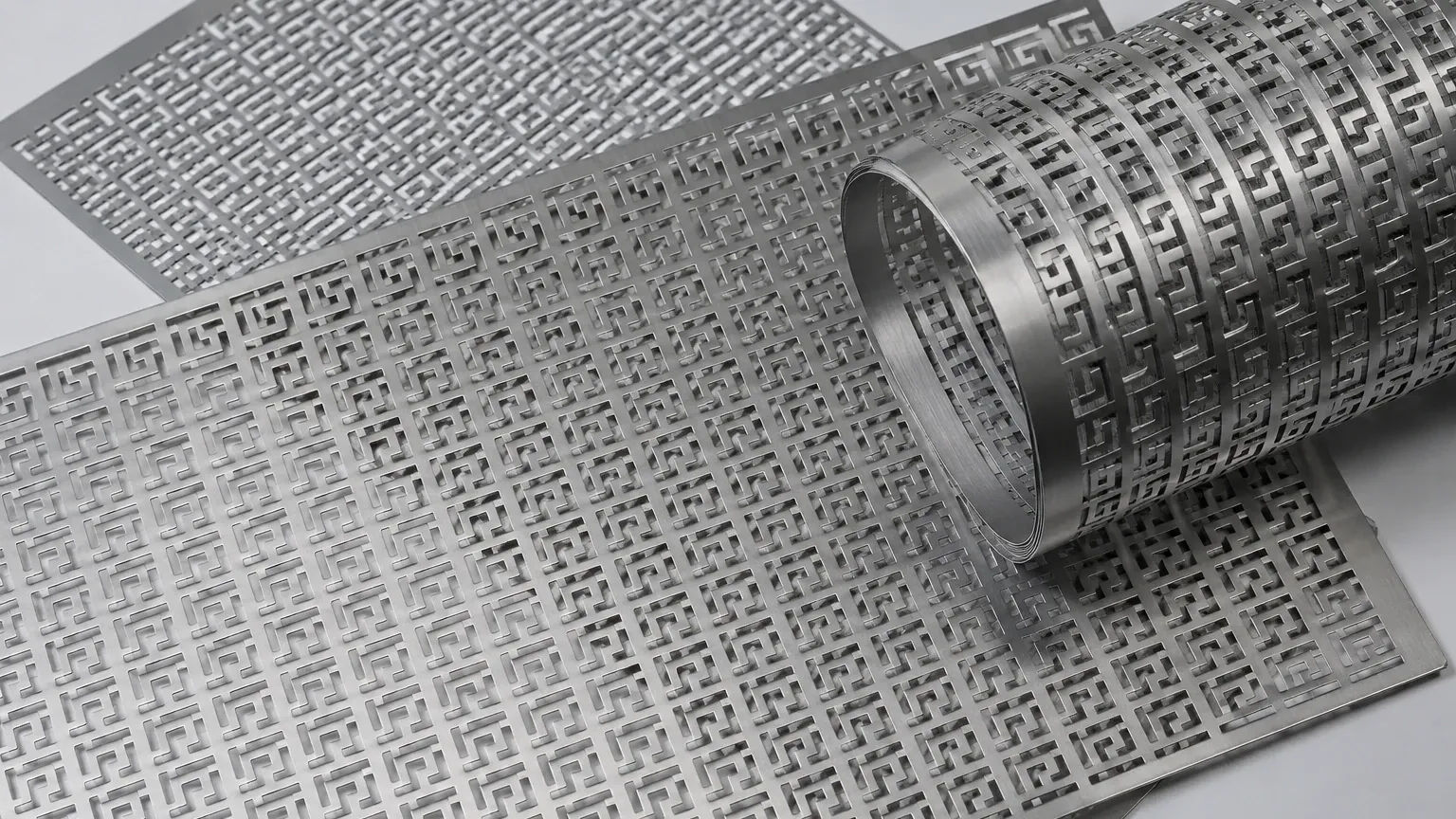
The Grecian pattern, often referred to in the industry as a "cloverleaf" or "cross-and-clover" design, is characterized by a series of interconnected geometric cutouts that resemble a traditional latticework. Unlike standard round or square perforations, the Grecian design utilizes a complex arrangement of lines and curves that distribute mechanical loads differently across the surface of the metal sheet.
From an engineering perspective, this pattern is valued for its ability to provide significant open area—often ranging from 35% to over 50%—without compromising the flatness or rigidity of the panel as severely as some large-diameter round hole patterns might. The interlocking nature of the design ensures that there are no long, straight lines of solid metal that could act as failure points under vibration, which is a critical consideration in industrial machinery enclosures.
Material Selection and Industrial Durability
The performance of grecian perforated metal is inextricably linked to the substrate material. While the pattern can be punched into various metals, industrial applications typically demand materials that can withstand corrosive environments, high temperatures, and mechanical wear.
Stainless Steel (Grade 304 and 316)
As a manufacturer specializing in stainless steel filtration solutions, Kaifil frequently utilizes Grade 304 and Grade 316 for Grecian patterns.
* Grade 304: Offers excellent formability and resistance to atmospheric corrosion, making it suitable for general industrial venting and protective grilles.
* Grade 316: Contains molybdenum, providing superior resistance to chlorides and marine environments. This is the preferred choice for chemical processing plants and offshore applications where the Grecian pattern serves as a primary filtration or ventilation barrier.
Aluminum and Carbon Steel
For applications where weight reduction is a priority, such as in aerospace or mobile hydraulic systems, aluminum Grecian perforated sheets provide a high strength-to-weight ratio. Conversely, carbon steel may be used for indoor industrial guards where cost-efficiency is paramount, though these usually require secondary finishes like powder coating or galvanization to prevent oxidation.
Technical Specifications: Open Area and Airflow Performance
One of the most critical factors for engineers specifying Perforated & Expanded Metal is the calculation of the "open area." This percentage determines how much air, light, or fluid can pass through the medium and directly impacts the pressure drop across the component.
Grecian perforated metal is frequently selected when a project requires a high volume of airflow but needs to prevent the passage of larger debris. Because the pattern is intricate, calculating the exact open area requires precise geometric modeling. In a B2B procurement context, it is essential to confirm the following technical parameters:
1. Hole Size: The dimensions of the individual "clover" or "cross" elements.
2. Pitch: The distance between the centers of repeating patterns.
3. Gauge: The thickness of the metal sheet, which typically ranges from 22 gauge for light decorative vents to 11 gauge or thicker for heavy-duty industrial guards.
For filtration applications, the Grecian pattern often serves as a support structure (a "cage") for finer wire mesh. In these instances, the open area of the Grecian metal must be significantly higher than the mesh to ensure it does not become the bottleneck in the fluid dynamics of the system.
Manufacturing Precision and Customization
Producing high-quality grecian perforated metal requires advanced CNC punching technology. Unlike simpler patterns, the Grecian design involves complex tool paths. Precision is vital to ensure that the "bridges" (the solid metal between the holes) remain consistent in width. If the bridges are too thin, the sheet may warp during the punching process or fail under pressure; if they are too thick, the intended airflow performance will not be met.
Kaifil’s OEM capabilities allow for the customization of margins and blank areas. In many industrial applications, a perforated sheet is not used in its raw form but is instead welded into a frame or formed into a cylinder. By specifying "safe margins"—solid metal borders around the perforated area—engineers can ensure easier welding and greater structural integrity for the final assembly. Furthermore, custom sheet sizes reduce material waste, which is a significant factor in total cost considerations for large-scale projects.
Industrial and Architectural Applications
While the Grecian pattern is often noted for its visual appeal, its industrial utility is extensive. Its ability to obscure the internal components of a machine while allowing for maximum ventilation makes it ideal for several specific use cases:
* HVAC and Radiator Covers: In heavy machinery, radiators require high airflow for cooling but must be protected from large external objects. The Grecian pattern provides an effective barrier that is more rigid than standard expanded metal.
* Acoustic Ceiling Panels: When backed with sound-absorbent material, Grecian perforated panels help in noise reduction within industrial facilities without creating a "closed-off" environment.
* Electronic Enclosures: For high-end server racks or power distribution units, the pattern facilitates heat dissipation while maintaining a professional appearance and preventing unauthorized physical access to internal components.
* Filtration Support Segments: In large-scale water treatment or chemical filtration, Grecian patterns are used as the outer decorative and protective layer for multi-stage filter cartridges, providing a robust exterior that can withstand handling and installation stresses.
Selection Criteria for Engineers and Purchasing Teams
Before finalizing a purchase order for grecian perforated metal, technical professionals should evaluate the following criteria to avoid common risks such as premature corrosion or mechanical failure:
1. Environmental Compatibility
Will the component be exposed to high humidity, salt spray, or acidic vapors? If so, stainless steel with a passivation finish is often required. Passivation removes free iron from the surface of the metal, enhancing the protective chromium oxide layer that prevents rust.
2. Load-Bearing Requirements
If the perforated metal is part of a floor grate or a pressurized vessel component, the load-bearing capacity must be calculated. The orientation of the Grecian pattern (straight row vs. staggered) can influence how the sheet resists bending forces.
3. Edge Conditions and Safety
Punched metal can have sharp burrs. For components that will be handled by maintenance personnel, specifying a "deburred" finish or a specific edge treatment is necessary for safety and to ensure the part fits perfectly into its housing without snagging.
4. Flatness Tolerances
The punching process introduces internal stresses into the metal. For large panels, it is crucial to confirm that the manufacturer uses leveling rollers to ensure the final product meets the required flatness tolerances, especially if the panels are to be used in precision architectural or mechanical assemblies.
Maintenance and Long-Term Performance
In industrial environments, the longevity of Perforated & Expanded Metal depends on regular maintenance. For Grecian patterns, the intricate corners of the cloverleaf design can sometimes accumulate dust or chemical residues.
For stainless steel components, periodic cleaning with deionized water or specialized industrial cleaners is recommended to prevent "pitting" corrosion. In filtration applications, the Grecian support layer should be inspected during every filter element replacement cycle for signs of deformation or stress cracking, particularly at the weld points where the sheet is joined to the end caps.
Conclusion
Grecian perforated metal is more than a decorative choice; it is a sophisticated engineering solution for complex ventilation and filtration challenges. By selecting the appropriate material grade, calculating the necessary open area, and ensuring manufacturing precision, industrial teams can leverage this pattern to improve both the functionality and the lifespan of their equipment.
As a dedicated manufacturer of custom filtration solutions, Kaifil provides the technical expertise required to navigate these specifications. From initial material selection to the delivery of precision-punched components, we ensure that every piece of grecian perforated metal meets the rigorous standards of modern industrial applications.
