


Gradient Perforated Metal
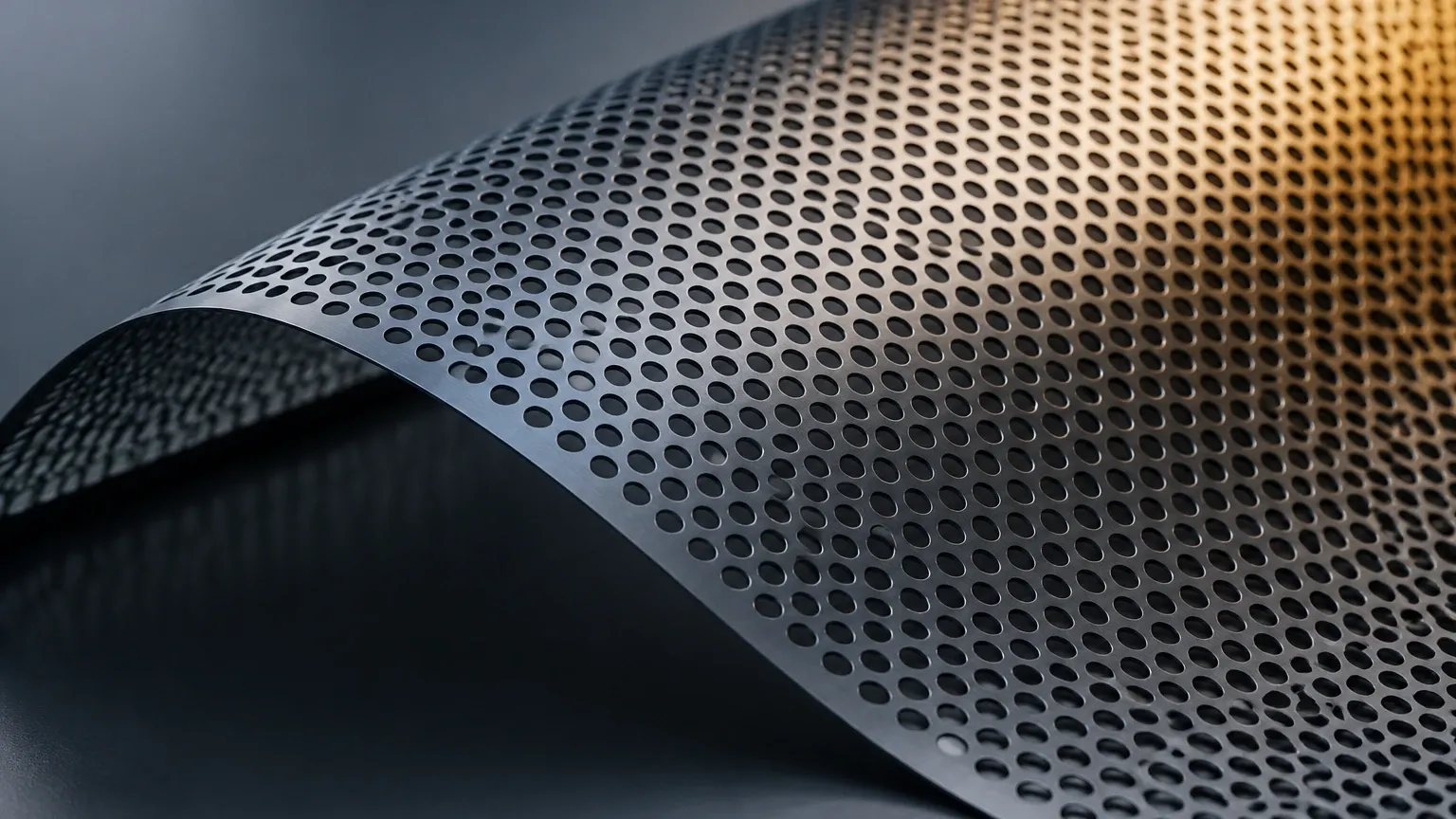
In industrial engineering and advanced filtration, the requirement for precise fluid dynamics often exceeds the capabilities of standard uniform perforation patterns. Gradient perforated metal represents a specialized evolution within the broader category of Perforated & Expanded Metal, offering a non-uniform distribution of apertures designed to meet specific mechanical, acoustic, or hydraulic objectives. Unlike conventional perforated sheets where hole size and spacing remain constant, gradient patterns feature a calculated transition in hole diameter, density, or geometry across the surface of the material.
For engineers and procurement specialists, understanding the technical nuances of gradient perforated metal is essential for optimizing system performance. Whether the goal is to equalize flow distribution in a chemical reactor, manage pressure drops in a hydraulic system, or provide localized structural reinforcement in a filtration assembly, the selection of the correct gradient profile is a critical engineering decision.
Technical Fundamentals of Gradient Perforation
Gradient perforated metal is defined by its varying open area percentage. This variation is achieved through three primary methods:
1. Aperture Size Scaling: The diameter of the holes increases or decreases across the length or width of the sheet while maintaining a constant pitch (the distance between hole centers).
2. Density Variation: The size of the holes remains constant, but the spacing between them changes, effectively altering the number of holes per square inch.
3. Hybrid Gradients: Both the size and the spacing are manipulated to achieve complex flow or aesthetic profiles.
From a manufacturing perspective, producing high-quality gradient patterns requires advanced CNC punching or laser cutting capabilities. Standard rotary perforation is often insufficient for complex gradients because the tooling must be dynamically adjusted or programmed to handle the shifting coordinates. At Kaifil, the focus is on ensuring that these transitions do not compromise the structural integrity of the stainless steel substrate, particularly when the material is destined for high-pressure filtration environments.
Engineering Considerations for Industrial Filtration
In filtration applications, gradient perforated metal serves as more than just a support structure; it acts as a functional component that influences the entire filtration cycle. When specifying these components, engineers must evaluate several key factors:
Flow Distribution and Velocity Control
In large-scale filtration vessels, fluid often enters through a single inlet, creating high-velocity zones directly opposite the intake. This can lead to uneven wear on the filter media and "channeling," where the fluid bypasses large portions of the filter bed. By using a gradient pattern with a lower open area near the inlet and a higher open area toward the periphery, engineers can equalize the flow velocity across the entire surface. This ensures uniform loading of the filter media and extends the service life of the system.
Pressure Drop Management
Every perforation pattern introduces a specific resistance to flow. In multi-stage filtration systems, gradient perforated metal can be used to manage the pressure gradient across different sections of the assembly. By strategically increasing the open area in zones where the fluid path is more restricted, the total system pressure drop can be minimized, reducing energy consumption for pumps and compressors.
Mechanical Strength and the "Bridge" Ratio
The "bridge" is the solid metal remaining between the perforated holes. In a gradient pattern, the bridge width changes constantly. Engineers must ensure that even at the point of maximum open area, the bridge remains thick enough to withstand the mechanical stresses of the application. This is particularly vital in backwashing operations or high-viscosity fluid processing where the metal is subjected to cyclic loading.
Material Selection and Corrosion Resistance
The performance of Perforated & Expanded Metal is heavily dependent on the alloy selected. For the demanding environments typical of chemical processing, pharmaceuticals, and food production, stainless steel is the industry standard.
* Grade 304/304L: Suitable for general industrial use, providing excellent formability and basic corrosion resistance. It is often used in food processing where hygiene is paramount but chemical exposure is moderate.
* Grade 316/316L: The preferred choice for marine environments, pharmaceutical manufacturing, and chemical processing. The addition of molybdenum provides superior resistance to pitting and crevice corrosion, especially in chloride-rich environments.
* Specialty Alloys: For extreme temperatures or highly aggressive chemical media, alloys such as Duplex stainless steel or Hastelloy may be required.
When designing a gradient perforated component, the material thickness must be balanced against the hole size. A general engineering rule is that the hole diameter should not be smaller than the material thickness (1:1 ratio) to prevent excessive tool wear and ensure clean, burr-free perforations.
Applications Across Key B2B Sectors
Gradient perforated metal is utilized in diverse industrial sectors where precision control over air, light, or fluid is required.
Chemical and Petrochemical Processing
In catalytic reactors, gradient perforated plates are used to support catalyst beds. The gradient pattern ensures that the gaseous or liquid reactants are distributed evenly through the catalyst, maximizing the reaction efficiency and preventing "hot spots" that can damage equipment or reduce yield.
Pharmaceutical and Food & Beverage
In centrifugal separators and fluid bed dryers, gradient patterns help manage the airflow or centrifugal force. In food processing, these screens are often used for grading and sorting, where the transition in hole size allows for the sequential separation of products based on dimensions in a single pass.
Acoustic and Noise Control
Beyond filtration, gradient perforated metal is a staple in industrial acoustic management. By varying the hole size, the material can be tuned to absorb or dampen specific frequencies of sound. This is frequently used in turbine enclosures, heavy machinery housing, and HVAC systems to meet occupational safety and health regulations regarding noise exposure.
Water Treatment and Desalination
In large-scale water intake systems, gradient screens are used to prevent debris from entering sensitive equipment. The gradient design helps manage the approach velocity of the water, which is critical for protecting local aquatic life (fish impingement and entrainment) while maintaining high flow rates for the plant.
Customization and Procurement: What Engineers Need to Confirm
Procuring gradient perforated metal is more complex than ordering standard sheets. To ensure the final product meets technical requirements, the following specifications must be confirmed during the design phase:
1. CAD Documentation: Unlike standard patterns, gradients require detailed CAD drawings or vector files that define the exact position and size of every hole.
2. Margin Requirements: Specify the "safe zones" or unperforated margins required for welding, bolting, or framing. Because the pattern is irregular, margins must be clearly defined relative to the gradient direction.
3. Flatness Tolerances: The perforation process introduces internal stresses into the metal, which can cause warping. Gradient patterns, due to their uneven distribution of holes, are particularly prone to this. Specifying leveling requirements is essential for components that must fit into tight assemblies.
4. Surface Finish: For filtration in the pharmaceutical or food industries, a secondary finish such as electropolishing or pickling is often necessary to remove burrs and ensure a smooth, easy-to-clean surface that prevents bacterial growth.
Maintenance and Total Cost of Ownership
While the initial cost of gradient perforated metal may be higher than standard patterns due to the complexity of programming and manufacturing, the total cost of ownership (TCO) is often lower. This is achieved through:
* Extended Media Life: By equalizing flow, the primary filter media (such as wire mesh or membranes) lasts longer.
* Reduced Energy Costs: Optimized pressure drops lead to lower pump energy consumption.
* Simplified Assemblies: A single gradient plate can sometimes replace multiple stages of standard perforated sheets, reducing the number of components to be cleaned and maintained.
Cleaning protocols for gradient screens should be established based on the smallest hole size in the pattern. In applications prone to scaling or biological fouling, regular chemical cleaning or ultrasonic baths may be required to maintain the integrity of the flow profile.
Conclusion
Gradient perforated metal is a high-performance engineering solution that addresses the limitations of uniform perforation patterns. By allowing for the precise manipulation of open area, it provides engineers with a powerful tool for flow equalization, acoustic damping, and structural optimization. When sourcing these components, partnering with a manufacturer like Kaifil—who understands the intricacies of stainless steel fabrication and industrial filtration—ensures that the final product will perform reliably in the most demanding environments.
For technical teams looking to optimize their filtration or fluid handling systems, evaluating the benefits of a gradient profile is a logical step toward improved efficiency and durability. Whether for a custom OEM project or a specialized industrial replacement, the technical precision of Perforated & Expanded Metal continues to be a cornerstone of modern process engineering.
