


Perforated Metal Hanger Straps
In industrial infrastructure, the reliability of support systems is as critical as the machinery they hold. Perforated metal hanger straps, often referred to as plumber's tape or pipe stay, serve as a versatile and essential component for securing piping, ductwork, and filtration assemblies. While seemingly simple, the engineering behind these straps involves precise material selection, load-bearing calculations, and environmental considerations to ensure long-term structural integrity.
As a specialized application of Perforated & Expanded Metal, these straps provide a high strength-to-weight ratio and the flexibility required for complex industrial layouts. For engineers and procurement teams, understanding the technical nuances of these components is vital for maintaining safety standards and operational efficiency in demanding environments such as chemical processing, water treatment, and food production.
Understanding Perforated Metal Hanger Straps in Industrial Applications
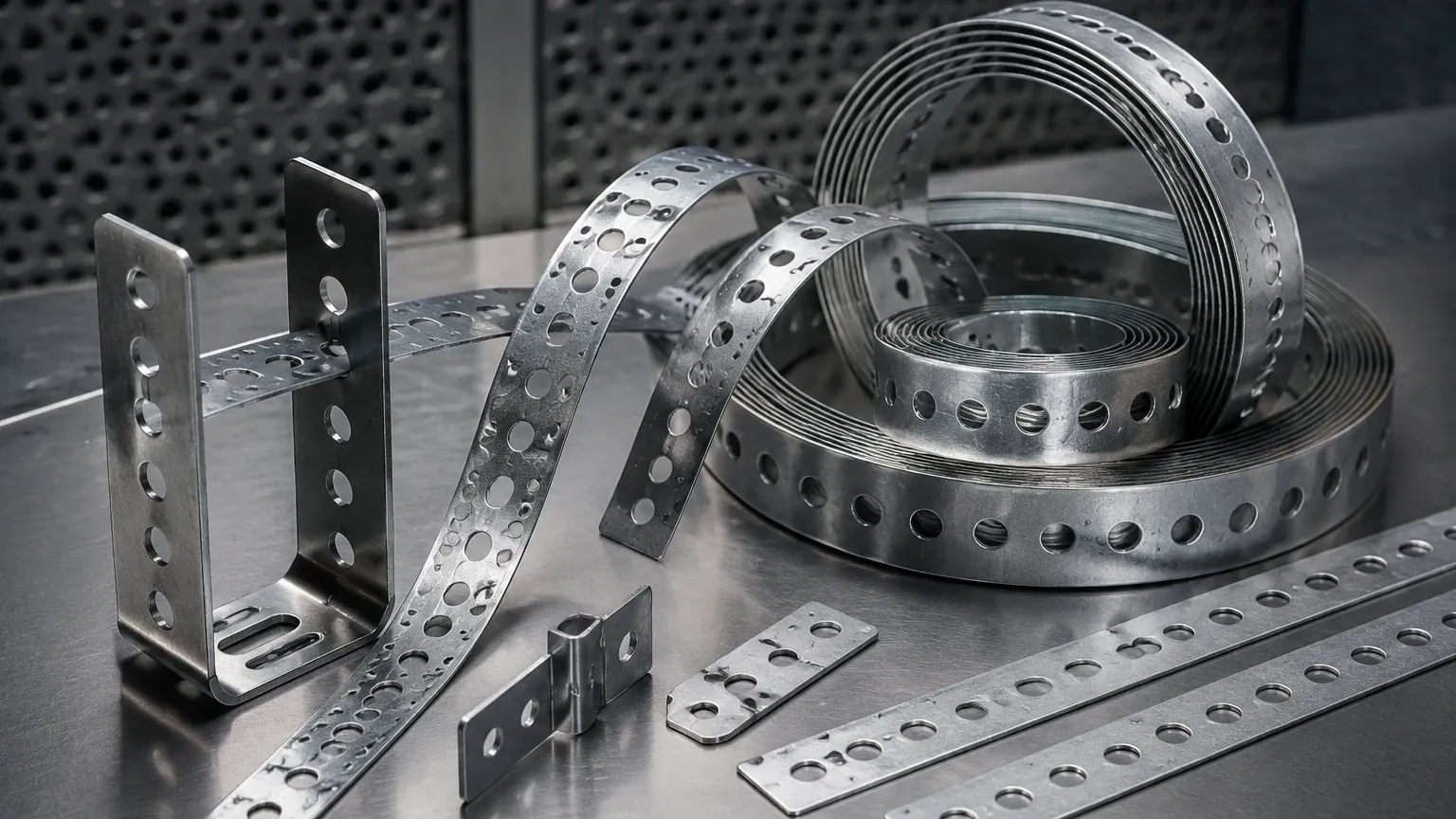
Perforated metal hanger straps are essentially thin strips of metal—typically stainless steel, galvanized steel, or copper—featuring a continuous row of punched holes. These holes allow for adjustable fastening using bolts, screws, or nails, making the straps adaptable to various diameters and configurations of pipes and equipment.
In industrial settings, these straps are not merely utility items but are engineered components designed to withstand specific stresses. The "perforated" nature of the strap is its primary advantage; it allows for incremental adjustments during installation, which is crucial when aligning heavy-duty filtration units or complex hydraulic lines. Unlike solid brackets, perforated straps can be wrapped around irregular shapes, providing a custom fit without the need for bespoke fabrication for every individual support point.
The Role of Perforated & Expanded Metal Manufacturing
The manufacturing process for these straps aligns with broader techniques used in the production of industrial screens and filters. High-precision stamping presses create uniform hole patterns, ensuring that the structural integrity of the metal is maintained while providing the necessary open area for fasteners. When discussing perforated metal hanger straps, it is important to recognize that the quality of the base material and the precision of the perforation process directly impact the strap's tensile strength and resistance to fatigue.
Material Engineering: Selecting the Right Alloy for Durability
The choice of material for perforated metal hanger straps is dictated by the environment in which they will operate. Industrial facilities often present corrosive atmospheres, extreme temperatures, or strict hygiene requirements. Selecting an inappropriate material can lead to galvanic corrosion, stress-corrosion cracking, or premature failure of the support system.
Stainless Steel (Grades 304 and 316)
For most industrial applications, particularly in filtration and chemical processing, stainless steel is the preferred material.
* Grade 304: Offers excellent corrosion resistance and strength. It is suitable for general industrial use, indoor applications, and environments where moisture is present but chemical exposure is limited.
* Grade 316: Contains molybdenum, which provides superior resistance to chlorides and marine environments. In pharmaceutical or food and beverage sectors, where aggressive cleaning agents are used, Grade 316 perforated metal hanger straps are often mandatory to prevent pitting and maintain sanitary standards.
Galvanized Steel
Galvanized straps are coated with a layer of zinc to prevent oxidation. These are cost-effective solutions for HVAC ducting and dry industrial environments. However, in high-humidity or chemically active zones, the zinc coating can eventually deplete, leading to rust. Engineers must evaluate the expected lifespan of the facility when choosing between galvanized and stainless steel options.
Specialized Coatings
In some instances, perforated metal hanger straps are provided with plastic or rubber coatings. This serves two purposes: preventing galvanic corrosion between dissimilar metals (e.g., a stainless strap holding a copper pipe) and providing vibration dampening to reduce noise and mechanical wear on the supported equipment.
Load Bearing and Mechanical Properties
One of the most common questions from engineering teams involves the load capacity of perforated metal hanger straps. Because the strap is perforated, its cross-sectional area is reduced at the point of the holes, which must be accounted for in tensile strength calculations.
Tensile Strength and Gauge Thickness
The thickness of the metal, or its gauge, is the primary determinant of its strength. Standard industrial straps often range from 20-gauge to 14-gauge. A 14-gauge stainless steel strap will naturally support significantly more weight than a 20-gauge galvanized strap. When calculating the required strength, engineers should apply a safety factor (typically 3:1 or 4:1) to account for dynamic loads, such as water hammer in piping or vibration in filtration systems.
Hole Pattern and Fastener Compatibility
The diameter of the perforations must match the intended fasteners. If the hole is too large for the bolt head or washer, the strap may pull through under load. Conversely, if the hole is too small, installers may be tempted to enlarge it in the field, which can create stress risers and compromise the strap’s integrity. Standard patterns usually involve 1/8-inch or 1/4-inch holes spaced at regular intervals to ensure maximum versatility.
Customization Options for Specialized Filtration and Piping Support
While off-the-shelf hanger straps suffice for many applications, custom industrial projects often require specific dimensions or hole configurations. As a manufacturer specializing in custom solutions, Kaifil understands that filtration assemblies often require integrated support structures that go beyond standard hardware store variety straps.
Custom Widths and Lengths
In heavy-duty hydraulic or water treatment systems, standard 3/4-inch wide straps may not provide enough surface area to distribute the load effectively. Custom-width perforated metal hanger straps can be manufactured to provide greater stability and reduce the pressure exerted on the pipe or filter housing. Similarly, providing straps in pre-cut lengths or specific bulk coils can streamline the installation process for large-scale projects.
Precision Perforation for Integrated Systems
In some advanced filtration designs, the hanger strap is part of the filter housing itself. In these cases, the perforation pattern must be engineered to align perfectly with the filter’s mounting points. High-performance Perforated & Expanded Metal techniques allow for variable hole spacing or the inclusion of solid "land" areas within the strap to enhance strength where it is most needed.
Installation Guidelines for Industrial Reliability
Proper installation is just as important as material selection. Even the highest quality stainless steel strap will fail if it is improperly tensioned or fastened.
Spacing and Support Intervals
The distance between hanger straps depends on the material of the pipe or equipment being supported and the weight of the fluid it carries. For example, plastic piping requires more frequent support than steel piping to prevent sagging. Engineers should refer to ASME or local building codes to determine the maximum allowable distance between supports. Over-spacing can lead to structural deformation, while under-spacing increases material costs and installation time.
Avoiding Sharp Bends
When wrapping perforated metal hanger straps around equipment, installers should avoid sharp 90-degree bends, which can create stress points in the metal. A gradual radius ensures that the load is distributed evenly across the width of the strap. If a sharp bend is unavoidable, using a heavier gauge material or a reinforced bracket may be necessary.
Fastener Selection
Always use fasteners made of the same material as the strap to prevent galvanic corrosion. If using a stainless steel strap, use stainless steel bolts and nuts. Using a zinc-plated bolt with a stainless strap in a moist environment will cause the bolt to corrode rapidly, potentially leading to a failure of the entire support system.
Total Cost of Ownership and Maintenance Cycles
When procurement teams evaluate perforated metal hanger straps, the initial purchase price is often the focus. However, in an industrial context, the total cost of ownership (TCO) includes installation labor, maintenance, and the cost of potential downtime if a support fails.
Longevity and Replacement
In a chemical plant, a low-cost galvanized strap might need replacement every two years due to corrosion. In contrast, a Grade 316 stainless steel strap might last for decades. The labor cost of replacing supports in a hard-to-reach area often far exceeds the price difference between the two materials. Therefore, investing in high-quality perforated metal hanger straps at the outset is usually the most cost-effective strategy.
Inspection Protocols
Industrial maintenance schedules should include a visual inspection of all hanger straps and supports. Inspectors should look for:
1. Signs of Corrosion: Rust streaks or pitting, especially near the holes.
2. Deformation: Elongation of the holes or thinning of the strap, indicating that the load may exceed the strap's capacity.
3. Loose Fasteners: Vibration can cause nuts to back off over time, requiring retightening or the use of locking washers.
Why Engineering Precision Matters
At Kaifil, we recognize that even a component as small as a hanger strap plays a vital role in the safety and performance of a filtration system. Our expertise in manufacturing precision metal components ensures that every product, from complex filter cartridges to the straps that hold them, meets rigorous industrial standards. By focusing on material purity, accurate perforation, and durable design, we help engineers build systems that stand the test of time.
When selecting components for your next project, consider the environmental demands and mechanical requirements of your application. Whether you need standard dimensions or a custom-engineered solution, choosing the right partner for your metal components is the first step toward operational excellence.
For detailed specifications on available materials and custom manufacturing capabilities, Review product options and application support to ensure your infrastructure is supported by the highest quality metal solutions.
