


Heavy Duty Expanded Metal Mesh
In industrial filtration and structural engineering, the integrity of a system often depends on the strength of its primary support components. Heavy duty expanded metal mesh serves as a critical material in these environments, offering a unique combination of structural rigidity, high open-area ratios, and cost-effective manufacturing. Unlike standard expanded metal, the heavy-duty variant is characterized by thicker gauge materials and larger strand widths, designed specifically to withstand high-pressure differentials, mechanical impact, and heavy load-bearing requirements.
For engineers and procurement specialists, selecting the correct Perforated & Expanded Metal involves more than just choosing a material grade. It requires an understanding of the expansion process, the resulting geometric properties, and how these factors influence flow dynamics and mechanical durability in demanding applications such as chemical processing, hydraulic filtration, and heavy industrial screening.
The Engineering Fundamentals of Heavy Duty Expanded Metal
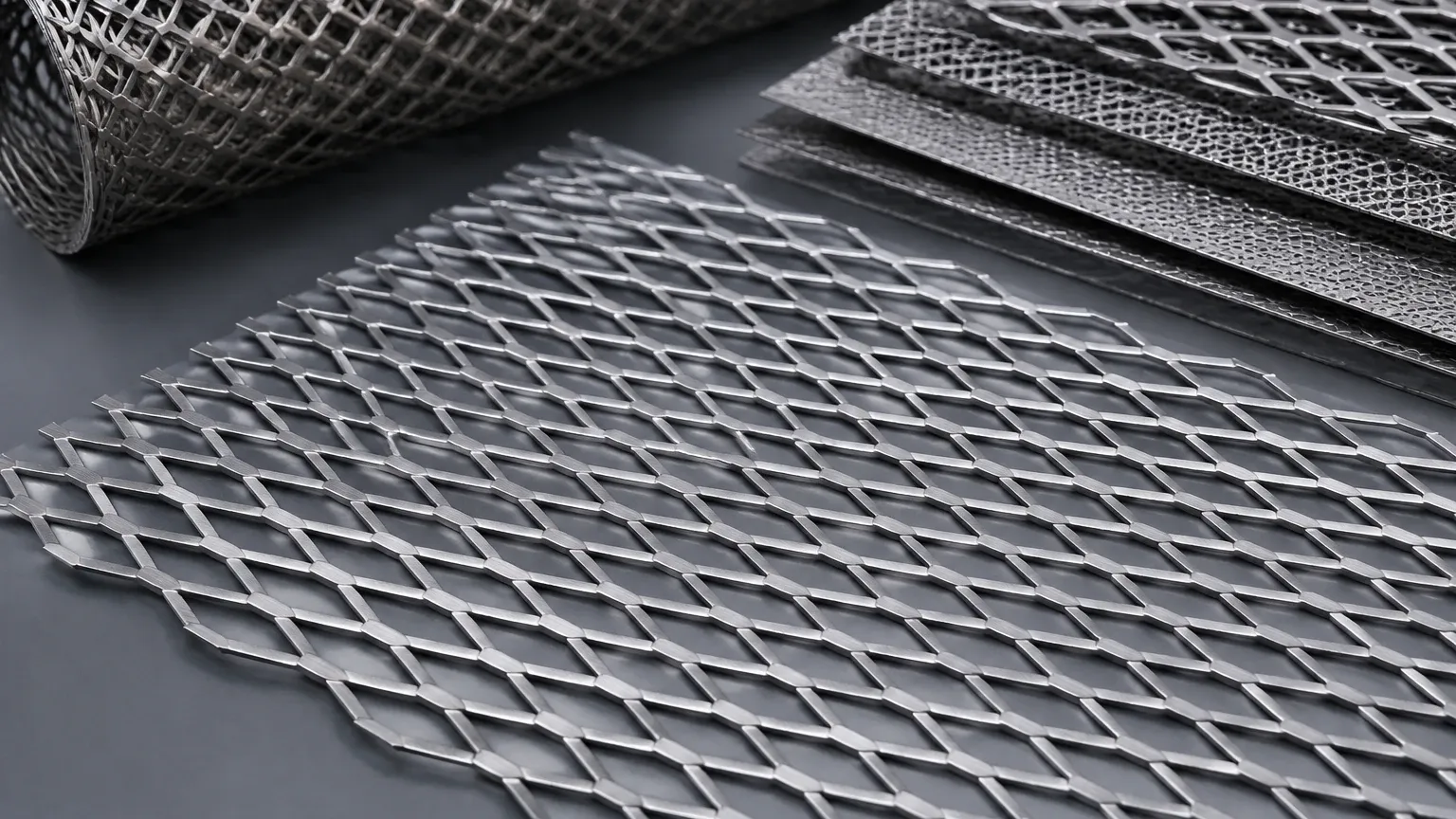
Heavy duty expanded metal mesh is produced through a simultaneous slitting and stretching process. A solid metal sheet—typically stainless steel, carbon steel, or aluminum—is fed through a machine equipped with a reciprocating knife. As the knife slits the metal, it also expands it, creating a uniform pattern of diamond-shaped openings.
One of the primary advantages of this process is that it is "waste-free." Unlike perforated metal, where the "slugs" or holes are punched out and discarded (or recycled), expanded metal is formed by stretching the existing material. This results in a finished product that can be larger than the original sheet, providing a high strength-to-weight ratio.
Geometric Definitions for Technical Specification
When specifying heavy duty expanded metal mesh for industrial filtration or structural support, engineers must define several key parameters:
* SWD (Short Way of Diamond): The distance from the center of one bond to the center of the next bond measured across the short diamond diagonal.
* LWD (Long Way of Diamond): The distance from the center of one bond to the center of the next bond measured across the long diamond diagonal.
* Strand Width: The amount of metal between the openings; essentially the thickness of the "wire" created by the slit.
* Strand Thickness: The original thickness of the base metal sheet.
* Bond: The intersection where two strands meet, which is twice the thickness of the base metal, providing the mesh's inherent rigidity.
In heavy-duty applications, the strand thickness typically exceeds 3mm, and the bond area is significantly reinforced to prevent deformation under mechanical stress. This makes it an ideal candidate for support cores in large-scale industrial filter cartridges.
Material Selection and Corrosion Resistance
The performance of heavy duty expanded metal mesh is heavily dictated by the alloy selected. In the B2B industrial sector, stainless steel is the standard for filtration due to its resistance to oxidation, corrosion, and temperature extremes.
Stainless Steel 304 vs. 316
* Type 304 Stainless Steel: This is the most common grade used for heavy-duty mesh in general industrial applications. It offers excellent strength and good corrosion resistance for most water treatment and food-grade applications. However, it can be susceptible to pitting in high-chloride environments.
* Type 316 Stainless Steel: For chemical processing, pharmaceutical manufacturing, or marine environments, Type 316 is preferred. The addition of molybdenum enhances its resistance to chloride-induced corrosion and chemical attack, ensuring a longer service life for filter components exposed to aggressive solvents or acids.
Beyond stainless steel, heavy duty expanded metal mesh can be manufactured from carbon steel for structural applications where corrosion is not a primary concern, or from specialized alloys like Monel or Inconel for extreme high-temperature filtration environments.
The Role of Heavy Duty Mesh in Industrial Filtration
In industrial filtration, heavy duty expanded metal mesh rarely acts as the primary filtration media for fine particles. Instead, it serves three critical functions: support, protection, and coarse pre-filtration.
1. Support Cores for Filter Cartridges
In high-pressure hydraulic or chemical systems, fine filtration media (such as pleated paper or fine wire mesh) lacks the structural integrity to withstand the differential pressure as the filter becomes loaded with contaminants. A heavy duty expanded metal core provides the internal skeleton that prevents the media from collapsing inward. The diamond pattern is particularly effective here because it provides a high percentage of open area, ensuring that the support structure does not significantly increase the pressure drop across the filter.
2. Outer Protection Sleeves
Conversely, heavy duty mesh is often used as an outer sleeve to protect delicate filter media from mechanical damage during installation, handling, or from high-velocity fluid intake. The rigidity of the heavy-duty strands ensures that the filter maintains its shape even when subjected to external impacts or turbulent flow conditions.
3. Coarse Pre-Filtration and Strainers
In applications involving large debris—such as water intake from rivers or primary chemical mixing—heavy duty expanded metal mesh acts as a robust strainer. It can capture large solids that would otherwise damage downstream pumps or clog finer filtration stages. Its ability to be formed into cylinders or cones makes it highly versatile for custom strainer designs.
Evaluating Performance: Load, Flow, and Durability
When integrating heavy duty expanded metal mesh into a system, engineering teams must evaluate the balance between physical strength and hydraulic performance.
Load-Bearing Capacity
Unlike woven wire mesh, expanded metal is a single, continuous piece of material. There are no joints to unravel and no wires to shift. This "one-piece" construction allows for superior load distribution. In heavy-duty variants, the thickness of the strands allows the mesh to support significant weight, making it suitable for industrial flooring, catwalks, and heavy-duty baskets in parts-washing applications.
Flow Rate and Open Area
The open area of expanded metal is determined by the relationship between the strand width and the diamond size. For filtration, a higher open area is generally preferred to minimize flow resistance. However, increasing the open area often requires narrowing the strands, which can reduce the mesh's structural strength. Engineers must calculate the "Effective Open Area" to ensure the mesh can handle the required flow velocity without creating excessive turbulence or pressure loss.
Structural Integrity Under Pressure
In a filtration housing, the mesh must resist "bursting" or "collapsing" pressures. Heavy duty expanded metal is particularly resistant to these forces because the bonds (the intersections of the diamonds) act as structural nodes. When the mesh is rolled into a cylinder and welded, these nodes provide a high degree of hoop strength, which is essential for high-pressure hydraulic filters.
Customization and OEM Considerations
Standard off-the-shelf expanded metal often fails to meet the precise tolerances required for high-performance industrial filtration. This is where customized manufacturing becomes essential. For an OEM (Original Equipment Manufacturer), the ability to specify exact dimensions is critical for assembly efficiency and product reliability.
Flattened vs. Raised Expanded Metal
* Raised (Standard): The strands and bonds are set at a uniform angle to the plane of the sheet. This provides maximum strength and a skid-resistant surface but results in a thicker profile.
* Flattened: The raised mesh is passed through a cold-rolling reducing mill. This flattens the strands and bonds into a single plane, resulting in a smooth, flat surface. Flattened heavy duty expanded metal mesh is often preferred for filter support because it provides a consistent surface for the filter media to rest against, reducing the risk of abrasion or tearing of the media.
Precision Cutting and Forming
For B2B applications, the mesh often needs to be supplied in specific shapes—circles, rectangles, or pre-rolled cylinders. Advanced manufacturing allows for "bond-shearing," which ensures the edges of the mesh are clean and do not have sharp "protrusions" that could damage other components in the filter assembly.
Maintenance, Replacement, and Total Cost of Ownership
Understanding the lifecycle of heavy duty expanded metal mesh is vital for maintenance planning and total cost analysis. While the initial cost of stainless steel heavy-duty mesh is higher than carbon steel or lighter gauges, the total cost of ownership is often lower due to extended replacement cycles.
Replacement Cycles
In most filtration systems, the heavy-duty mesh support is a permanent or semi-permanent component. While the fine filter media (the "consumable") is replaced regularly, the expanded metal core or sleeve can often be cleaned and reused. However, replacement is necessary if:
* There is visible deformation or "bowing" of the mesh, indicating that the system has exceeded its pressure limits.
* Corrosion has compromised the thickness of the strands, reducing the structural integrity.
* The bonds have begun to crack due to fatigue from pressure cycling.
Cleaning and Compatibility
Heavy duty expanded metal is highly compatible with various industrial cleaning methods, including ultrasonic cleaning, high-pressure steam, and chemical baths. Its open structure allows for easy access to all surfaces, ensuring that contaminants are thoroughly removed during maintenance cycles. It is essential to ensure that the cleaning agents used are compatible with the metal grade (e.g., avoiding certain acids with 304 stainless steel) to prevent stress corrosion cracking.
Conclusion: Selecting the Right Partner for Filtration Solutions
Choosing the right Perforated & Expanded Metal requires a technical partner who understands the nuances of industrial filtration. It is not merely about providing a piece of mesh; it is about engineering a component that contributes to the efficiency, safety, and longevity of the entire filtration system.
Before proceeding with a purchase, engineering teams should confirm the following with their supplier:
1. Material Traceability: Ensure the stainless steel grades are certified to meet international standards (ASTM, DIN, etc.).
2. Tolerances: Confirm that the SWD, LWD, and strand dimensions can be held within the required ranges for your specific housing design.
3. Finishing Requirements: Determine if the mesh requires degreasing, pickling, or electropolishing to meet the cleanliness standards of your industry (especially in pharmaceutical or food processing).
4. Application Support: Discuss the specific pressure and flow requirements of your system to ensure the selected heavy duty expanded metal mesh has the necessary mechanical properties to perform under load.
By focusing on these technical details and prioritizing structural integrity, B2B purchasers can ensure that their filtration systems remain reliable even in the most demanding industrial environments.
