


Heavy Gauge Expanded Metal
In industrial filtration and structural engineering, the selection of support materials is as critical as the selection of the primary filtration media itself. Heavy gauge expanded metal represents a specialized category of metal mesh that provides high structural integrity, significant open area, and cost-effective manufacturing for demanding environments. Unlike standard thin-gauge meshes used for decorative or light shielding purposes, heavy gauge variants are engineered to withstand mechanical stress, high-pressure differentials, and corrosive chemical exposures.
For engineers and procurement teams, understanding the technical nuances of heavy gauge expanded metal is essential for optimizing filter performance and ensuring the longevity of industrial equipment. This guide examines the engineering principles, material considerations, and application-specific criteria required to integrate these components into professional filtration systems.
Understanding Heavy Gauge Expanded Metal in Industrial Contexts
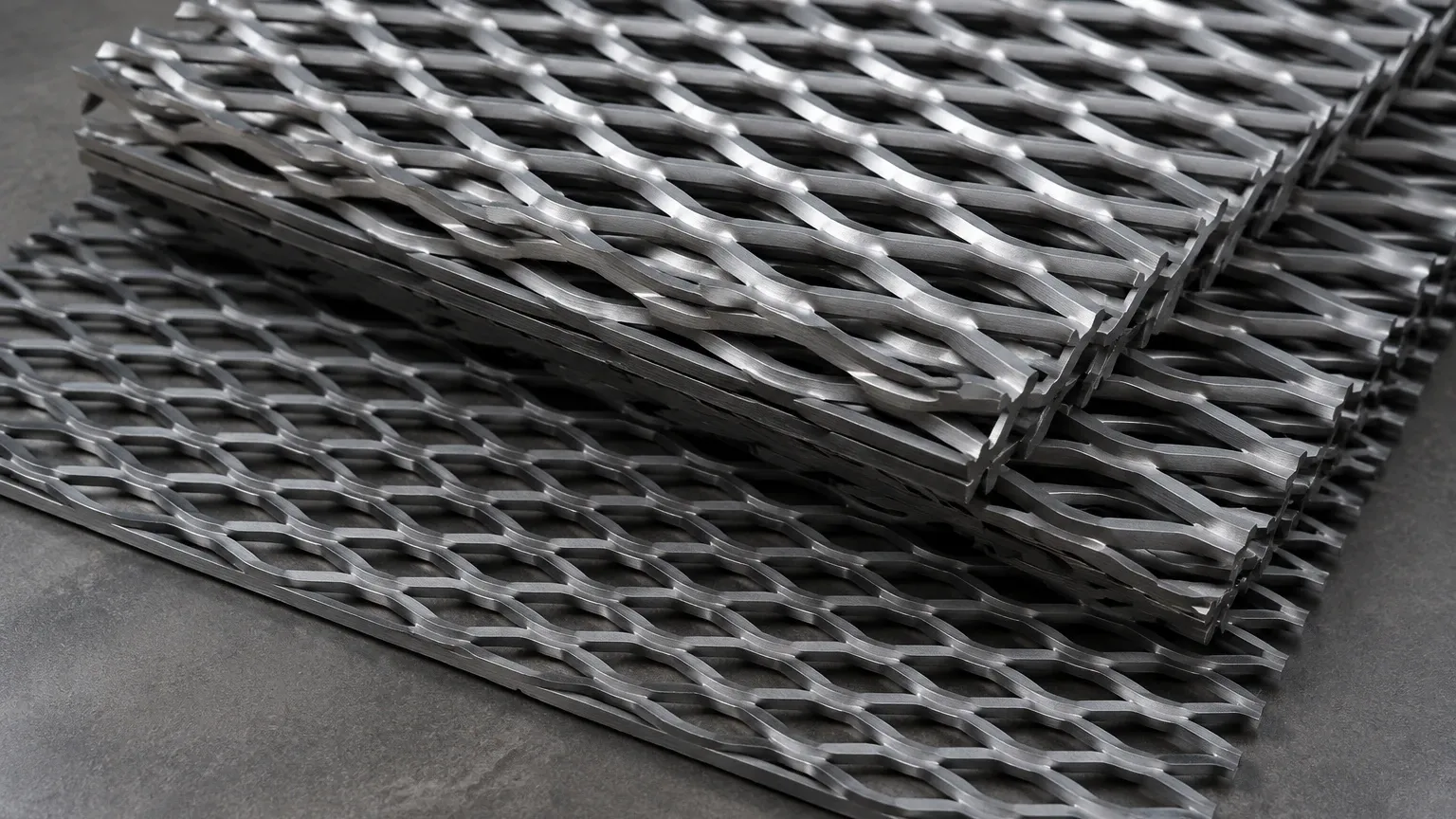
Expanded metal is produced through a process of simultaneously slitting and stretching a solid metal sheet. This mechanical expansion creates a diamond-shaped pattern of openings, where the "strands" are the metal strips and the "bonds" are the intersections where the strands meet.
When we refer to Perforated & Expanded Metal in a "heavy gauge" context, we are typically discussing materials with a thickness exceeding 3mm (approximately 11 gauge) or those designed for high-load applications. The manufacturing process is unique because it involves no scrap or waste; the original sheet is stretched to its final dimensions, making it a more resource-efficient alternative to perforated metal in many scenarios.
In heavy gauge applications, the thickness of the base material and the width of the strands are increased to provide a rigid framework. This rigidity is vital when the metal serves as a support cage for delicate wire mesh or as a primary screen in high-flow water treatment and chemical processing systems.
Key Technical Specifications and Terminology
To accurately specify heavy gauge expanded metal, engineers must use standardized terminology to describe the geometry and physical properties of the mesh. These specifications directly impact the flow rate, pressure drop, and mechanical strength of the final component.
* SWD (Short Way of Design): The distance from the center of one bond to the center of the next bond measured across the short diamond diagonal.
* LWD (Long Way of Design): The distance from the center of one bond to the center of the next bond measured across the long diamond diagonal.
* Strand Thickness: The thickness of the base metal used to produce the mesh.
* Strand Width: The amount of metal fed into the precision dies to create one strand.
* Raised vs. Flattened: Heavy gauge expanded metal is naturally "raised," meaning the strands are at an angle to the plane of the sheet. For filtration applications requiring a smooth surface to prevent damage to secondary media, the mesh may undergo a "flattening" process through a cold-rolling mill.
In the context of heavy gauge expanded metal, the relationship between strand width and thickness determines the overall weight and strength. A thicker strand width increases the rigidity but reduces the percentage of open area, which can increase the resistance to fluid flow.
Material Selection for Heavy Gauge Applications
The choice of alloy is the primary factor in determining the chemical compatibility and thermal stability of the expanded metal. In industrial filtration, stainless steel is the standard due to its resistance to oxidation and corrosion.
1. 304/304L Stainless Steel: The most common grade for general industrial use. It offers excellent formability and weldability, making it suitable for cylindrical filter cores and support baskets.
2. 316/316L Stainless Steel: Contains molybdenum, which provides superior resistance to chlorides and pitting. This is the preferred material for marine environments, pharmaceutical processing, and acidic chemical filtration.
3. Specialty Alloys: For extreme temperatures or highly aggressive chemical environments, materials such as Monel, Inconel, or Duplex stainless steel may be used. These alloys maintain their structural integrity where carbon steel or standard stainless grades would fail.
When selecting materials for heavy gauge components, engineers must also consider the "temper" of the metal. While the expansion process work-hardens the material, ensuring the base sheet has the correct mechanical properties is essential for preventing fractures during the stretching phase, especially in thicker gauges.
The Role of Heavy Gauge Expanded Metal in Filtration Systems
Heavy gauge expanded metal is rarely used as a standalone fine filter. Instead, it serves several critical roles within complex filtration assemblies:
Structural Support Cores
In high-pressure hydraulic or liquid process filters, the primary filtration media (such as fine wire mesh or fiber felt) lacks the structural strength to resist the pressure of the fluid. A heavy gauge expanded metal cylinder acts as the internal core, preventing the media from collapsing inward under differential pressure.
Protective Outer Guards
Industrial filter cartridges are often subject to rough handling during installation and maintenance. An outer wrap of expanded metal protects the delicate pleated or wrapped media from mechanical damage without significantly impeding the flow of the process fluid.
Pre-Filtration and Coarse Screening
In water treatment or intake systems, heavy gauge expanded metal is used to capture large debris, such as stones, wood, or plastic, before the water reaches more sensitive downstream filtration stages. The diamond pattern is particularly effective at catching elongated debris that might pass through circular perforations.
Engineering Evaluation: Load, Flow, and Pressure Drop
When integrating heavy gauge expanded metal into a system design, engineers must balance mechanical strength against hydraulic performance.
Open Area Calculation
The percentage of open area determines the velocity of the fluid passing through the mesh. For expanded metal, this is calculated based on the strand width and the SWD. A higher open area results in a lower pressure drop (ΔP), which is critical for energy efficiency in pumping systems. However, increasing the open area usually requires narrowing the strands, which reduces the load-bearing capacity.
Directional Flow Characteristics
Because the strands in raised expanded metal are angled, the mesh has directional properties. Fluid flowing in one direction may experience more turbulence than fluid flowing in the opposite direction. Designers must account for this "louver" effect, especially in high-velocity gas filtration or air intake systems.
Structural Rigidity
In cylindrical applications, the orientation of the diamonds (LWD vs. SWD) relative to the axis of the cylinder affects the hoop strength. Generally, orienting the LWD parallel to the cylinder's circumference provides the highest resistance to crushing forces.
Manufacturing Risks and Quality Control
Producing high-quality heavy gauge expanded metal requires precision machinery and strict quality control. Several risks must be managed during the manufacturing process to ensure the component is fit for industrial use:
* Edge Burrs: The slitting process can leave sharp burrs on the edges of the strands. In filtration, these burrs can puncture fine mesh layers or cause injury to personnel during maintenance. Post-production deburring or pickling is often required.
* Pattern Uniformity: Variations in the feed rate or die alignment can lead to uneven diamond sizes. This not only affects the aesthetic but also creates localized areas of higher pressure drop or structural weakness.
* Camber and Flatness: Large sheets of expanded metal can develop a "camber" (a curve in the plane of the sheet) during expansion. For components that must be rolled into cylinders or fitted into tight frames, maintaining tight tolerances on flatness and straightness is essential.
Kaifil addresses these risks through advanced manufacturing capabilities, ensuring that every custom filtration component meets the specific tolerances required by the application.
Procurement Checklist: Confirming Requirements
Before finalizing a purchase order for heavy gauge expanded metal components, purchasing teams and engineers should confirm the following technical details with the manufacturer:
1. Dimensional Accuracy: Confirm the required SWD, LWD, and strand dimensions. Are these "nominal" or "actual" measurements?
2. Surface Finish: Is the material to be supplied in its natural raised state, or does it require flattening? Are there specific requirements for degreasing, pickling, or electropolishing?
3. Forming Requirements: If the metal is to be used in a cylindrical filter, will the manufacturer provide it as a flat sheet, a pre-rolled cylinder, or a fully welded component?
4. Material Certification: Request Mill Test Reports (MTRs) to verify the chemical composition and mechanical properties of the alloy, especially for pharmaceutical or food-grade applications.
5. Load Requirements: Define the maximum differential pressure the component must withstand. This allows the manufacturer to recommend the optimal strand thickness and width.
By addressing these factors early in the design and procurement phase, industrial operators can ensure that their filtration systems remain reliable, efficient, and cost-effective over their entire service life. Heavy gauge expanded metal, when specified correctly, provides the rugged foundation necessary for high-performance industrial filtration.
