


Hexagonal Perforated Metal Sheet
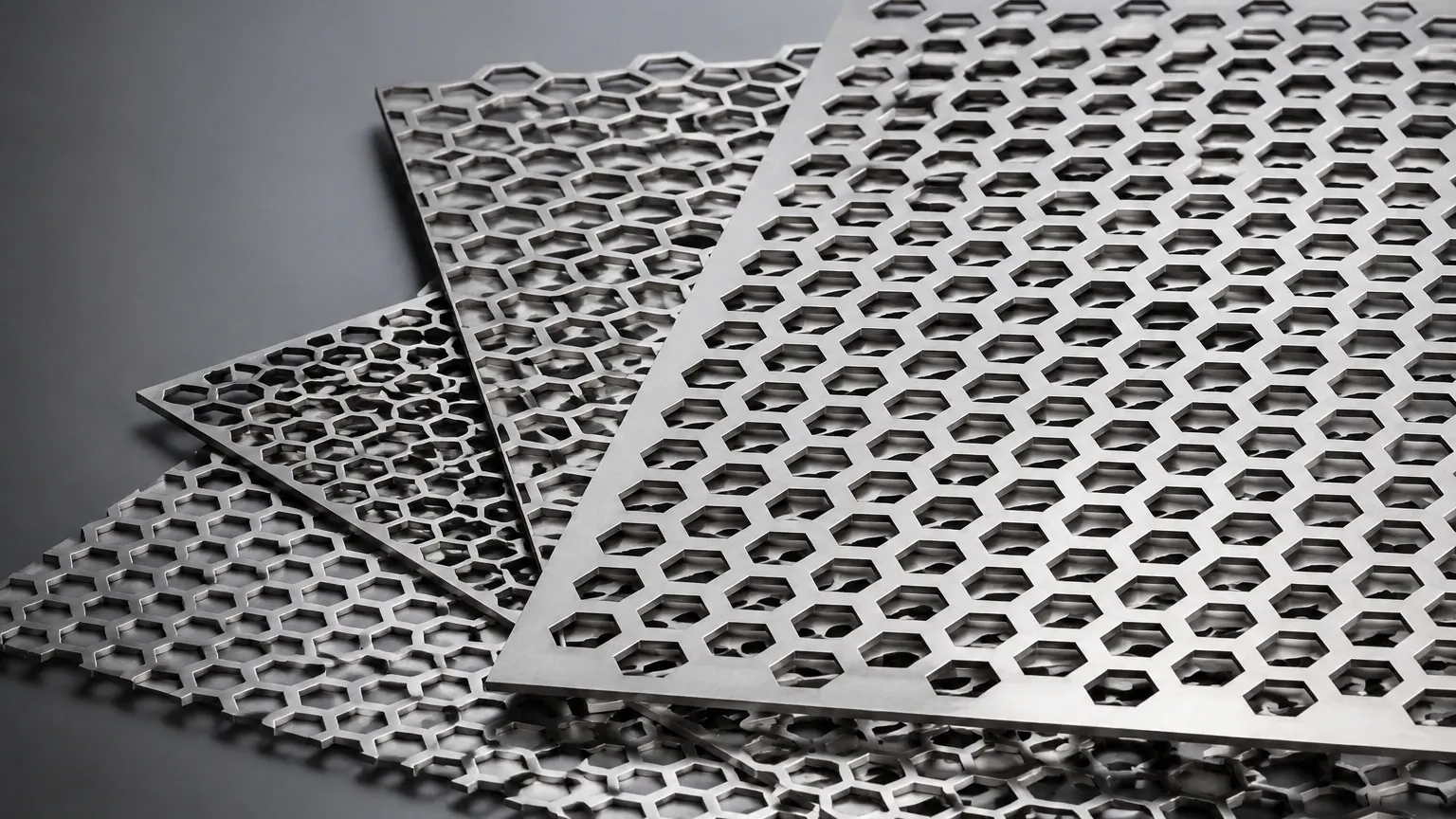
In the landscape of industrial filtration and structural engineering, the selection of perforation patterns is a critical decision that directly impacts fluid dynamics, structural integrity, and material efficiency. Among the various geometries available in Perforated & Expanded Metal solutions, the hexagonal perforated metal sheet stands out for its unique ability to provide an exceptionally high open area without a proportional sacrifice in mechanical strength. Often referred to as a honeycomb pattern, this configuration is increasingly specified for applications ranging from high-efficiency air filtration to architectural cladding and acoustic dampening.
For engineers and procurement specialists, understanding the technical nuances of hexagonal perforations is essential for optimizing system performance. This guide explores the engineering principles, material considerations, and application-specific advantages of hexagonal perforated metal sheets within industrial environments.
The Engineering Logic of Hexagonal Perforations
The primary driver for selecting a hexagonal perforated metal sheet over traditional round or square patterns is the maximization of open area. In industrial filtration and ventilation, the open area percentage determines the pressure drop across the medium and the volume of flow (air or liquid) that can pass through the sheet at a given velocity.
Open Area Efficiency
Hexagonal patterns can achieve an open area of up to 80% or more, significantly higher than the typical 40% to 60% seen in standard round-hole configurations. This efficiency is due to the geometric nesting of the hexagons, which allows for minimal bridge width (the material between the holes) while maintaining a continuous metal skeleton. For applications where airflow is paramount—such as cooling systems for high-performance electronics or large-scale HVAC intakes—the hexagonal pattern minimizes resistance and energy consumption.
Strength-to-Weight Ratio
Despite the high percentage of removed material, the hexagonal structure mimics the natural honeycomb, which is renowned for its high strength-to-weight ratio. The staggered arrangement of the hexagons distributes mechanical loads across the sheet more uniformly than square patterns. This makes it an ideal choice for weight-sensitive applications, such as aerospace components or portable industrial equipment, where structural support is required but weight must be minimized.
Technical Specifications and Geometric Parameters
When specifying a hexagonal perforated metal sheet for an industrial project, several geometric parameters must be defined to ensure the component meets the required performance standards. Precision in these measurements is vital for both filtration accuracy and structural fit.
1. Hole Size (Width Across Flats): Unlike round holes defined by diameter, hexagonal holes are measured by the distance between two parallel flat sides. Common sizes range from 3mm to 20mm, though custom micro-perforations are available for specialized filtration needs.
2. Pitch (Center-to-Center): This is the distance from the center of one hexagon to the center of the adjacent hexagon. The relationship between the hole size and the pitch determines the open area percentage and the width of the bridges.
3. Bridge (Bar) Width: This is the thickness of the metal remaining between the perforations. In high-open-area designs, the bridge width is kept to a minimum, but it must remain sufficient to withstand the operating pressure and prevent material fatigue.
4. Sheet Thickness: Hexagonal perforations can be applied to materials ranging from thin foils (0.5mm) to heavy plates (5mm or more), depending on the manufacturing method and the material's ductility.
Calculating the open area for a hexagonal pattern involves a specific formula:
`Open Area % = (Hole Size² / Pitch²) x 100` (assuming a standard 60-degree staggered layout). Engineers must verify these calculations during the design phase to ensure the sheet meets the flow requirements of the specific industrial process.
Material Selection for Industrial Environments
The performance of a hexagonal perforated metal sheet is heavily dependent on the base alloy. At Kaifil, the focus is on stainless steel and high-performance alloys to ensure longevity in demanding B2B applications.
Stainless Steel (304 and 316L)
Stainless steel is the industry standard for perforated filtration components. Grade 304 offers excellent formability and general corrosion resistance, making it suitable for many industrial ventilation and protective screening tasks. However, for chemical processing, pharmaceutical manufacturing, or marine environments, Grade 316L is preferred. The addition of molybdenum in 316L provides superior resistance to pitting and crevice corrosion, especially in the presence of chlorides.
Aluminum and Special Alloys
For applications where weight is the primary constraint, aluminum hexagonal sheets are used. While aluminum offers a high strength-to-weight ratio and natural corrosion resistance, it lacks the extreme temperature and pressure tolerance of stainless steel. In high-temperature exhaust systems or aggressive chemical reactors, specialized alloys like Inconel or Monel may be required to maintain structural integrity under thermal stress.
Applications in Industrial Filtration and Beyond
The versatility of the hexagonal perforated metal sheet allows it to serve multiple functions across various sectors. Its role often bridges the gap between a decorative element and a high-performance industrial component.
High-Flow Ventilation and Cooling
In data centers and industrial power cabinets, heat dissipation is a critical concern. Hexagonal perforated sheets allow for maximum airflow while providing a physical barrier against debris and unauthorized access. The high open area ensures that cooling fans can operate at lower RPMs, reducing energy costs and noise levels.
Support Structures for Fine Filter Media
In complex filtration assemblies, such as those used in water treatment or hydraulic systems, a fine wire mesh is often used as the primary filtration layer. Because fine mesh lacks the rigidity to withstand high differential pressures, it is frequently backed by a hexagonal perforated metal sheet. The hexagonal pattern provides robust support while ensuring that the support layer itself does not significantly impede the flow of the filtrate.
Architectural and Acoustic Applications
Beyond pure filtration, these sheets are used in industrial architecture for sunscreens, facades, and acoustic panels. When backed with sound-absorbent material, the hexagonal perforations allow sound waves to pass into the absorbent core, effectively reducing noise pollution in manufacturing plants and mechanical rooms.
Manufacturing Considerations and Quality Control
Producing a high-quality hexagonal perforated metal sheet requires advanced CNC punching or laser cutting capabilities. The manufacturing process must be tightly controlled to avoid common defects that could compromise the final application.
* Burr Removal: Punching metal creates burrs on the exit side of the hole. In filtration applications, these burrs can trap contaminants or cause turbulence. Precision leveling and deburring processes are necessary to ensure a smooth, clean surface.
* Flatness and Stress Relief: The perforation process introduces internal stresses into the metal sheet, which can cause bowing or warping. Industrial-grade sheets must undergo a leveling process to ensure they meet flatness tolerances, which is especially important for sheets that will be subsequently rolled into filter cartridges or welded into frames.
* Margin Specifications: Engineers must specify the "margins" (the unperforated areas around the edges of the sheet). Proper margins are essential for welding the sheet into a housing or securing it within a frame without compromising the structural integrity of the perforated zone.
Evaluating Total Cost and Replacement Cycles
When integrating hexagonal perforated metal sheets into an industrial system, procurement teams should look beyond the initial purchase price and consider the total cost of ownership (TCO). Several factors influence the long-term value of these components:
1. Durability vs. Frequency of Replacement: A higher-grade material like 316L stainless steel may have a higher upfront cost but can last significantly longer in corrosive environments, reducing downtime and replacement labor costs.
2. Ease of Cleaning: In food and beverage or pharmaceutical applications, the ability to clean the filter media is paramount. The smooth surface of a well-manufactured perforated sheet is easier to sanitize than woven wire mesh, making it a cost-effective choice for systems requiring frequent Clean-in-Place (CIP) cycles.
3. Customization Requirements: Standard sizes are often available, but custom-engineered sheets—where hole sizes and patterns are optimized for a specific fluid's viscosity and flow rate—can lead to significant gains in process efficiency.
Conclusion: Selecting the Right Partner for Filtration Solutions
The hexagonal perforated metal sheet is more than just a piece of metal with holes; it is a precision-engineered component that plays a vital role in industrial efficiency. Whether it is used as a high-flow vent, a structural support for fine mesh, or a decorative architectural element, its performance is dictated by the accuracy of its geometry and the quality of its material.
For engineers and technical professionals, the key to a successful implementation lies in detailed specification and collaboration with a manufacturer that understands the rigors of industrial applications. By focusing on parameters like open area, material grade, and manufacturing tolerances, organizations can ensure that their Perforated & Expanded Metal components deliver reliable, long-term service in even the most demanding environments. When evaluating suppliers, prioritize those with the technical expertise to provide application guidance, ensuring the selected hexagonal pattern is perfectly aligned with the project's operational goals.
