


Jual Perforated Metal
In the landscape of industrial filtration and structural engineering, the selection of specialized metal components is a critical factor in determining the efficiency, longevity, and safety of a system. For procurement officers and engineers navigating the global market for "jual perforated metal," the focus often shifts from mere availability to technical compliance and material integrity. Perforated and expanded metals are not merely sheets with holes; they are precision-engineered components designed to manage flow, provide structural support, and withstand rigorous environmental stressors.
As a professional manufacturer, Kaifil specializes in custom stainless steel filtration solutions, providing the technical expertise required to transform raw metal sheets into high-performance industrial tools. Understanding the nuances of material selection, hole geometry, and manufacturing tolerances is essential for any professional involved in the acquisition of these materials.
The Technical Distinction: Perforated vs. Expanded Metal
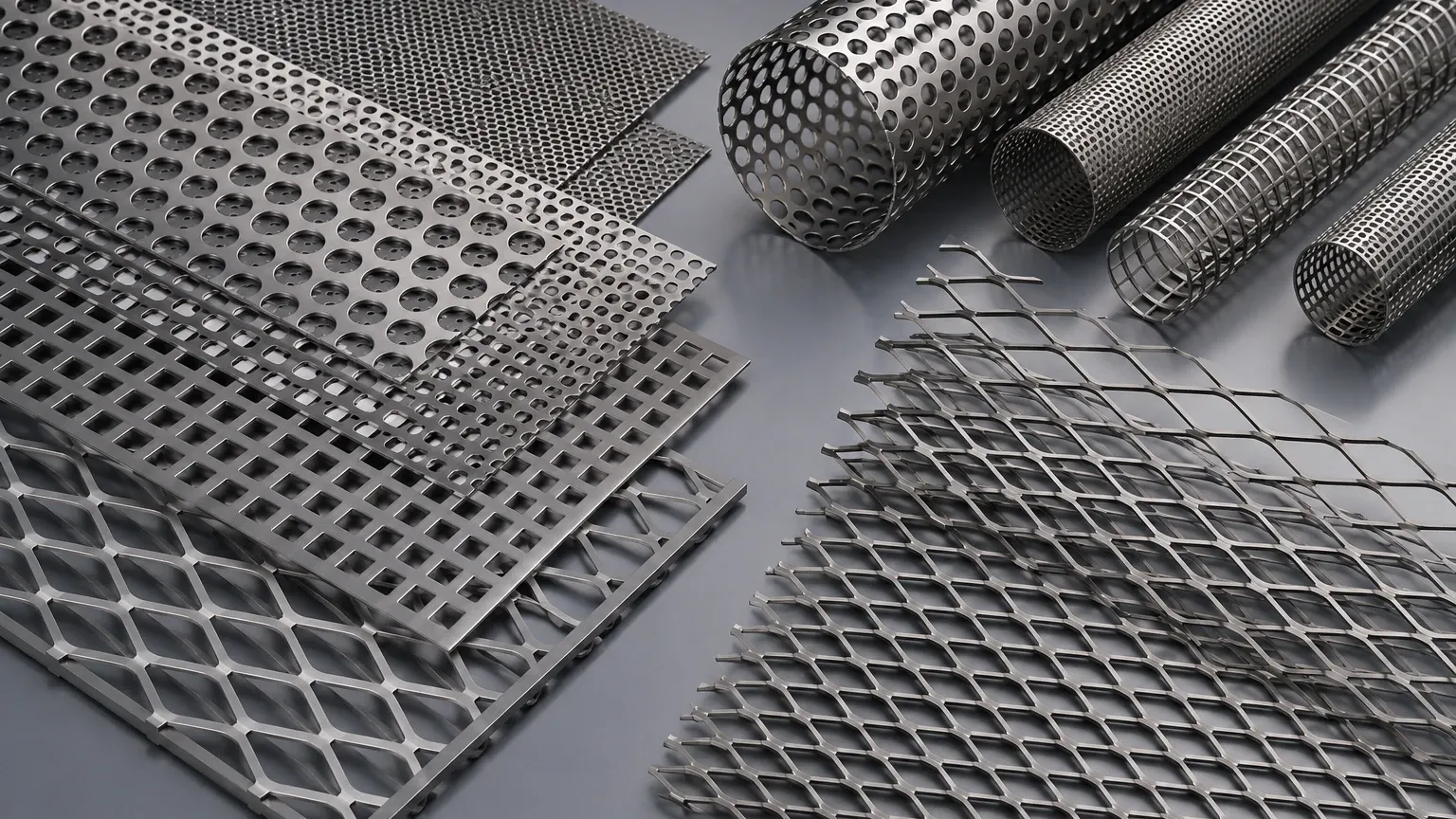
When evaluating options for Perforated & Expanded Metal, it is important to distinguish between the two manufacturing processes, as they offer different mechanical properties and performance characteristics.
Perforated Metal
Perforated metal is produced by mechanically punching or laser-cutting a series of holes into a solid metal sheet. This process allows for extreme precision in hole size, shape, and placement. Engineers favor perforated metal when specific open area percentages are required for flow control or when a specific aesthetic or structural pattern is necessary. The punching process maintains the flatness of the sheet, making it easier to integrate into filter cartridges or housing units.
Expanded Metal
Expanded metal is created by simultaneously slitting and stretching a metal sheet. This process results in a diamond-shaped mesh pattern that is integral to the sheet, meaning there are no welds or joins. Because no material is lost during the expansion process, it is often a more cost-effective solution for structural reinforcement or coarse filtration. Expanded metal can be supplied in its "standard" raised form, which provides a high-grip surface and excellent rigidity, or it can be "flattened" through a cold-rolling process to achieve a smooth surface similar to perforated metal.
Engineering Specifications for Industrial Filtration
For those searching for "jual perforated metal" to be used in filtration applications, the technical specifications must align with the fluid dynamics of the specific process. At Kaifil, we emphasize several key engineering parameters:
1. Hole Size and Shape: While round holes are the most common due to their structural stability and ease of manufacture, square, slotted, and hexagonal patterns are utilized for specific filtration needs. Slotted holes, for instance, are often used in the food and beverage industry for sorting or dewatering processes where elongated particles are present.
2. Pitch and Arrangement: The arrangement of holes—whether staggered (60-degree) or straight (90-degree)—significantly impacts the strength of the sheet. A 60-degree staggered pattern is the most popular because it provides the highest open area and uniform strength across the sheet.
3. Gauge and Thickness: The thickness of the material must be balanced against the hole diameter. A general engineering rule is that the hole diameter should not be smaller than the material thickness to avoid excessive tool wear and potential structural deformation during the punching process.
Material Grades and Chemical Compatibility
The environment in which the metal will operate dictates the material grade. In the context of industrial filtration, stainless steel is the industry standard due to its corrosion resistance and mechanical strength. When sourcing "jual perforated metal," it is vital to confirm the specific grade of stainless steel provided.
* Grade 304/304L: The most common grade, offering excellent corrosion resistance in a wide range of atmospheric environments and many corrosive media. It is suitable for most food processing and general industrial applications.
* Grade 316/316L: Contains molybdenum, which provides superior resistance to chlorides and marine environments. This is the preferred choice for chemical processing, pharmaceutical manufacturing, and water treatment plants where aggressive chemicals are present.
* Specialty Alloys: For high-temperature or extreme chemical environments, alloys such as Monel, Inconel, or Duplex stainless steel may be required. Kaifil works closely with clients to ensure the material selection matches the chemical compatibility requirements of the application.
Calculating Open Area and Flow Performance
The "Open Area" is perhaps the most critical metric for filtration engineers. It represents the percentage of the sheet that is comprised of holes, directly influencing the flow rate and pressure drop across the filter. When looking for "jual perforated metal," the supplier should be able to provide precise calculations for the open area.
For a standard staggered round hole pattern, the formula is:
Open Area % = (D² × 90.69) / C²
Where:
* D = Hole Diameter
* C = Center-to-Center Distance (Pitch)
A higher open area allows for higher flow rates but may compromise the structural integrity of the sheet. Conversely, a lower open area increases the pressure drop, which may require more powerful pumps and increase the energy consumption of the system. Finding the optimal balance is where Kaifil’s engineering expertise becomes an asset to our partners.
Manufacturing Standards and Quality Control
Quality in perforated metal is defined by tolerances and the absence of defects. Professional manufacturing involves more than just punching holes; it requires a comprehensive quality control process. Key aspects to verify when sourcing "jual perforated metal" include:
* Flatness: The punching process can introduce internal stresses that cause the sheet to curl. Precision leveling is required to ensure the final product is flat and ready for fabrication.
* Burr Control: Punching naturally creates a "burr" or a sharp edge on the exit side of the hole. For filtration applications, these burrs must be minimized or removed through deburring processes to prevent particle entrapment or injury during handling.
* Margin Specifications: Margins are the unperforated areas along the edges of the sheet. Precise margins are necessary for welding the sheet into a cylindrical filter cartridge or securing it into a frame. Kaifil provides customized margin configurations to meet specific assembly requirements.
Applications Across Demanding Industrial Sectors
Perforated and expanded metals serve as the backbone for various industrial processes. Their versatility allows them to be used as primary filtration media or as support structures for finer wire mesh filters.
Chemical and Petrochemical Processing
In these sectors, perforated metal is used in catalyst support grids, strainer baskets, and reactor internals. The material must withstand high pressures and corrosive fluids, making Grade 316L stainless steel the standard choice.
Food and Beverage Industry
From grain drying to juice extraction, perforated metal provides a hygienic and durable solution. The smooth surface of stainless steel allows for easy cleaning and sterilization, complying with stringent food safety standards.
Pharmaceutical Manufacturing
Precision is paramount in pharmaceutical applications. Perforated components are used in centrifugal filters, fluid bed dryers, and tablet coating machines. The ability to produce burr-free, high-precision holes is essential to prevent contamination and ensure consistent product quality.
Hydraulic and Water Treatment
In hydraulic systems, perforated metal acts as a protective sleeve for delicate filter elements, shielding them from high-velocity fluid flow and mechanical damage. In water treatment, expanded metal is often used in intake screens to prevent debris from entering the system.
Sourcing and Procurement: Why "Jual Perforated Metal" Requires Technical Verification
The phrase "jual perforated metal" is often associated with high-volume, commodity-grade products. However, for B2B applications, procurement must go beyond price. Engineers and purchasing teams should verify the following before finalizing a supplier:
1. Material Certification: Ensure the supplier can provide Mill Test Reports (MTRs) that verify the chemical composition and mechanical properties of the stainless steel.
2. Customization Capability: Many industrial applications require non-standard hole sizes or unique sheet dimensions. A manufacturer like Kaifil, with OEM capabilities, can provide bespoke solutions that off-the-shelf products cannot match.
3. Technical Support: Does the supplier understand the pressure drop across the media? Can they recommend a hole pattern that optimizes both strength and flow? Technical guidance is a value-added service that reduces the risk of system failure.
4. Total Cost of Ownership: While a lower-grade material or a less precise manufacturing process may reduce initial costs, it often leads to frequent replacements and downtime. Investing in high-quality perforated metal from a reputable manufacturer ensures a lower total cost of ownership over the life of the equipment.
Customization and OEM Capabilities at Kaifil
Kaifil distinguishes itself by moving beyond the role of a simple supplier to become a technical partner. Our manufacturing facility is equipped to handle complex requirements, from material selection and filtration accuracy to customized designs and production. We understand that every industrial environment is unique, and a one-size-fits-all approach to perforated metal is rarely effective.
Whether you require a perforated core for a high-pressure hydraulic filter or an expanded metal screen for a large-scale water intake, our team provides the engineering support necessary to ensure the component performs as expected. We offer a variety of secondary operations, including shearing, rolling, welding, and surface finishing (such as pickling and passivation), to deliver a ready-to-install product.
Conclusion
When searching for "jual perforated metal," industrial professionals must prioritize technical excellence and manufacturing precision. Perforated and expanded metals are vital components that impact the efficiency and reliability of industrial filtration systems. By focusing on material grades, open area calculations, and quality control standards, engineers can ensure they select a product that meets the demanding requirements of their specific application.
Kaifil remains committed to delivering high-performance, customized filtration solutions. By combining advanced manufacturing capabilities with deep industry experience, we provide the reliable components that modern industry depends on. For those seeking a partner who understands the complexities of metal filtration, Kaifil offers the expertise and quality required to optimize your industrial processes.
