


Diamond Perforated Metals Jobs
In the landscape of industrial manufacturing and architectural engineering, the functional roles—or "jobs"—assigned to metal components are defined by their geometry and material integrity. Diamond perforated and expanded metals represent a specialized category of materials engineered to balance structural rigidity with permeability. Whether used in high-pressure filtration systems or as safety barriers in heavy machinery, the specific diamond perforated metals jobs required by modern industry demand a deep understanding of metallurgy, open area calculations, and fabrication precision.
For engineers and procurement specialists, selecting the right Perforated & Expanded Metal is not merely a matter of aesthetics. It is a technical decision that impacts the efficiency of fluid dynamics, the lifespan of filtration media, and the safety of the operating environment. This guide explores the technical parameters, industrial applications, and engineering considerations that define the performance of diamond-patterned metals in professional settings.
Understanding the Geometry: Perforated vs. Expanded Diamond Patterns
While the term "diamond perforated" is often used broadly, it is essential to distinguish between perforated metal and expanded metal, as they perform different jobs and offer distinct mechanical properties.
Perforated Diamond Metal
Perforated metal is created through a punching process where diamond-shaped holes are mechanically removed from a solid metal sheet. This process allows for extreme precision in hole size and spacing (pitch). In diamond perforated metals jobs where exact open area percentages are critical—such as calibrated sieving or specific acoustic dampening—perforated sheets are the preferred choice. The remaining "bridges" of metal provide a flat, uniform surface that is easy to clean and integrate into filter housings.
Expanded Diamond Metal
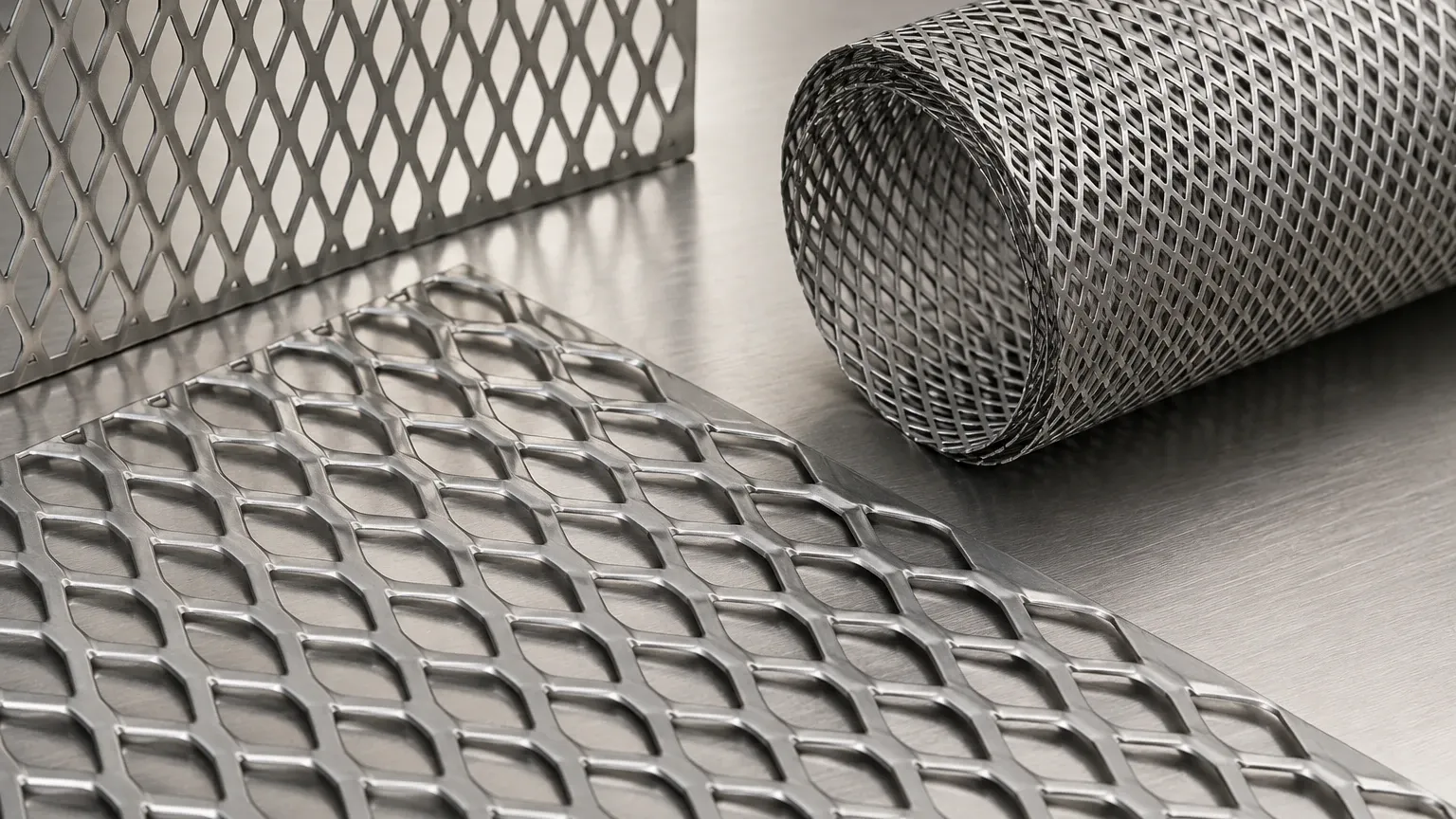
Expanded metal is manufactured by simultaneously slitting and stretching the material. This process creates a diamond pattern without any material waste, making it a cost-effective solution for large-scale industrial projects. The resulting strands and bonds are set at a sharp angle to the plane of the sheet, which adds structural volume and enhances the material's strength-to-weight ratio. This three-dimensional characteristic is particularly useful for jobs requiring high grip (such as walkways) or directional airflow control.
Primary Industrial Jobs for Diamond Perforated Metals
The versatility of the diamond pattern allows these materials to be deployed across a wide range of demanding sectors. Each application represents a specific "job" that the metal must perform reliably over thousands of operational hours.
1. High-Efficiency Filtration and Separation
In the chemical processing and water treatment industries, diamond perforated metals serve as the primary support structure for fine mesh filters or as standalone strainers. The diamond shape is often preferred over round holes in certain hydraulic applications because it can provide a higher open area while maintaining the hoop strength of a cylindrical filter cartridge. These components must withstand significant pressure differentials without deforming, a job that requires high-grade stainless steel (SS304 or SS316L) to prevent corrosion and mechanical failure.
2. Structural Reinforcement and Guarding
Machine guarding is one of the most common diamond perforated metals jobs in manufacturing plants. The diamond pattern provides excellent visibility for operators to monitor equipment while ensuring that hands or debris cannot enter dangerous moving parts. Because expanded diamond metal is rigid and difficult to shear, it is also frequently used for security screens and protective partitions in high-traffic industrial zones.
3. Heat Dissipation and Ventilation
Electronic enclosures and heavy-duty engine housings require constant airflow to prevent overheating. Diamond perforated metals are tasked with the job of facilitating maximum ventilation while blocking electromagnetic interference (EMI) or preventing the ingress of foreign objects. The sharp angles of the diamond pattern can also be engineered to deflect liquid splashes, protecting sensitive internal components in outdoor or wash-down environments.
4. Acoustic Control and Diffusion
In power plants and large-scale HVAC systems, noise mitigation is a regulatory requirement. Perforated diamond metals are used as the facing for acoustic insulation. The pattern allows sound waves to pass through into the absorbing material while protecting the delicate insulation from physical damage. The specific open area of the diamond pattern is calculated to target particular frequency ranges, ensuring the metal performs its acoustic job effectively.
Engineering Selection Criteria for Diamond Patterns
When specifying diamond perforated or expanded metal for industrial jobs, several technical variables must be confirmed to ensure the component meets the application's demands.
Material Selection
Material choice is the foundation of performance. For most industrial filtration and processing jobs, stainless steel is the standard due to its resistance to oxidation and chemical attack.
- Type 304: Suitable for general industrial use, providing good corrosion resistance and formability.
- Type 316/316L: Essential for marine environments, pharmaceutical processing, and chemical handling where chlorides or acids are present.
- Specialty Alloys: For high-temperature jobs, alloys like Inconel or Monel may be required to maintain structural integrity.
Open Area Percentage
The "open area" refers to the total area of the holes divided by the total area of the sheet. This is a critical metric for any job involving fluid or gas flow. A higher open area reduces pressure drop but can compromise the structural strength of the sheet. Engineers must find the "sweet spot" where the diamond pattern provides enough throughput for the process without risking fatigue failure under load.
Gauge and Strand Width
In expanded metal, the thickness of the original sheet (gauge) and the width of the resulting strands determine the material's rigidity. For heavy-duty diamond perforated metals jobs, such as floor grating or debris screens in mining, a heavier gauge is required to resist impact and wear. Conversely, for precision filtration, thinner gauges with micro-diamond openings are utilized.
Fabrication and Customization for OEM Requirements
Standard off-the-shelf metal sheets rarely meet the specific needs of complex industrial systems. Most diamond perforated metals jobs require some level of secondary fabrication. As a professional manufacturer, Kaifil provides comprehensive OEM solutions that transform raw perforated sheets into functional components.
Precision Cutting and Forming
Diamond patterns can be difficult to align during welding if the sheets are not cut with precision. Advanced CNC laser cutting and waterjet services ensure that the edges of the diamond pattern are clean, allowing for seamless integration into larger assemblies. Forming processes, such as rolling perforated sheets into cylinders for filter cartridges, require specialized equipment to ensure the diamond pattern does not distort or lose its dimensional accuracy.
Surface Finishing and Treatment
Depending on the job, the metal may require additional surface treatments:
- Pickling and Passivation: Essential for stainless steel to restore the protective oxide layer after welding.
- Electropolishing: Used in food and pharmaceutical jobs to create a microscopically smooth surface that prevents bacterial growth and eases cleaning.
- Powder Coating: Often applied to architectural or safety-related diamond metals for added corrosion resistance and visibility.
Evaluating Risks in Diamond Metal Procurement
Substandard materials or poor manufacturing can lead to significant operational risks. When sourcing for diamond perforated metals jobs, engineers should be aware of common pitfalls:
1. Burrs and Sharp Edges: In filtration jobs, internal burrs can catch fibers or cause turbulence. In safety jobs, they pose a risk to personnel. High-quality perforated metal should be properly deburred.
2. Inconsistent Pitch: If the spacing between diamonds varies, the structural integrity of the sheet is compromised, leading to "weak spots" that may fail under pressure.
3. Material Substitution: Using low-grade alloys in place of specified stainless steel can lead to rapid corrosion, especially in chemical processing environments. Always verify material certifications (MTRs).
4. Flatness Issues: Expanded metal naturally has a raised profile. If the job requires a flat surface (e.g., for a gasket seal), the material must undergo a "flattening" process through heavy rollers.
The Role of Diamond Patterns in Sustainable Engineering
Modern industrial jobs are increasingly focused on sustainability and resource efficiency. Expanded diamond metal is inherently sustainable because the manufacturing process involves no scrap loss—every ounce of the original sheet is used in the final product. Furthermore, the durability of stainless steel diamond perforated metals means they have a long service life, reducing the need for frequent replacements and minimizing the total cost of ownership.
In filtration systems, the high open area of diamond patterns can lead to lower energy consumption by reducing the pump power required to move fluids through the system. By optimizing the geometry of the diamond openings, engineers can achieve better separation efficiency, which leads to cleaner outputs and less waste in chemical and water treatment processes.
Conclusion: Selecting the Right Partner for Diamond Metal Projects
The success of diamond perforated metals jobs depends on the alignment between engineering requirements and manufacturing capability. Whether you are designing a new hydraulic filtration system, a protective machine guard, or an architectural ventilation panel, the technical nuances of the diamond pattern must be carefully managed.
At Kaifil, we specialize in providing high-performance Perforated & Expanded Metal solutions tailored to the rigorous demands of industrial applications. Our expertise in stainless steel fabrication ensures that every component we produce is engineered for durability, precision, and optimal performance in its designated job. By focusing on material quality and advanced manufacturing techniques, we help our global partners achieve reliable filtration and structural solutions that stand up to the most challenging environments.
Before initiating your next project, confirm the required open area, material grade, and mechanical loads with your technical team. Choosing a manufacturer that understands the engineering behind the diamond pattern is the most effective way to ensure your industrial components perform their jobs without compromise.
