


Kingspan Perforated Metal Panels
In the realm of modern industrial architecture and high-performance building envelopes, the integration of specialized metal components is critical for achieving both functional efficiency and structural durability. Kingspan perforated metal panels represent a sophisticated intersection of aesthetic design and engineering utility, often utilized in facade systems, acoustic damping, and solar shading. For engineers and procurement specialists, understanding the technical nuances of these components—ranging from material grade to open area calculations—is essential for ensuring long-term performance in demanding environments.
While often associated with large-scale architectural cladding, the underlying technology of Perforated & Expanded Metal serves a much broader range of industrial purposes. From providing ventilation in mechanical enclosures to acting as the primary substrate for precision filtration systems, the selection of the right metal panel requires a deep dive into metallurgical properties and mechanical specifications.
Engineering Principles of Perforated Metal Panels
The performance of a perforated metal panel is dictated by its geometric configuration. Engineers must balance the need for structural rigidity with the requirement for transparency, airflow, or sound permeability.
Open Area Calculations
The "Open Area" is perhaps the most critical specification for any perforated panel. It is the ratio of the area of the holes to the total area of the sheet, expressed as a percentage. For a standard 60-degree staggered round hole pattern—the most common and structurally efficient configuration—the formula used is:
Open Area % = (D² × 90.69) / P²
Where *D* is the hole diameter and *P* is the center-to-center pitch. A higher open area allows for better ventilation and light transmission but reduces the overall tensile strength of the panel. In industrial applications, such as machine guarding or filtration support, maintaining a specific open area is vital to prevent pressure drops or overheating in sensitive equipment.
Hole Patterns and Pitch
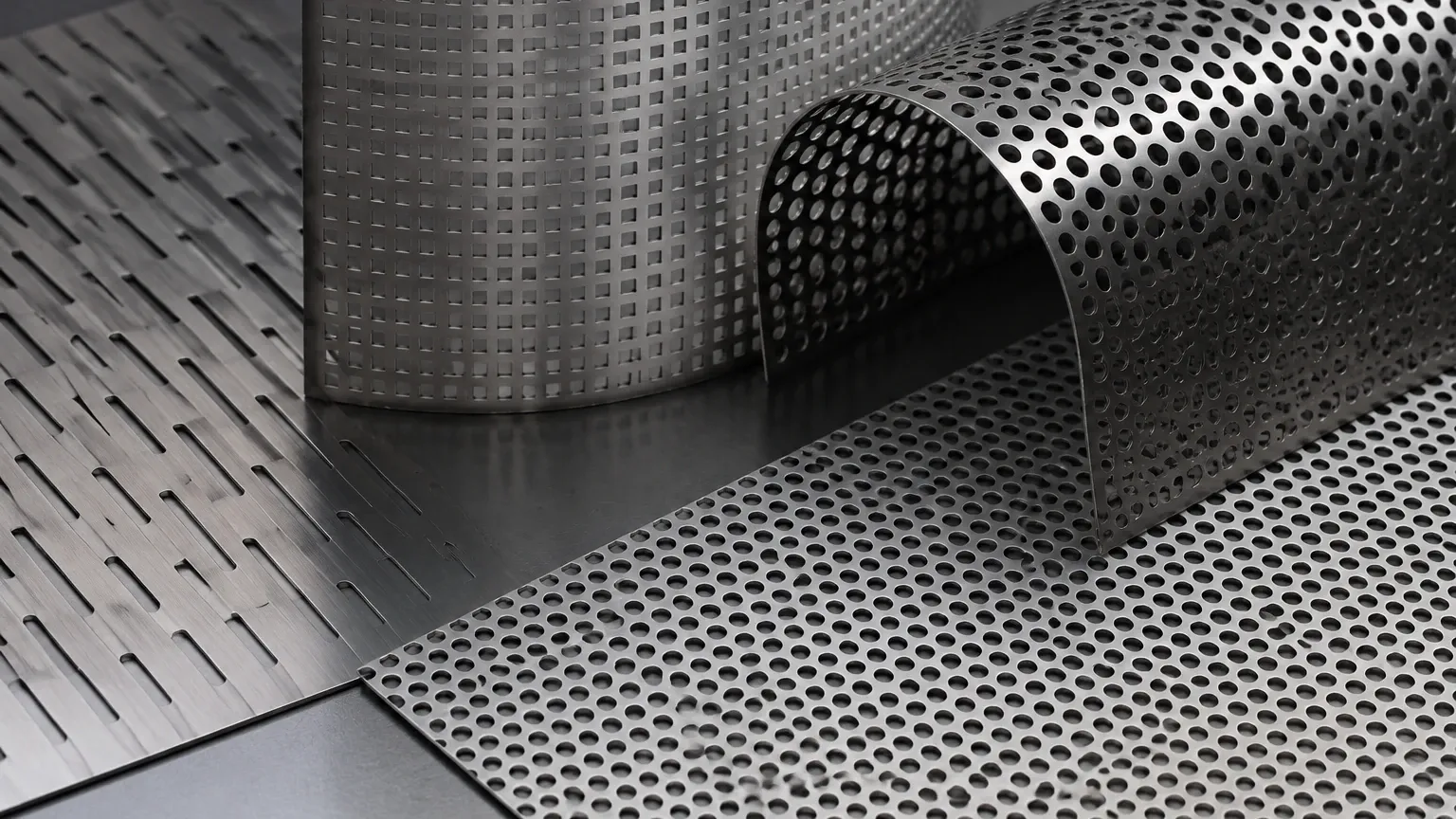
Beyond round holes, panels can be manufactured with square, slotted, or hexagonal patterns. Slotted patterns are frequently used in sorting and sieving applications, while hexagonal patterns offer an extremely high open area (up to 80%) while maintaining a unique aesthetic profile often seen in high-end architectural projects involving kingspan perforated metal panels.
Material Selection: Durability and Environment
Selecting the appropriate alloy is the first step in preventing premature failure due to corrosion, fatigue, or thermal stress. While aluminum is popular for its lightweight properties in architectural facades, industrial environments often demand the superior characteristics of stainless steel.
Stainless Steel Grades (304 vs. 316)
For most indoor or mildly corrosive environments, Type 304 stainless steel provides excellent strength and basic corrosion resistance. However, in chemical processing plants, coastal regions, or applications involving frequent exposure to chlorides, Type 316 stainless steel is the industry standard. The addition of molybdenum in SS316 significantly enhances its resistance to pitting and crevice corrosion, making it the preferred choice for durable metal panels in harsh industrial settings.
Aluminum and Specialized Coatings
In building envelope systems, aluminum is often selected for its high strength-to-weight ratio and natural oxide layer that resists atmospheric corrosion. When integrated into kingspan perforated metal panels, these are often finished with PVDF (Polyvinylidene Fluoride) or powder coatings to provide additional UV protection and color consistency across large surface areas.
Perforated vs. Expanded Metal: Structural Differences
When evaluating options for industrial panels, it is important to distinguish between perforated and expanded metal processes. Both fall under the category of Perforated & Expanded Metal, but they offer different mechanical advantages.
1. Perforated Metal: Created by punching holes into a solid sheet. This process allows for precise control over hole size, shape, and margins (the unperforated area around the edges). It provides a flat, smooth surface that is ideal for filtration and aesthetic cladding.
2. Expanded Metal: Produced by simultaneously slitting and stretching the metal sheet. This creates a diamond-shaped mesh. Because no material is lost during the expansion process, it is often more cost-effective. The resulting three-dimensional structure provides excellent grip for walkways and high structural rigidity for security fencing.
For engineers, the choice between the two often comes down to the required precision. Perforated panels allow for exact hole placement, which is necessary for bolting patterns and specific airflow requirements in HVAC and filtration systems.
Integration with Building Envelopes and Filtration Systems
In architectural applications, kingspan perforated metal panels are frequently used as a "rainscreen" or a secondary skin. This design allows for natural ventilation behind the panel, which helps manage moisture and reduces the thermal load on the building's primary insulation layer. This "breathable" facade is essential for energy-efficient building design.
In industrial filtration, these same perforated structures serve as the "backbone" for more delicate filter media. A stainless steel filter cartridge might use a heavy-gauge perforated core to withstand high differential pressures while supporting a fine wire mesh outer layer. The engineering challenge here is to ensure the perforated support does not introduce turbulence or excessive resistance to the fluid or gas being processed.
Technical Evaluation and Procurement Risks
When sourcing metal panels for a project, several technical factors must be confirmed to avoid installation delays or performance failures. Procurement teams should work closely with manufacturers to verify the following:
Dimensional Tolerances
Standard industrial tolerances for perforated sheets usually follow industry norms (such as those set by the Industrial Perforators Association). However, for custom architectural panels, tighter tolerances may be required to ensure that patterns align perfectly across multiple panels. Engineers should specify tolerances for sheet flatness, squareness, and hole alignment.
Edge Margins and Finishing
One common oversight is the specification of margins. "Minimal margins" mean the perforation goes as close to the edge as possible, while "specified margins" leave a solid border for welding or bolting. Furthermore, the deburring process is essential for industrial panels to ensure safety during handling and to prevent the accumulation of debris in filtration applications.
Load-Bearing Requirements
If the panels are to be used in floor grating, ceiling tiles, or wind-loaded facades, a structural analysis is required. The "Equivalent Solid Material" method is often used to calculate the deflection and stress of perforated metals. This ensures the panel can withstand environmental forces, such as high wind speeds or the weight of maintenance personnel.
Maintenance and Life-Cycle Costs
The total cost of ownership for metal panels is heavily influenced by the maintenance cycle. Stainless steel components, while having a higher initial material cost, often prove more economical over a 20-year cycle due to their minimal maintenance requirements. In contrast, coated carbon steel or certain aluminum alloys may require periodic recoating or specialized cleaning to prevent oxidation.
For industrial filtration components, the "cleanability" of the perforated surface is a key factor. Smooth, electropolished stainless steel surfaces prevent bacterial growth and allow for easier Clean-in-Place (CIP) procedures in food, beverage, and pharmaceutical applications.
Conclusion: Selecting the Right Solution
Whether you are integrating kingspan perforated metal panels into a modern building facade or selecting a heavy-duty perforated core for a chemical filtration system, the technical requirements remain grounded in material science and mechanical engineering. By focusing on the specific needs of the application—be it corrosion resistance, open area precision, or structural load capacity—engineers can ensure they select a solution that balances performance with longevity.
For those seeking specialized industrial components, exploring the full range of Perforated & Expanded Metal options is the best way to find a fit-for-purpose solution. Understanding the manufacturing limits and material possibilities allows for the development of customized filtration and structural components that meet the rigorous demands of today’s industrial landscape.
