


Kode Expanded Metal
In the landscape of industrial filtration and structural support, the term "kode expanded metal" refers to the standardized system of specifications and nomenclature used to define the physical characteristics of expanded metal sheets. For engineers and procurement specialists, understanding these codes is essential for ensuring that a component meets the mechanical and chemical requirements of a specific application. Whether used as a support layer for fine wire mesh or as a standalone filtration medium, expanded metal must be specified with precision to avoid system failures or suboptimal performance.
At Kaifil, we specialize in high-performance Perforated & Expanded Metal solutions, focusing on stainless steel alloys that provide the durability required for chemical processing, pharmaceuticals, and food production. This guide examines the technical parameters within expanded metal coding, material selection criteria, and the engineering considerations necessary for industrial integration.
Understanding the Manufacturing Process and Its Impact on Specifications
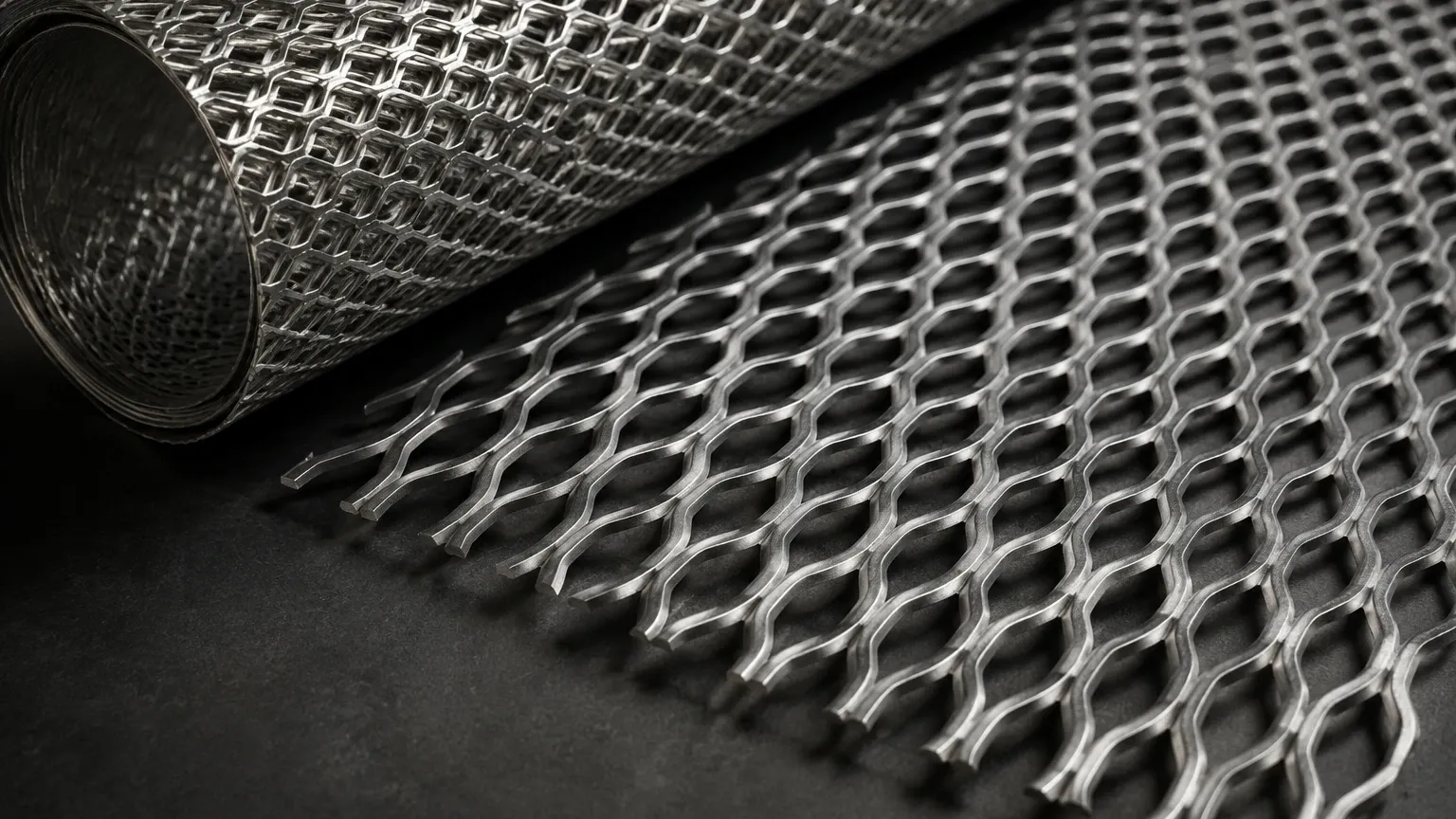
Expanded metal is produced through a process of simultaneous slitting and stretching. Unlike perforated metal, which involves punching out material and creating scrap, expanded metal is formed by expanding a solid sheet into a diamond-patterned mesh. This process results in a product that is structurally integral, as the "bonds" where the strands intersect are part of the original metal sheet rather than welds or joints.
From a technical perspective, the manufacturing process determines the "kode expanded metal" parameters. The pressure applied by the expanding machine and the design of the die dictate the dimensions of the diamond opening. Because the material is stretched, it gains a high strength-to-weight ratio. For filtration applications, this structural rigidity is vital, as it allows the expanded metal to act as a rigid skeleton for more delicate filter media, such as fine stainless steel wire mesh, preventing deformation under high differential pressure.
Deciphering the Technical "Kode": Key Parameters
When reviewing a specification sheet or a "kode expanded metal" catalog, several acronyms and measurements define the product's performance. Understanding these is the first step in successful component selection:
1. SWD and LWD (Short Way of Diamond and Long Way of Diamond)
These measurements refer to the distance from the center of one bond to the center of the next bond.
* SWD (Short Way of Diamond): The dimension across the short axis of the diamond.
* LWD (Long Way of Diamond): The dimension across the long axis of the diamond.
These dimensions are critical for determining the overall mesh density and the size of particles that can pass through the openings in preliminary filtration stages.
2. Strand Width and Thickness
The "strand" is the single metal strip that forms the side of the diamond.
* Strand Width: The amount of metal fed into the machine between slits.
* Strand Thickness: The gauge of the original base metal.
Increasing the strand width and thickness directly enhances the mechanical strength and pressure resistance of the mesh but reduces the percentage of open area.
3. SWO and LWO (Short Way of Opening and Long Way of Opening)
While SWD and LWD measure from bond-to-bond, SWO and LWO measure the actual clear space between the strands. For engineers designing filtration systems, the SWO is often the more critical "kode" because it defines the maximum particle size that can physically transit the mesh.
Material Selection for Industrial Environments
In B2B industrial sectors, the material composition of the expanded metal is as important as its geometric code. While carbon steel is common in architectural applications, industrial filtration often demands the corrosion resistance of stainless steel.
* Stainless Steel 304: The standard grade for general industrial use, offering good corrosion resistance and excellent forming properties. It is widely used in food and beverage applications where sanitation is a priority.
* Stainless Steel 316/316L: Contains molybdenum, which provides superior resistance to chlorides and pitting. This is the preferred material for marine environments, chemical processing, and pharmaceutical manufacturing.
* Specialty Alloys: For high-temperature or highly acidic environments, alloys like Monel or Inconel may be specified within the expanded metal code to ensure longevity and prevent media migration due to material degradation.
At Kaifil, we ensure that the material grade is verified through mill test reports (MTRs), providing the traceability required for critical industrial components.
Expanded Metal vs. Perforated Metal: Engineering Trade-offs
When navigating the options for Perforated & Expanded Metal, engineers must weigh the benefits of each. While both provide filtration and support, their mechanical behaviors differ.
Structural Integrity: Expanded metal is generally stronger per pound than perforated metal because the strands are oriented at an angle to the original plane of the sheet, providing three-dimensional rigidity. This makes it an ideal choice for high-pressure hydraulic filters or large-scale industrial strainers.
Open Area and Flow Rates: Perforated metal allows for more precise control over the percentage of open area, as hole sizes and patterns (staggered vs. straight) can be customized exactly. Expanded metal codes usually result in a fixed range of open areas based on the expansion ratio. However, expanded metal often provides a larger open area than perforated metal of similar strength, which can help reduce pressure drop across the filter element.
Cost Efficiency: Since the expansion process produces no scrap metal, expanded metal is often more cost-effective than perforated metal, especially when using expensive alloys like 316L stainless steel.
Customization and OEM Considerations
Standard "kode expanded metal" products may not always meet the exacting requirements of specialized industrial equipment. Customization is often necessary to optimize filtration performance. Key customization factors include:
* Flattened vs. Raised: Standard expanded metal has a "raised" surface where the strands are canted. For applications requiring a smooth surface—such as when the mesh is in direct contact with a delicate filter membrane—the metal can be "flattened" through a cold-rolling process. This reduces the thickness and creates a level surface.
* Tolerances: In precision engineering, standard commercial tolerances may be insufficient. Specifying tighter tolerances for LWD and SWD ensures that the mesh fits perfectly within machined filter housings, preventing bypass.
* Edge Finishing: Depending on the installation method, expanded metal can be supplied with "random sheared" edges or "bond sheared" edges. Bond shearing provides a cleaner edge with fewer sharp protrusions, which is essential for manual handling and safety during maintenance cycles.
Evaluating Total Cost of Ownership (TCO)
When selecting a "kode expanded metal" for a long-term industrial project, the initial purchase price is only one factor. Engineers should consider the Total Cost of Ownership, which includes:
1. Durability and Replacement Cycles: A higher-grade stainless steel might have a higher upfront cost but significantly longer service life in corrosive environments, reducing downtime and replacement labor.
2. Cleaning Efficiency: In food and pharmaceutical applications, the mesh must be cleanable (CIP – Clean-in-Place). Flattened expanded metal is often easier to sanitize than raised mesh, as it lacks the crevices where bacteria or debris can accumulate.
3. Compatibility: Ensuring the expanded metal is chemically compatible with the process fluid prevents premature failure and contamination of the end product.
Confirming Specifications Before Procurement
Before finalizing a purchase order for expanded metal components, technical teams should confirm the following data points with their manufacturer:
* Exact Alloy Grade: Ensure the material meets the specific ASTM or ISO standards required for the application.
* Dimensional Accuracy: Verify the SWD, LWD, and strand dimensions against the system's flow and pressure requirements.
* Surface Finish: Determine if the application requires pickling, passivation, or electropolishing to enhance corrosion resistance and cleanliness.
* Load-Bearing Requirements: If the expanded metal is acting as a support for other media, calculate the maximum differential pressure it must withstand without permanent deformation.
Kaifil provides comprehensive technical support to help engineers navigate these specifications. By focusing on precision manufacturing and material integrity, we help our partners achieve reliable filtration performance in the most demanding industrial environments. For more detailed technical data and to explore our range of customization options, you can review our Perforated & Expanded Metal product specifications.
In conclusion, the "kode expanded metal" is more than just a part number; it is a complex set of engineering variables that dictate the efficiency, safety, and longevity of industrial filtration systems. By understanding these codes and working with an experienced manufacturer like Kaifil, procurement and engineering teams can ensure they receive components that are perfectly suited to their operational needs.
