


Light Expanded Metal
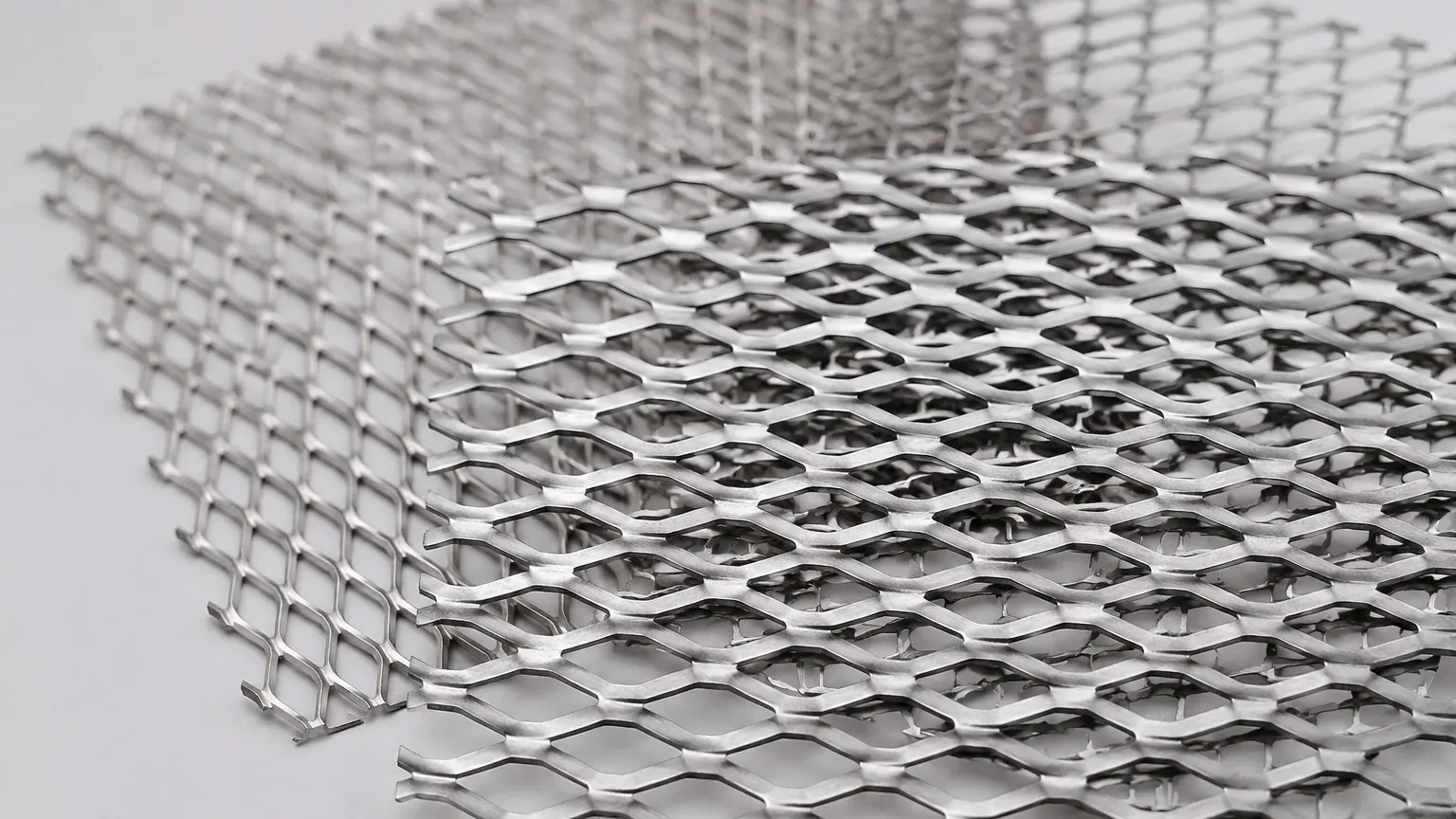
In the landscape of industrial filtration and structural support, light expanded metal represents a critical component for engineers seeking a balance between structural integrity, high open area, and material efficiency. Unlike traditional woven wire or perforated sheets, light expanded metal is manufactured through a unique process of simultaneous slitting and stretching, resulting in a continuous, jointless mesh. For B2B procurement teams and design engineers, understanding the technical nuances of this material is essential for optimizing the performance of filtration systems, protective guards, and precision components.
As a specialized manufacturer, Kaifil focuses on delivering high-performance Perforated & Expanded Metal solutions tailored to the rigorous demands of the chemical, pharmaceutical, and food processing industries. This guide explores the technical specifications, manufacturing advantages, and application-specific considerations of light expanded metal to support informed decision-making in industrial environments.
The Manufacturing Process: Precision Slitting and Stretching
The production of light expanded metal begins with a solid metal sheet or coil, typically of a lighter gauge than standard expanded metal. The material is fed through a machine equipped with precision knives that slit the metal while simultaneously stretching it. This mechanical expansion creates a pattern of diamond-shaped openings.
One of the primary advantages of this process is that it is virtually waste-free. Unlike perforated metal, where the material removed to create holes becomes scrap, expanded metal utilizes the entire original sheet. This efficiency often translates to a more cost-effective solution, especially when working with high-value alloys like 316L stainless steel. Furthermore, because the mesh is formed from a single piece of metal, there are no welds or joints that can fail under mechanical stress or vibrate loose in high-flow applications. This monolithic structure ensures consistent conductivity and structural rigidity throughout the component.
Technical Specifications: Geometric Parameters for Engineers
When specifying light expanded metal for industrial filtration or support, engineers must define several key geometric parameters. These dimensions dictate the flow characteristics, mechanical strength, and filtration efficiency of the final product.
SWD and LWD
* SWD (Short Way of Design): The distance from the center of one bond to the center of the next bond measured across the short diamond diagonal.
* LWD (Long Way of Design): The distance from the center of one bond to the center of the next bond measured across the long diamond diagonal.
In "light" variations, these dimensions are significantly smaller than those found in architectural or heavy industrial expanded metal, often ranging from fractions of a millimeter to a few millimeters. This precision allows the material to serve as an effective support for fine wire mesh or as a primary filter for larger particulates.
Strand Width and Thickness
* Strand Width: The amount of metal fed into the knives between slits.
* Strand Thickness: The original thickness of the base metal sheet.
The ratio between strand width and thickness determines the overall strength and the "open area" of the mesh. For filtration applications, maximizing the open area is often a priority to minimize pressure drop, while maintaining enough strand thickness to resist deformation under high hydraulic pressure.
Raised vs. Flattened Expanded Metal
Light expanded metal is available in two primary forms:
1. Raised (Standard): The strands are set at an angle to the plane of the sheet, providing a three-dimensional texture. This is beneficial for applications requiring high surface area or turbulence-inducing properties in fluid flow.
2. Flattened: The raised mesh is passed through a cold-rolling mill, flattening the strands into the same plane as the original sheet. Flattened light expanded metal is preferred when a smooth surface is required, such as when it is used as a support layer for delicate filter membranes or in sandwich-style filter cartridges.
Material Selection for Demanding Environments
The performance of light expanded metal is heavily dependent on the alloy selected. In the B2B industrial sector, stainless steel is the gold standard due to its durability and resistance to environmental degradation.
* Stainless Steel 304: The most common grade, offering excellent formability and general corrosion resistance. It is suitable for water treatment and standard industrial equipment.
* Stainless Steel 316/316L: Contains molybdenum, which provides superior resistance to chlorides and pitting. This is the preferred choice for marine environments, chemical processing, and pharmaceutical applications where hygiene and corrosion resistance are paramount.
* Specialty Alloys: For extreme environments involving high temperatures or highly acidic/alkaline fluids, materials like Monel, Inconel, or Titanium can be expanded, though these require specialized manufacturing expertise to maintain the integrity of the light-gauge strands.
Light Expanded Metal in Industrial Filtration
In the context of filtration, light expanded metal rarely acts alone. It is most frequently utilized as a structural support or a drainage layer within a multi-layered filter element. Its role is critical in maintaining the geometry of the filter media under operational stress.
Pleat Support in Filter Cartridges
In pleated filter cartridges, light expanded metal is often used as the inner or outer support core. Its rigidity prevents the pleated media from collapsing or "pinching off" when subjected to high differential pressures. The diamond pattern provides a high open area, ensuring that fluid can pass through the support layer with minimal resistance, thereby optimizing the total effective filtration area.
Pre-Filtration and Debris Guards
For systems handling fluids with large, sharp, or heavy debris, a layer of light expanded metal can serve as a primary pre-filter. It protects more delicate downstream components, such as fine wire mesh or polymer membranes, from mechanical damage. Its robust construction allows it to withstand the impact of solids that might tear or deform lighter woven materials.
Coalescing and Separation
The three-dimensional nature of raised light expanded metal is often leveraged in oil-water separation or mist elimination. The angled strands provide multiple impingement surfaces that encourage small droplets to coalesce into larger ones, facilitating easier separation from the gas or liquid stream.
Selection Criteria: Beyond the Basics
When purchasing light expanded metal for OEM or project-based applications, procurement teams should evaluate several factors beyond simple dimensions:
1. Tolerance Requirements: In precision engineering, even slight variations in SWD or LWD can affect the fit-up in a filter housing. Confirming the manufacturer's ability to hold tight tolerances is essential.
2. Edge Treatment: Expanded metal can have "open" or "closed" edges. For components that will be handled frequently or integrated into automated assembly lines, deburring or specialized edge finishing may be necessary to prevent snagging or injury.
3. Surface Cleanliness: In pharmaceutical and food-grade applications, the material must be free of lubricants and oils used during the expansion process. Specifying ultrasonic cleaning or chemical passivation ensures compliance with industry standards.
4. Flow Characteristics: Engineers should request data on the percentage of open area. A higher open area reduces the energy required to pump fluids through the system, contributing to lower long-term operational costs.
Quality Control and Customization
Kaifil emphasizes a technical approach to manufacturing, recognizing that every industrial application has unique constraints. Customization in light expanded metal goes beyond choosing a material; it involves optimizing the mesh geometry to match the specific pressure and flow requirements of the client’s system.
Quality control is a non-negotiable aspect of B2B supply chains. Reliable manufacturers provide material certifications (MTRs) to verify alloy composition and perform rigorous dimensional inspections. For filtration components, ensuring the consistency of the expansion process is vital, as any irregularity in the mesh pattern can create localized high-velocity zones, leading to premature wear or bypass in the filter media.
Evaluating Total Cost of Ownership
While the initial purchase price is a factor, the total cost of ownership (TCO) of light expanded metal is determined by its service life and the protection it affords to more expensive system components. Stainless steel expanded metal, while more costly than carbon steel or plastic alternatives, offers a significantly longer lifecycle in corrosive environments. Its ability to be cleaned and reused in certain applications further enhances its value proposition.
Furthermore, the structural support provided by expanded metal can extend the life of expensive filter membranes. By preventing pleat collapse and distributing pressure evenly, the expanded metal ensures that the filter operates at peak efficiency for a longer duration, reducing the frequency of maintenance shutdowns and replacement costs.
Conclusion
Light expanded metal is a versatile, efficient, and robust material that serves as a cornerstone in modern industrial filtration and engineering design. Whether used as a rigid support core in a high-pressure hydraulic filter or as a protective screen in a chemical reactor, its jointless construction and high open area provide performance benefits that other materials cannot easily replicate.
For engineers and purchasing professionals, the key to success lies in selecting a partner who understands the technical demands of the application. By focusing on material purity, geometric precision, and application-specific customization, Kaifil helps global customers achieve reliable and cost-effective filtration solutions. When considering your next project involving Perforated & Expanded Metal, prioritize technical compatibility and manufacturing quality to ensure long-term system integrity.
