


Lowes Perforated Metal
In the realm of industrial maintenance and small-scale prototyping, the search for "lowes perforated metal" often represents a starting point for engineers and maintenance managers looking for immediate, off-the-shelf solutions. While retail hardware outlets provide a valuable service for general-purpose applications, decorative projects, or emergency repairs, the transition from a hardware store product to a high-performance industrial filtration component requires a deeper understanding of material science, precision engineering, and manufacturing tolerances.
For industrial-scale operations—particularly in chemical processing, food and beverage production, and pharmaceutical manufacturing—the requirements for Perforated & Expanded Metal go far beyond the standard sheets found in a local warehouse. This article examines the technical distinctions between retail-grade and industrial-grade perforated metal, providing engineers with the criteria necessary to select the right materials for demanding environments.
Understanding the Basics: Perforated vs. Expanded Metal
Before evaluating procurement sources, it is essential to distinguish between the two primary types of metal mesh used in industrial settings. While both offer open areas for flow and filtration, their manufacturing processes and mechanical properties differ significantly.
Perforated Metal
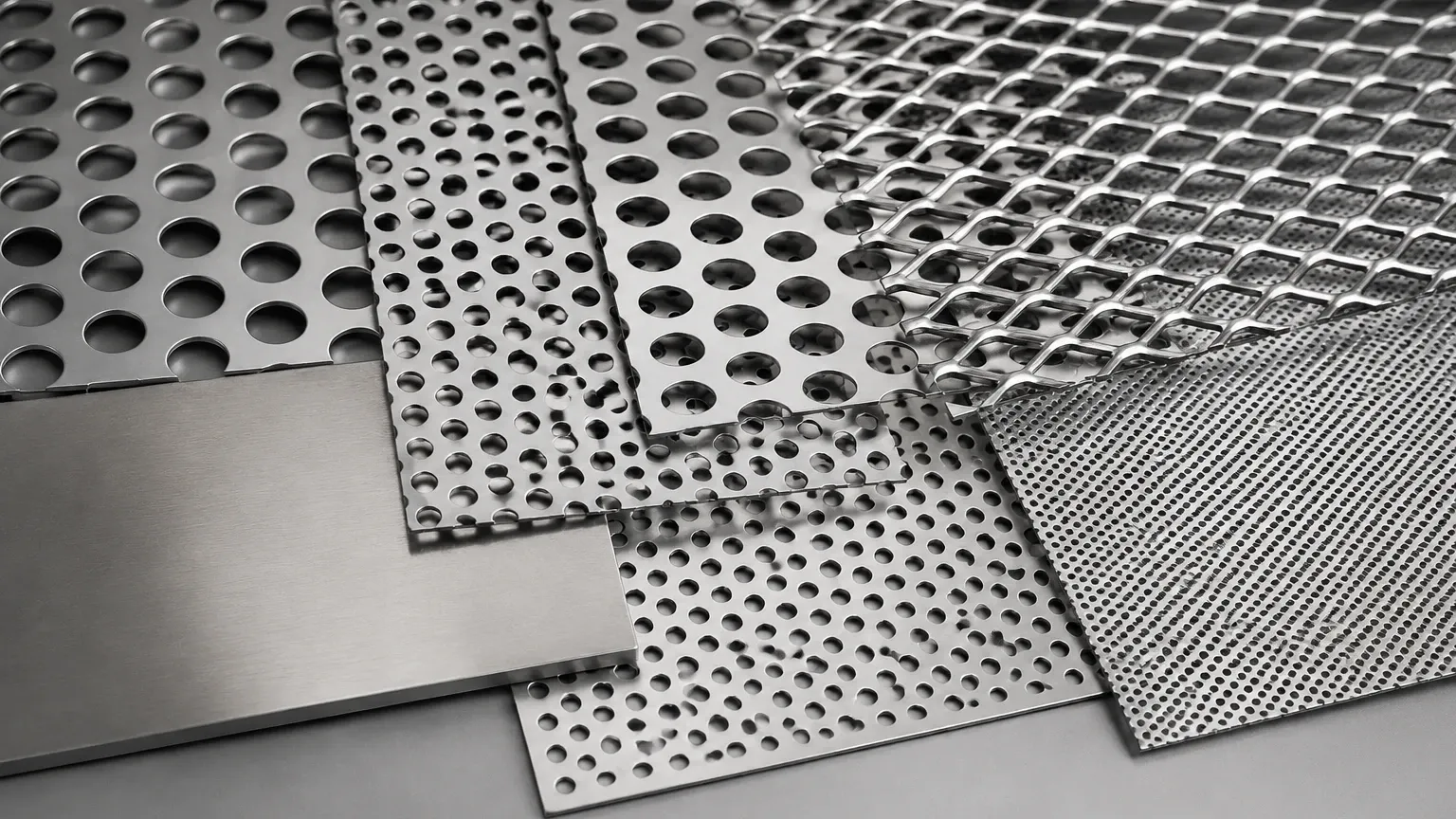
Perforated metal is produced by punching a series of holes into a solid metal sheet. This process allows for extreme precision in hole size, shape, and spacing. In industrial filtration, perforated metal serves as a robust support structure for finer wire mesh or as a primary filter for coarse particles. The ability to control the "open area" percentage is critical for managing flow rates and pressure drops across a system.
Expanded Metal
Expanded metal is created by simultaneously slitting and stretching a metal sheet. This process creates diamond-shaped openings without any material waste, making it a cost-effective alternative for many applications. Unlike perforated metal, expanded metal has a three-edged texture (unless flattened), which can provide additional surface area and structural rigidity. However, it offers less precision in terms of exact aperture size compared to perforated options.
Retail vs. Industrial Grade: Why Specifications Matter
When an engineer searches for "lowes perforated metal," they are typically encountering consumer-grade materials. While suitable for residential or light commercial use, these products often fall short in industrial environments for several technical reasons.
1. Material Composition and Traceability
Retail outlets usually stock "general purpose" aluminum, galvanized steel, or 304 stainless steel. In contrast, industrial manufacturers like Kaifil provide high-grade 316L stainless steel, titanium, or specialized alloys. In the pharmaceutical and chemical industries, material traceability (MTRs) is mandatory to ensure the metal can withstand corrosive agents and high temperatures without leaching contaminants into the process stream.
2. Tolerance and Precision
Standard retail sheets often have wider tolerances regarding hole alignment and sheet flatness. For an OEM manufacturer integrating a filter cartridge into a high-pressure hydraulic system, a deviation of even a fraction of a millimeter can lead to bypass issues or mechanical failure. Industrial-grade perforated metal is manufactured to tight tolerances, ensuring that every hole aligns perfectly with the housing and support components.
3. Open Area Calculations
The "open area" is the ratio of the holes to the total area of the sheet. In industrial filtration, this calculation is vital for determining the flow capacity of the filter. Retail products may not provide verified open area percentages, whereas industrial suppliers provide calculated data to help engineers predict pressure drop and filtration efficiency.
Engineering Considerations for Industrial Selection
Selecting the right perforated or expanded metal for a B2B application involves several engineering variables. If your project has moved beyond the capabilities of a standard retail sheet, consider the following factors:
Hole Patterns and Pitch
The arrangement of holes—whether staggered or straight—affects both the strength of the sheet and the flow characteristics.
- Staggered Patterns: Usually 60 degrees, these offer the highest strength-to-weight ratio and are the most common for industrial filtration.
- Straight Patterns: These are easier to align for specific aesthetic or mechanical requirements but offer less structural integrity under high pressure.
Edge and Margin Requirements
One of the primary limitations of retail-bought metal is the lack of custom margins. Industrial perforated metal can be manufactured with "blank" or unperforated margins, which are essential for welding the sheet into a cylinder or mounting it into a frame. Without these margins, the structural integrity of the weld is compromised, leading to premature failure in vibrating or high-pressure environments.
Surface Finish and Treatment
In food and beverage or pharmaceutical applications, the surface finish is a critical safety factor. Industrial filters often undergo electropolishing or passivating to remove burrs and ensure a smooth, easy-to-clean surface that prevents bacterial growth. Retail-grade perforated metal often retains sharp edges from the punching process, which can trap particles and make sterilization impossible.
Applications in Demanding Industries
Industrial-grade perforated and expanded metals are utilized in environments where a failure in filtration could lead to significant downtime or product contamination.
Chemical Processing
In chemical plants, filters must withstand aggressive solvents and acids. Using a standard galvanized sheet from a retail source would result in rapid corrosion. Instead, engineers specify 316L stainless steel perforated tubes that provide the mechanical strength to support fine mesh layers while resisting chemical attack.
Food and Beverage
Filtration in the food industry requires materials that are FDA-compliant and capable of withstanding Clean-in-Place (CIP) procedures. Custom-fabricated perforated baskets are used to strain solids from liquids, requiring precise hole sizes to ensure product consistency and safety.
Hydraulic Systems
High-pressure hydraulic systems utilize perforated metal as a core support for filter elements. The metal must be able to resist collapsing under the immense pressure of the fluid while maintaining a consistent flow path. This requires specific gauge thicknesses and hole geometries that are rarely available in standard retail inventories.
Total Cost of Ownership: Beyond the Initial Purchase
While the price point of a "lowes perforated metal" sheet may seem attractive for a quick fix, the total cost of ownership (TCO) in an industrial setting tells a different story.
1. Durability: Industrial-grade materials last significantly longer in harsh environments, reducing the frequency of replacements.
2. Efficiency: Precisely engineered open areas minimize energy consumption by reducing the load on pumps and compressors.
3. Risk Mitigation: Using certified materials prevents costly batches of contaminated products or catastrophic equipment failure.
For purchasing teams, the goal is to balance the immediate need for a component with the long-term operational stability of the facility. Partnering with a specialized manufacturer allows for the development of custom filtration solutions that are tailored to the specific flow rates, temperatures, and chemical exposures of the application.
Confirming Specifications Before Procurement
Before moving from a retail search to an industrial order, engineering teams should confirm the following data points with their supplier:
- Material Grade: Is 304 sufficient, or does the environment require 316L or a specialty alloy?
- Hole Diameter and Pitch: What is the exact aperture required for the target particle size?
- Gauge Thickness: Will the metal support the pressure differential of the system?
- Margin Dimensions: Are blank areas needed for welding or mechanical fastening?
- Compliance: Does the material meet industry-specific standards (e.g., 3A, FDA, or ISO)?
Conclusion
While "lowes perforated metal" serves a purpose in the consumer and DIY markets, industrial filtration demands a higher level of precision, material integrity, and customization. For engineers and technical professionals, selecting the right Perforated & Expanded Metal is a critical step in ensuring the efficiency and longevity of their filtration systems. By focusing on technical specifications—such as material grade, open area, and custom margins—companies can move beyond temporary fixes and implement reliable, high-performance filtration solutions that meet the rigors of modern industry.
Kaifil specializes in bridging the gap between standard metal products and high-precision industrial components. Whether you are developing a new OEM filtration system or upgrading an existing process, understanding the engineering nuances of perforated materials is the key to optimized performance.
