


Mcnichols Perforated Metal Panels
In the landscape of industrial filtration and structural engineering, perforated metal panels represent a critical component for fluid dynamics, particle separation, and mechanical protection. While many engineers and procurement specialists search for mcnichols perforated metal panels as a benchmark for quality and availability, understanding the underlying technical specifications and manufacturing variables is essential for selecting the right solution for demanding industrial environments.
Perforated metal is produced by mechanically punching or laser-cutting holes into metal sheets, creating a pattern of openings that allow for the passage of air, light, or liquid while retaining structural integrity. For applications ranging from chemical processing to food-grade filtration, the choice of material, hole geometry, and precision tolerances determines the long-term efficiency and cost-effectiveness of the installation.
Understanding the Industry Standard for Perforated Metal Panels
When evaluating mcnichols perforated metal panels or similar industrial-grade products, the primary focus is often on the versatility of the material. These panels are utilized across diverse sectors, including pharmaceutical manufacturing, hydraulic systems, and architectural design. The standard for these panels is defined by their consistency in hole size, spacing (pitch), and flatness.
Industrial perforated panels must withstand significant mechanical stress, especially when used as support structures for finer filter media or as primary strainers in high-pressure pipelines. The durability of the panel is not merely a function of the thickness (gauge) of the metal but also the configuration of the perforation pattern. Engineers must balance the "open area" percentage—which dictates flow rate and pressure drop—against the remaining metal's ability to resist deformation under load.
Technical Specifications: Hole Patterns and Open Area Calculations
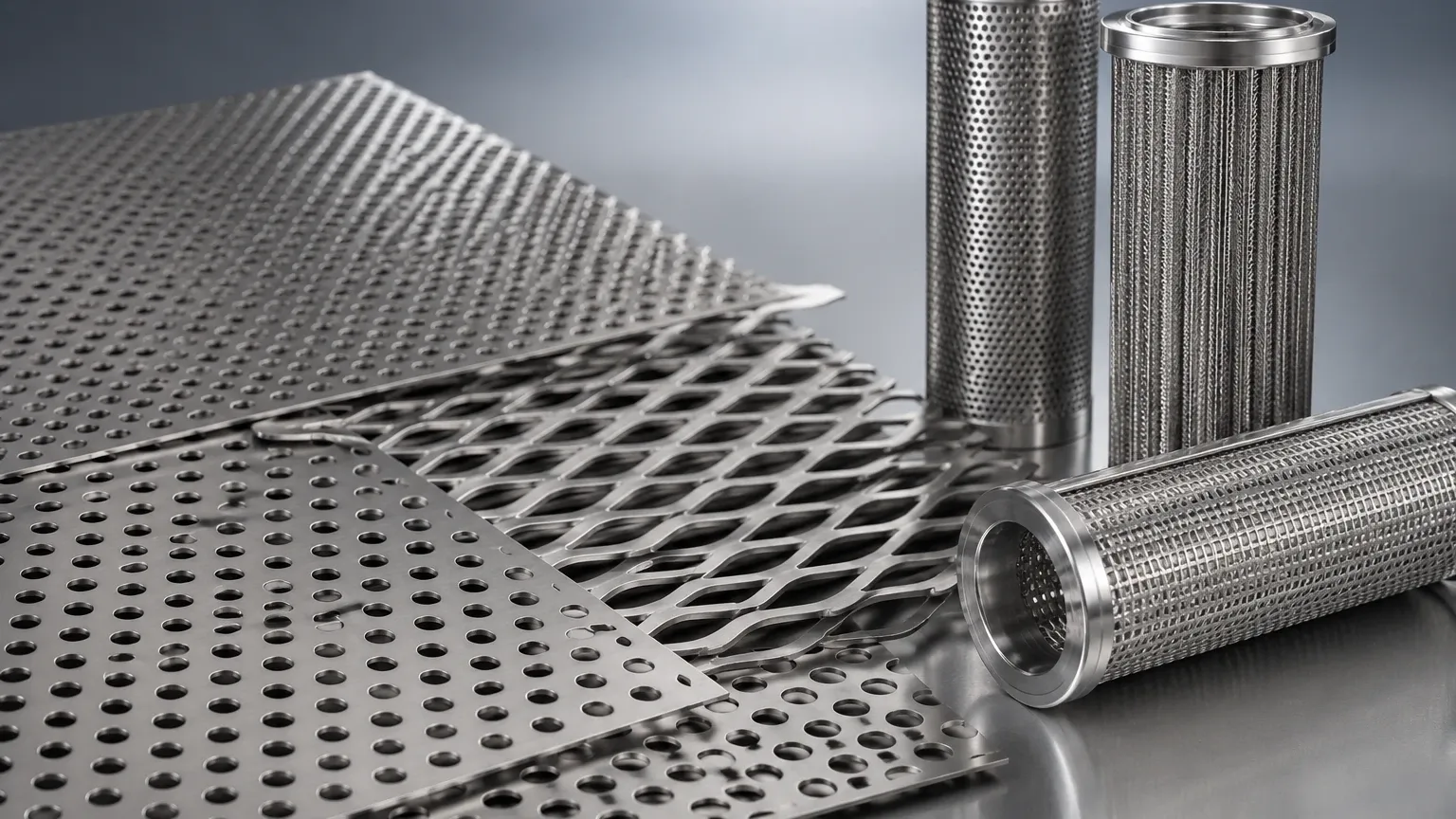
The performance of Perforated & Expanded Metal is governed by the geometry of its openings. The most common configurations include:
* Round Holes: The most popular choice due to its manufacturing efficiency and structural strength. Round holes are typically arranged in a 60-degree staggered pattern, which provides the highest open area while maintaining panel rigidity.
* Square Holes: Often selected for applications requiring a higher open area or for aesthetic purposes in architectural panels. However, square holes can create stress concentrations at the corners, making them less ideal for high-pressure filtration.
* Slotted Holes: Frequently used in sorting and sifting applications where elongated particles or fibers need to be managed. These can be oriented in side-staggered or end-staggered patterns.
Calculating the open area is a vital step in the engineering process. For a standard 60-degree staggered round hole pattern, the formula involves the hole diameter (D) and the center-to-center spacing or pitch (P). The open area percentage directly impacts the velocity of the fluid passing through the panel and the resulting pressure differential. An incorrectly calculated open area can lead to system inefficiencies, such as pump cavitation or premature clogging of the filtration system.
Material Selection for High-Performance Filtration
Material compatibility is a non-negotiable factor in industrial procurement. While carbon steel may be suitable for dry, non-corrosive environments, most professional filtration applications require stainless steel or specialized alloys.
Stainless Steel (304 and 316L)
Stainless steel is the preferred material for the majority of industrial perforated panels. Grade 304 offers excellent corrosion resistance for general applications, while Grade 316L (low carbon) is essential for chemical processing and marine environments due to its superior resistance to pitting and crevice corrosion in chloride-rich settings. In the food and beverage industry, 316L is often mandated to meet hygiene and sanitation standards.
Aluminum and Specialized Alloys
For applications where weight reduction is critical, such as in aerospace or portable filtration units, aluminum perforated panels offer a high strength-to-weight ratio. In extreme environments involving high temperatures or highly acidic fluids, alloys like Monel, Inconel, or Hastelloy may be required to ensure the longevity of the filter component.
Manufacturing Nuances: Perforated vs. Expanded Metal
It is common for technical teams to compare perforated metal with expanded metal. While both provide open areas for flow, their manufacturing processes and physical properties differ significantly.
* Perforated Metal: Created by punching holes out of a solid sheet. This process allows for precise margins (unperforated edges) and a wide variety of hole shapes. It is generally easier to weld and form into cylinders or custom cartridges.
* Expanded Metal: Produced by simultaneously slitting and stretching the metal sheet. This process creates a diamond-shaped pattern and results in no material waste. Expanded metal is often more cost-effective for large-scale structural use but lacks the precision and smooth surface finish required for fine filtration applications.
In filtration systems, perforated metal is frequently used as the outer protective cage or the inner core of a filter cartridge, providing the necessary mechanical support for wire mesh or fiber media. The precision of the punching process ensures that the filter elements fit perfectly within the housing, preventing bypass and ensuring 100% filtration efficiency.
Critical Evaluation Criteria for Industrial Procurement
When sourcing mcnichols perforated metal panels or custom-manufactured alternatives, engineers should confirm several critical factors to avoid operational risks:
1. Tolerances: Standard commercial tolerances may not be sufficient for precision machinery. Specify the required tolerance for hole diameter, pitch, and sheet dimensions.
2. Flatness and Burrs: The punching process can introduce stresses that cause the metal to bow. Additionally, the underside of the punched hole may have burrs. For filtration applications, panels should be leveled and deburred to prevent damage to secondary filter layers and to ensure safe handling.
3. Margins: Unperforated borders (margins) are essential for welding and mounting. Clear specifications on the width of the margins on all four sides of the panel are necessary for successful integration into the final product.
4. Surface Finish: Depending on the application, panels may require electropolishing, degreasing, or powder coating. In pharmaceutical and food industries, a smooth, burr-free surface is critical to prevent bacterial growth and facilitate cleaning (CIP/SIP processes).
Custom Engineering and OEM Filtration Solutions
While off-the-shelf mcnichols perforated metal panels serve many standard needs, complex industrial applications often require customized solutions. Custom manufacturing allows for the optimization of hole patterns to match specific flow dynamics, the integration of mounting flanges, and the fabrication of complex shapes such as conical strainers or multi-layered filter baskets.
Working with a manufacturer that specializes in custom stainless steel filtration provides the advantage of technical consultation. Engineers can determine the optimal balance between filtration accuracy and structural durability. For instance, in hydraulic systems, the perforated support core must be engineered to withstand high collapse pressures, which requires a specific combination of material thickness and hole density.
Common Risks and Mitigation in Panel Selection
The most common risk in selecting perforated metal is underestimating the environmental impact on the material. Using a lower-grade alloy to save on initial costs often leads to accelerated corrosion, which can contaminate the process fluid and lead to catastrophic system failure. Furthermore, ignoring the "transparency" or open area requirements can lead to excessive energy consumption as pumps work harder to overcome the resistance of the filter.
To mitigate these risks, procurement teams should provide suppliers with a comprehensive application profile, including:
* Operating temperature and pressure.
* Chemical composition of the fluid.
* Required flow rate.
* Target particle size for retention.
* Mechanical load requirements.
Installation and Maintenance Considerations
The longevity of perforated metal panels is also dependent on proper installation and maintenance. In filtration assemblies, panels should be securely fastened to prevent vibration, which can lead to fatigue cracking over time. Regular inspection for signs of erosion, scaling, or localized corrosion is recommended, especially in high-velocity systems.
For panels used in straining applications, the ease of cleaning is a major factor in total cost of ownership. Stainless steel panels with smooth, polished surfaces resist the buildup of solids and are more responsive to backwashing or ultrasonic cleaning. Understanding the replacement cycle is also vital; while stainless steel is durable, it is not infinite. Establishing a baseline for pressure drop across the panel allows operators to identify when a component is reaching the end of its functional life due to permanent fouling or structural wear.
In conclusion, whether specifying mcnichols perforated metal panels or seeking a custom-engineered filtration component, the focus must remain on technical precision and material integrity. By prioritizing engineering specifications over generic marketing claims, industrial professionals can ensure their filtration systems operate with maximum reliability and efficiency.
