


Metal Perforated Metal
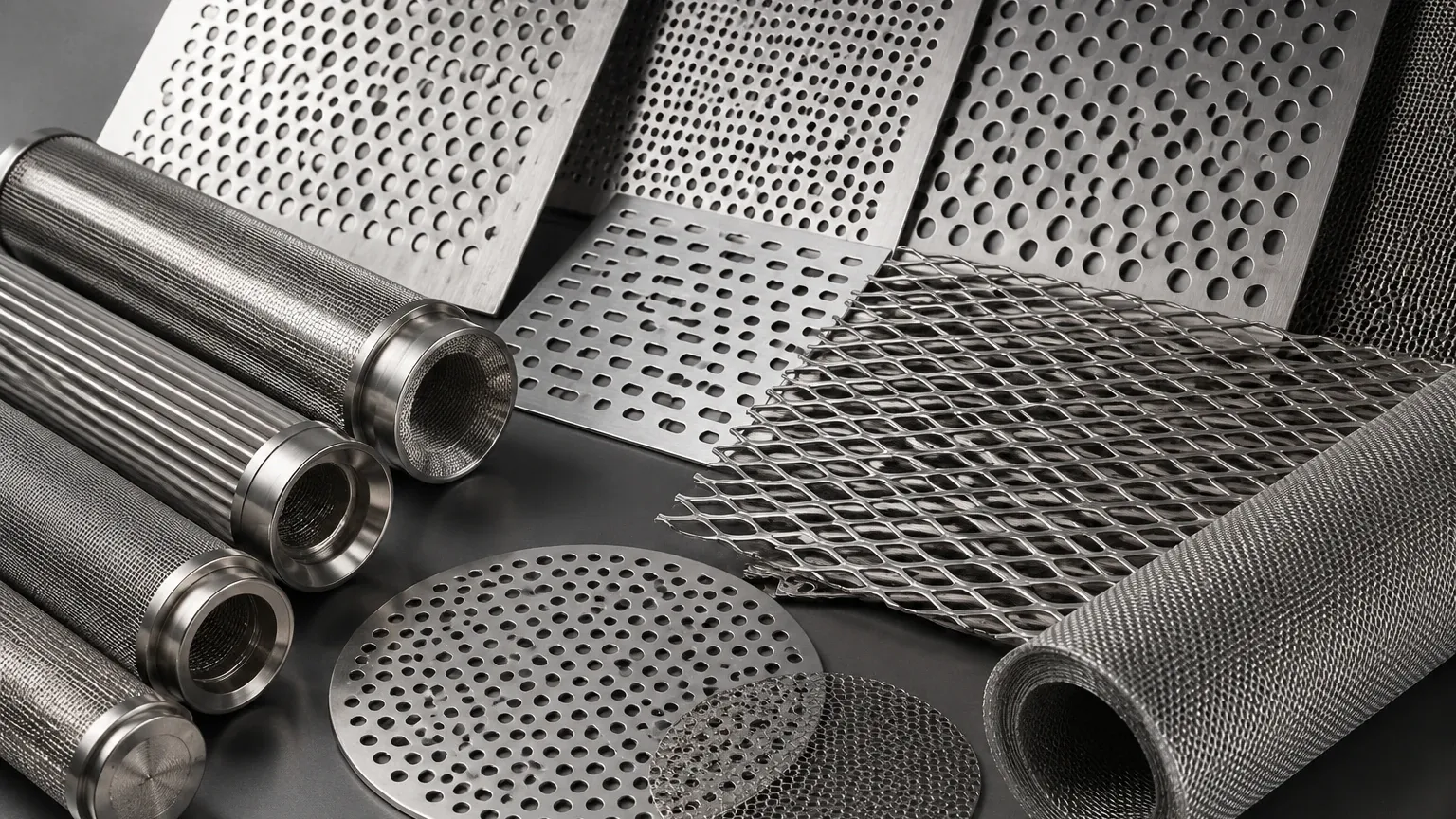
In the landscape of industrial filtration and structural engineering, metal perforated metal serves as a fundamental component for fluid management, particle separation, and mechanical protection. Often referred to as perforated sheet or punched metal, this material is characterized by a systematic pattern of holes, slots, or decorative shapes stamped or punched into a metal substrate. For engineers and procurement specialists, selecting the correct specification of metal perforated metal is not merely a matter of aesthetics; it is a critical decision that impacts flow rates, pressure drops, structural integrity, and the overall lifespan of the filtration system.
At Kaifil, we recognize that industrial environments—ranging from chemical processing plants to food production facilities—demand high-performance materials that can withstand corrosive substances and high-pressure differentials. Understanding the technical nuances of perforated and expanded metal is essential for optimizing filtration efficiency and ensuring system reliability.
The Engineering Fundamentals of Metal Perforated Metal
The manufacturing of metal perforated metal involves a precise punching process where a series of dies are used to remove material from a solid sheet or coil. This process allows for high dimensional accuracy and the ability to maintain specific margins (unperforated areas) around the edges of the sheet, which is vital for subsequent welding or mounting into filter housings.
Material Selection and Chemical Compatibility
The choice of material is the primary determinant of the component's performance in challenging environments. In the realm of industrial filtration, stainless steel is the preferred substrate due to its inherent resistance to oxidation and chemical attack.
* Grade 304 Stainless Steel: This is the standard industrial grade, offering excellent formability and resistance to many corrosive agents. It is widely used in food and beverage applications where hygiene and moderate corrosion resistance are required.
* Grade 316 Stainless Steel: For more demanding environments, such as marine applications or chemical processing involving chlorides, Grade 316 is the benchmark. The addition of molybdenum enhances its resistance to pitting and crevice corrosion.
* Specialty Alloys: In high-temperature or extreme chemical environments, alloys like Monel, Inconel, or Hastelloy may be utilized to ensure the structural integrity of the metal perforated metal remains intact over long service cycles.
Perforated & Expanded Metal: Understanding the Differences
When specifying filtration media or support structures, engineers often evaluate both Perforated & Expanded Metal solutions. While they may appear similar in function, their manufacturing processes and mechanical properties differ significantly.
Perforated Metal Characteristics
Perforated metal is created by punching holes into a sheet. This process allows for a wide variety of hole shapes (round, square, slotted, hexagonal) and precise control over the "open area" percentage. Because the material is punched, the resulting sheet remains flat and retains much of its original stiffness, making it an ideal support core for wire mesh filters or as a standalone strainer in high-pressure hydraulic systems.
Expanded Metal Characteristics
Expanded metal is produced by simultaneously slitting and stretching the metal sheet. This process creates diamond-shaped openings without any material waste. While expanded metal offers a high strength-to-weight ratio and excellent grip, it typically has a raised profile (unless flattened) and less precise control over the exact filtration rating compared to perforated options. In filtration, expanded metal is frequently used as a protective outer guard or a coarse pre-filter.
Technical Specifications and Hole Geometry
The performance of metal perforated metal in a filtration context is dictated by its geometry. Engineers must specify several key parameters to ensure the component meets the application's hydraulic requirements.
Hole Patterns
* Staggered Pattern: This is the most common configuration for industrial filtration. By staggering the holes (usually at a 60-degree angle), manufacturers can maximize the open area while maintaining the structural strength of the metal bridges between the holes. This pattern provides uniform flow and prevents "dead zones" in the fluid stream.
* Straight Pattern: Holes are aligned in both vertical and horizontal rows. While simpler to manufacture, straight patterns generally offer lower open area percentages and less structural stability than staggered configurations.
* Slotted Holes: Often used for viscous fluids or materials with elongated particles, slotted perforations help prevent blinding (clogging) and facilitate easier cleaning.
Open Area Calculation
The open area is the ratio of the total area of the holes to the total area of the sheet, expressed as a percentage. This is a critical metric for calculating flow velocity and pressure drop. A higher open area reduces resistance to flow but may compromise the mechanical strength of the sheet. For example, a 60-degree staggered round hole pattern's open area is calculated using the formula:
`Open Area % = (D² x 90.69) / P²`
*(Where D is the hole diameter and P is the pitch/center-to-center distance)*
Applications in Industrial Filtration
Metal perforated metal is a versatile component used across various sectors. Its role often alternates between being the primary filtration medium and acting as a secondary support structure.
Chemical and Petrochemical Processing
In these industries, perforated metal components must resist aggressive solvents and high temperatures. They are often used as internal supports for catalyst baskets or as strainers in pipeline systems to protect sensitive pumps and valves from debris.
Food and Beverage Production
Hygiene is paramount in food processing. Perforated stainless steel is used in centrifugal screens, grain drying, and juice extraction. The smooth surface of punched metal allows for effective Clean-in-Place (CIP) procedures, reducing the risk of bacterial growth in the filtration system.
Hydraulic and Lubrication Systems
High-pressure hydraulic systems require robust filtration to protect precision components. Metal perforated metal often serves as the inner core of a filter cartridge, providing the necessary collapse strength to support fine wire mesh or pleated fiber media under extreme pressure differentials.
Customization and Engineering Considerations
One of the primary advantages of working with a professional manufacturer like Kaifil is the ability to customize metal perforated metal to meet specific engineering tolerances. Standard off-the-shelf sheets rarely meet the specialized needs of high-performance industrial equipment.
Precision and Tolerances
When ordering perforated components, engineers must define tolerances for hole diameter, pitch, and sheet flatness. In high-speed rotating machinery or precision filtration housings, even minor deviations can lead to vibration, bypass, or mechanical failure.
Secondary Operations
To ensure the metal perforated metal is ready for assembly, several secondary processes may be required:
* Deburring: Removing the sharp edges created during the punching process is essential for safety and to prevent turbulence in the fluid stream.
* Leveling: Ensuring the sheet is perfectly flat after the stress of perforation.
* Forming: Rolling or bending the perforated sheet into cylinders or cones for use in filter cartridges.
* Surface Finishing: Electropolishing or pickling to enhance corrosion resistance and provide a smooth, contaminant-free surface.
Evaluating Total Cost of Ownership (TCO)
While the initial purchase price of metal perforated metal is a factor, procurement teams should focus on the Total Cost of Ownership. A lower-quality perforated sheet may suffer from premature fatigue, corrosion, or clogging, leading to frequent downtime and replacement costs.
* Durability: High-quality stainless steel and proper gauge thickness ensure the component can withstand repeated cleaning cycles and pressure surges.
* Filtration Efficiency: Correctly calculated open areas and hole patterns optimize energy consumption by reducing the load on pumps.
* Maintenance Cycles: Well-engineered perforated components are easier to clean and maintain, extending the service life of the entire filtration assembly.
Pre-Purchase Checklist for Engineers
Before finalizing a specification for metal perforated metal, the following technical details should be confirmed with the manufacturer:
1. Material Grade: Is the alloy compatible with the fluid chemistry and temperature?
2. Hole Size and Pitch: Does the geometry provide the required filtration rating and open area?
3. Sheet Thickness (Gauge): Is the material thick enough to resist deformation under the expected pressure load?
4. Margins: Are specific unperforated borders required for welding or mechanical fastening?
5. Finish Requirements: Does the application require deburring, electropolishing, or specialized coatings?
6. Quantity and Lead Time: Does the production volume align with project timelines?
By addressing these factors early in the design phase, engineers can ensure that the selected metal perforated metal provides reliable, long-term performance in their specific industrial application. Whether used as a robust support for delicate filter media or as a primary screening element, the quality of the perforation remains a cornerstone of industrial process efficiency.
