


Metal Perforated Steel
In the landscape of industrial filtration and structural engineering, metal perforated steel serves as a fundamental component for managing fluid dynamics, mechanical support, and particle separation. Unlike standard woven wire mesh, perforated steel offers a rigid, self-supporting structure that can withstand high-pressure differentials and mechanical stress. For engineers and procurement teams, understanding the technical nuances of hole patterns, material grades, and fabrication tolerances is essential for optimizing the performance of filtration systems.
As a specialized material, metal perforated steel is created through a punching process where a series of holes are mechanically pressed into a solid metal sheet. This process allows for precise control over the open area, hole diameter, and pitch, making it an ideal choice for applications ranging from coarse strainers to the internal support cores of high-precision filter cartridges.
Engineering Fundamentals: Patterns and Open Areas
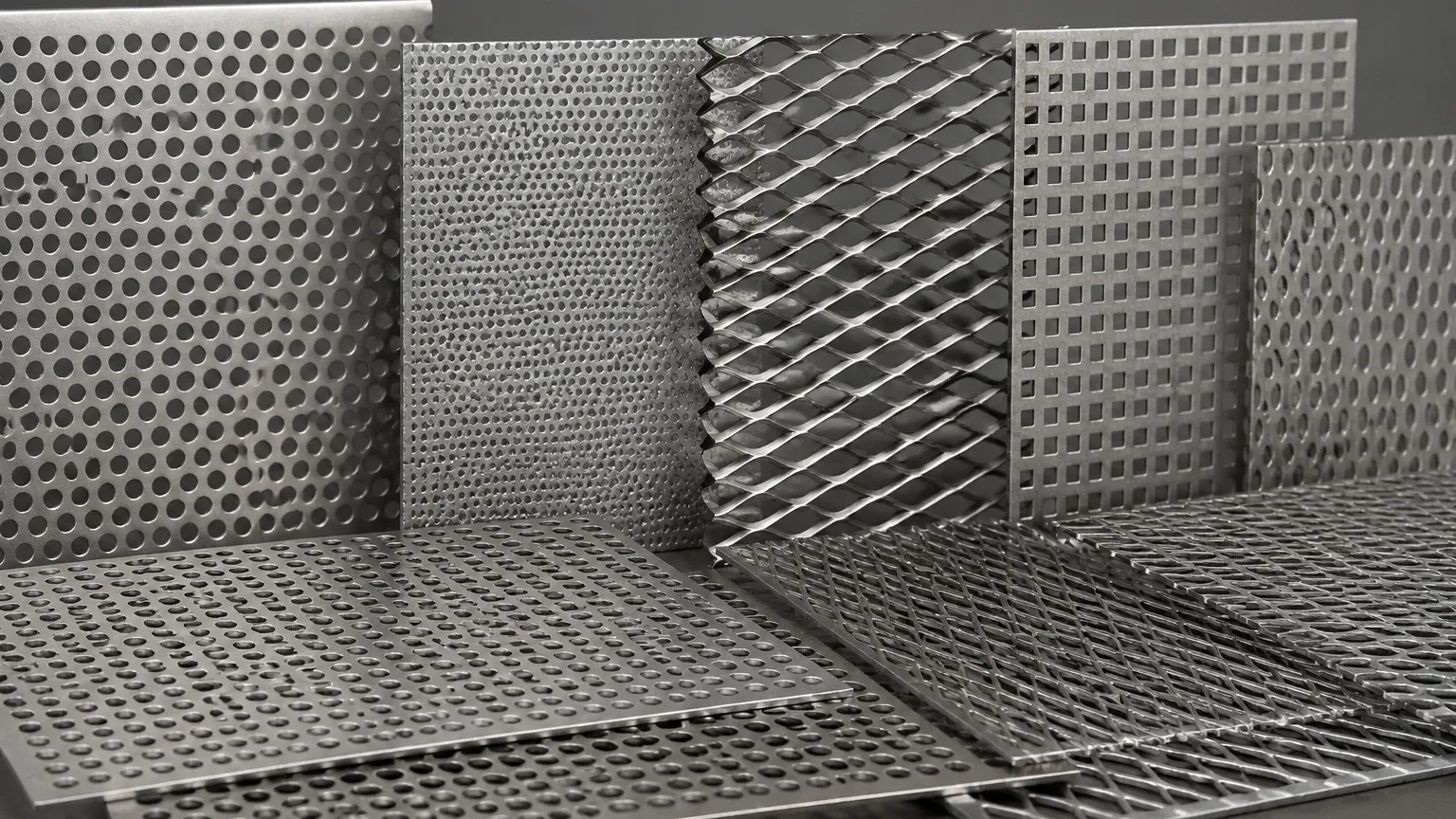
The performance of metal perforated steel is primarily dictated by its geometry. The arrangement of holes influences both the flow rate of the medium and the structural integrity of the component. There are three primary patterns used in industrial filtration:
1. Staggered Patterns: This is the most common configuration, typically featuring a 60-degree staggered layout. This arrangement provides the highest level of open area and ensures uniform stress distribution across the sheet, which is critical for components subjected to high hydraulic pressure.
2. Straight Line Patterns: In this layout, holes are aligned both horizontally and vertically. While this offers a clean aesthetic and is easier to align for certain mechanical fasteners, it generally provides lower structural strength compared to staggered patterns under load.
3. Specialty Patterns: Slotted, hexagonal, or square holes are utilized for specific filtration requirements. For instance, slotted holes are often preferred in applications involving elongated particles or fibers that might bridge across round holes.
Calculating the "Open Area Percentage" is a critical step in the design phase. It represents the ratio of the total area of the holes to the total area of the sheet. A higher open area reduces the pressure drop across the filter but may compromise the mechanical strength of the metal perforated steel. Engineers must balance these two factors based on the specific flow requirements and the expected mechanical load of the application.
Material Selection: Stainless Steel vs. Carbon Steel
The choice of material is perhaps the most significant factor in determining the lifespan and chemical compatibility of the filtration component. In industrial environments, stainless steel is the preferred choice due to its inherent resistance to corrosion and oxidation.
* Grade 304 Stainless Steel: This is the standard industrial grade, offering excellent formability and resistance to most atmospheric conditions and mild chemicals. It is widely used in food and beverage processing and general industrial water treatment.
* Grade 316/316L Stainless Steel: For more aggressive environments, such as chemical processing or marine applications, 316 stainless steel is specified. The addition of molybdenum enhances resistance to pitting and crevice corrosion, particularly in chloride-rich environments. The "L" (low carbon) variant is preferred for components that require extensive welding to prevent carbide precipitation.
* Carbon Steel and Galvanized Steel: While these materials are more cost-effective, they are generally limited to non-corrosive environments or applications where the perforated steel is used as a temporary structural element. In filtration, carbon steel is often treated with protective coatings, though any breach in the coating can lead to rapid failure.
When selecting Perforated & Expanded Metal for critical applications, engineers must also consider the gauge (thickness) of the steel. Thicker gauges provide higher burst pressure ratings, which is essential for high-viscosity fluids or systems with significant pressure surges.
Perforated vs. Expanded Metal: Structural Differences
While both materials provide openings for flow, the manufacturing processes and resulting mechanical properties differ significantly. Metal perforated steel is produced by removing material (the "slugs"), resulting in a flat, smooth surface with precise hole dimensions. This flatness is crucial when the perforated sheet serves as a substrate for fine wire mesh or membranes, as it prevents localized stress points that could tear the finer media.
In contrast, expanded metal is produced by slitting and stretching the sheet simultaneously. This creates a diamond-shaped pattern and a three-dimensional profile. Expanded metal is often lighter and more cost-effective because no material is lost during production. However, it lacks the dimensional precision of perforated steel and is typically used for secondary support or as a pre-filter for larger debris rather than as a precision filtration medium.
The Role of Perforated Steel in Multi-Layer Filtration
In many high-performance filtration systems, metal perforated steel does not act alone. It is frequently used as the "inner core" or "outer cage" of a multi-layer filter cartridge. In these designs, the perforated steel provides the mechanical backbone, while layers of fine stainless steel wire mesh or sintered metal fiber provide the actual filtration rating.
Internal Support Cores
In high-pressure hydraulic or chemical systems, the filter media (such as pleated mesh) can collapse under the force of the fluid flow. A central tube made of metal perforated steel provides the necessary radial strength to keep the media in place. The perforations must be burr-free to avoid damaging the delicate mesh layers during assembly or operation.
Protective Outer Cages
For filters exposed to high-velocity flow or potential mechanical impact, an outer cage of perforated steel protects the internal filter media from damage. This is particularly common in industrial strainers and water intake screens where large debris could otherwise puncture the primary filter element.
Fabrication Standards and Customization Options
Industrial applications often require customized metal perforated steel components to fit specific housing dimensions or flow profiles. Key customization factors include:
* Margins: These are the unperforated areas along the edges of the sheet. Specifying accurate margins is essential for welding the sheet into a cylinder or bolting it into a frame. Standard margins are typically minimal, but "safe side" or custom margins can be engineered for specific assembly requirements.
* Tolerances: Precision perforation requires tight tolerances on hole diameter and pitch. In filtration, even a small deviation in the hole size can lead to uneven flow distribution or localized clogging.
* Surface Finishes: Beyond the choice of material, surface treatments such as electropolishing or passivating can further enhance the corrosion resistance of stainless steel. For the food and pharmaceutical industries, a smooth, burr-free finish is mandatory to prevent bacterial growth and ensure ease of cleaning (CIP/SIP processes).
Performance Evaluation: Pressure Drop and Particle Retention
When integrating metal perforated steel into a system, engineers must evaluate the "clean pressure drop." This is the resistance to flow caused by the filter element before any contaminants have been captured. A high initial pressure drop reduces the available energy for the rest of the process and shortens the effective service life of the filter.
Particle retention in perforated steel is determined by the hole diameter. While it is not suitable for removing microscopic particles (where wire mesh or sintered media are required), it is highly effective as a primary stage for removing scale, metal chips, and large organic matter. By removing these larger contaminants, the perforated steel protects downstream fine filters from premature loading, thereby reducing the total cost of ownership (TCO) for the filtration system.
Maintenance and Replacement Cycles
One of the primary advantages of stainless steel perforated components is their durability. Unlike disposable synthetic filters, metal perforated steel elements are often cleanable and reusable. Maintenance cycles depend on the nature of the contaminant and the fluid chemistry. In many cases, backwashing or ultrasonic cleaning can restore the element to near-original performance.
However, replacement is necessary if the component shows signs of:
1. Erosion: High-velocity abrasive particles can gradually enlarge the holes or thin the metal, compromising both filtration accuracy and structural integrity.
2. Chemical Degradation: Even stainless steel can succumb to stress corrosion cracking or pitting if the fluid chemistry changes or if the material was not properly passivated.
3. Mechanical Deformation: Pressure spikes exceeding the design limits can cause the perforated sheet to bow or buckle, leading to bypass or failure of the filter assembly.
Conclusion: Selecting the Right Solution
Selecting the appropriate metal perforated steel requires a comprehensive understanding of the operational environment. It is not merely about choosing a hole size; it involves a detailed assessment of material compatibility, mechanical load, flow dynamics, and fabrication requirements. By focusing on high-quality stainless steel grades and precise geometric patterns, industrial operators can ensure their filtration systems provide reliable, long-term performance in even the most demanding conditions.
For engineers looking to optimize their processes, working with a manufacturer that understands the intersection of metallurgy and fluid dynamics is critical. Whether used as a standalone strainer or a support structure for complex multi-layer cartridges, metal perforated steel remains a cornerstone of modern industrial filtration technology.
