


Moz Designs Perforated Metal
In the intersection of industrial engineering and architectural aesthetics, perforated metal serves as a versatile medium that balances structural integrity with functional porosity. While many professionals encounter "moz designs perforated metal" in the context of high-end architectural finishes and interior design elements, the technical requirements for industrial applications—particularly in filtration and fluid dynamics—demand a rigorous focus on material science and precision manufacturing.
For engineers and procurement teams, understanding the mechanical properties and fabrication limits of Perforated & Expanded Metal is essential for ensuring that the final component meets the specific demands of the operating environment. Whether used as a support structure for fine wire mesh or as a standalone filtration medium, the selection of hole patterns, material grades, and finishing techniques determines the long-term performance and cost-effectiveness of the installation.
Technical Foundations of Perforated and Expanded Metal
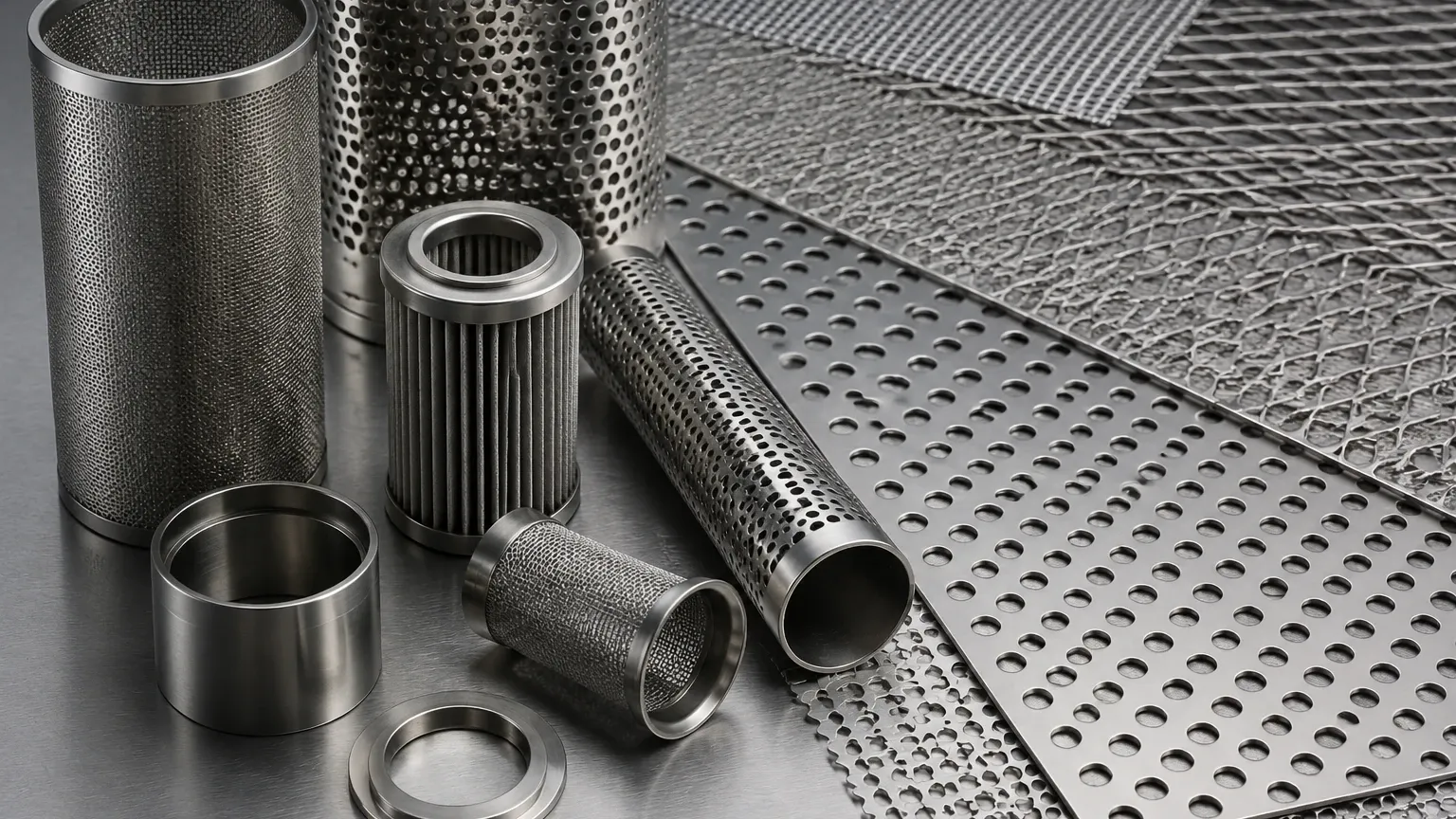
Perforated metal is produced through a mechanical punching process where sheets of metal are fed through a press equipped with specialized die sets. This process creates a series of holes, slots, or decorative shapes. In contrast, expanded metal is created by simultaneously slitting and stretching the material, resulting in a diamond-shaped mesh without any material waste.
When evaluating solutions like moz designs perforated metal for industrial use, engineers must prioritize the "open area" percentage. This metric defines the ratio of the area of the holes to the total area of the sheet. In filtration, the open area directly correlates with flow rate and pressure drop. A higher open area reduces resistance to fluid or gas flow but may compromise the structural rigidity of the sheet. Conversely, a lower open area provides greater mechanical strength but can lead to increased differential pressure across the filter element.
Hole Patterns and Their Mechanical Impact
The arrangement of perforations significantly influences the directional strength of the metal sheet. The three most common patterns include:
1. Staggered 60-Degree Pattern: This is the industry standard for industrial applications. It provides the highest open area and uniform strength across the sheet, making it ideal for high-pressure filtration housings.
2. Straight Line Pattern: Holes are aligned in both horizontal and vertical rows. While aesthetically clean, this pattern is generally weaker than staggered arrangements and is often reserved for decorative applications or low-stress environments.
3. Staggered 45-Degree Pattern: An alternative to the 60-degree stagger, often used when specific flow characteristics or aesthetic requirements are needed without sacrificing too much structural integrity.
Material Selection for Industrial Environments
The longevity of perforated metal components depends heavily on the base material's resistance to corrosion, temperature fluctuations, and mechanical wear. In sectors such as chemical processing and food production, stainless steel is the preferred choice due to its inert properties and durability.
Stainless Steel Grades
* Grade 304: The most common stainless steel for general industrial use. It offers excellent corrosion resistance and formability, making it suitable for water treatment and standard industrial filtration.
* Grade 316L: Containing molybdenum, this grade provides superior resistance to chlorides and acidic environments. It is the standard for pharmaceutical, marine, and high-purity chemical applications where preventing contamination is critical.
* Specialty Alloys: For extreme environments involving high temperatures or highly aggressive chemicals, materials like Monel, Inconel, or Hastelloy may be perforated to meet specific engineering specifications.
When sourcing materials that align with the visual standards of moz designs perforated metal but require industrial performance, the surface finish is equally important. Options range from mill finishes to electropolishing, which removes surface impurities and enhances the chromium-rich oxide layer for maximum corrosion resistance.
Engineering Considerations for Filtration Support
One of the primary uses of perforated metal in industrial settings is providing a rigid skeleton for finer filtration media, such as woven wire mesh. In these multi-layer constructions, the perforated metal acts as a "support cage" or "inner core."
Burst Strength and Pressure Differentials
Engineers must calculate the burst strength of the perforated cylinder or sheet to ensure it can withstand the maximum operating pressure of the system. If a filter becomes clogged, the differential pressure (ΔP) increases. If the perforated support lacks sufficient wall thickness or the hole pattern is too dense, the component may collapse, leading to downstream contamination and equipment damage.
Compatibility with Wire Mesh
When laminating or welding wire mesh to perforated metal, the alignment of the mesh openings with the perforations is vital. Improper alignment can create "dead zones" where fluid cannot flow efficiently, leading to localized buildup and premature filter failure. Precision manufacturing ensures that the perforated substrate provides maximum support with minimal interference to the filtration process.
Customization and OEM Capabilities
Industrial projects rarely fit a one-size-fits-all model. Customization is often necessary to meet the spatial constraints of existing machinery or the specific flow requirements of a new process. Manufacturers like Kaifil specialize in providing tailored solutions that bridge the gap between standard industrial components and specialized designs.
Precision Punching and Secondary Operations
Modern CNC punching technology allows for extreme precision in hole placement and diameter. Beyond simple punching, several secondary operations are often required for industrial-grade components:
* Leveling: The punching process can introduce internal stresses that cause the metal sheet to curl or warp. Precision leveling restores flatness, which is critical for subsequent welding or assembly.
* Deburring: Punched holes often have sharp edges or "burrs" on the exit side. For filtration applications, these must be removed to prevent turbulence, ensure safety during maintenance, and prevent the snagging of fine mesh layers.
* Forming and Welding: Perforated sheets are often rolled into cylinders or formed into cones. High-quality longitudinal welding (such as TIG or plasma welding) ensures that the seam is as strong as the base material.
Evaluating Quality and Total Cost of Ownership
When comparing moz designs perforated metal or similar high-quality perforated products, it is important to look beyond the initial purchase price. The total cost of ownership (TCO) includes the lifespan of the part, the frequency of replacement, and the impact on system efficiency.
Common Risks in Substandard Perforated Metal
* Inconsistent Hole Diameters: Variations in hole size can lead to unpredictable flow rates and uneven filtration performance.
* Poor Material Traceability: In regulated industries like food and pharmaceuticals, using uncertified materials can lead to legal and safety risks. Always confirm that the manufacturer provides material test reports (MTRs).
* Edge Margins: Standard perforated sheets often have "unperforated borders" or margins. If these are not accounted for in the design phase, they can interfere with welding or reduce the effective filtration area.
Questions for Procurement and Engineering Teams
Before finalizing a specification for perforated or expanded metal, technical teams should confirm the following:
1. What is the maximum allowable pressure drop? This will dictate the required open area.
2. What are the chemical cleaning protocols? This ensures the material grade and finish can withstand harsh CIP (Clean-in-Place) cycles.
3. Are there specific tolerances for hole pitch and diameter? Precision is key for high-speed industrial equipment.
4. Is a specific margin required for welding? Custom margins can simplify the assembly of filter cartridges.
Conclusion
Whether the objective is to achieve the refined look associated with moz designs perforated metal or to solve a complex industrial filtration challenge, the success of the project relies on technical expertise and manufacturing precision. By focusing on material science, mechanical calculations, and customized fabrication, engineers can implement Perforated & Expanded Metal solutions that offer both durability and high-performance filtration.
For those managing demanding industrial environments, partnering with a manufacturer that understands the nuances of OEM requirements—from material selection to final deburring—ensures that the filtration components contribute to the overall reliability and efficiency of the system. Choosing the right perforated metal is not just about the pattern; it is about engineering a solution that stands up to the rigors of industrial use.
