


Octagon Expanded Metal
In the landscape of industrial filtration and structural support, the choice of media geometry significantly dictates the efficiency, durability, and mechanical integrity of the final system. Octagon expanded metal represents a specialized variation of traditional expanded mesh, offering a unique geometric profile that balances open area with structural rigidity. For engineers and procurement professionals in sectors such as chemical processing, pharmaceuticals, and water treatment, understanding the technical nuances of this material is essential for optimizing filtration performance and ensuring long-term equipment reliability.
At its core, expanded metal is produced by simultaneously slitting and stretching a solid metal sheet. This process creates a continuous piece of mesh without joins or welds, which is inherently stronger than woven wire or welded mesh of a similar weight. While diamond-shaped openings are the industry standard, the octagon expanded metal pattern provides a distinct architectural and functional advantage, particularly when used as a support substrate or a protective outer cage for delicate filter media.
Understanding the Geometry of Octagon Expanded Metal
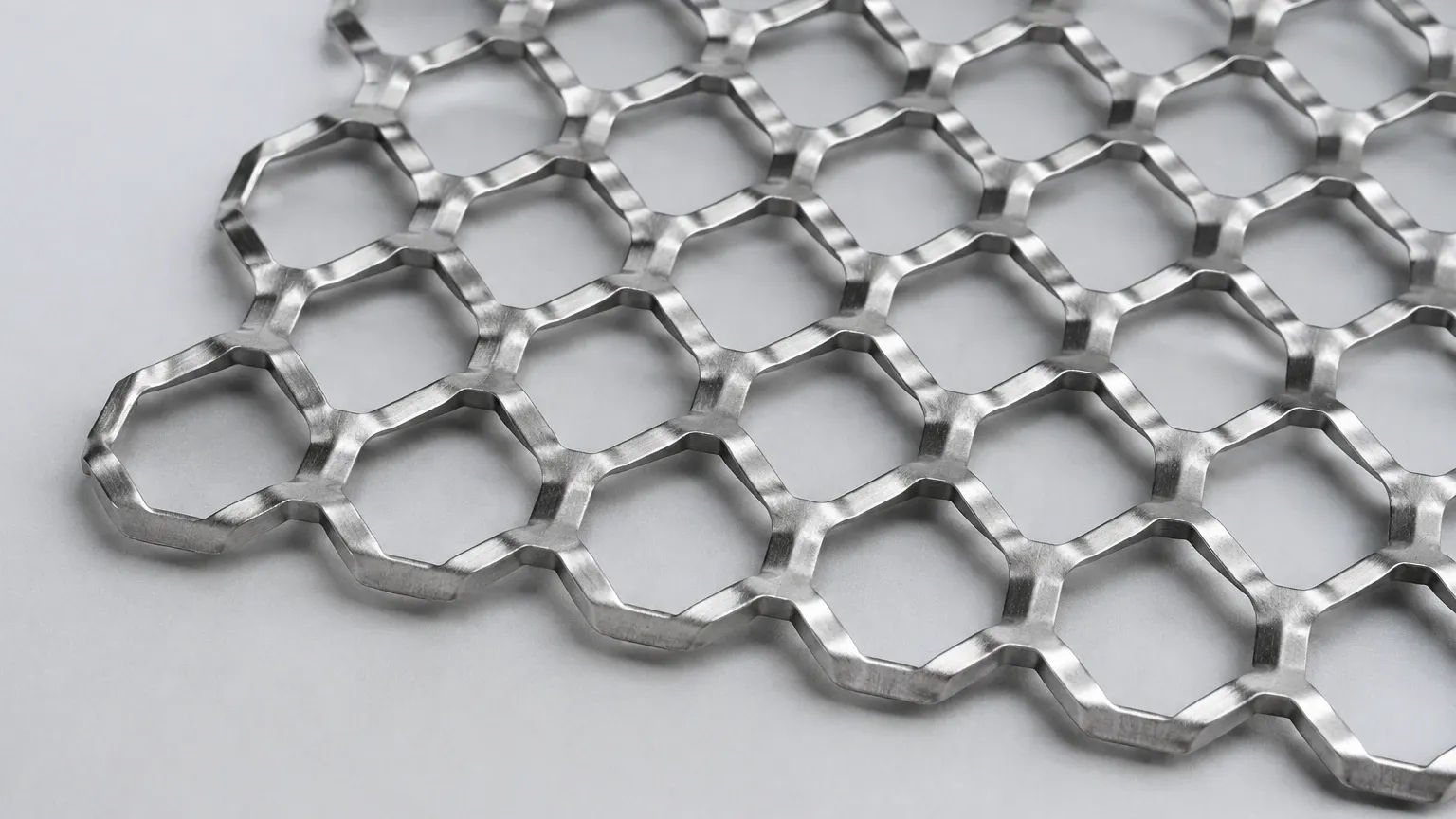
The performance of octagon expanded metal is defined by its specific geometric parameters. Unlike standard diamond patterns, the octagonal shape is achieved through precise tooling that creates additional facets within the mesh structure. This geometry influences how the material reacts to mechanical stress and how fluids or gases pass through the openings.
Key Dimensional Variables
When specifying octagon expanded metal for industrial applications, engineers must define several critical dimensions:
* Long Way of Design (LWD): The distance from the center of one bond to the center of the next bond across the long axis of the octagon.
* Short Way of Design (SWD): The distance across the short axis, which typically dictates the overall thickness and rigidity of the sheet.
* Strand Width: The amount of metal fed into the machine between slits, which determines the thickness of the individual "ribs" of the octagon.
* Strand Thickness: The original thickness of the base metal sheet.
* Open Area Percentage: A calculation of the void space versus the solid metal, which is the primary factor in determining flow rate and pressure drop.
The octagonal shape provides more "flats" compared to a diamond pattern. In filtration, these flat surfaces offer a more stable contact point for secondary layers, such as fine wire mesh or synthetic membranes, reducing the risk of media abrasion or puncture under high-pressure conditions.
Material Selection and Industrial Durability
For the demanding environments found in chemical processing and hydraulic systems, material integrity is non-negotiable. Kaifil specializes in utilizing high-grade alloys to ensure that the Perforated & Expanded Metal components can withstand corrosive agents and extreme temperatures.
Stainless Steel Grades
Stainless steel is the preferred material for octagon expanded metal in B2B industrial contexts due to its oxidation resistance and mechanical strength. Common grades include:
1. Grade 304: The standard industrial choice, offering excellent corrosion resistance in most atmospheric and water-based environments. It is suitable for food and beverage applications where frequent wash-downs occur.
2. Grade 316/316L: Containing molybdenum, these grades offer superior resistance to chlorides and acids. This is the baseline requirement for pharmaceutical processing and marine environments.
3. Specialty Alloys: In high-temperature or highly aggressive chemical environments, alloys like Monel, Inconel, or Hastelloy may be used to prevent premature failure of the filtration assembly.
The choice of material directly impacts the total cost of ownership. While 316L stainless steel carries a higher initial price point than 304, its longevity in corrosive environments often results in lower replacement frequencies and reduced downtime.
Engineering Performance: Filtration and Flow Dynamics
In industrial filtration, octagon expanded metal serves two primary roles: as a coarse filter for large particulates and as a structural support for finer media. Its performance is evaluated based on its ability to manage flow while maintaining mechanical stability.
Flow Rate and Pressure Drop
The octagonal geometry allows for a high percentage of open area, which is critical for minimizing pressure drop across the filter. A high pressure drop forces pumps to work harder, increasing energy consumption and potentially leading to system failure. Engineers must calculate the "effective open area" to ensure that the octagon expanded metal does not become a bottleneck in the fluid path.
Structural Support and Pleat Retention
In pleated filter cartridges, octagon expanded metal is often used as an inner core or an outer wrap. The octagonal facets provide a uniform surface that supports the pleats of the filter media, preventing them from collapsing under the force of the flow. This support is vital for maintaining the surface area of the filter, which directly correlates to the dirt-holding capacity and service life of the cartridge.
Comparing Perforated & Expanded Metal for Industrial Use
When selecting a metal substrate, engineers often weigh the pros and cons of perforated metal versus expanded metal. While both fall under the category of Perforated & Expanded Metal, their manufacturing processes and physical properties differ significantly.
* Material Efficiency: Perforated metal is created by punching holes in a sheet, which results in significant material waste (the "slugs"). Expanded metal is slit and stretched, meaning there is virtually no waste. This often makes expanded metal a more cost-effective solution for large-scale industrial projects.
* Weight-to-Strength Ratio: Because expanded metal is a single piece of material with interconnected strands, it offers a higher strength-to-weight ratio than perforated metal. The octagonal pattern further enhances this by distributing loads across multiple axes.
* Surface Profile: Perforated metal is naturally flat. Standard expanded metal has a raised profile, which can be beneficial for creating turbulence in a flow stream. However, for applications requiring a smooth surface, expanded metal can be "flattened" through a cold-rolling process.
For most filtration support applications, octagon expanded metal provides a superior balance of economy and structural performance.
Key Evaluation Criteria for Purchasing Teams
Procuring octagon expanded metal requires more than just specifying a pattern. Purchasing teams must confirm several technical factors to ensure the product meets the engineering requirements of the application.
Tolerances and Precision
In precision filtration, even minor deviations in LWD or SWD can affect the fitment of the filter within its housing. It is essential to confirm the manufacturer’s tolerance levels. High-precision expanded metal should have consistent opening sizes across the entire sheet to ensure uniform flow distribution.
Surface Finish and Deburring
The expansion process can leave sharp edges on the metal strands. In pharmaceutical or food-grade applications, these edges must be removed through deburring or electropolishing. Burrs can trap contaminants, making the filter difficult to clean, or they can shed metal particles into the process stream, leading to product contamination.
Flattening and Leveling
If the octagon expanded metal is to be used as a support layer in a multi-layered filter element, it must be perfectly flat. Any bowing or warping in the sheet can create gaps between the layers, leading to bypass—where unfiltered fluid escapes through the gaps rather than passing through the media.
Customization and OEM Integration
Industrial filtration is rarely a one-size-fits-all field. Most high-performance systems require customized components tailored to specific flow rates, chemical exposures, and physical dimensions. Kaifil’s manufacturing capabilities allow for the production of octagon expanded metal that meets exact OEM specifications.
Custom Tooling
While standard octagon patterns exist, custom tooling can be developed to adjust the LWD, SWD, and strand width to achieve a specific open area or structural requirement. This level of customization is particularly important for proprietary filter designs where performance optimization is a competitive advantage.
Prototyping and Testing
Before moving to full-scale production, engineers should request prototypes to test the material in real-world conditions. This allows for the evaluation of mechanical strength under pressure spikes and the assessment of chemical compatibility over time. Kaifil works closely with engineering teams to provide samples that reflect the final production quality, ensuring that there are no surprises during the integration phase.
Common Risks and Quality Assurance in Metal Mesh Procurement
Navigating the procurement of industrial metal components involves identifying and mitigating potential risks. Substandard octagon expanded metal can lead to catastrophic system failures or frequent, costly maintenance cycles.
Material Substitution
A common risk in the global supply chain is the substitution of lower-grade alloys. For example, using 304 stainless steel in a 316L specification can lead to rapid pitting corrosion in chloride-rich environments. To mitigate this, purchasing teams should require Mill Test Reports (MTRs) that certify the chemical composition of the raw material.
Inconsistent Expansion
If the expansion machinery is not properly calibrated, the resulting mesh may have inconsistent opening sizes. This leads to uneven flow distribution, where certain areas of the filter are overloaded while others are underutilized. Visual inspection and random sampling are necessary to ensure the uniformity of the octagon pattern.
Stress Cracking
The process of slitting and stretching metal introduces internal stresses. In lower-quality materials or poorly executed expansion processes, these stresses can lead to micro-cracks at the bonds (the points where the strands intersect). Under the cyclic loading of a hydraulic system or the thermal expansion of a chemical reactor, these cracks can propagate, leading to the structural failure of the mesh.
Maintenance and Longevity in Filtration Systems
The lifespan of octagon expanded metal is largely determined by the environment and the maintenance protocols in place. In many industrial settings, filters are designed to be cleaned and reused rather than discarded.
Cleaning-in-Place (CIP)
In the food, beverage, and pharmaceutical industries, components must be compatible with CIP systems. Octagon expanded metal, when properly deburred and polished, facilitates efficient cleaning. The lack of hidden crevices (unlike in some woven meshes) prevents the buildup of biological films or chemical residues.
Replacement Cycles
While stainless steel expanded metal is highly durable, it is not infinite. Factors such as erosion from high-velocity particulates or gradual chemical thinning will eventually necessitate replacement. Engineers should establish a monitoring program—often based on differential pressure readings—to determine the optimal time for replacement before a failure occurs.
Conclusion
Octagon expanded metal is a sophisticated engineering material that offers significant advantages for industrial filtration and structural support. By providing a stable, high-strength, and high-open-area substrate, it enables the design of more efficient and durable filtration systems. When sourcing these components, it is vital to partner with a manufacturer that understands the technical demands of the application and can provide the necessary material certifications and customization.
For engineers looking to optimize their filtration assemblies, the integration of high-quality Perforated & Expanded Metal is a strategic decision that impacts the overall efficiency and reliability of the industrial process. By focusing on material grade, geometric precision, and application-specific customization, procurement teams can ensure they are investing in a solution that provides the lowest total cost of ownership and the highest performance standards.
