


Ornamental Expanded Metal
In industrial engineering and architectural design, the selection of materials for structural support, protective screening, and filtration often requires a balance between mechanical performance and visual integration. While standard industrial gratings and meshes prioritize utility, ornamental expanded metal offers a specialized solution that combines high structural integrity with specific aesthetic or airflow patterns. As a critical subset of Perforated & Expanded Metal, these components are engineered to meet the rigorous demands of chemical processing, food production, and pharmaceutical environments where durability and precision are non-negotiable.
Understanding the technical nuances of ornamental expanded metal is essential for engineers and procurement teams. This guide examines the manufacturing processes, material considerations, and performance metrics that define high-quality expanded metal solutions in professional B2B applications.
Technical Fundamentals of Expanded Metal Production
To evaluate ornamental expanded metal, one must first understand the underlying manufacturing process that differentiates it from perforated or woven alternatives. Expanded metal is produced by simultaneously slitting and stretching a solid metal sheet. This process creates a series of diamond-shaped or decorative openings without any loss of material, making it a highly efficient and sustainable manufacturing method.
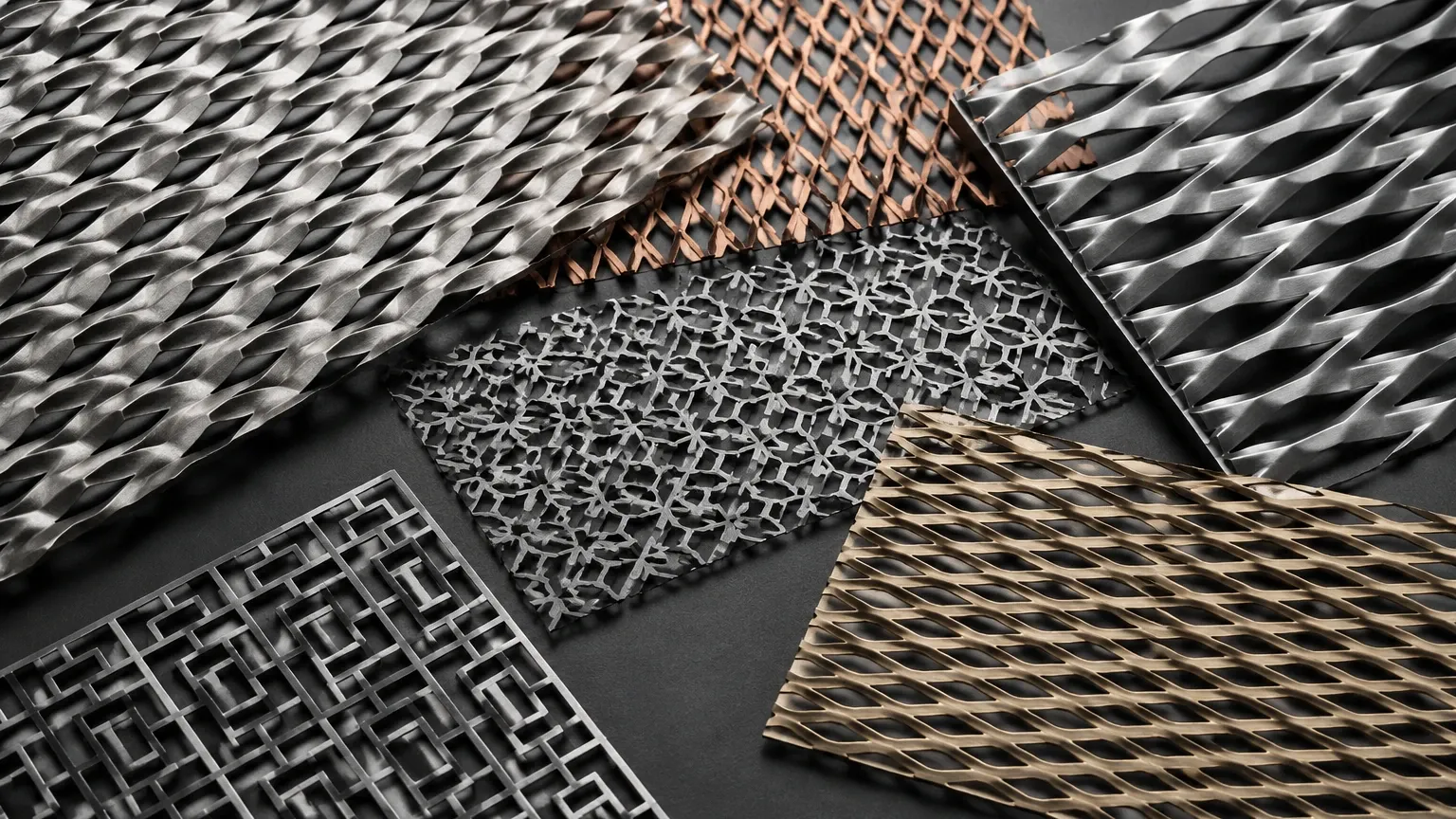
Unlike perforated metal, which involves punching holes and generating scrap (slugs), expanded metal expands the original sheet into a larger area while maintaining the continuity of the metal. This results in a product that is often stronger and lighter per square foot than the original sheet. For ornamental variations, the tooling is specifically designed to create unique geometries—such as hexagonal, louvers, or complex diamond patterns—that provide specific functional benefits beyond simple aesthetics.
From an engineering perspective, the "bonds" (the intersection of the strands) and "strands" (the metal strips that form the openings) provide a rigid structure. In its standard form, expanded metal has a raised surface that provides natural slip resistance and high structural rigidity. For applications requiring a smooth finish, the material can be "flattened" through a cold-rolling process, though this slightly reduces the overall strength compared to the raised version.
Material Selection for Industrial Environments
In the sectors Kaifil serves—such as chemical processing and water treatment—the choice of material is the most significant factor in the longevity and performance of ornamental expanded metal. While carbon steel is available for low-moisture environments, most industrial applications demand the corrosion resistance of stainless steel or specialized alloys.
Stainless Steel (304 and 316/316L)
Stainless steel is the industry standard for filtration support and protective screening. Grade 304 offers excellent corrosion resistance for general industrial use, while Grade 316 (containing molybdenum) is preferred for marine environments, chemical plants, and pharmaceutical facilities where exposure to chlorides or acidic cleaning agents is common. In food and beverage applications, 316L (low carbon) is often specified to prevent carbide precipitation during welding, ensuring the integrity of the mesh in hygienic environments.
Aluminum Alloys
Aluminum is frequently chosen for ornamental expanded metal in architectural cladding and ventilation systems due to its high strength-to-weight ratio and natural resistance to atmospheric corrosion. It is an ideal choice when weight reduction is a primary design constraint, although it lacks the extreme temperature and chemical resistance of stainless steel.
Specialty Coatings
For certain industrial applications, expanded metal may be galvanized or powder-coated. Galvanization provides a sacrificial zinc layer that protects against rust in outdoor or high-humidity settings. Powder coating allows for specific color-coding in safety environments (e.g., machine guards) while adding an extra layer of chemical resistance.
Engineering Metrics: Open Area and Structural Integrity
When specifying ornamental expanded metal, engineers must calculate the balance between the "open area" and the structural load requirements. The open area percentage determines the volume of air, light, or fluid that can pass through the mesh, which is critical for ventilation covers, acoustic panels, and filtration support layers.
Defining Dimensions
To ensure precise communication between the engineer and the manufacturer, four primary measurements are used:
1. LWD (Long Way of Diamond): The distance from the center of a bond to the center of the next bond across the long axis.
2. SWD (Short Way of Diamond): The distance across the short axis of the diamond.
3. Strand Width: The amount of metal fed into the machine for each slit.
4. Strand Thickness: The gauge of the original metal sheet.
By adjusting these parameters, manufacturers can tailor the ornamental expanded metal to provide specific shading, airflow resistance, or debris exclusion. For instance, a wider strand width increases the rigidity of the mesh but reduces the open area. Engineers must also consider the "pitch" or angle of the strands, which can provide directional screening—blocking visibility or debris from one angle while allowing airflow from another.
Applications in Industrial Filtration and Protection
While the term "ornamental" might suggest a purely decorative role, in B2B contexts, these patterns are often chosen for their specific functional geometry. Kaifil provides customized solutions where expanded metal serves as a foundational component in complex systems.
Filtration Media Support
In high-pressure hydraulic or chemical filtration, expanded metal is often used as a support cage for finer wire mesh or synthetic filter media. The diamond pattern provides a stable, non-shifting structure that prevents the filter media from collapsing under differential pressure. The ornamental aspect allows for a more uniform distribution of stress across the filter cartridge surface.
Machine Guarding and Safety Enclosures
Safety is paramount in industrial facilities. Ornamental expanded metal is used to create guards for rotating machinery, conveyor belts, and high-voltage areas. The expanded pattern allows operators to visually inspect the equipment without compromising physical safety. Unlike solid panels, the mesh prevents heat buildup by allowing natural or forced convection.
Architectural and HVAC Ventilation
In large-scale industrial buildings, expanded metal serves as an intake or exhaust grille. The ornamental patterns can be engineered to act as louvers, directing airflow while preventing rain or large debris from entering the system. This dual-purpose role—combining architectural integration with mechanical ventilation—is a hallmark of modern industrial design.
Customization and OEM Capabilities
For many engineering projects, off-the-shelf expanded metal does not meet specific tolerances or environmental requirements. This is where the value of a specialized manufacturer like Kaifil becomes apparent. Customization goes beyond simple dimensions; it includes material thickness, pattern geometry, and secondary processing.
Precision Cutting and Forming
Industrial filters and machine components often require expanded metal to be cut into precise circles, arcs, or cylinders. Advanced CNC shearing and laser cutting ensure that the edges of the mesh are clean and the dimensions are accurate to within microns. Furthermore, expanded metal can be formed into conical or cylindrical shapes to serve as the core or outer wrap of a filter cartridge.
Welding and Assembly
Integrating expanded metal into a larger assembly often requires specialized welding techniques. Spot welding, TIG welding, and ultrasonic welding are used depending on the material and the required strength of the bond. For pharmaceutical or food-grade components, ensuring that welds are free of crevices where bacteria can grow is a critical quality control step.
Selection Criteria: Total Cost of Ownership
When evaluating Perforated & Expanded Metal for a project, procurement teams should look beyond the initial purchase price and consider the total cost of ownership (TCO). Several factors influence the long-term value of ornamental expanded metal:
* Durability and Replacement Cycles: A higher-grade stainless steel may have a higher upfront cost but will significantly outlast galvanized steel in corrosive environments, reducing downtime and replacement labor.
* Maintenance Requirements: Expanded metal with a smooth, flattened finish is easier to clean in food processing applications, reducing the time and chemicals required for sanitation.
* Installation Efficiency: Custom-fabricated panels that are pre-cut to size and include mounting holes or frames reduce on-site labor costs and minimize the risk of installation errors.
* Structural Performance: Because expanded metal is made from a single piece of material, it cannot unravel like woven wire mesh. This structural integrity reduces the risk of mechanical failure in critical applications.
Conclusion
Ornamental expanded metal is a versatile and robust material that serves as more than just a visual element in industrial design. By offering a unique combination of strength, open area, and material efficiency, it provides engineers with a reliable solution for filtration support, protective screening, and architectural ventilation.
When sourcing these components, it is vital to partner with a manufacturer that understands the technical rigors of your specific industry. From precise material selection to custom geometric configurations, the right expanded metal solution can significantly enhance the performance and safety of industrial equipment. For engineers looking to optimize their filtration or protective systems, reviewing the full range of Perforated & Expanded Metal options is the first step toward achieving a high-performance, cost-effective design.
