


Other Names for Expanded Metal
In the realm of industrial manufacturing and material science, precision in terminology is as critical as precision in fabrication. For engineers, procurement specialists, and project managers, the material commonly known as expanded metal often appears under various aliases depending on the industry, geographic region, or specific application. Understanding these "other names for expanded metal" is essential for ensuring that technical specifications are met and that the correct material is sourced for demanding environments, particularly in high-performance filtration systems.
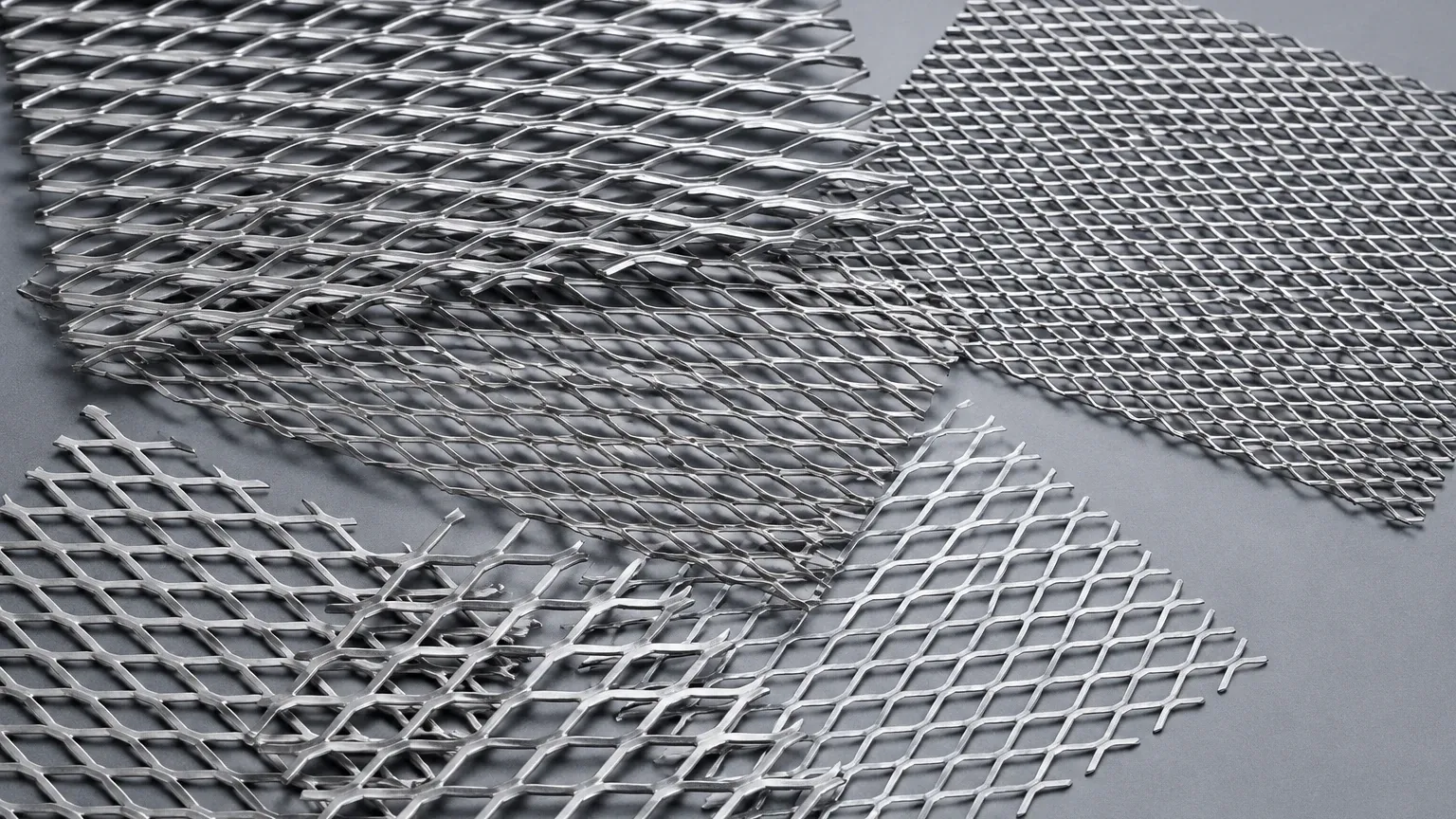
Expanded metal is a unique material produced by simultaneously slitting and stretching a metal sheet. This process creates a continuous piece of mesh with diamond-shaped openings, characterized by the absence of welds or joins. Because the process involves no material waste, it is often a cost-effective alternative to other types of Perforated & Expanded Metal. However, the diversity of its use—from architectural facades to internal support structures for filter cartridges—has led to a fragmented vocabulary.
Understanding the Nomenclature of Expanded Metal
The most common alternative names for expanded metal often describe its physical appearance or the mechanical process used to create it. In many technical drawings and Bill of Materials (BOM), you may encounter terms that refer to the same base product but emphasize different structural characteristics.
Diamond Mesh
One of the most frequent synonyms is "diamond mesh." This name is purely descriptive, referring to the characteristic rhomboid or diamond-shaped apertures formed during the expansion process. While "diamond mesh" is widely used in fencing and security applications, in an industrial context, it specifically refers to the standard, unflattened state of the metal where the strands are set at a sharp angle to the plane of the sheet.
Raised Metal or Standard Expanded Metal
In technical specifications, expanded metal is often called "raised metal" or "standard expanded metal." These terms are used to distinguish the material from its "flattened" counterpart. When the metal is expanded, the strands and bonds are angled, creating a three-dimensional surface. This structural rigidity is vital for applications requiring high grip or specific flow turbulence in fluid dynamics.
Stretch Metal
In some European and Asian markets, expanded metal is frequently referred to as "stretch metal." This name highlights the manufacturing method: the metal is literally stretched beyond its original dimensions. For procurement teams working with international suppliers, recognizing "stretch metal" as a direct synonym for expanded metal prevents confusion during the quoting phase.
Technical Distinctions: Raised vs. Flattened Expanded Metal
When discussing other names for expanded metal, it is impossible to ignore the two primary forms the material takes after the initial expansion. Choosing the wrong form can lead to catastrophic failures in filtration and mechanical assemblies.
Flattened Expanded Metal
Often called "cold-rolled expanded metal," this version undergoes an additional processing step. After the expansion, the sheet is passed through a heavy-duty cold rolling mill. This flattens the strands and bonds back into the same plane as the original sheet. Engineers often specify this as "flattened mesh" or "smooth expanded metal." In industrial filtration, flattened expanded metal is preferred when the mesh serves as a support layer for delicate wire cloth or synthetic membranes, as the smooth surface prevents the media from being punctured or abraded.
Expanded Metal Grating
In heavy-duty industrial environments, particularly for flooring or catwalks, expanded metal is often referred to simply as "grating" or "heavy expanded metal." This variant is produced from thicker plates (often carbon steel or heavy-gauge stainless steel) and is designed to bear significant loads. While it shares the same manufacturing principle as the light-gauge mesh used in filters, the structural requirements are vastly different.
Expanded Metal vs. Perforated Metal: Avoiding Specification Errors
In the procurement of industrial components, the terms "perforated" and "expanded" are sometimes used interchangeably by non-technical staff, which is a significant error. While both fall under the broader category of Perforated & Expanded Metal, they are distinct products with different performance profiles.
* Perforated Metal: Created by punching holes into a sheet. This process results in "slugs" or waste material. It offers high precision in hole size and spacing but is generally more expensive due to material loss.
* Expanded Metal: Created by slitting and stretching. There is zero material waste. The resulting mesh is often stronger per pound because the strands remain part of a continuous piece of metal, providing inherent structural integrity.
Using the term "perforated" when you actually require "expanded" can lead to higher costs and lower structural rigidity in your filtration components. Conversely, specifying expanded metal for an application requiring exact circular holes (which expanded metal cannot provide) will lead to assembly issues.
Applications in Industrial Filtration and Support
For a manufacturer like Kaifil, expanded metal is a cornerstone of high-performance filtration solutions. In this sector, the material is often referred to by its functional role rather than its generic name. Understanding these functional names is crucial for engineers designing complex systems.
Filter Support Tubes
In the construction of stainless steel filter cartridges, expanded metal is often called the "inner core" or "support cage." Here, the material's high open-area-to-weight ratio allows for maximum fluid flow while providing the necessary mechanical strength to prevent the filter media from collapsing under high differential pressure.
Pleat Support
In pleated filter elements, expanded metal is sometimes called "pleat mesh" or "spacer mesh." It is sandwiched between layers of fine wire mesh or fiberglass to maintain the shape of the pleats and ensure that the entire surface area of the filter remains accessible to the process fluid.
Flame Arrestors and Spark Guards
Due to its ability to dissipate heat and break up flame fronts, expanded metal is frequently referred to as "flame mesh" in safety-critical applications. In these instances, the specific alloy—usually 304 or 316L stainless steel—is as important as the mesh geometry itself.
Engineering Parameters: SWD, LWD, and Strand Geometry
Regardless of the "other names for expanded metal" used, technical communication must eventually move to standardized engineering parameters. When requesting a quote or designing a component, the following metrics are the industry standard:
1. SWD (Short Way of Design): The distance from the center of one bond to the center of the next bond across the short axis of the diamond.
2. LWD (Long Way of Design): The distance from the center of one bond to the center of the next bond across the long axis of the diamond.
3. Strand Width: The amount of metal fed into the machine between the slits.
4. Strand Thickness: The thickness of the original base metal sheet.
5. Open Area: Expressed as a percentage, this is critical for calculating flow rates and pressure drops in filtration systems.
By focusing on these metrics, engineers can bypass the ambiguity of regional or industry-specific names and ensure the material performs as expected in the field.
Procurement Checklist for Industrial Filters
When sourcing expanded metal components for industrial applications, especially for filtration, purchasing teams should confirm several factors before finalizing an order. Miscommunication regarding the "other names for expanded metal" can result in receiving material that is technically correct by name but functionally useless for the specific application.
* Material Grade: Ensure the alloy is specified. For chemical processing and water treatment, SS316L is often required for its superior corrosion resistance compared to SS304.
* State of Finish: Explicitly state whether "Raised" or "Flattened" is required. In many industrial catalogs, expanded metal defaults to "Raised" unless otherwise specified.
* Direction of the Diamond: In some applications, the orientation of the SWD and LWD relative to the flow of fluid or the length of the sheet is critical for structural stability.
* Tolerance Levels: Standard commercial expanded metal has relatively wide tolerances. For precision filtration components, specify "Precision Expanded Metal" to ensure tighter adherence to SWD and LWD dimensions.
Conclusion
The variety of names for expanded metal—from "diamond mesh" and "stretch metal" to "raised grating"—reflects the material's immense versatility across different sectors. However, for the B2B professional, clarity is paramount. Whether you are designing a new hydraulic filter or sourcing support components for a chemical reactor, understanding these terms ensures better communication with manufacturers and more reliable end products.
At Kaifil, we specialize in translating these diverse requirements into high-quality stainless steel filtration solutions. By focusing on the technical realities of Perforated & Expanded Metal, we help our partners achieve optimal performance, durability, and cost-efficiency in their most demanding industrial applications. When specifying your next project, remember that while the name may vary, the engineering fundamentals of expanded metal remain the key to a successful filtration system.
