


Perforated 2×4
In industrial fabrication and filtration design, the 2×4 format (2 feet by 4 feet) represents one of the most versatile and widely utilized dimensions for metal panels. Whether serving as a protective guard, a structural support for fine wire mesh, or a primary coarse filter, the perforated 2×4 panel is a staple in engineering specifications. Selecting the correct configuration requires a deep understanding of material properties, hole geometry, and the mechanical stresses the panel will encounter during its service life.
At Kaifil, we specialize in high-precision Perforated & Expanded Metal solutions, focusing on stainless steel alloys that meet the rigorous demands of chemical processing, food production, and hydraulic systems. This guide explores the technical parameters of perforated 2×4 panels to assist engineers and procurement teams in making informed decisions for their specific applications.
Technical Specifications and Material Selection
The performance of a perforated 2×4 panel is fundamentally dictated by its material composition. In industrial environments, where corrosion and high temperatures are common, material selection is the first critical step in the design process.
Stainless Steel Alloys
Stainless steel is the preferred choice for most industrial filtration and structural applications.
* Grade 304: This is the standard "18/8" stainless steel. It offers excellent corrosion resistance in most atmospheric conditions and is highly weldable. It is suitable for general industrial use, architectural panels, and food-grade applications where high acidity is not a factor.
* Grade 316/316L: Containing molybdenum, Grade 316 provides superior resistance to chlorides and pitting. For engineers designing systems for marine environments, pharmaceutical processing, or chemical plants, 316L (the low-carbon version) is often specified to prevent carbide precipitation during welding, ensuring the structural integrity of the perforated 2×4 panel.
Gauge and Thickness
The thickness of the metal, often measured in gauge or millimeters, determines the panel's rigidity and load-bearing capacity. A standard perforated 2×4 panel may range from thin 22-gauge sheets for lightweight decorative or acoustic applications to heavy 10-gauge (or thicker) plates for industrial floor grates or high-pressure filter supports. Engineers must balance the need for structural strength with the weight constraints of the overall system.
Understanding Hole Patterns and Open Area
The functionality of a perforated 2×4 panel is defined by its "open area"—the percentage of the sheet that is comprised of holes. This calculation is vital for determining flow rates in filtration and the degree of transparency in architectural designs.
Common Hole Geometries
1. Round Holes: The most popular and efficient pattern. Round holes offer the best strength-to-weight ratio and are the easiest to manufacture with high precision. They are typically arranged in a 60-degree staggered pattern, which provides the highest open area and uniform strength in all directions.
2. Square Holes: Often used when a higher open area is required or for specific aesthetic requirements. However, square holes can create stress concentrations at the corners, which may lead to premature fatigue in high-vibration environments.
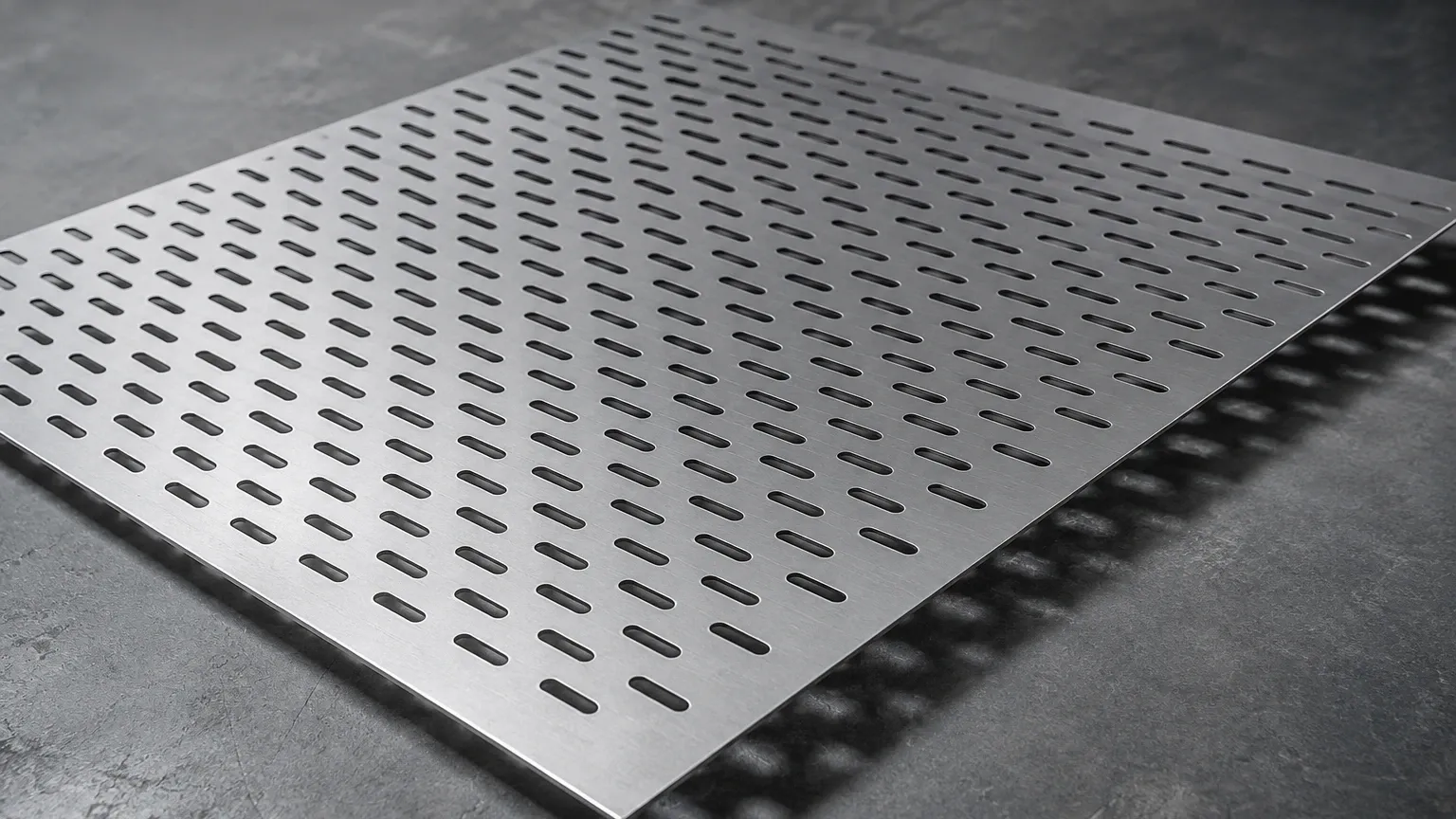
3. Slotted Holes: Ideal for sorting and grading applications. Slotted perforated 2×4 panels are frequently used in agricultural processing and wastewater treatment to allow the passage of liquids while retaining elongated solids.
Calculating Open Area
For a standard 60-degree staggered round hole pattern, the open area percentage (OA%) is calculated using the formula:
OA% = (D² × 90.69) / P²
Where:
* D = Hole Diameter
* P = Pitch (the center-to-center distance between holes)
An engineer specifying a perforated 2×4 panel for a hydraulic system must ensure the open area is sufficient to prevent excessive pressure drops, which could damage pumps or reduce system efficiency.
Applications in Industrial Filtration Systems
Within the scope of Kaifil’s expertise, the perforated 2×4 panel often serves as a critical component in complex filtration assemblies. Its primary role is frequently structural, providing a rigid skeleton for more delicate filtration media.
Support for Wire Mesh Filters
In many high-pressure applications, fine stainless steel wire mesh lacks the mechanical strength to withstand the differential pressure across the filter element. A perforated 2×4 panel is often rolled into a cylinder or used as a flat backing to support the mesh. This "sandwich" construction allows for high-precision filtration (down to micron levels) while maintaining the durability required for industrial processing.
Coarse Filtration and Strainers
In water treatment and chemical processing, perforated 2×4 panels act as primary strainers. They remove large debris—such as stones, plastic fragments, or organic matter—before the fluid reaches more sensitive downstream equipment. The 2×4 dimension is particularly useful here, as it fits standard rack systems and can be easily removed for cleaning or replacement during maintenance cycles.
Diffusers and Flow Control
Perforated metal is an excellent medium for diffusing flow. In gas processing or large-scale ventilation, a perforated 2×4 panel can be used to break up high-velocity streams, ensuring a uniform distribution of air or gas across a heat exchanger or catalyst bed. This prevents "hot spots" and improves the overall efficiency of the thermal process.
Manufacturing Considerations for 2×4 Panels
Producing a high-quality perforated 2×4 panel involves more than just punching holes in a sheet of metal. Several manufacturing nuances affect the final product's performance and longevity.
Flatness and Leveling
The perforating process introduces significant internal stresses into the metal sheet, which can cause it to curl or buckle. To ensure a perforated 2×4 panel is truly flat, it must undergo a leveling process. Precision roller levelers are used to neutralize these stresses, resulting in a panel that can be easily integrated into frames or housings without the need for excessive force.
Margins and Borders
Engineers must specify the "margins"—the unperforated areas along the edges of the panel. For a 2×4 panel intended for welding into a frame, a 1-inch solid margin around the perimeter is often recommended. This provides a clean surface for welding and increases the overall structural rigidity of the assembly. "Finished" margins mean the hole pattern stops before the edge, whereas "unfished" or "random" margins mean the pattern is sheared through the holes.
Surface Finishing
For stainless steel panels, surface treatment is essential for longevity.
* Degreasing: Removes lubricants used during the punching process.
* Passivation: A chemical treatment that enhances the protective chromium oxide layer on the surface of the stainless steel, significantly improving corrosion resistance.
* Electropolishing: Provides a mirror-like finish and removes microscopic burrs, which is critical for food and beverage or pharmaceutical applications where bacterial growth must be minimized.
Selection Criteria: What Engineers Need to Confirm
When ordering or specifying a perforated 2×4 panel, technical professionals should evaluate several factors to ensure the product meets the intended application’s requirements. Missing a single variable can lead to premature failure or sub-optimal performance.
Load-Bearing Requirements
Will the panel be subjected to static or dynamic loads? If the perforated 2×4 is used as a walkway or a floor grate, the deflection must be calculated based on the span and the material thickness. Even in filtration, the "collapse pressure" of the support structure must be known to prevent the filter from imploding under clogged conditions.
Chemical Compatibility
Beyond the base metal, consider the environment. Is the panel exposed to high concentrations of sulfuric acid? Is it in a high-temperature exhaust stream? Matching the alloy to the chemical environment is the most effective way to manage the total cost of ownership by extending the replacement cycle.
Hole Size vs. Material Thickness
A general rule in perforating is that the hole diameter should not be smaller than the material thickness. For example, punching a 1mm hole through 2mm thick stainless steel is technically challenging and can lead to frequent tool breakage and higher costs. If a very fine hole is required in a thick plate, alternative methods like laser drilling or waterjet cutting may be necessary, though these are typically more expensive than traditional punching.
Common Risks and Mitigation Strategies
Procuring perforated metal involves navigating potential pitfalls that can impact the quality of the final assembly.
1. Burrs and Sharp Edges: The punching process naturally creates burrs on the exit side of the hole. In applications involving manual handling or delicate filter media, these burrs must be removed through sanding or chemical deburring to prevent injury or damage to the mesh.
2. Tolerance Accumulation: Standard manufacturing tolerances for shearing and perforating can add up. If a perforated 2×4 panel must fit into a precision-machined slot, engineers should specify tighter tolerances than the industry standard (AIPA) to ensure a proper fit.
3. Corrosion at the Punch Site: The heat and pressure of punching can sometimes deplete the chromium at the edge of the hole. Proper passivation after fabrication is the best defense against localized corrosion in these areas.
Why the 2×4 Format is an Industry Standard
The 2×4 dimension has become a standard for several practical reasons. First, it aligns with the standard sheet sizes produced by steel mills (typically 4×8 or 4×10 feet), allowing for zero-waste shearing. Second, it is a manageable size for a single technician to handle, install, or clean without requiring heavy lifting equipment. Finally, many industrial housings, acoustic ceiling grids, and HVAC plenums are designed around this modular footprint, making the perforated 2×4 panel a universal component for both new builds and retrofits.
For organizations looking to optimize their filtration processes or integrate durable metal components into their systems, understanding these nuances is essential. Kaifil provides the engineering support and manufacturing precision necessary to deliver customized perforated solutions that exceed standard expectations. Whether you require specific hole patterns for flow optimization or specialized alloys for harsh environments, our team ensures that every perforated 2×4 panel is built to exact technical specifications.
