


2mm Perforated Metal Sheet
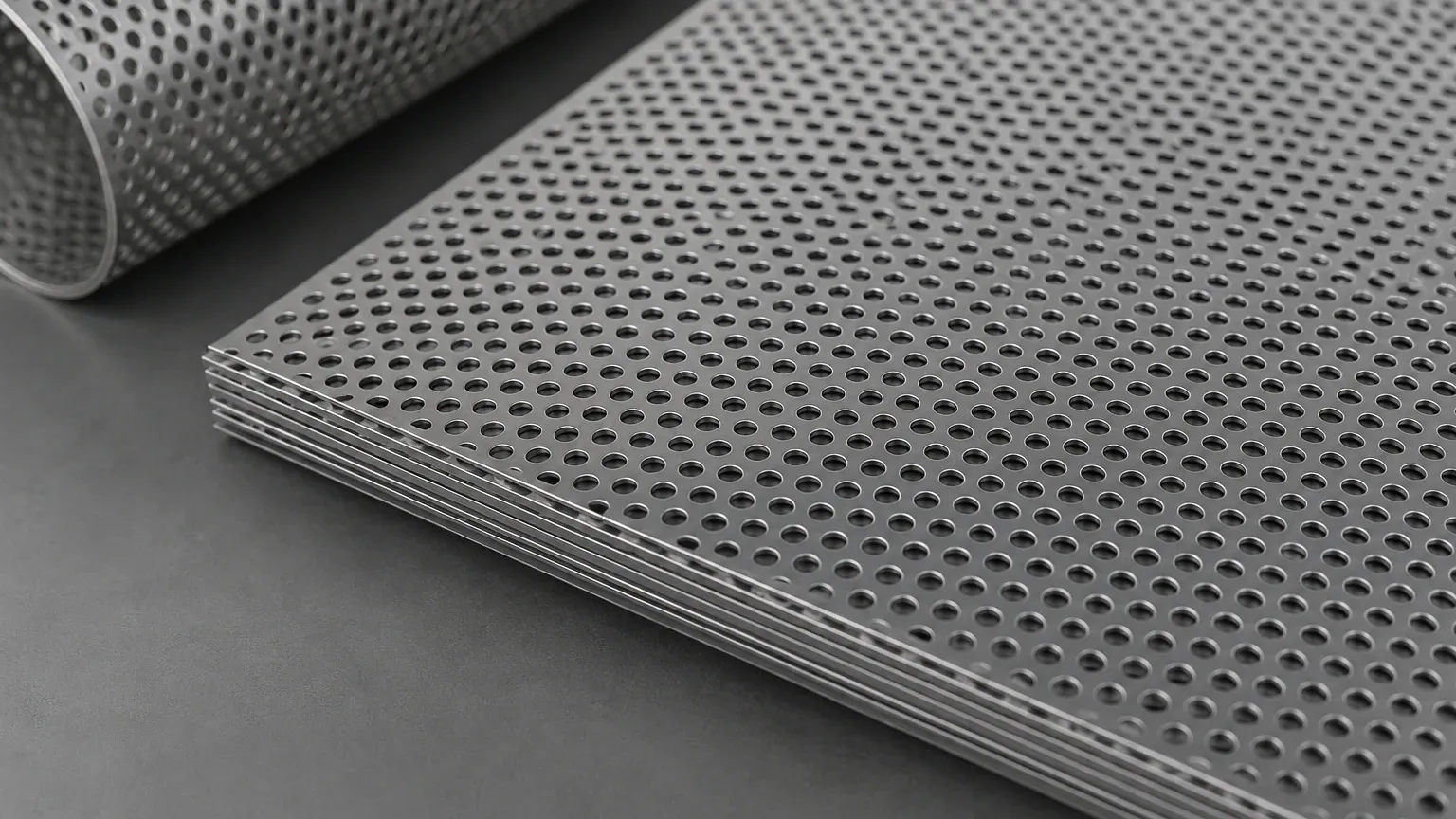
In industrial filtration and structural engineering, the specification of a 2mm perforated metal sheet represents a versatile middle ground between fine precision and mechanical durability. Whether the "2mm" refers to the hole diameter, the sheet thickness, or the center-to-center pitch, understanding the technical nuances of these dimensions is critical for ensuring the performance of the final component. As a specialized manufacturer of stainless steel filtration solutions, Kaifil provides high-performance Perforated & Expanded Metal products designed to meet the rigorous demands of chemical processing, food production, and hydraulic systems.
Selecting the correct perforated metal involves more than choosing a hole size; it requires a deep dive into material science, fluid dynamics, and manufacturing tolerances. This guide examines the engineering considerations and application criteria for 2mm perforated metal sheets in industrial environments.
Understanding the Technical Specifications of 2mm Perforated Metal
When engineers specify a "2mm perforated metal sheet," the term can be ambiguous without further qualification. In a professional procurement context, three distinct dimensions must be defined:
1. Hole Diameter (d): This is the most common interpretation. A 2mm hole diameter is frequently used for medium-grade filtration, sorting, and protective screening. It is large enough to allow significant flow while small enough to retain coarse particulates.
2. Sheet Thickness (t): A 2mm thick sheet (approximately 14 gauge) provides substantial structural rigidity. In filtration, the thickness of the plate influences the pressure drop across the medium and the mechanical strength against backwashing or high-pressure differentials.
3. Pitch (p): The distance from the center of one hole to the center of the adjacent hole. A 2mm pitch with a 1mm hole would result in a specific open area percentage. If the pitch itself is 2mm, the spacing between holes becomes a critical factor in the sheet's overall strength.
For most industrial filtration applications, a 2mm perforated metal sheet typically refers to a stainless steel plate with 2mm round holes. The relationship between the hole diameter and the plate thickness is governed by the "one-to-one rule," which suggests that for standard punching processes, the hole diameter should not be less than the material thickness to avoid excessive tool wear or breakage.
Material Selection: The Role of Stainless Steel
The environment in which the perforated sheet operates dictates the material choice. While carbon steel and aluminum are available, stainless steel remains the industry standard for filtration and high-stress industrial applications due to its corrosion resistance and mechanical properties.
Grade 304 Stainless Steel
This is the most common grade used for general-purpose perforated sheets. It offers excellent forming and welding characteristics and provides reliable resistance to atmospheric corrosion and many organic and inorganic chemicals. It is widely used in food processing and architectural applications.
Grade 316/316L Stainless Steel
For more demanding environments, such as marine applications or chemical processing involving chlorides, Grade 316 is the preferred choice. The addition of molybdenum enhances its resistance to pitting and crevice corrosion. 316L (low carbon) is used when heavy welding is required to prevent carbide precipitation.
Specialty Alloys
In high-temperature or highly acidic environments, alloys like Duplex stainless steel or Monel may be used. These materials ensure that the 2mm perforations maintain their geometric integrity even under thermal expansion or aggressive chemical attack.
Calculating Open Area and Its Impact on Filtration
The "Open Area" is the percentage of the sheet that is occupied by holes. This is the most critical value for engineers calculating flow rates and pressure drops. For a standard 60-degree staggered round hole pattern—the most common and strongest configuration—the formula is:
Open Area % = (d² × 90.69) / p²
Where:
* d = Hole diameter (e.g., 2mm)
* p = Pitch (center-to-center distance)
For a 2mm perforated metal sheet with a 3mm pitch, the open area would be approximately 40.3%.
Why Open Area Matters
In filtration, a higher open area reduces the resistance to fluid or gas flow, thereby lowering the energy required for pumping and reducing the risk of system fatigue. However, increasing the open area decreases the structural integrity of the sheet. Engineers must balance the need for high throughput with the requirement that the filter element withstand the mechanical stresses of the operating environment.
Engineering Considerations: Strength vs. Permeability
One of the primary challenges in designing a 2mm perforated metal sheet for industrial use is the trade-off between permeability and mechanical strength.
Pressure Drop (ΔP)
As fluid passes through the 2mm holes, a pressure differential is created. If the holes are too sparse (low open area), the pressure drop increases, which can lead to cavitation in pumps or deformation of the filter media. Conversely, if the holes are too densely packed, the "bridge" (the metal between the holes) may become too thin, leading to stress cracks over time.
Structural Support
In many high-pressure hydraulic or water treatment systems, a 2mm perforated sheet acts as a support core for finer wire mesh layers. In this "support tube" configuration, the 2mm sheet must resist collapse under external pressure. The thickness of the 2mm sheet becomes a vital engineering parameter here; a 2mm thick plate with 2mm holes provides a robust foundation that prevents the finer mesh from migrating or tearing.
Cleaning and Maintenance
Unlike woven wire mesh, perforated metal has a smooth surface that is easier to clean via backpulsing or mechanical scraping. The 2mm hole size is particularly effective in self-cleaning filters where larger debris must be removed without the particles becoming wedged in the media (a phenomenon known as "blinding").
Manufacturing Precision and Customization
Producing a high-quality 2mm perforated metal sheet requires advanced CNC punching or laser cutting technology. At Kaifil, we emphasize precision to ensure that every hole is uniform in diameter and spacing, which is essential for consistent filtration performance.
Punching vs. Laser Cutting
* Punching: This is the most cost-effective method for large production runs. It creates clean, consistent holes. However, for very thick materials (e.g., a 3mm plate with 2mm holes), punching becomes technically difficult.
* Laser Cutting: Offers extreme precision and the ability to create complex patterns or vary hole sizes across a single sheet. It is ideal for thicker plates where punching would cause material distortion.
Secondary Processing
Industrial applications often require more than just a flat sheet. Kaifil provides various secondary services to turn perforated sheets into functional components:
* Rolling and Welding: Forming the sheet into cylinders for use as filter cartridges or intake screens.
* Degreasing and Passivation: Essential for food-grade and pharmaceutical applications to ensure the removal of manufacturing oils and the restoration of the protective oxide layer on stainless steel.
* Leveling: Ensuring the sheet is perfectly flat after the punching process, which naturally introduces internal stresses into the metal.
Applications of 2mm Perforated Metal in Industry
The versatility of the 2mm perforated metal sheet allows it to serve across various sectors:
1. Chemical and Petrochemical Processing
Used as catalyst support grids and internal components for reactor vessels. The 2mm holes allow for the passage of processed fluids while retaining catalyst beads or preventing large scale-flakes from entering sensitive downstream equipment.
2. Food and Beverage Industry
In grain drying, malting, and fruit juice extraction, 2mm perforated sheets are used as sorting screens and drainage plates. Stainless steel 304 or 316 ensures compliance with hygiene standards and resistance to organic acids.
3. Water Treatment and Desalination
Acting as a pre-filter or intake screen, the 2mm sheet protects membranes and high-pressure pumps from stones, shells, and other large debris. Its durability in saltwater environments (when using 316L) is a key advantage.
4. Acoustic and Architectural Dampening
Beyond filtration, 2mm perforated sheets are used in silencers and acoustic panels. The hole size and pattern are engineered to trap specific sound frequencies, making them useful in heavy machinery enclosures and power plants.
Critical Questions for Engineers Before Procurement
To ensure the successful integration of a 2mm perforated metal sheet into a project, technical teams should confirm the following details with their manufacturer:
* What is the required thickness-to-hole ratio? If the thickness exceeds the hole diameter, specialized drilling or laser cutting may be necessary, impacting the total cost.
* What are the margin requirements? Standard sheets often have "unfinished" edges where the hole pattern stops. If a specific solid border (margin) is needed for welding or mounting, this must be specified in the design phase.
* What is the flow medium? Understanding the viscosity, temperature, and chemical composition of the fluid will determine if a standard 2mm hole is sufficient or if a different pattern (like slotted holes) would better prevent clogging.
* What is the expected lifecycle? For high-vibration environments, the bridge width between holes must be calculated to prevent fatigue failure.
Conclusion
The 2mm perforated metal sheet is a fundamental component in modern industrial design, offering a balance of filtration efficiency and structural integrity. Whether used as a standalone screen or as a support structure within a complex filter assembly, its performance depends on precise manufacturing and informed material selection.
Kaifil’s expertise in Perforated & Expanded Metal ensures that engineers receive components tailored to their specific pressure, flow, and environmental requirements. By focusing on technical accuracy and high-grade stainless steel fabrication, we help our partners achieve reliable and cost-effective filtration solutions for the most demanding applications.
