


Perforated Metal 3mm
In industrial engineering and filtration design, the specification of "perforated metal 3mm" typically refers to one of two critical dimensions: the hole diameter or the sheet thickness. Both parameters are fundamental to the structural integrity and functional performance of the component. Selecting the right combination of these dimensions is essential for applications ranging from coarse filtration in chemical processing to protective screening in heavy machinery.
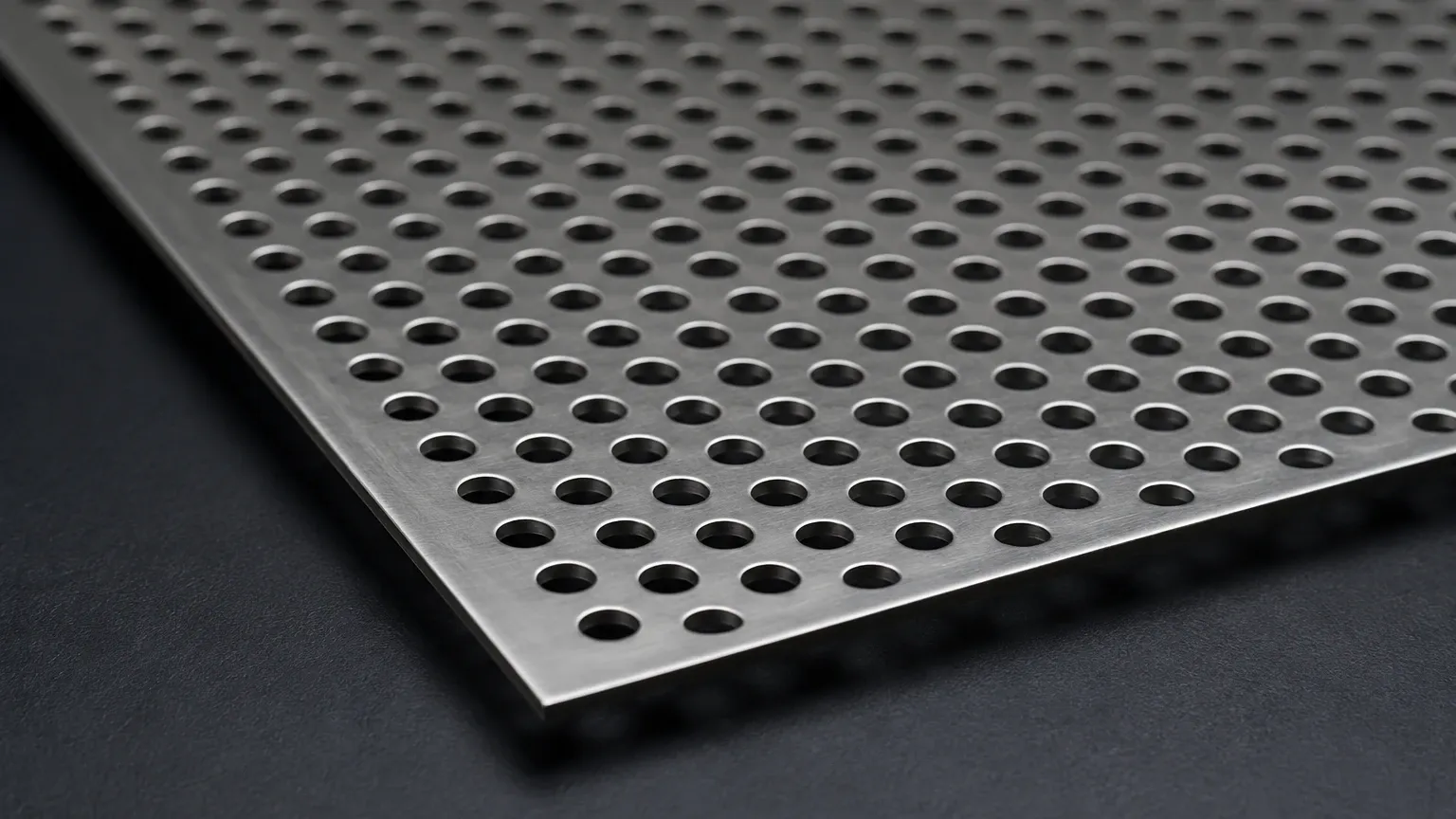
Perforated metal is produced by mechanically punching or laser-cutting a series of holes into a metal sheet. When dealing with a 3mm specification, engineers must balance the requirements for flow rate (open area) against the mechanical strength of the material. As a specialized manufacturer, Kaifil provides precision-engineered Perforated & Expanded Metal solutions designed to meet the rigorous demands of industrial environments.
Understanding the Technical Specifications of Perforated Metal 3mm
When an engineering brief specifies perforated metal 3mm, the first step is to clarify whether the 3mm refers to the aperture (hole size) or the gauge (material thickness). In many industrial filtration contexts, a 3mm hole diameter is a standard for primary screening, while a 3mm thickness is common for heavy-duty support structures or architectural panels.
The Relationship Between Hole Size and Thickness
One of the most important engineering principles in perforation is the "one-to-one rule." Ideally, the hole diameter should not be smaller than the material thickness. For instance, if you are using a 3mm thick stainless steel sheet, the hole diameter should generally be 3mm or larger. Punching a hole smaller than the material thickness increases internal stress on the tooling and the metal, often leading to premature tool wear or deformation of the sheet.
Pitch and Staggered Patterns
The performance of perforated metal 3mm is also defined by the pitch—the distance between the centers of adjacent holes. The most common configuration is the 60-degree staggered pattern, which provides the highest open area and uniform strength across the sheet. A typical specification might involve a 3mm hole with a 5mm pitch, creating a specific open area percentage that dictates the flow velocity and pressure drop in filtration systems.
Material Selection for 3mm Perforated Components
The choice of material is as critical as the dimensions. In industrial filtration and processing, stainless steel is the preferred medium due to its mechanical properties and resistance to environmental degradation.
Stainless Steel 304 vs. 316L
For most standard industrial applications, Grade 304 stainless steel provides excellent durability and cost-effectiveness. However, in environments involving high chloride concentrations, acidic solutions, or pharmaceutical processing, Grade 316L is required. The addition of molybdenum in 316L enhances its resistance to pitting and crevice corrosion, which is vital when the perforated metal 3mm component is subjected to continuous immersion or aggressive cleaning cycles.
Specialty Alloys and Carbon Steel
While stainless steel is the mainstay for Kaifil’s filtration solutions, other materials like carbon steel may be used for dry applications where corrosion is not a primary concern. In specialized chemical processing, exotic alloys like Duplex stainless steel or Monel may be specified for their unique resistance to high-pressure and high-temperature environments. Regardless of the material, the precision of the 3mm perforation remains the central focus for ensuring consistent performance.
Calculating Open Area and Filtration Efficiency
For engineers, the "open area" is the most significant value derived from the perforated metal 3mm specification. It represents the percentage of the sheet that is comprised of holes, directly influencing the flow rate and the size of particles that can pass through the medium.
Mathematical Determination
To calculate the open area for a 3mm round hole in a 60-degree staggered pattern, the following formula is used:
Open Area % = (D² × 90.69) / R²
*Where D = Hole Diameter (3mm) and R = Center-to-Center Pitch.*
If the pitch is 5mm, the open area would be approximately 32.6%. Increasing the pitch reduces the open area, which increases the structural strength but also increases the pressure drop across the filter. Conversely, a tighter pitch increases the open area but may compromise the sheet's ability to withstand hydraulic pressure or mechanical impact.
Impact on Filtration
A 3mm hole size is often used as a "pre-filter" or a support layer for finer wire mesh. In multi-stage filtration systems, the perforated metal 3mm layer protects more delicate mesh components from large debris or high-velocity turbulence. It acts as a robust barrier that ensures the longevity of the entire filtration assembly.
Industrial Applications for Perforated Metal 3mm
The versatility of perforated metal 3mm makes it a staple in various sectors. Its application is rarely purely aesthetic; it is almost always a functional component of a larger mechanical system.
Chemical and Petrochemical Processing
In chemical reactors and distillation columns, perforated plates are used to distribute flow or support catalyst beds. A 3mm thickness provides the necessary rigidity to support the weight of the catalyst while maintaining a precise flow path for gases or liquids.
Food and Beverage Production
Perforated metal is widely used in grain drying, fruit processing, and brewery lautering tuns. The 3mm specification is often found in screens used to separate solids from liquids. Because stainless steel is non-reactive and easy to sanitize, it meets the strict hygiene standards required in these industries.
Hydraulic and Water Treatment
In large-scale water intake systems, perforated metal 3mm screens prevent aquatic life and large debris from entering pumps and turbines. In hydraulic systems, perforated tubes serve as the inner core of filter cartridges, providing the structural backbone that prevents the filter media from collapsing under high differential pressure.
Engineering Considerations: Margins, Flatness, and Burrs
Ordering perforated metal 3mm requires more than just specifying the hole size and thickness. Several secondary factors influence the final quality and fitment of the part.
1. Margins: Standard perforated sheets often have a "minimum margin" where the hole pattern ends before the edge of the sheet. For custom OEM components, engineers may require "no margins" or specific "blank areas" for welding and mounting. Clear communication on margin requirements is essential to avoid interference during assembly.
2. Flatness and Leveling: The punching process introduces internal stresses into the metal, which can cause the sheet to bow or curl. Precision leveling is a necessary post-perforation step to ensure the 3mm sheet remains flat, especially if it is to be laser-cut or formed into a cylinder later.
3. Burr Removal: Punching naturally creates a "burr" on the exit side of the hole. In filtration applications, these burrs can trap contaminants or cause turbulence. Kaifil utilizes various deburring and polishing techniques to ensure a smooth finish, which is critical for both performance and safety during handling.
Customization and OEM Capabilities
Every industrial application has unique constraints. While standard perforated metal 3mm sheets are available, most high-performance filtration systems require customized solutions. This involves tailoring the dimensions, hole patterns, and material grades to the specific pressure, temperature, and chemical conditions of the project.
Customization often includes:
* Forming and Welding: Rolling perforated sheets into cylinders or cones for filter cartridges.
* Surface Finishes: Electropolishing or pickling to enhance corrosion resistance and cleanliness.
* Complex Hole Geometries: While round holes are standard, square, slotted, or hexagonal perforations may be required for specific mechanical or flow characteristics.
By working with a dedicated manufacturer, engineers can ensure that their perforated metal 3mm components are not just "off-the-shelf" parts but are optimized for the total cost of ownership and long-term reliability.
Comparing Perforated & Expanded Metal
When evaluating Perforated & Expanded Metal for a project, it is important to understand the manufacturing differences. While perforated metal is created by removing material (punching holes), expanded metal is created by slitting and stretching the material simultaneously.
Expanded metal is often more cost-effective because there is no material waste (no "slugs" are punched out). However, perforated metal 3mm offers superior precision in hole size and a smoother surface finish, which is usually preferred in high-end filtration and food-grade applications. Perforated metal also allows for "blank margins" and specific hole placements that are impossible to achieve with the continuous diamond pattern of expanded metal.
Conclusion: Confirming Requirements for Your Project
Before finalizing a purchase or design for perforated metal 3mm, technical teams should confirm several key data points to ensure the component performs as expected:
* Primary Function: Is the 3mm specification for the hole size (filtration) or the thickness (structure)?
* Environmental Factors: Will the component be exposed to corrosive chemicals, high temperatures, or abrasive particles?
* Mechanical Loading: What is the expected pressure drop or physical load the sheet must support?
* Tolerance Requirements: What are the acceptable variances for hole diameter and sheet flatness?
By addressing these engineering considerations early in the design phase, purchasing teams can avoid common pitfalls such as material failure or assembly mismatches. Kaifil’s expertise in custom stainless steel filtration ensures that every perforated component is manufactured to the highest standards of precision and durability, providing reliable solutions for the most demanding industrial applications.
