


Perforated Metal 4×8
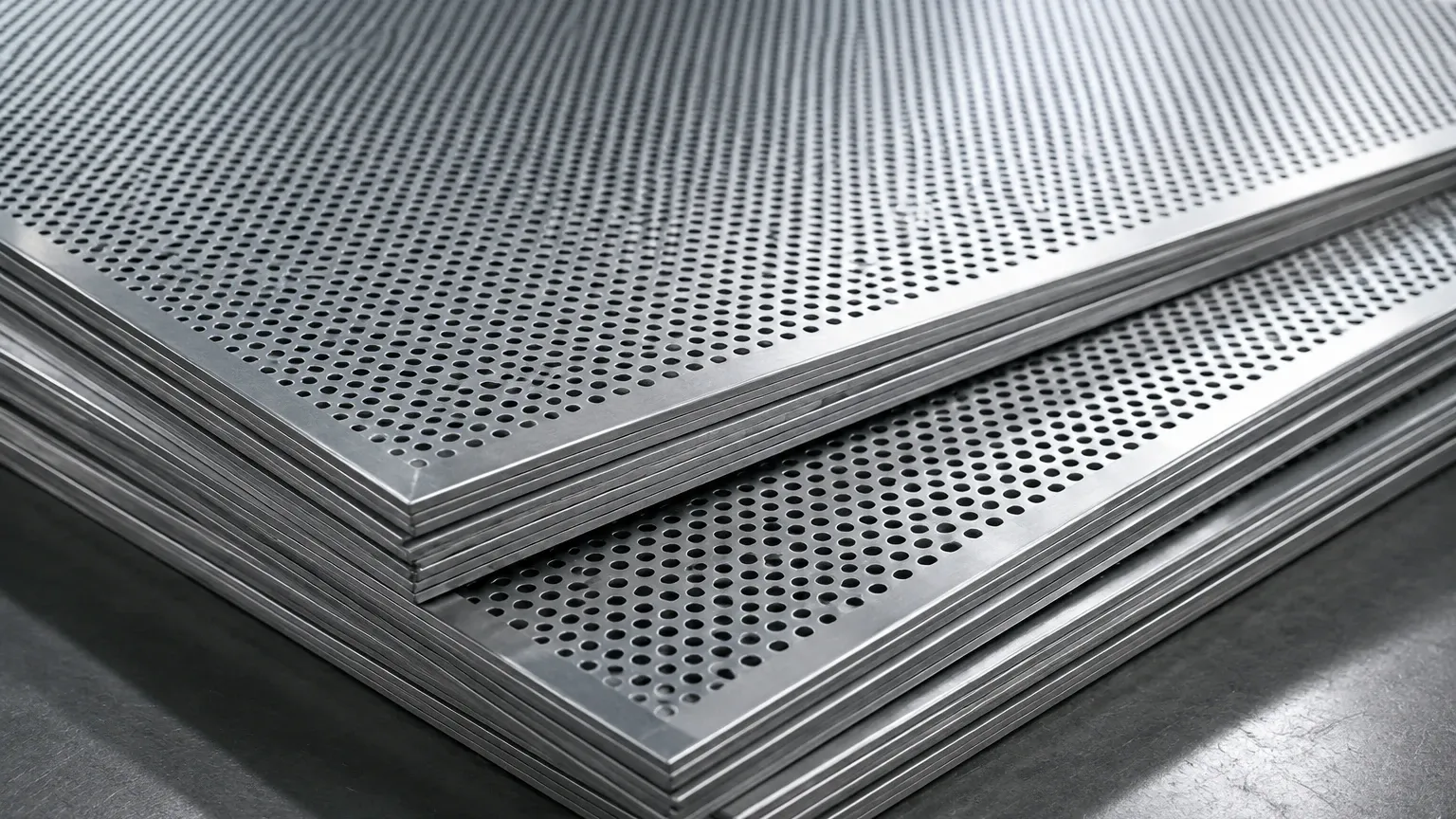
In the landscape of industrial manufacturing and filtration, the perforated metal 4×8 sheet stands as one of the most versatile and widely utilized formats. Measuring four feet by eight feet (approximately 1219 mm x 2438 mm), this standard dimension is the cornerstone for a vast array of applications, ranging from heavy-duty industrial strainers to precision architectural components. For engineers and procurement specialists, understanding the technical nuances of these sheets—from material metallurgy to the physics of open area—is essential for ensuring long-term performance and cost-efficiency.
As a specialized manufacturer of stainless steel filtration solutions, Kaifil recognizes that the selection of Perforated & Expanded Metal is rarely about the dimensions alone. It is about how those dimensions interact with hole geometry, material thickness, and environmental stressors to provide a reliable filtration or structural barrier.
The Engineering Logic Behind the 4×8 Standard
The prevalence of the perforated metal 4×8 format is not arbitrary. It aligns with global industrial standards for sheet metal production, logistics, and secondary processing machinery. Most hydraulic presses, laser cutters, and CNC punching machines are optimized for this specific footprint, which minimizes material waste and reduces the setup time required for custom fabrication.
From a logistics perspective, 4×8 sheets are easily palletized and transported via standard freight, making them a cost-effective choice for large-scale industrial projects. In the context of filtration, these sheets often serve as the "motherboard" from which smaller, circular, or cylindrical filter components are harvested. By starting with a standard 4×8 sheet, manufacturers can maximize the nesting of parts, thereby reducing the total cost per unit for the end-user.
Material Selection: Prioritizing Durability and Compatibility
When specifying a perforated metal 4×8 sheet for industrial use, the choice of material is the most critical decision impacting the component's lifecycle. While carbon steel and aluminum are available, industrial filtration and chemical processing environments typically demand the superior properties of stainless steel.
Stainless Steel 304
This is the most common grade used for perforated sheets. It offers excellent corrosion resistance and formability. In food and beverage applications, SS304 provides a sanitary surface that resists oxidation from water and many organic chemicals. It is the standard choice for general-purpose industrial guarding and support structures.
Stainless Steel 316
For more demanding environments, such as pharmaceutical manufacturing or marine applications, SS316 is the preferred material. The addition of molybdenum (typically 2-3%) significantly enhances its resistance to pitting and crevice corrosion in chloride-rich environments. When a perforated metal 4×8 sheet is intended for use in chemical reactors or saltwater filtration, SS316 ensures structural integrity where other metals would fail.
Specialized Alloys
In high-temperature or highly acidic environments, engineers may specify exotic alloys like Monel, Inconel, or Hastelloy. These materials maintain their mechanical properties under extreme thermal stress, which is vital for high-pressure steam filtration or petrochemical refining.
Technical Parameters: Hole Patterns and Open Area
The performance of a perforated metal 4×8 sheet is defined by its hole pattern and the resulting percentage of open area. These factors dictate flow rates, pressure drops, and the size of particles that can pass through the medium.
Round Hole Patterns
Round holes are the most popular geometry due to their structural stability and ease of manufacturing. They are typically arranged in two ways:
1. 60-Degree Staggered: This is the industry standard for filtration. It provides the highest percentage of open area and the greatest structural strength because the holes are equidistant from one another.
2. Straight Line: Holes are aligned in rows and columns. While easier to align with certain structural frames, this pattern offers lower strength and less open area than staggered configurations.
Square and Slotted Holes
Square holes offer a higher open area for applications requiring maximum airflow or high-volume liquid throughput. Slotted holes are frequently used in sorting and sieving applications where the shape of the particle (such as grain or elongated fibers) requires a specific orientation to pass through or be retained.
Calculating Open Area
The "Open Area Percentage" is the ratio of the total area of the holes to the total area of the sheet. For a 60-degree staggered round hole pattern, the formula is:
% Open Area = (D² x 90.69) / P²
*(Where D = Hole Diameter and P = Center-to-Center Pitch)*
For engineers, balancing the open area is a trade-off: a higher open area reduces pressure drop and increases flow, but it also reduces the mechanical strength of the sheet. Finding the "sweet spot" is essential for applications like hydraulic oil filtration or high-velocity air intake systems.
Manufacturing Precision: Margins, Flatness, and Tolerances
A common oversight in purchasing perforated metal 4×8 sheets is failing to specify the edge conditions and tolerances. In industrial B2B procurement, these details determine whether a sheet can be seamlessly integrated into a larger assembly.
Margins (Unperforated Edges)
Margins are the blank areas along the edges of the sheet where no holes are punched. Standard sheets may come with "minimum margins" (where the pattern is sheared through the holes) or "finished margins" (where a solid border is maintained). For filtration cartridges that require welding, a finished margin is essential to provide a clean surface for the weld bead, ensuring a leak-proof seal.
Flatness and "Oil Canning"
The process of punching thousands of holes into a metal sheet introduces significant internal stresses. This can cause the sheet to bow or develop waves, a phenomenon known as "oil canning." High-quality perforated metal 4×8 sheets undergo a leveling process (often via roller leveling) to ensure they meet strict flatness tolerances. This is particularly important if the sheet is to be used as a support plate in a multi-layer filter housing where gaps could lead to bypass.
Gauge and Thickness
Thickness is typically measured in gauges or millimeters. In the 4×8 format, maintaining a consistent thickness across the entire 32-square-foot surface is vital. Variations in thickness can affect the burst pressure of a filter or the load-bearing capacity of a walkway or screen.
Industrial Applications of Perforated Metal 4×8 Sheets
The versatility of the 4×8 format allows it to serve multiple roles across various heavy industries. At Kaifil, we see these sheets utilized in several critical capacities:
1. Support Structures for Fine Mesh
In many high-pressure filtration systems, a fine wire mesh is used to achieve micron-level filtration. However, the mesh itself lacks the structural rigidity to withstand high differential pressures. A perforated metal 4×8 sheet is often rolled into a cylinder or used as a flat plate to act as a "backup" or support layer, providing the necessary mechanical strength while allowing fluid to pass through.
2. Industrial Strainers and Baskets
For large-scale debris removal in water treatment or chemical processing, 4×8 sheets are fabricated into strainer baskets. The durability of stainless steel ensures that these components can be cleaned and reused, providing a lower total cost of ownership compared to disposable filter elements.
3. Acoustic Dampening and HVAC
In industrial power plants and manufacturing facilities, perforated sheets are used in silencers and acoustic panels. The holes allow sound waves to pass into sound-absorbing material behind the metal, while the metal itself protects the delicate insulation from mechanical damage and high-velocity airflow.
4. Protective Guarding and Safety
Machine guards made from perforated metal 4×8 sheets provide a unique combination of visibility, ventilation, and protection. Operators can monitor equipment while remaining shielded from moving parts, and the perforations prevent the buildup of heat within the enclosure.
Quality Evaluation and Risk Mitigation
When sourcing perforated metal 4×8 sheets, engineers must look beyond the price per sheet. Substandard manufacturing can lead to several risks that compromise the final product's performance.
* Burrs and Sharp Edges: Incomplete punching or dull dies can leave burrs on the exit side of the hole. In filtration, these burrs can trap contaminants prematurely or even break off and enter the downstream flow, causing catastrophic damage to pumps or valves.
* Hole Misalignment: If the punching sequence is not precisely controlled, the pattern can drift across the 8-foot length. This makes it difficult to align multiple sheets or to weld them into precise cylindrical shapes.
* Surface Contamination: During the perforating process, lubricants are used to cool the dies. If these lubricants are not properly removed (especially in stainless steel), they can lead to carbon contamination and subsequent localized corrosion (rusting) even in "stainless" grades.
To mitigate these risks, it is essential to confirm that the supplier adheres to strict quality control protocols, including degreasing processes and deburring stages. For pharmaceutical or food-grade applications, asking for material mill certificates and compliance with sanitary standards is a mandatory step in the procurement process.
Customization Beyond the Standard 4×8
While the 4×8 sheet is the starting point, many industrial applications require secondary operations to transform the raw material into a functional filtration component. Kaifil specializes in taking these raw Perforated & Expanded Metal materials and applying advanced manufacturing techniques to meet specific client needs.
Customization options include:
* Precision Shearing and Notching: Cutting the 4×8 sheet into exact dimensions for specific filter housings.
* Rolling and Welding: Forming the sheet into rigid tubes for use as center cores in filter cartridges.
* Surface Finishing: Electropolishing or passivating the stainless steel to enhance corrosion resistance and create a smoother surface for easier cleaning.
* Variable Perforation: Creating sheets with different hole sizes or patterns in different zones of the same 4×8 area to control flow distribution.
Conclusion: Making an Informed Procurement Decision
The perforated metal 4×8 sheet is more than just a commodity; it is a precision-engineered component that serves as the backbone of many industrial systems. By focusing on material grade, hole geometry, and manufacturing tolerances, engineers can ensure they select a product that offers the best balance of performance and longevity.
When evaluating your next project, consider the total lifecycle of the filter or structure. A high-quality stainless steel perforated sheet may have a higher upfront cost than a thinner or lower-grade alternative, but the reduction in maintenance, replacement frequency, and system downtime typically results in a much lower total cost of ownership.
For those requiring specific technical guidance or custom-fabricated filtration components, it is advisable to partner with a manufacturer that understands the intersection of metallurgy and fluid dynamics. We invite you to Review product options and application support to see how precision-engineered perforated solutions can be integrated into your specific industrial environment.
