


Perforated Metal Acoustic Ceiling Panels
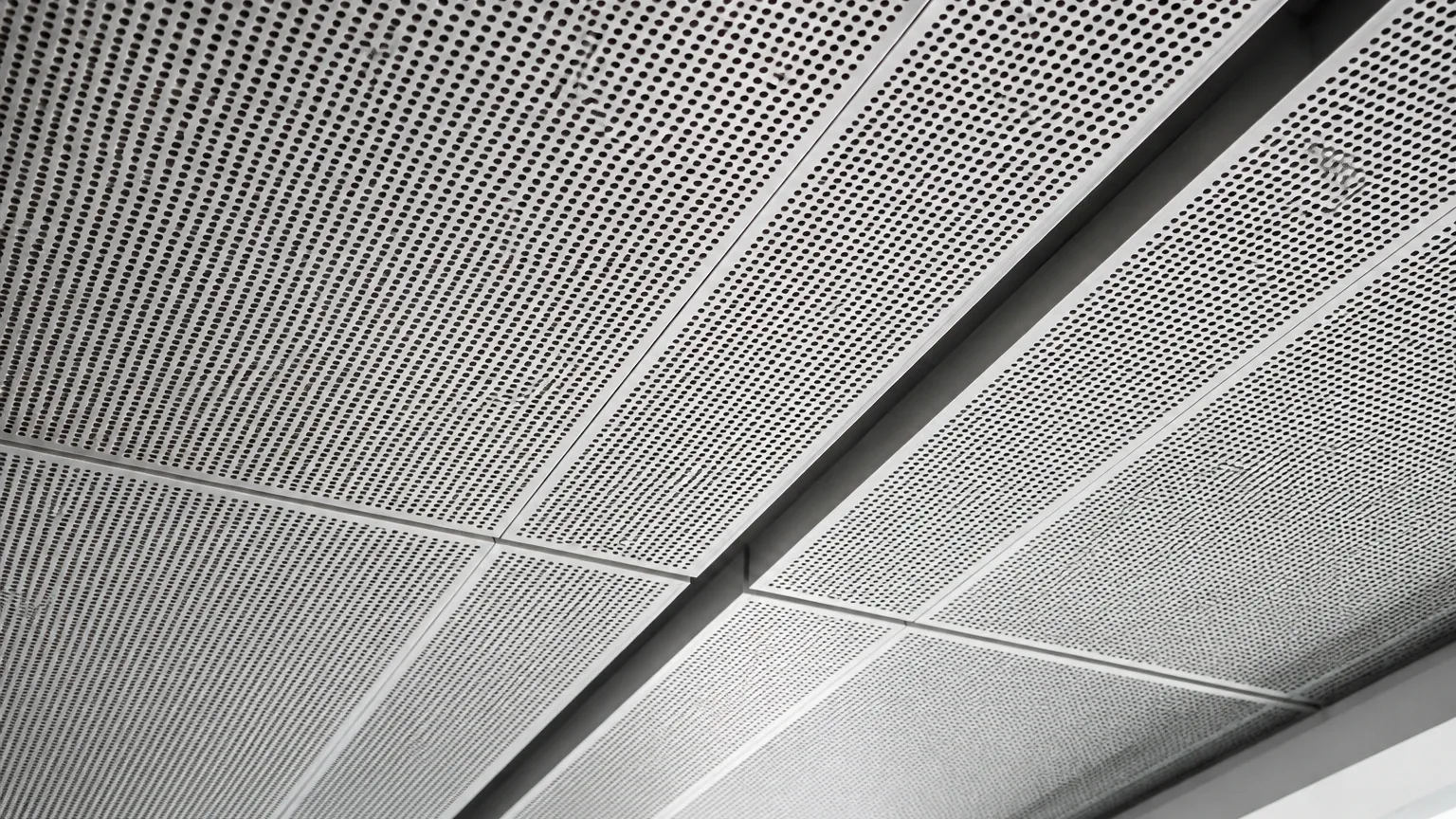
In industrial and commercial architecture, sound management is as much a matter of engineering as it is of design. High-traffic environments, manufacturing facilities, and specialized processing plants often face significant acoustic challenges, including excessive reverberation and high ambient noise levels. Perforated metal acoustic ceiling panels have emerged as a primary solution for these environments, offering a balance of structural durability, fire resistance, and superior sound attenuation.
Unlike traditional acoustic tiles made from mineral fiber or fiberglass, metal panels provide a robust, long-term solution that can withstand the rigors of industrial use. For engineers and procurement teams, selecting the right Perforated & Expanded Metal components requires a deep understanding of how perforation patterns, material properties, and acoustic backing materials interact to achieve specific Noise Reduction Coefficient (NRC) targets.
The Mechanics of Sound Absorption in Perforated Metal
It is a common misconception that the metal panel itself absorbs sound. In reality, a perforated metal panel acts as a "transparent" acoustic screen. Sound waves pass through the perforations rather than reflecting off a solid surface. Once the sound waves pass through the metal, they are trapped and dissipated by an acoustic absorbent material—typically mineral wool, fiberglass, or a specialized acoustic fleece—situated behind the panel.
From a technical perspective, the efficiency of this system is governed by the Helmholtz resonator principle. Each hole in the perforated panel, combined with the air cavity and the porous backing behind it, creates a resonant system that can be tuned to absorb specific sound frequencies. By adjusting the hole diameter, the spacing (pitch), and the depth of the air cavity, engineers can customize the acoustic response of the ceiling system to address low, mid, or high-frequency noise.
In industrial settings, where machinery may produce consistent low-frequency hums or high-frequency whistles, the ability to specify the perforation pattern is critical. A panel with a higher percentage of open area generally allows more sound energy to reach the absorbent backing, but this must be balanced against the structural requirements of the panel itself.
Technical Specifications: Open Area and Hole Patterns
The most critical factor in the performance of perforated metal acoustic ceiling panels is the "Open Area" percentage. This is the ratio of the area of the holes to the total area of the sheet. For acoustic applications, the open area typically ranges from 10% to 40%, although specific industrial requirements may demand higher or lower values.
Calculation of Open Area
The formula for calculating the open area depends on the hole arrangement. For a standard 60-degree staggered round hole pattern—the most common for acoustic panels—the formula is:
Open Area % = (D² × 90.69) / P²
*(Where D = Hole Diameter and P = Pitch/Center-to-Center distance)*
Pattern Selection
1. Round Holes: These are the industry standard due to their structural integrity and ease of manufacturing. They provide uniform sound transparency across the panel.
2. Square Holes: These offer a higher open area percentage for a given pitch but may reduce the overall stiffness of the panel. They are often chosen for high-volume airflow applications combined with acoustics.
3. Slotted or Micro-perforations: Micro-perforations (holes smaller than 1.5mm) are increasingly popular in environments where the aesthetic of a solid panel is desired without sacrificing acoustic performance. These patterns are highly effective at dissipating sound energy through friction as air moves through the tiny apertures.
Material Selection for Industrial Environments
While aluminum is frequently used in commercial office spaces due to its light weight, industrial applications often require the superior physical properties of stainless steel or galvanized steel. Kaifil specializes in custom stainless steel solutions, which offer distinct advantages in demanding environments.
Stainless Steel (Grades 304 and 316)
In chemical processing plants, food and beverage facilities, and pharmaceutical laboratories, corrosion resistance is non-negotiable. Stainless steel perforated panels are resistant to moisture, chemical vapors, and rigorous cleaning protocols. Grade 316, in particular, is recommended for marine environments or facilities using high-chloride cleaning agents. Beyond corrosion resistance, stainless steel provides the highest level of fire safety, as it does not contribute to smoke development or flame spread.
Galvanized Steel
For large-scale industrial warehouses or mechanical rooms where cost-effectiveness is a priority, galvanized steel provides excellent impact resistance and moderate corrosion protection. It is an ideal substrate for powder coating, which can further enhance the panel's durability and acoustic properties.
Aluminum
Aluminum is often specified where weight is a primary concern, such as in suspended ceiling systems for large transport hubs or airports. While easier to fabricate, it lacks the extreme temperature resistance and tensile strength of stainless steel.
Integrating Acoustic Backing Materials
The perforated metal panel is only one half of the acoustic equation. The choice of backing material determines the actual NRC rating of the assembly. There are three primary types of backing used with perforated metal acoustic ceiling panels:
1. Acoustic Fleece (Non-Woven Tissue)
This is a thin, black or white fabric that is thermally bonded to the back of the perforated panel during the manufacturing process. It is highly effective for mid-to-high frequency sound absorption and provides a clean, uniform look behind the perforations. Because it is very thin, it is ideal for applications where plenum space is limited.
2. Mineral Wool or Fiberglass Batts
For maximum sound absorption (NRC ratings of 0.90 or higher), thick batts of mineral wool or fiberglass are placed on top of the panels. These materials are excellent at absorbing low-frequency energy. In industrial settings, these batts are often encapsulated in a thin plastic film (mylar) to prevent fibers from shedding into the environment, which is crucial for cleanroom or food-grade applications.
3. Composite Inserts
In some specialized environments, a combination of materials is used to provide both sound absorption and sound transmission loss (blocking sound from traveling to the floor above). These typically consist of a layer of porous absorber and a high-mass barrier like loaded vinyl.
Engineering Considerations for Installation and Maintenance
When specifying perforated metal ceiling systems, engineers must account for the structural and operational requirements of the facility. A well-designed system must do more than just manage sound; it must be serviceable and safe.
Load-Bearing and Deflection
Perforated panels are inherently less rigid than solid sheets. Engineers must calculate the allowable deflection based on the panel thickness (gauge), the open area, and the span between supports. In industrial environments where panels may be subject to vibration or air pressure changes, using a heavier gauge or adding stiffeners to the back of the panel is often necessary.
Accessibility and Maintenance
In many facilities, the ceiling plenum houses critical infrastructure, including HVAC ducting, electrical conduits, and fire suppression systems. Ceiling panels should be designed for easy removal. Options include:
* Lay-in Panels: These sit in a standard T-bar grid and are the easiest to remove but offer the least security against uplift.
* Clip-in/Snap-in Systems: These provide a concealed grid appearance and lock the panels in place, making them suitable for high-vibration areas.
* Hook-on Systems: Often used for large-format panels, these allow for sequential access and are very secure.
Cleaning and Hygiene
In food processing or pharmaceutical environments, the ability to clean the ceiling is paramount. Stainless steel panels can be steam-cleaned or washed down with sanitizers. It is important to ensure that the acoustic backing is either removable or fully encapsulated to prevent moisture retention and microbial growth.
Customization and OEM Capabilities
Standard off-the-shelf acoustic panels often fail to meet the specific requirements of unique industrial projects. This is where custom manufacturing becomes essential. Buyers should look for partners capable of providing tailored solutions that address specific engineering hurdles.
Customization options typically include:
* Variable Perforation Zones: Creating panels with solid borders or specific perforated sections to accommodate light fixtures, sprinklers, or HVAC diffusers without compromising the panel's structural integrity.
* Precision Forming: Bending and shaping panels to fit curved ceilings or complex architectural geometries.
* Advanced Coatings: Applying specialized antimicrobial or high-durability powder coatings that do not bridge the perforations (which would reduce acoustic performance).
* Material Thickness: Adjusting the gauge of the metal to meet specific impact resistance or weight requirements.
By working closely with a manufacturer like Kaifil, procurement teams can ensure that the Perforated & Expanded Metal components are engineered to the exact tolerances required for the application. This collaborative approach reduces the risk of onsite installation issues and ensures that the final acoustic performance aligns with the initial engineering simulations.
Conclusion: Making an Informed Procurement Decision
Selecting perforated metal acoustic ceiling panels is a multi-faceted decision that impacts the safety, functionality, and longevity of an industrial facility. Engineers must prioritize material grade and open area calculations to ensure the panels can withstand the environment while meeting acoustic targets.
Before finalizing a specification, it is recommended to confirm the following with your manufacturer:
* Certified NRC Data: Ensure the perforation pattern and backing combination have been tested in an acoustic laboratory.
* Fire Ratings: Verify that the entire assembly, including the backing and any coatings, meets local fire and smoke safety standards.
* Structural Limits: Confirm that the chosen gauge and span are appropriate for the expected mechanical loads.
With the right engineering approach, perforated metal ceilings provide a durable, high-performance solution for the most demanding acoustic environments.
