


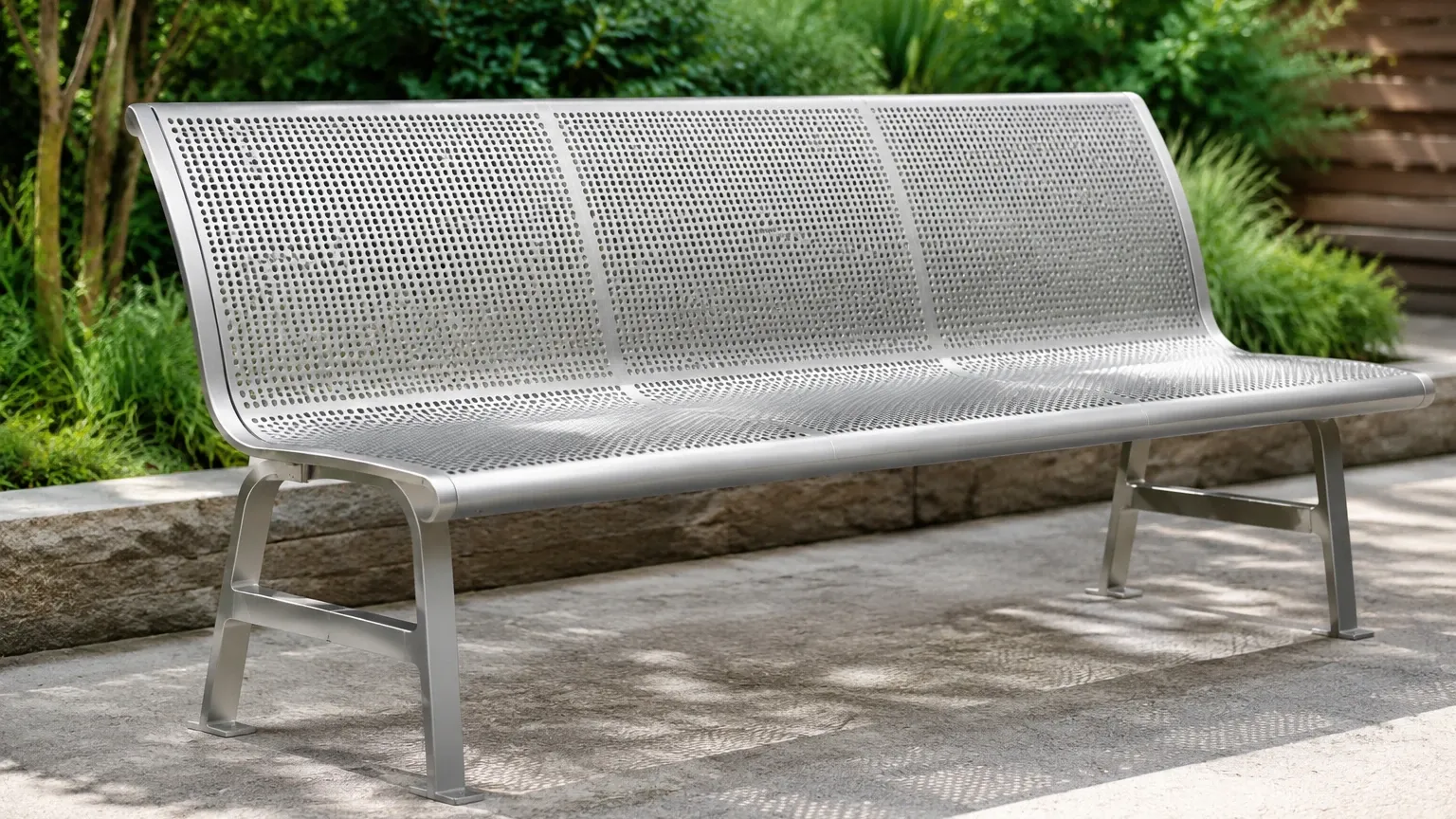
Perforated Metal Bench
In industrial environments, the selection of work surfaces and seating is dictated by more than just ergonomics; it is a matter of structural integrity, chemical resistance, and operational hygiene. A perforated metal bench serves as a critical component in laboratories, cleanrooms, and chemical processing facilities where airflow, drainage, and durability are paramount. Unlike solid surfaces, perforated metal offers a unique combination of strength-to-weight ratio and functional transparency, making it the preferred choice for demanding technical applications.
At the core of these components is the quality of the Perforated & Expanded Metal used in their construction. For engineers and procurement teams, understanding the technical nuances of material grades, hole patterns, and manufacturing tolerances is essential to ensuring that a perforated metal bench meets the specific rigors of its intended environment.
Engineering Fundamentals of Perforated Metal for Benches
The performance of a perforated metal bench is primarily defined by the specifications of the metal sheet from which it is fabricated. In industrial B2B contexts, the choice typically narrows down to stainless steel—specifically Grade 304 or Grade 316—due to its inherent resistance to oxidation and chemical exposure.
Material Selection
* Stainless Steel 304: This is the standard industrial grade, offering excellent corrosion resistance for most indoor and mildly corrosive environments. It is highly weldable and maintains structural integrity under significant loads.
* Stainless Steel 316: For environments involving high salinity, heavy chemical exposure, or pharmaceutical processing, SS316 is the preferred choice. The addition of molybdenum enhances its resistance to pitting and crevice corrosion, which is vital for benches subjected to aggressive cleaning agents.
Gauge and Thickness
The thickness of the metal sheet, often referred to as the gauge, determines the load-bearing capacity of the bench. For industrial workbenches, a thickness ranging from 11-gauge (approx. 3mm) to 16-gauge (approx. 1.5mm) is common. Thicker gauges are selected for heavy-duty assembly lines, while thinner gauges may suffice for laboratory seating or light-duty cleanroom tables. It is critical to calculate the deflection limits based on the expected weight distribution to prevent permanent deformation over time.
Geometric Configurations and Performance Impact
The hole pattern of a perforated metal bench is not merely an aesthetic choice; it directly influences the mechanical properties and functional utility of the surface. Engineers must evaluate the "Open Area Percentage" to balance the need for airflow with the requirement for a stable, flat surface.
Hole Patterns and Pitch
* Round Holes (Staggered vs. Straight): Round holes are the most common due to their structural stability and ease of cleaning. A 60-degree staggered pattern is often utilized because it provides the highest strength and the most uniform distribution of open space.
* Square Holes: These offer a higher open area percentage, which is beneficial for high-velocity laminar flow environments, though they may have slightly lower structural rigidity at the corners compared to round holes.
* Slotted Holes: Often used for drainage or specific sorting applications, slotted patterns can be oriented to facilitate the movement of fluids or debris away from the work area.
Calculating Open Area
The open area is the ratio of the area of the holes to the total area of the sheet, expressed as a percentage. For a perforated metal bench used in a cleanroom with vertical laminar flow, an open area of 40% to 60% is often targeted to minimize air turbulence. However, for a bench intended for heavy manual labor, a lower open area (20% to 30%) may be necessary to provide more "land" (the solid metal between holes) for structural support.
Manufacturing Processes and Quality Control
Producing a high-quality perforated metal bench requires precision manufacturing to ensure that the final product is free from burrs, sharp edges, or internal stresses that could lead to premature failure. As a specialized manufacturer, Kaifil emphasizes several key stages in the production of Perforated & Expanded Metal components.
Precision Punching and Leveling
The punching process involves high-speed CNC presses that create holes with high dimensional accuracy. However, the process of punching thousands of holes into a metal sheet introduces internal stresses, which can cause the material to curl or bow. Industrial-grade benches must undergo a leveling process—often through roller leveling—to ensure the surface is perfectly flat. A non-flat surface on a laboratory bench can lead to equipment instability and inaccurate measurements.
Deburring and Surface Finishing
In pharmaceutical and food processing applications, the presence of burrs is a significant risk factor for contamination and worker safety. After perforation, the sheets must be deburred. Furthermore, surface treatments such as electropolishing or passivation are applied to stainless steel. Electropolishing, in particular, removes a microscopic layer of the surface, resulting in a smooth, mirror-like finish that is highly resistant to bacterial adhesion and easier to sterilize.
Margin Considerations
Margins are the unperforated areas along the edges of the sheet. When designing a perforated metal bench, specifying the correct margins is vital for subsequent fabrication. Solid margins provide the necessary surface area for high-strength welding to the bench frame and ensure that the edges of the bench remain rigid and safe for operators.
Performance Advantages in Industrial Environments
Why choose a perforated metal bench over a solid stainless steel or plastic alternative? The advantages are rooted in the physical requirements of industrial operations.
Airflow and Laminar Flow Compatibility
In cleanrooms and biosafety labs, maintaining a consistent downward flow of filtered air is essential to prevent contamination. A solid bench would create air turbulence and "dead zones" where particulates can settle. The perforations allow the air to pass through the work surface, maintaining the integrity of the controlled environment.
Fluid Drainage and Heat Dissipation
In wet processing areas or chemical labs, spills are a common occurrence. A perforated metal bench allows liquids to drain immediately into a collection tray or floor drain, preventing the pooling of hazardous chemicals. Additionally, for benches housing electronic testing equipment or hot components, the perforations facilitate natural convection, helping to dissipate heat and protect sensitive instrumentation.
Ease of Sanitization
Stainless steel perforated surfaces are non-porous and resistant to the harsh disinfectants used in medical and food-grade facilities. The ability to spray down and steam-clean a bench without worrying about water entrapment (provided the design avoids "blind" crevices) makes it an ideal choice for high-hygiene zones.
Selection Criteria for Industrial Procurement
When sourcing a perforated metal bench, engineering and purchasing teams should confirm several technical details with the manufacturer to ensure the product is fit for purpose.
1. Load Capacity Requirements: Define the maximum static and dynamic loads. This will dictate the metal gauge and the required support structure beneath the perforated surface.
2. Chemical Compatibility: Confirm if the bench will be exposed to specific acids, bases, or solvents. This determines whether SS304 is sufficient or if SS316 is mandatory.
3. Hole Size vs. Object Size: Ensure that the hole diameter is smaller than the smallest tools or components used on the bench to prevent items from falling through.
4. Edge Treatment: Specify whether the edges should be folded (hemmed), framed with C-channel, or left flat for integration into an existing system.
5. Compliance Standards: In certain industries, the bench may need to meet specific standards, such as NSF for food safety or ISO standards for cleanroom equipment.
Maintenance and Long-Term Durability
The total cost of ownership for a perforated metal bench is significantly lower than cheaper alternatives due to its longevity. However, maintaining that durability requires adherence to proper care protocols. While stainless steel is "stainless," it is not "stain-proof." Regular cleaning to remove chloride deposits or concentrated chemical residues is necessary to prevent tea-staining or pitting.
For benches used in high-traffic industrial zones, periodic inspections of the weld points and the integrity of the perforated pattern are recommended. Because perforated metal can be customized to exact specifications, replacing a damaged top is often a straightforward process if the original manufacturing drawings are maintained. Kaifil provides the technical expertise to replicate or improve upon existing designs, ensuring that industrial facilities maintain peak operational efficiency.
Conclusion
A perforated metal bench is a sophisticated piece of industrial equipment that requires careful engineering to balance structural strength with functional requirements like airflow and drainage. By selecting the appropriate grade of Perforated & Expanded Metal and specifying precise geometric patterns, facilities can ensure a safe, durable, and compliant workspace. Whether for a high-tech cleanroom or a rugged chemical processing plant, the technical details—from gauge thickness to the method of deburring—make the difference between a surface that fails and one that performs for decades.
