


Perforated Metal Box
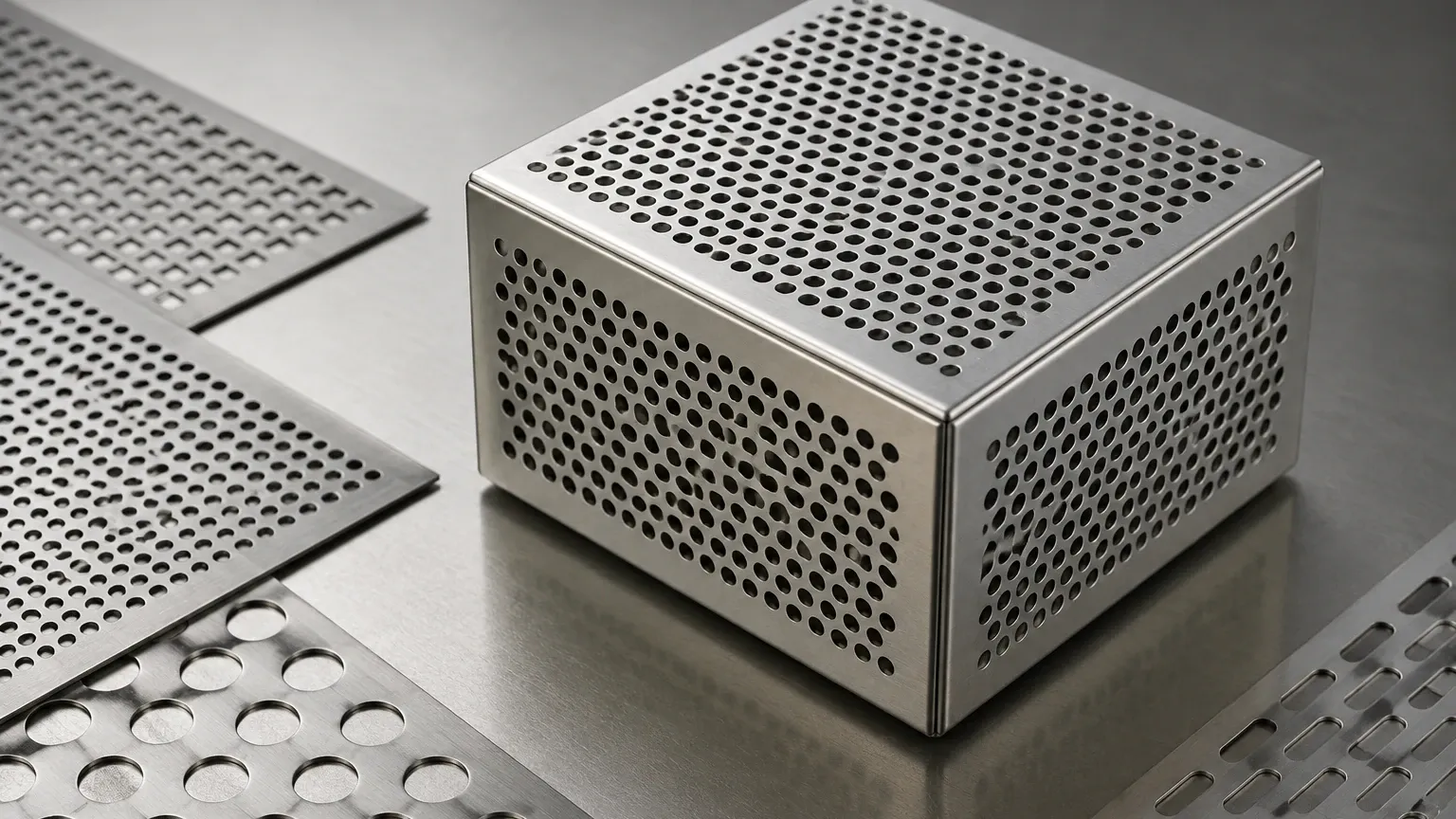
In industrial engineering and manufacturing, the transition from raw material to a functional component requires a deep understanding of both material properties and structural design. A perforated metal box is a prime example of this evolution, where flat sheets of Perforated & Expanded Metal are transformed into three-dimensional units designed for containment, filtration, protection, or ventilation. These components are critical in environments ranging from chemical processing plants to food production lines, where the balance between structural integrity and fluid or air permeability is paramount.
Selecting or designing a perforated metal box involves more than specifying dimensions. Engineers must account for hole geometry, open area percentages, load-bearing requirements, and the corrosive nature of the operating environment. This guide explores the technical considerations, manufacturing processes, and application-specific criteria essential for integrating these components into industrial systems.
Understanding the Role of Perforated Metal Boxes in Industrial Systems
A perforated metal box serves as a versatile enclosure or structural element. Unlike solid metal containers, these boxes allow for the controlled passage of air, light, sound, or fluids while retaining solid particles or providing mechanical protection. In the context of industrial filtration, these boxes often function as heavy-duty strainers, baskets, or support structures for finer filter media.
The primary advantage of using a perforated metal box lies in its strength-to-weight ratio. By utilizing perforated sheets, manufacturers can reduce the overall weight of a component without significantly compromising its structural rigidity, provided the engineering calculations for the "bridge" (the metal between the holes) are accurate. This makes them ideal for mobile industrial equipment, overhead ventilation systems, and manual handling trays in sterilization or washing processes.
Material Selection and Engineering Considerations
The performance of a perforated metal box is fundamentally dictated by the material from which it is fabricated. Since these components are often exposed to harsh chemicals, high temperatures, or high-pressure cleaning cycles, material choice is the first critical decision in the design phase.
Stainless Steel (304 and 316/316L)
Stainless steel is the industry standard for most industrial perforated boxes. Grade 304 offers excellent formability and general corrosion resistance, making it suitable for many industrial housings and ventilation covers. However, for applications involving chlorides, acids, or pharmaceutical-grade environments, Grade 316 or 316L is preferred. The addition of molybdenum in Grade 316 provides superior resistance to pitting and crevice corrosion, which is essential for long-term durability in marine or chemical processing environments.
Specialty Alloys and Carbon Steel
In specific high-temperature or highly specialized chemical environments, alloys like Monel, Inconel, or Hastelloy may be used. Conversely, for dry, indoor applications where cost is a primary driver and corrosion is not a concern, galvanized or plain carbon steel may suffice, though these often require secondary coatings like powder coating or galvanization to prevent oxidation.
Mechanical Strength and Gauge
The thickness (gauge) of the metal must be balanced against the perforation pattern. A high open-area percentage on a thin-gauge sheet may lead to structural failure under load. Engineers must calculate the "equivalent solid thickness" to ensure the box can withstand the internal pressure of the media it contains or the external force of the system it is integrated into.
Design Parameters: Hole Patterns and Open Area
The functionality of a perforated metal box is defined by its perforation pattern. This determines the flow rate, the size of particles captured, and the structural stability of the box walls.
Hole Geometry
* Round Holes: The most common and cost-effective pattern. Round holes offer the best structural integrity and are the easiest to manufacture with high precision.
* Square Holes: Often used for high-visibility or high-airflow applications. Square holes provide a larger open area but can create stress concentrations at the corners.
* Slotted Holes: Ideal for sorting or filtering elongated materials. These are frequently used in agricultural processing or specialized drainage systems.
Staggered vs. Straight Patterns
Holes are typically arranged in either a 60-degree staggered pattern or a straight line. The 60-degree staggered pattern is the most popular because it provides the highest open area and uniform strength across the sheet. Straight patterns are generally reserved for aesthetic applications or specific alignment requirements in ventilation.
Calculating Open Area
The open area is the ratio of the total area of the holes to the total area of the sheet, expressed as a percentage. For a perforated metal box used in filtration, the open area must be sufficient to prevent excessive pressure drop while ensuring the holes are small enough to perform the required containment or separation. For example, a box used as a pump suction strainer requires a high open area to avoid cavitating the pump, yet the structural ribs must remain thick enough to resist the suction force.
Manufacturing and Fabrication Techniques
Creating a high-quality perforated metal box requires precision at every stage of fabrication. The process begins with the raw Perforated & Expanded Metal sheet and involves several specialized steps.
CNC Punching and Laser Cutting
Modern manufacturing utilizes CNC (Computer Numerical Control) punching for high-volume production of perforated patterns. For complex box shapes or custom hole configurations, fiber laser cutting offers the precision needed to ensure that edges are clean and dimensions are exact. This is particularly important for boxes that must fit into tight tolerances within larger machinery.
Bending and Forming
Once the flat pattern is cut and perforated, it is moved to a press brake. The bending process must account for the "springback" of the metal, which can vary depending on the hole pattern. In a perforated metal box, the bends often occur along lines where the metal is thinner due to the perforations, requiring skilled operators to ensure the final angles are accurate and the structural integrity of the corners is maintained.
Welding and Assembly
The joints of the box are typically secured using TIG (Tungsten Inert Gas) or MIG (Metal Inert Gas) welding. For stainless steel boxes used in the food or pharmaceutical industries, TIG welding is preferred because it produces clean, high-quality welds that can be ground smooth to eliminate crevices where bacteria might grow. Spot welding is sometimes used for lighter-duty enclosures where high-pressure containment is not required.
Key Applications for Industrial Perforated Metal Boxes
The versatility of the perforated metal box makes it a staple in numerous industrial sectors. Its design is tailored to the specific needs of the application.
Industrial Filtration and Straining
In hydraulic systems and chemical processing, perforated boxes serve as primary filters. They are designed to catch large debris before it can reach and damage sensitive downstream components like pumps or fine mesh filters. These "filter baskets" are often removable for easy cleaning and maintenance.
Sterilization and Cleaning Trays
In the medical and pharmaceutical sectors, perforated boxes are used as trays for cleaning and sterilizing instruments. The perforations allow for the complete penetration of steam or cleaning chemicals and ensure rapid drainage and drying. These boxes are usually made from electropolished 316L stainless steel to ensure the highest levels of hygiene.
Acoustic Enclosures and Ventilation
Perforated metal is an excellent material for sound attenuation. A perforated metal box lined with acoustic insulation can be used to enclose noisy machinery, allowing heat to escape through the perforations while dampening sound waves. Similarly, they are used as protective covers for HVAC systems and electronic components that require constant airflow for cooling.
Material Handling and Storage
In manufacturing facilities, heavy-duty perforated boxes are used for parts washing or transporting hot components. The perforations allow oil, coolants, or heat to dissipate quickly, making the handling process safer and more efficient.
Evaluating Performance and Quality Standards
When procuring a perforated metal box, engineers must verify that the product meets specific quality benchmarks to ensure long-term reliability.
Dimensional Tolerances
In industrial assemblies, a box that is out of square by even a few millimeters can cause significant installation issues. Manufacturers should adhere to strict dimensional tolerances for the length, width, height, and hole alignment. This is especially critical for boxes that serve as inserts or cartridges in larger filtration housings.
Surface Finish
The finish of the metal affects both its corrosion resistance and its cleanability. Common finishes include:
* 2B Finish: A smooth, moderately reflective cold-rolled finish suitable for most industrial applications.
* Electropolishing: A chemical process that removes a fine layer of material, leaving a mirror-like, ultra-smooth surface. This is essential for pharmaceutical and food-grade boxes to prevent particle adhesion.
* Pickling and Passivation: Chemical treatments that remove surface contaminants and enhance the protective oxide layer of stainless steel.
Load Testing and Pressure Ratings
For boxes used in high-pressure filtration or heavy material handling, manufacturers may perform load testing to ensure the box does not deform under stress. Understanding the maximum differential pressure (ΔP) a perforated metal box can withstand before buckling is a vital safety consideration in pressurized systems.
Procurement and Customization: A Guide for Engineers
Customization is often necessary because off-the-shelf solutions rarely meet the precise needs of specialized industrial processes. When working with a manufacturer like Kaifil, providing detailed specifications ensures the final product performs as intended.
Information to Confirm Before Ordering
Before initiating a custom build for a perforated metal box, engineers should confirm the following:
1. Exact Media Properties: What fluid or gas will pass through the box? What is its temperature and pH level?
2. Required Flow Rate: What is the minimum open area needed to maintain system efficiency?
3. Mechanical Interface: How will the box be mounted? Does it require handles, flanges, or a locking lid?
4. Cleaning Cycle: How often will the box be cleaned, and what methods (ultrasonic, high-pressure steam, chemicals) will be used?
Total Cost of Ownership (TCO)
While carbon steel or lower-grade alloys may have a lower initial purchase price, the total cost of ownership often favors high-quality stainless steel. A perforated metal box that resists corrosion and mechanical fatigue will require fewer replacements and less downtime, ultimately providing better value over the lifecycle of the industrial system.
By focusing on precision engineering and material excellence, manufacturers can provide perforated metal boxes that not only meet the immediate needs of the application but also contribute to the overall efficiency and safety of the industrial environment. Whether used for complex filtration or simple mechanical protection, these components remain a fundamental building block of modern industrial design.
