


Perforated Metal Facade Panels
In modern industrial and commercial architecture, the selection of building envelope materials has shifted from purely aesthetic considerations to complex engineering requirements. Perforated metal facade panels represent a critical intersection of structural performance, environmental control, and material longevity. As a specialized manufacturer of stainless steel components, Kaifil provides high-precision Perforated & Expanded Metal solutions designed to meet the rigorous demands of industrial environments, chemical processing plants, and high-traffic commercial facilities.
Understanding the technical nuances of these panels is essential for engineers and purchasing teams. This guide examines the material properties, engineering calculations, and functional benefits that define high-quality perforated metal facade systems.
Understanding the Engineering Behind Perforated Metal Facade Panels
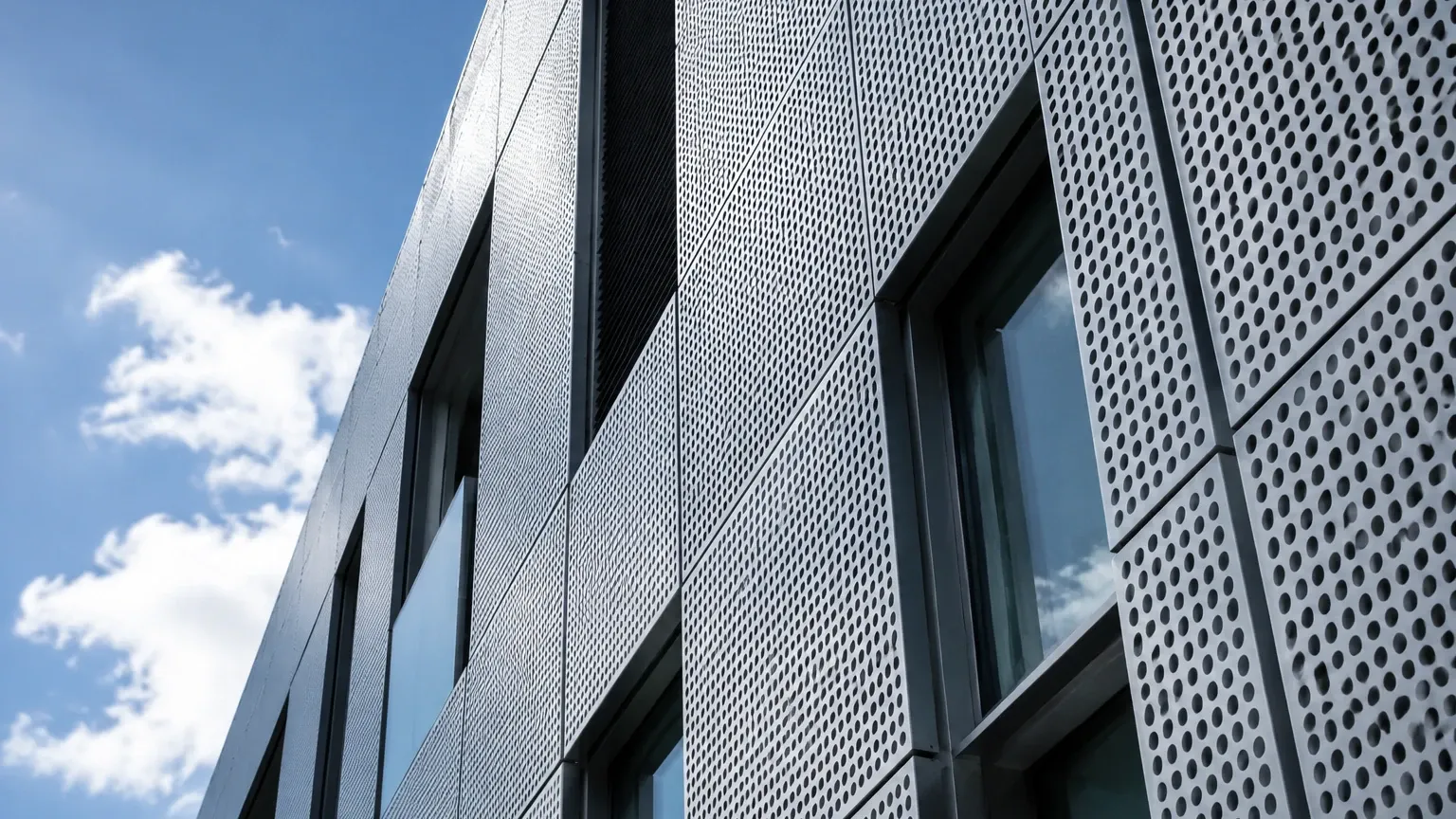
Perforated metal facade panels are more than simple decorative screens; they are engineered components that manage light, airflow, and structural loads. The manufacturing process involves the precise punching or laser cutting of sheet metal—typically stainless steel, aluminum, or galvanized steel—to create a specific pattern of holes.
The relationship between the hole size, the spacing (pitch), and the thickness of the material determines the panel's mechanical properties. For industrial applications, these panels must withstand wind loads, thermal expansion, and potentially corrosive atmospheres. Unlike standard cladding, perforated systems allow for a degree of transparency and permeability that is vital for ventilation in mechanical rooms, parking structures, and industrial enclosures.
Material Selection for Industrial Durability
The longevity of a facade system is primarily dictated by its material composition. In industrial contexts, where exposure to pollutants, moisture, and chemicals is common, material selection is the most critical decision in the procurement process.
Stainless Steel (Grades 304 and 316)
Stainless steel is the preferred choice for high-performance perforated metal facade panels due to its inherent corrosion resistance and high strength-to-weight ratio.
- Grade 304: Suitable for most standard industrial environments, providing excellent durability and resistance to oxidation.
- Grade 316: Contains molybdenum, making it essential for coastal installations or chemical processing facilities where chloride exposure is a risk.
Aluminum
Aluminum is frequently used when weight reduction is a priority. While it offers good corrosion resistance through natural oxidation or anodizing, it has a lower modulus of elasticity compared to stainless steel, requiring thicker gauges to achieve the same structural rigidity over large spans.
Specialized Alloys
For extreme environments, such as high-heat exhaust systems or heavy chemical processing, specialized alloys may be required. Kaifil’s expertise in custom filtration components translates directly to facade manufacturing, ensuring that material integrity is maintained even under harsh operating conditions.
Technical Parameters: Hole Patterns and Open Area
The performance of perforated metal facade panels is defined by the "Open Area" percentage. This is the ratio of the area of the holes to the total area of the sheet, expressed as a percentage. This figure dictates how much light, air, and sound can pass through the panel.
Common Hole Geometries
1. Round Holes: The most common and cost-effective pattern. Round holes offer the best structural stability and are available in staggered or straight configurations. A 60-degree staggered pattern is the industry standard for maximizing open area while maintaining sheet strength.
2. Square Holes: Often selected for higher open area requirements. However, square holes create higher stress concentrations at the corners, which must be accounted for in structural calculations.
3. Slotted Holes: Ideal for directional airflow or specific architectural visual effects. Slotted patterns are frequently used in screening applications where visibility needs to be obscured from one angle but maintained from another.
Calculating Open Area
For a standard 60-degree staggered round hole pattern, the open area (R) is calculated using the formula:
R = (D² × 90.69) / P²
Where:
- D = Hole diameter
- P = Pitch (distance between the centers of two adjacent holes)
Accurate calculation of the open area is vital for HVAC engineers who must ensure that the facade does not create excessive backpressure for building ventilation systems.
Functional Performance in Industrial Environments
Perforated metal facade panels serve several critical functional roles beyond their visual impact. In B2B and industrial applications, these functions often take precedence over aesthetics.
Thermal Regulation and Solar Shading
By strategically selecting the open area and hole pattern, engineers can use perforated panels as solar screens. These panels reflect a portion of solar radiation while allowing natural light and air to penetrate. This reduces the cooling load on the building’s HVAC system, leading to significant energy savings over the facility's lifecycle.
Airflow and Pressure Management
In industrial facilities housing heavy machinery, generators, or cooling towers, airflow is a safety requirement. Perforated metal facade panels provide the necessary ventilation while protecting equipment from debris and unauthorized access. Engineers must balance the need for airflow with the requirement for physical protection, often specifying different perforation patterns for different zones of a building.
Acoustic Dampening
Perforated metal is an effective component in acoustic management. When used in conjunction with sound-absorbing materials, the perforations allow sound waves to pass through the metal face and be trapped by the insulation behind it. This is particularly useful in industrial sites located near residential areas or in noisy manufacturing environments where sound attenuation is required by local regulations.
Structural Integrity and Load Considerations
A facade is a structural element that must be engineered to withstand environmental forces. Perforating a metal sheet inherently reduces its stiffness compared to a solid sheet of the same thickness. Therefore, structural calculations must account for the "Equivalent Solid Material" properties.
Wind Load Resistance
Facade panels must be able to withstand both positive pressure (wind blowing against the building) and negative pressure (suction on the leeward side). The open area of the panel actually helps reduce the total wind load by allowing some air to pass through, but the remaining surface area still experiences significant force. The gauge of the metal and the design of the framing system must be calculated based on the maximum expected wind speeds in the region.
Thermal Expansion
Metal expands and contracts with temperature fluctuations. For long runs of perforated metal facade panels, the mounting system must allow for this movement to prevent buckling or oil-canning. Slotted mounting holes and flexible joints are standard engineering solutions to accommodate thermal cycles.
Customization and OEM Manufacturing Capabilities
Industrial projects rarely fit a "one-size-fits-all" model. Customization is often required to meet specific filtration, ventilation, or structural needs. As a manufacturer specializing in custom stainless steel solutions, Kaifil offers extensive OEM capabilities for Perforated & Expanded Metal products.
Precision Manufacturing
Advanced CNC punching and laser cutting technologies allow for the creation of complex patterns and precise tolerances. This is essential when panels must integrate perfectly with other building components or when specific filtration accuracies are required for industrial enclosures.
Post-Processing and Finishing
To ensure the longevity of the facade, various post-processing steps can be applied:
- Degreasing and Cleaning: Removing manufacturing oils to ensure proper adhesion of coatings or to meet cleanroom standards.
- Passivation: A chemical process for stainless steel that enhances the protective oxide layer, significantly improving corrosion resistance.
- Powder Coating or Anodizing: Providing additional protection and specific color options for commercial applications.
Selection Guide for Engineering and Purchasing Teams
When specifying perforated metal facade panels, technical professionals should confirm several key data points before proceeding to the procurement phase:
1. Environment Assessment: Determine the level of corrosive elements (salts, chemicals, moisture) to choose between 304 or 316 stainless steel.
2. Open Area Requirements: Consult with HVAC and lighting engineers to define the minimum and maximum open area percentages.
3. Gauge and Span: Calculate the necessary metal thickness based on the distance between structural supports and the local wind load requirements.
4. Edge Margins: Specify the width of the solid (unperforated) borders around the perimeter of the panel. Margins are necessary for structural stability and to provide a clean surface for mounting and welding.
5. Flatness Tolerances: Perforating can introduce internal stresses that cause sheets to curl. Ensure the manufacturer uses leveling processes to guarantee panel flatness.
Total Cost of Ownership
While the initial cost of stainless steel perforated metal facade panels may be higher than alternative materials like plastic or lower-grade metals, the total cost of ownership (TCO) is often lower. The durability of stainless steel reduces the need for frequent replacements, and the energy savings provided by solar shading can offset the material costs over time. Furthermore, metal is highly recyclable, aligning with modern sustainability and LEED certification goals for industrial construction.
Conclusion
Perforated metal facade panels are high-performance components that require a deep understanding of material science and structural engineering. By focusing on precise technical specifications—such as material grade, open area calculations, and structural load resistance—engineers can implement facade solutions that are both functional and durable.
Kaifil continues to support global industrial sectors by providing customized, high-quality metal components. Whether for chemical processing ventilation, architectural screening, or specialized industrial enclosures, our commitment to precision manufacturing ensures that every panel meets the exact requirements of the application. For technical support and detailed product specifications, exploring the range of Perforated & Expanded Metal options is the first step toward an optimized filtration or facade solution.
