


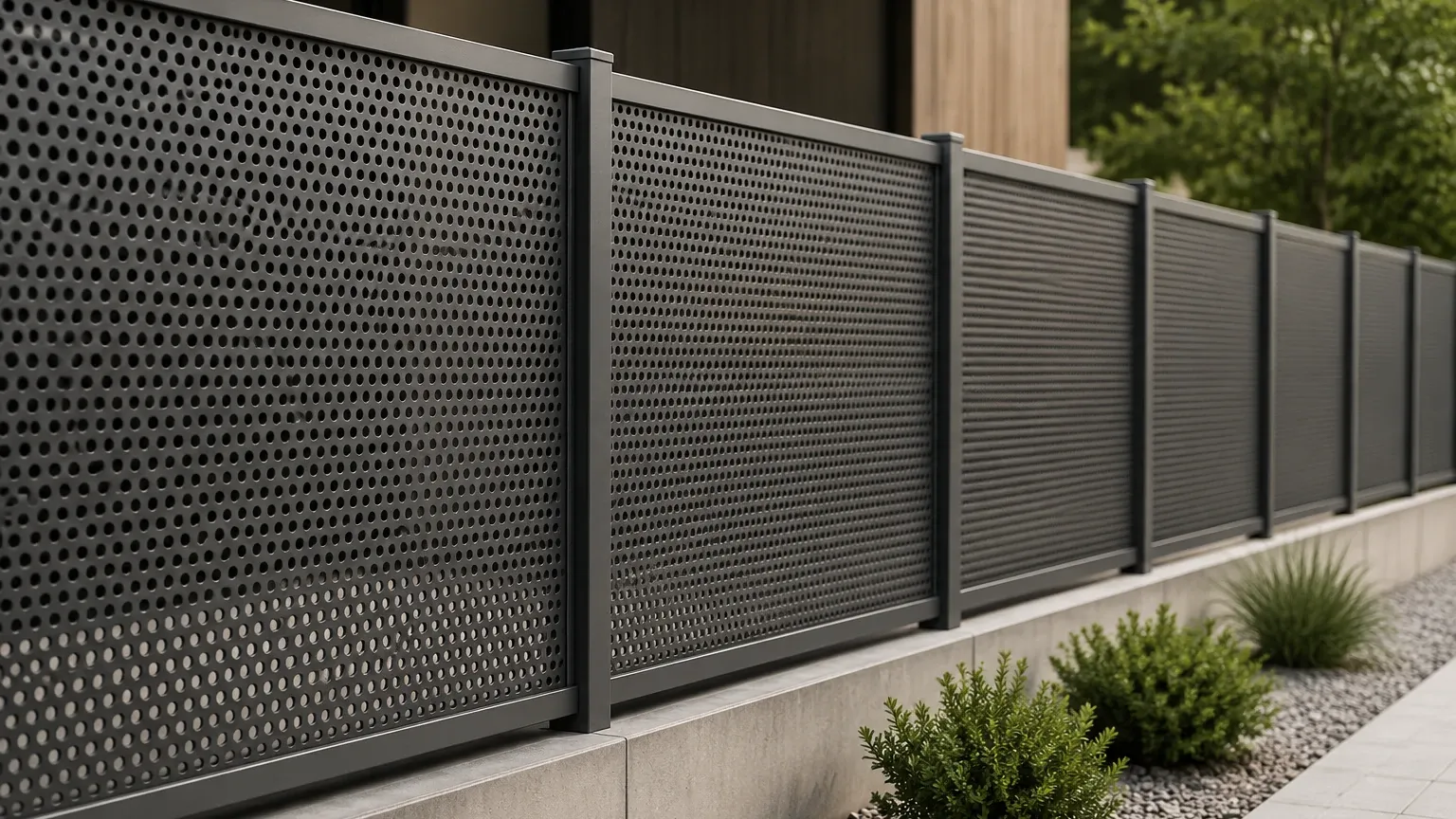
Perforated Metal Fence Panels
In industrial architecture and facility management, the selection of fencing materials extends beyond simple boundary marking. Engineers and procurement specialists must balance security, structural integrity, environmental resistance, and specific functional requirements such as airflow or light transmission. Perforated metal fence panels have emerged as a primary solution for these demanding environments, offering a versatile alternative to traditional solid barriers or chain-link fencing.
By utilizing advanced manufacturing techniques associated with Perforated & Expanded Metal, these panels provide a customizable platform that can be engineered to meet precise mechanical and aesthetic specifications. This guide explores the technical nuances of perforated metal fencing, focusing on material selection, performance metrics, and industrial application logic.
Technical Fundamentals of Perforated Metal Fencing
Perforated metal fence panels are produced through a cold-stamping process where a series of holes are punched into a metal sheet. Unlike woven wire or expanded metal, the perforation process allows for high precision in hole size, shape, and spacing. This precision is critical for applications where specific filtration, ventilation, or security parameters must be met.
Material Selection and Durability
The performance of a perforated fence is largely dictated by the base alloy. In industrial sectors such as chemical processing, pharmaceutical manufacturing, and food production, stainless steel is the standard due to its corrosion resistance and hygienic properties.
* Stainless Steel 304: The most common grade, offering excellent corrosion resistance and value for standard industrial environments.
* Stainless Steel 316: Contains molybdenum, providing superior resistance to chlorides and pitting. This is essential for coastal installations or facilities dealing with aggressive chemical cleaning agents.
* Aluminum: Selected for applications requiring a high strength-to-weight ratio and natural atmospheric corrosion resistance, though it lacks the sheer mechanical durability of stainless steel.
* Carbon Steel: Often used in heavy industrial settings where cost is a primary factor, typically requiring a secondary finish such as hot-dip galvanizing or powder coating to prevent oxidation.
Engineering Metrics: Open Area and Airflow
One of the most significant advantages of using perforated metal fence panels is the ability to control the "Open Area Percentage." This metric refers to the ratio of the total area of the holes to the total area of the sheet. For engineers, calculating the open area is vital for two reasons: wind loading and ventilation.
Wind Load Management
Solid fences act as sails, capturing wind energy and transferring significant stress to the support posts and footings. Perforated panels allow air to pass through, significantly reducing the wind load. This allows for lighter structural supports and reduces the risk of failure during extreme weather events.
Ventilation and Visibility
In machinery guarding or equipment enclosures, airflow is necessary to prevent overheating. Perforated panels allow for constant air exchange while maintaining a physical barrier. Furthermore, by adjusting the hole size and pitch, engineers can create "one-way" visibility or specific levels of transparency, allowing security personnel to monitor areas without compromising the privacy or security of the enclosure.
Perforation Patterns and Their Functional Impact
The geometry of the perforations affects both the strength of the panel and its visual impact. While many patterns exist within the realm of Perforated & Expanded Metal, three primary configurations dominate the fencing market:
1. Round Holes: The most efficient and cost-effective pattern. Round holes offer the highest structural strength-to-weight ratio and are the easiest to manufacture with high precision.
2. Square Holes: Provide a higher open area percentage compared to round holes of the same size, making them ideal for maximum visibility and airflow. However, they are more susceptible to stress concentrations at the corners.
3. Slotted Holes: Often used for specific architectural aesthetics or for applications requiring directional airflow or drainage.
Engineers must also consider the "Staggered" versus "Straight" hole arrangement. A 60-degree staggered pattern is the most common, as it provides the highest degree of panel rigidity and uniform strength across the surface.
Perforated vs. Expanded Metal Fence Panels
When evaluating fencing solutions, it is common to compare perforated metal with expanded metal. While both fall under the broader category of industrial metal mesh, their manufacturing processes and physical characteristics differ significantly.
* Expanded Metal: Created by slitting and stretching a single sheet of metal. This process creates a diamond-shaped mesh with no waste, making it a highly cost-effective option. It provides excellent grip for climbing resistance but lacks the flat, smooth surface and precise hole geometry of perforated metal.
* Perforated Metal: Offers a wider range of hole shapes and much tighter tolerances. Because the material remains flat and smooth, it is safer for high-traffic areas where personnel might come into contact with the fence. It also allows for "margins" (unperforated edges), which simplify the welding and framing process during installation.
Industrial Application Scenarios
Perforated metal fence panels are utilized across diverse sectors due to their adaptability. In many cases, these panels serve as more than just a perimeter; they are integrated components of a facility's safety and operational strategy.
Machinery and Robot Guarding
In automated manufacturing, perforated panels are used to create safety perimeters around high-speed robotics and heavy machinery. The panels allow operators to visually inspect the equipment while remaining protected from flying debris or accidental contact. The use of stainless steel ensures that these guards can withstand the rigorous wash-down procedures common in food and pharmaceutical plants.
Acoustic Barriers
In power plants, HVAC enclosures, and noisy industrial zones, perforated metal is used as a component of sound-dampening systems. When combined with acoustic insulation materials, the perforated surface allows sound waves to pass into the absorbent core rather than reflecting them back into the environment, effectively reducing noise pollution.
Security and Anti-Climb Fencing
By selecting small hole diameters (e.g., less than 10mm), perforated panels become virtually impossible to climb, as they provide no finger or toe holds. This makes them ideal for high-security areas, substations, and data centers where unauthorized access must be prevented without creating a completely opaque barrier.
Customization and OEM Considerations
For B2B procurement, off-the-shelf fencing solutions rarely meet the specific technical requirements of a complex industrial project. Customization is often necessary to ensure the fence integrates perfectly with existing infrastructure. Key customization options include:
* Custom Margins: Specifying unperforated areas at the edges of the panel to facilitate easier mounting to frames or posts.
* Variable Hole Densities: Designing panels with different open areas in different sections to balance privacy at eye level with airflow at the base.
* Surface Finishes: Beyond material selection, finishes such as electropolishing (for stainless steel) or specialized powder coatings can enhance both the longevity and the aesthetic of the installation.
When sourcing these components, it is essential to work with a manufacturer capable of maintaining tight tolerances across large production runs. Precision in the perforation process ensures that panels align perfectly during installation, reducing labor costs and structural inconsistencies.
Installation and Maintenance for Long-Term Value
The total cost of ownership for perforated metal fence panels is often lower than that of traditional materials when maintenance is factored in. Stainless steel panels, in particular, require minimal upkeep.
Structural Mounting
Panels are typically mounted into U-edging or angle iron frames, which are then bolted or welded to support posts. Engineers must ensure that the framing system accounts for thermal expansion, especially in outdoor environments or facilities with high temperature fluctuations.
Maintenance Protocols
In most industrial settings, maintenance involves periodic cleaning to remove accumulated dust, salt, or chemical residues. For stainless steel 316, a simple pressurized water wash is often sufficient to maintain the protective chromium oxide layer. Unlike painted or galvanized steel, there is no risk of the finish chipping or peeling, which prevents the onset of sub-surface corrosion.
Conclusion: Selecting the Right Solution
Perforated metal fence panels represent a sophisticated engineering choice for industrial perimeter control and safety. By understanding the relationship between material properties, hole geometry, and environmental stressors, engineers can specify a solution that provides security, durability, and functional performance.
Whether the goal is to manage wind loads, provide machinery guarding, or ensure long-term corrosion resistance in a chemical plant, the versatility of Perforated & Expanded Metal provides the necessary framework for a high-performance installation. When evaluating suppliers, technical professionals should prioritize manufacturers who offer extensive customization capabilities and a deep understanding of industrial filtration and metal fabrication standards to ensure the final product meets the rigorous demands of the application.
