


Perforated Metal Fence
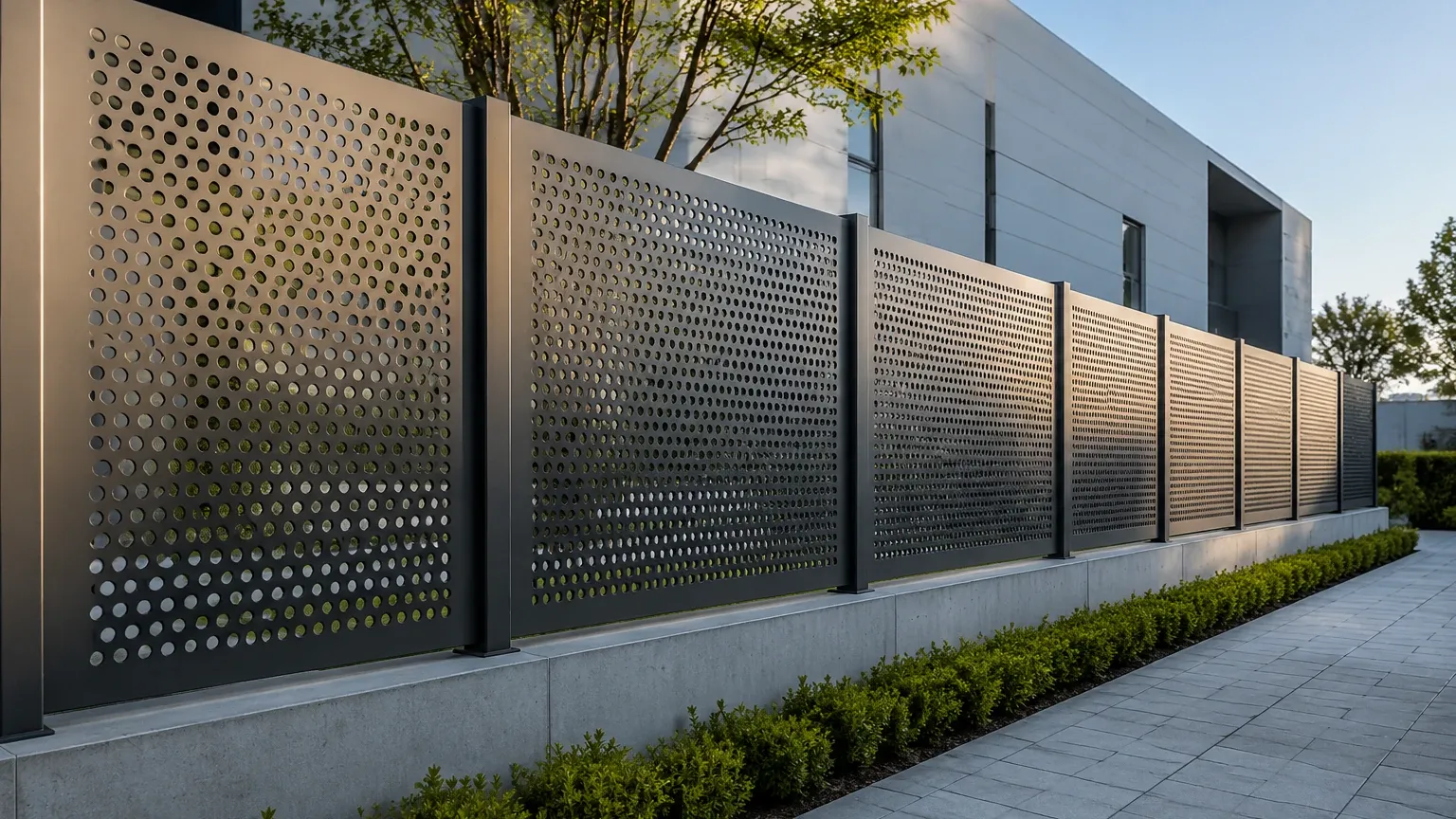
In industrial and commercial infrastructure, the selection of perimeter materials is a critical engineering decision that impacts security, airflow, and long-term maintenance costs. A perforated metal fence represents a specialized application of Perforated & Expanded Metal technology, transitioning from high-precision filtration and screening roles into structural and protective environments. Unlike traditional chain-link or solid paneling, perforated metal offers a unique balance of transparency and opacity, combined with the mechanical strength of solid steel or aluminum sheets.
For engineers and procurement professionals, understanding the technical specifications—such as hole patterns, open area percentages, and material grades—is essential for ensuring the fence meets the specific environmental and security requirements of a project. This guide explores the engineering fundamentals, material considerations, and performance criteria necessary for selecting and implementing perforated metal fencing in industrial contexts.
Engineering Fundamentals: The Mechanics of Perforated Panels
The performance of a perforated metal fence is primarily determined by the geometry of the perforations and the properties of the base metal. Manufacturing involves CNC punching or laser cutting precise patterns into metal sheets, a process that allows for high levels of customization regarding hole size, shape, and spacing.
Hole Patterns and Pitch
There are three primary configurations used in fencing applications:
1. Round Holes: The most common and cost-effective pattern. Round holes offer high structural integrity and are available in staggered (60-degree) or straight (90-degree) patterns. Staggered patterns typically provide higher strength-to-weight ratios.
2. Square Holes: Often selected for high visibility and modern aesthetics. While square holes offer a larger open area for a given hole size, they can introduce stress concentration points at the corners, which must be accounted for in high-wind load environments.
3. Slotted Holes: Frequently used for directional airflow or visibility control. Slotted perforations can be oriented vertically or horizontally to meet specific privacy or ventilation needs.
Open Area Percentage
The "open area" refers to the cumulative area of the holes compared to the total area of the sheet. In fencing, this calculation is vital for two reasons: wind loading and visibility. A higher open area percentage (e.g., 50-60%) reduces the "sail effect," allowing wind to pass through the panel and reducing the stress on support posts. Conversely, a lower open area (e.g., 20-30%) increases privacy and physical security but requires more robust structural support to withstand wind pressure.
Material Selection for Industrial Environments
Material choice is the single most important factor in determining the service life of a perforated metal fence. Because these structures are often exposed to corrosive atmospheres, chemical runoff, or coastal salt spray, selecting a high-performance alloy is mandatory.
Stainless Steel (304 and 316)
Stainless steel is the gold standard for industrial fencing due to its inherent corrosion resistance.
* Grade 304: Suitable for most general industrial applications. It provides excellent strength and good resistance to oxidation.
* Grade 316: Contains molybdenum, making it significantly more resistant to chloride-induced pitting. This grade is required for chemical processing plants, wastewater treatment facilities, and coastal installations.
Aluminum Alloys
Aluminum is favored for its lightweight properties and natural oxide layer that resists corrosion. It is often used in applications where weight reduction is necessary for ease of installation or when the fence is mounted on existing structures that cannot support the weight of heavy-gauge steel.
Carbon Steel with Protective Coatings
For projects with strict budget constraints, carbon steel can be used if it is properly treated. Hot-dip galvanizing or high-performance powder coating is necessary to prevent rapid oxidation. However, in high-wear environments, any scratch in the coating can lead to localized corrosion, making stainless steel a more reliable long-term investment for critical infrastructure.
Comparative Analysis: Perforated vs. Expanded Metal
When evaluating Perforated & Expanded Metal for fencing, it is important to distinguish between the two manufacturing methods, as they offer different mechanical advantages.
| Feature | Perforated Metal | Expanded Metal |
| :— | :— | :— |
| Manufacturing | Material is punched out (creates scrap). | Material is slit and stretched (no waste). |
| Structural Rigidity | High; maintains flat sheet integrity. | Extremely high; 3D structure resists bending. |
| Customization | Unlimited hole shapes and complex patterns. | Limited to diamond or hexagonal shapes. |
| Weight | Varies by open area; generally heavier. | Generally lighter for the same surface area. |
| Aesthetics | Clean, precise, and modern. | Industrial, textured, and aggressive. |
Expanded metal is often used for high-security fencing because the strands are interconnected, making it nearly impossible to cut through with standard hand tools. Perforated metal, however, is preferred when specific airflow calculations or aesthetic consistency with architectural elements are required.
Performance Criteria: Wind Loads and Security
Engineers must conduct a thorough site analysis before specifying the gauge and pattern of a perforated metal fence. Two primary performance metrics dominate the evaluation process: wind resistance and impact durability.
Wind Load Calculations
In many regions, building codes dictate the wind pressure a fence must withstand. A solid panel acts as a sail, creating immense force on the foundation and posts. A perforated metal fence mitigates this by allowing air to pass through. The formula for wind force on a perforated panel involves the drag coefficient, which decreases as the open area increases. Specifying a 40% open area can significantly reduce the required depth of concrete footings compared to a solid barrier.
Security and Anti-Climb Features
The small diameter of perforations in many industrial designs serves as an anti-climb feature. If the holes are smaller than 10mm-15mm, they do not provide sufficient purchase for fingers or toes, making the fence difficult to scale. Furthermore, the thickness of the metal (typically 11 gauge to 16 gauge for fencing) ensures that the panels cannot be easily deformed or breached without heavy equipment.
Customization and OEM Manufacturing Considerations
As a professional manufacturer, Kaifil emphasizes the importance of precision in the customization phase. Standard off-the-shelf panels often fail to meet the specific tolerances required for industrial integration. Key customization options include:
* Margins: Specifying "plain margins" (unperforated edges) allows for easier welding or bolting to frames without damaging the hole pattern. This also enhances the structural stiffness of the individual panels.
* Secondary Operations: Beyond punching, panels may require precision bending (forming), degreasing, and deburring. Deburring is particularly important for fencing to ensure there are no sharp edges that could cause injury during installation or maintenance.
* Bolt Hole Integration: Pre-drilled mounting holes can be integrated into the CNC punching process to ensure perfect alignment with support posts, reducing labor costs during site assembly.
Installation and Maintenance Best Practices
To maximize the lifespan of a perforated metal fence, installation must account for galvanic corrosion and thermal expansion.
1. Fastener Compatibility: Always use fasteners made of the same material as the fence panels. For example, using zinc-plated steel bolts on a stainless steel panel will trigger galvanic corrosion, leading to premature failure of the joint.
2. Vibration Dampening: In high-vibration environments (such as near heavy machinery or transit lines), EPDM rubber gaskets should be used between the panel and the frame to prevent rattling and mechanical wear.
3. Cleaning Cycles: While stainless steel is low-maintenance, it is not "no-maintenance." In industrial zones, atmospheric pollutants can accumulate in the perforations. Periodic pressure washing or chemical cleaning (specifically for Grade 316 in salt environments) prevents the buildup of contaminants that could eventually lead to surface staining.
Total Cost of Ownership (TCO) Analysis
When purchasing industrial fencing, the initial quote is only one part of the financial equation. Purchasing teams should evaluate the Total Cost of Ownership over a 15-to-20-year cycle.
* Initial Cost: Carbon steel is cheapest, followed by aluminum, then stainless steel.
* Maintenance: Stainless steel requires the least intervention, whereas coated carbon steel may require repainting or touch-ups every 3-5 years.
* Replacement Cycle: A high-quality stainless steel perforated fence can last 30+ years in most environments, whereas lower-grade materials may require total replacement within a decade if corrosion takes hold.
By selecting the correct specifications for Perforated & Expanded Metal, companies can achieve a balance of high security, environmental resilience, and aesthetic professionality that standard fencing cannot provide.
Conclusion
A perforated metal fence is more than a simple barrier; it is a precision-engineered component that must be tailored to its environment. From selecting the appropriate stainless steel grade to calculating the necessary open area for wind passage, every technical detail contributes to the fence's effectiveness and longevity. For engineers and purchasing managers, partnering with a manufacturer that understands the nuances of metal fabrication and industrial requirements is the most effective way to ensure project success. Whether for security, privacy, or equipment protection, perforated metal remains one of the most versatile and durable solutions in the industrial sector.
