


Perforated Metal Fins
In the realm of industrial engineering, the management of fluid flow, heat transfer, and structural integrity often relies on specialized components that can balance surface area with permeability. Perforated metal fins represent a critical intersection of these requirements. Whether utilized in high-efficiency heat exchangers, architectural sunshades, or as structural supports in complex filtration systems, these components are engineered to meet precise mechanical and thermal specifications.
As a specialized manufacturer, Kaifil provides high-performance Perforated & Expanded Metal solutions tailored to demanding industrial environments. Understanding the technical nuances of perforated metal fins—from material selection to hole geometry—is essential for engineers and purchasing teams tasked with optimizing system performance and longevity.
Understanding the Role of Perforated Metal Fins in Industrial Systems
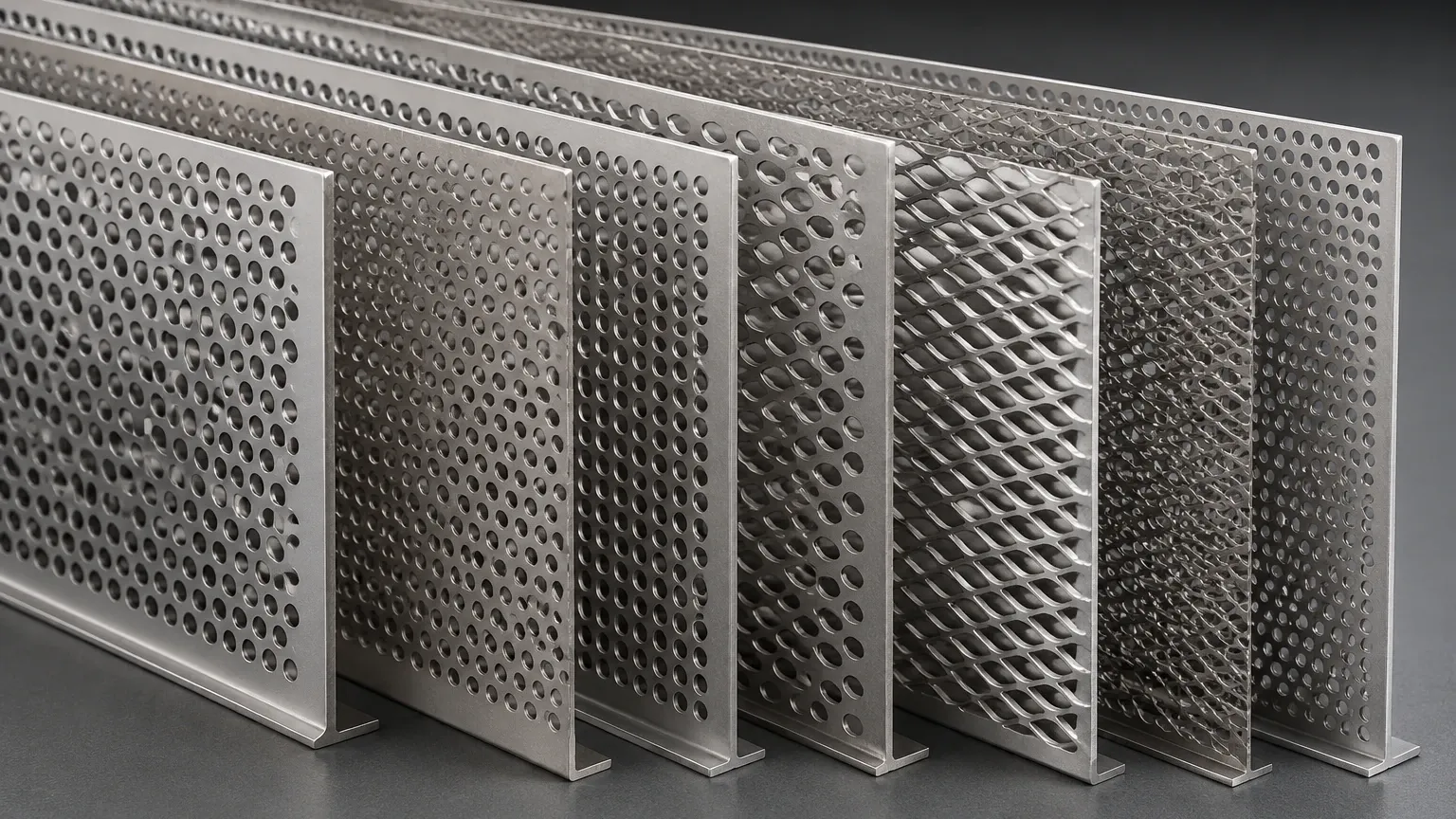
Perforated metal fins are essentially metal sheets that have been mechanically stamped or punched to create a pattern of holes, slots, or decorative shapes, then formed into fin-like structures. These fins serve several primary functions across various sectors:
1. Heat Dissipation: In thermal management, fins increase the available surface area for heat exchange. Perforations within these fins can disrupt the boundary layer of the cooling medium (air or liquid), promoting turbulence and enhancing heat transfer efficiency compared to solid fins.
2. Fluid Flow Control: In HVAC and chemical processing, perforated metal fins are used to diffuse or direct airflow and liquid streams. The specific open area of the perforation determines the pressure drop across the component, allowing for calibrated flow resistance.
3. Structural Support and Protection: In the filtration industry, perforated metal fins often act as the outer cage or inner core for pleated filter media. They provide the necessary rigidity to withstand high differential pressures while allowing the filtrate to pass through with minimal resistance.
4. Acoustic Attenuation: Perforated surfaces are frequently integrated into industrial silencers and acoustic enclosures. When backed by sound-absorbent material, the perforated fins help dissipate sound energy, reducing noise pollution in manufacturing plants.
Material Selection: Matching Alloys to Environmental Demands
The performance of perforated metal fins is heavily dictated by the base material. Industrial applications typically demand materials that offer a combination of mechanical strength, thermal conductivity, and corrosion resistance.
Stainless Steel (304, 316, and 316L)
Stainless steel is the industry standard for applications involving corrosive chemicals, high temperatures, or strict hygiene requirements (such as in food and beverage or pharmaceutical processing). Grade 316L is particularly valued for its superior resistance to pitting and crevice corrosion in chloride-rich environments. For filtration support, stainless steel provides the durability required for repeated cleaning cycles and backwashing.
Aluminum Alloys
When thermal conductivity and weight are the primary concerns, aluminum is the preferred choice. Aluminum fins are widely used in heat exchangers and aerospace components. While aluminum offers excellent corrosion resistance through its natural oxide layer, it may require additional anodizing or coating in highly alkaline or acidic environments.
Carbon Steel and Galvanized Steel
For indoor industrial applications where cost is a significant factor and corrosion risk is low, carbon steel provides high structural strength. Galvanized steel offers a middle ground, providing a protective zinc coating that resists rust in humid environments, though it is generally not suitable for high-temperature chemical processing.
Specialty Alloys
In extreme environments, such as petrochemical refining or power generation, specialty alloys like Monel, Inconel, or Hastelloy may be required. These materials maintain their structural integrity and oxidation resistance at temperatures exceeding the limits of standard stainless steels.
Engineering Design Parameters: Open Area and Hole Patterns
The efficacy of perforated metal fins is determined by the geometry of the perforations. Engineers must specify several key parameters to ensure the component meets the application's functional requirements.
Open Area Percentage
The "open area" is the ratio of the total area of the holes to the total area of the sheet, expressed as a percentage. This is perhaps the most critical metric for perforated metal fins.
* High Open Area (50%+): Minimizes pressure drop and weight but reduces structural rigidity and thermal mass.
* Low Open Area (under 20%): Provides maximum strength and surface area for heat conduction but significantly increases resistance to fluid flow.
Hole Geometry and Arrangement
* Round Holes: The most common and cost-effective pattern. Round holes offer high structural integrity and are available in staggered or straight-row configurations. Staggered patterns (usually at 60 degrees) are preferred for maximizing open area and ensuring uniform strength.
* Square Holes: Often used for architectural purposes or when a high open area is required with a specific aesthetic. However, square holes can create stress concentrations at the corners, making them less ideal for high-pressure industrial applications.
* Slotted Holes: Ideal for applications requiring directional flow or for filtering elongated particles. Slotted perforated metal fins are frequently used in sorting and sifting equipment.
Pitch and Margin
The "pitch" is the distance from the center of one hole to the center of the adjacent hole. The "margin" refers to the unperforated area around the edges of the fin. Specifying adequate margins is vital for welding or mechanically fastening the fins to a housing or tube sheet without compromising the integrity of the perforation pattern.
Performance Evaluation: Thermal Efficiency and Pressure Drop
When integrating perforated metal fins into a system, engineers must evaluate the trade-off between enhanced performance and the energy cost of moving fluids through the system.
Turbulence Induction
One of the primary advantages of using perforated metal fins in heat exchangers is the induction of turbulence. In a laminar flow regime, a stagnant boundary layer forms against the surface of a solid fin, acting as an insulator. Perforations break up this layer, forcing the fluid to mix and bringing cooler (or warmer) fluid into contact with the metal surface. This can significantly increase the heat transfer coefficient.
Pressure Drop (ΔP)
Every perforation introduces a localized restriction to flow. In filtration and HVAC systems, an excessive pressure drop leads to increased energy consumption by pumps and fans. Calculating the ΔP involves considering the fluid velocity, viscosity, and the discharge coefficient of the specific hole pattern. Using Perforated & Expanded Metal with a precision-engineered open area allows designers to hit the "sweet spot" where turbulence is maximized while pressure drop remains within acceptable limits.
Structural Rigidity
Fins are often subjected to vibration, thermal expansion, and mechanical impact. The perforation process inherently removes material, which can reduce the moment of inertia of the fin. Engineers must ensure that the remaining "ligaments" (the metal between the holes) are thick enough to prevent fatigue failure or buckling under load.
Industrial Applications: From Filtration Support to Heat Exchange
Perforated metal fins are versatile components found across a wide spectrum of industrial equipment. Their ability to be customized makes them indispensable for specific technical challenges.
1. Industrial Filtration and Separation
In the manufacture of stainless steel filter cartridges, perforated metal serves as the backbone. Perforated metal fins are often used to create the inner support core or the outer protective wrap. By using perforated metal, manufacturers like Kaifil ensure that the filter media is supported against high-pressure differentials without restricting the flow of the filtrate. This is especially important in hydraulic systems and chemical processing where fluid viscosity and pressure can fluctuate rapidly.
2. HVAC and Air Handling
In commercial and industrial HVAC systems, perforated fins are used in grilles, diffusers, and heat recovery ventilators. They help in achieving a uniform air distribution pattern, which is essential for maintaining consistent temperatures in large spaces. Furthermore, the use of perforated aluminum fins in cooling coils helps in moisture management and drainage.
3. Power Generation and Petrochemical
Heat exchangers in power plants and refineries often utilize finned tubes to manage the massive thermal loads. Perforated fins can be used in air-cooled heat exchangers (ACHEs) to improve the air-side heat transfer coefficient, allowing for smaller, more efficient units.
4. Architectural and Acoustic Solutions
Beyond purely mechanical functions, perforated metal fins are used in modern architecture for sunshading and building envelopes. These fins provide solar shading—reducing cooling loads—while maintaining visibility and natural ventilation. In industrial settings, they are used as baffles in silencers to reduce the noise generated by high-velocity gas exhaust.
Manufacturing and Customization: Why Precision Matters
The production of perforated metal fins requires specialized machinery and deep technical expertise. At Kaifil, the manufacturing process is centered on precision and repeatability, ensuring that every component meets the exact tolerances required by the client's engineering drawings.
Precision Perforating
Modern CNC punching presses allow for the creation of complex patterns with extreme accuracy. This precision is vital for ensuring that the open area is consistent across the entire surface of the fin, which in turn ensures predictable performance in the field.
Secondary Operations
Rarely is a perforated sheet used in its flat form. Most industrial applications require secondary operations such as:
* Forming and Bending: Shaping the perforated metal into U-channels, L-fins, or cylindrical cores.
* Welding: Utilizing TIG, MIG, or spot welding to integrate the fins into larger assemblies.
* Degreasing and Cleaning: Especially for food-grade or pharmaceutical applications, removing all manufacturing oils and burrs is a critical quality control step.
Customization Options
Every industrial environment is unique. A "one-size-fits-all" approach to perforated metal fins often leads to sub-optimal performance or premature failure. Customization allows for the optimization of:
* Material Grade: Choosing the exact alloy for the specific chemical environment.
* Hole Size and Pitch: Tailoring the flow characteristics to the system's requirements.
* Sheet Thickness: Balancing weight against the need for structural durability.
Conclusion: Selecting the Right Partner for Perforated Metal Solutions
Perforated metal fins are more than just metal with holes; they are engineered components that play a vital role in the efficiency and reliability of industrial systems. Whether the goal is to enhance heat transfer, provide structural support for filtration media, or manage fluid flow, the design and material choice are paramount.
For engineers and procurement professionals, partnering with a manufacturer that understands the technical demands of industrial filtration and metal fabrication is essential. Kaifil's expertise in Perforated & Expanded Metal ensures that your components are manufactured to the highest standards of quality and precision. By focusing on material integrity, accurate perforation patterns, and robust secondary processing, Kaifil delivers filtration and structural solutions that stand up to the most demanding industrial environments.
When evaluating your next project involving perforated metal fins, consider the total cost of ownership—including durability, maintenance cycles, and performance efficiency. A precision-engineered component may require a higher initial investment but will ultimately provide greater value through reduced energy costs and extended equipment life.
