


Perforated Metal for Cabinets
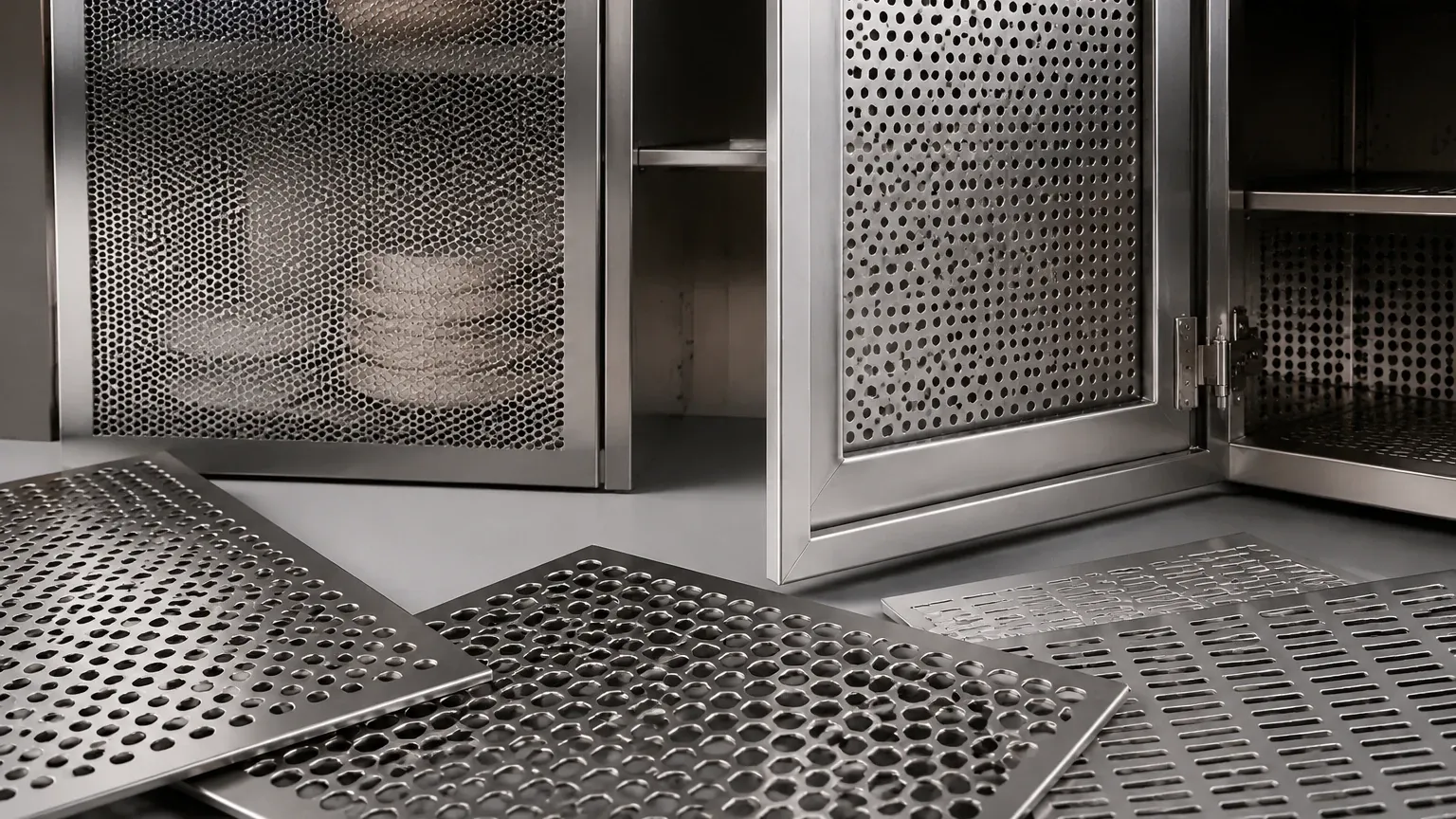
In industrial and commercial engineering, the selection of materials for enclosure systems is a critical decision that impacts thermal management, structural integrity, and equipment longevity. Perforated metal for cabinets has emerged as a standard solution for technical environments where airflow, visibility, and protection must be balanced. Unlike solid sheet metal, perforated components allow for passive or active ventilation while maintaining a secure barrier against external contaminants or unauthorized access.
For engineers and procurement teams, understanding the technical nuances of Perforated & Expanded Metal is essential for optimizing cabinet performance. This guide examines the engineering considerations, material properties, and application-specific requirements for integrating perforated metal into industrial cabinetry.
The Role of Perforated and Expanded Metal in Industrial Cabinetry
Industrial cabinets are rarely just storage units; they are often functional housings for electrical components, hydraulic systems, or sensitive laboratory equipment. The primary function of using perforated metal for cabinets is to facilitate heat dissipation. Electronic components generate significant thermal loads that, if not managed, can lead to premature component failure or system derating.
Perforated panels provide a high strength-to-weight ratio, allowing for lightweight cabinet doors and side panels that do not sacrifice structural rigidity. Furthermore, in environments such as chemical processing or food production, perforated metal allows for easy wash-down and prevents the accumulation of moisture or gases within the enclosure.
When comparing perforated and expanded metal, engineers must consider the manufacturing process. Perforated metal is created by punching a series of holes into a solid sheet, offering high precision in hole placement and size. Expanded metal is slit and stretched, creating a diamond-shaped mesh that is often more cost-effective but may offer less precision for specific airflow calculations. Both play vital roles in cabinet design depending on the required level of filtration and structural support.
Technical Specifications: Open Area and Airflow Dynamics
The most critical metric when selecting perforated metal for cabinets is the "percentage of open area." This figure determines how much air can pass through the panel and is calculated based on the hole diameter and the pitch (the distance between the centers of adjacent holes).
Calculating Open Area
For a standard 60-degree staggered round hole pattern, the formula is:
Open Area % = (D² × 90.69) / P²
*(Where D is the hole diameter and P is the pitch)*
In high-density server racks or electrical motor control centers (MCCs), an open area of 60% to 80% is often required to ensure that fans can move sufficient cubic feet per minute (CFM) of air without excessive static pressure. Conversely, for tool cabinets or security lockers, a smaller open area (20% to 40%) may be preferred to increase impact resistance and limit the size of objects that can pass through the mesh.
Hole Patterns and Their Impact
While round holes are the most common due to manufacturing efficiency and structural uniformity, other patterns serve specific cabinet functions:
* Square Holes: Provide a higher open area for maximum ventilation but may reduce the overall stiffness of the panel.
* Slotted Holes: Often used for directional airflow or to prevent the entry of specific debris shapes.
* Hexagonal Holes: Offer the highest possible open area (up to 80%+) and are frequently used in high-performance computing (HPC) cabinets.
Material Selection: Why Stainless Steel is the Standard
The environment in which the cabinet will operate dictates the material choice. While carbon steel and aluminum are options, stainless steel remains the preferred choice for industrial B2B applications due to its mechanical properties and resistance to environmental stressors.
Grade 304 Stainless Steel
Grade 304 is the most versatile and widely used stainless steel for perforated metal for cabinets. It offers excellent corrosion resistance to most oxidizing acids and is highly durable. It is suitable for indoor industrial environments, electrical enclosures, and general storage in non-corrosive atmospheres.
Grade 316 Stainless Steel
For cabinets located in coastal areas, offshore platforms, or chemical processing plants, Grade 316 is necessary. The addition of molybdenum provides superior resistance to chlorides and pitting. In pharmaceutical and food-grade applications, 316 stainless steel is often mandated due to its superior hygiene profile and resistance to harsh cleaning agents.
Surface Finishes
Beyond the material grade, the finish affects both performance and maintenance. A 2B mill finish is standard for industrial use, while a brushed or polished finish may be required for cleanrooms or laboratory cabinets to prevent bacterial adhesion and facilitate sterilization.
Designing for Function: Sector-Specific Applications
Different industries have unique requirements for cabinet enclosures. Customization of Perforated & Expanded Metal allows these needs to be met with precision.
1. Electrical and Server Enclosures
In data centers, the primary concern is the cooling of high-heat-density equipment. Perforated metal for cabinets in this sector must balance airflow with Electromagnetic Interference (EMI) shielding. The hole size must be small enough to attenuate electromagnetic waves while remaining large enough to prevent air turbulence.
2. Pharmaceutical and Laboratory Cabinets
In these environments, the focus shifts to cleanability. Perforated metal allows for the circulation of HEPA-filtered air to maintain sterile conditions. Engineering considerations include ensuring that the edges of the perforations are deburred and smooth to prevent the snagging of gloves or the accumulation of particulates.
3. Food and Beverage Processing
Cabinets used in food production must withstand frequent high-pressure wash-downs. Stainless steel perforated panels allow water to drain quickly and air to circulate, preventing mold growth. The hole pattern must be selected to prevent food particles from becoming trapped in the mesh.
4. Heavy Industrial and Hydraulic Systems
Hydraulic power units often require cabinets that protect components from physical impact while allowing heat from the reservoir and pumps to escape. Expanded metal is frequently used here for its high rigidity and ability to deflect heavy debris.
Manufacturing Precision and Customization Options
When sourcing perforated metal for cabinets, B2B buyers must look beyond the raw material and evaluate the manufacturer’s ability to provide finished, ready-to-install components. Kaifil specializes in custom stainless steel filtration and precision metal components, offering the technical expertise required for complex cabinet designs.
Margins and Edges
Standard perforated sheets often come with "minimum margins" (unperforated areas along the edges). However, for cabinet doors, custom margins are usually required to provide a solid surface for hinges, locks, and handles. Specifying "finished ends" ensures that the hole pattern is centered and symmetrical, which is vital for both structural integrity and professional appearance.
Secondary Operations
To reduce total cost and assembly time, many engineers prefer to receive perforated panels that have undergone secondary processing, such as:
* Leveling: Ensuring the sheet is perfectly flat after the punching process.
* Bending and Forming: Creating the flanges and returns necessary for cabinet door frames.
* Welding: Integrating the perforated panel into a larger assembly or frame.
* Powder Coating: Adding an extra layer of protection or color-coding for safety (e.g., bright yellow for hazardous material cabinets).
Installation and Structural Integration
Integrating perforated metal into a cabinet frame requires careful planning. Because the punching process can introduce internal stresses into the metal, panels may bow if not properly supported.
For large cabinet doors, a "U-edging" or a custom-welded frame is often used to capture the perforated panel. This provides a clean edge and prevents the sharp points of the perforations from being exposed. In bolted applications, engineers must ensure that the bolt holes are located in the solid margins of the panel to prevent tearing under load.
Another consideration is the orientation of the perforations. For rectangular or slotted holes, the direction of the slots (parallel or perpendicular to the long side of the cabinet) can affect both the visual aesthetic and the structural stiffness in a specific axis.
Total Cost of Ownership and Selection Criteria
While the initial cost of high-grade stainless steel perforated metal for cabinets may be higher than alternative materials like plastic or carbon steel, the total cost of ownership (TCO) is typically lower in industrial settings.
Durability and Maintenance
Stainless steel does not require frequent repainting or corrosion treatment. In high-traffic industrial environments, perforated metal resists dents and scratches far better than synthetic alternatives. The ease of cleaning and the ability to withstand harsh chemicals mean that the cabinets can remain in service for decades without replacement.
Energy Efficiency
By optimizing the open area for passive ventilation, engineers can often reduce the reliance on active cooling fans. This leads to lower energy consumption and reduced maintenance costs for the electrical components housed within the cabinet.
Key Questions for Procurement
Before finalizing a purchase order for perforated cabinet components, technical teams should confirm the following:
1. What is the required airflow (CFM)? This dictates the necessary open area percentage.
2. What is the environmental exposure? This determines the grade of stainless steel (304 vs. 316).
3. Are custom margins required? Essential for mounting hardware and structural frames.
4. What are the tolerance requirements? High-precision cabinets require tight tolerances on hole placement and panel dimensions.
Conclusion
Perforated metal for cabinets is a sophisticated engineering solution that addresses the complex demands of modern industrial environments. By carefully selecting the material grade, hole pattern, and open area, engineers can create enclosures that protect sensitive equipment while ensuring optimal thermal performance.
As a specialist in precision metal components, Kaifil provides the manufacturing capabilities and engineering support necessary to deliver high-quality Perforated & Expanded Metal solutions. Whether for chemical processing, pharmaceutical storage, or high-density electronics, the right perforated metal specification is the foundation of a durable and efficient industrial cabinet system.
