


Perforated Metal for Fence
In industrial and commercial architecture, the selection of fencing materials involves a complex balance between security, structural integrity, airflow, and aesthetic integration. Perforated metal for fence applications has emerged as a primary solution for engineers and facility managers who require more than a simple perimeter barrier. Unlike traditional chain-link or solid paneling, perforated metal offers a customizable set of physical properties that can be engineered to meet specific environmental and security demands.
As a manufacturer specializing in precision metal components, Kaifil provides Perforated & Expanded Metal solutions designed for high-performance applications. Understanding the technical nuances of these materials—from hole patterns and open area percentages to material grades—is essential for ensuring long-term durability and functionality in industrial environments.
Technical Fundamentals of Perforated Metal Fencing
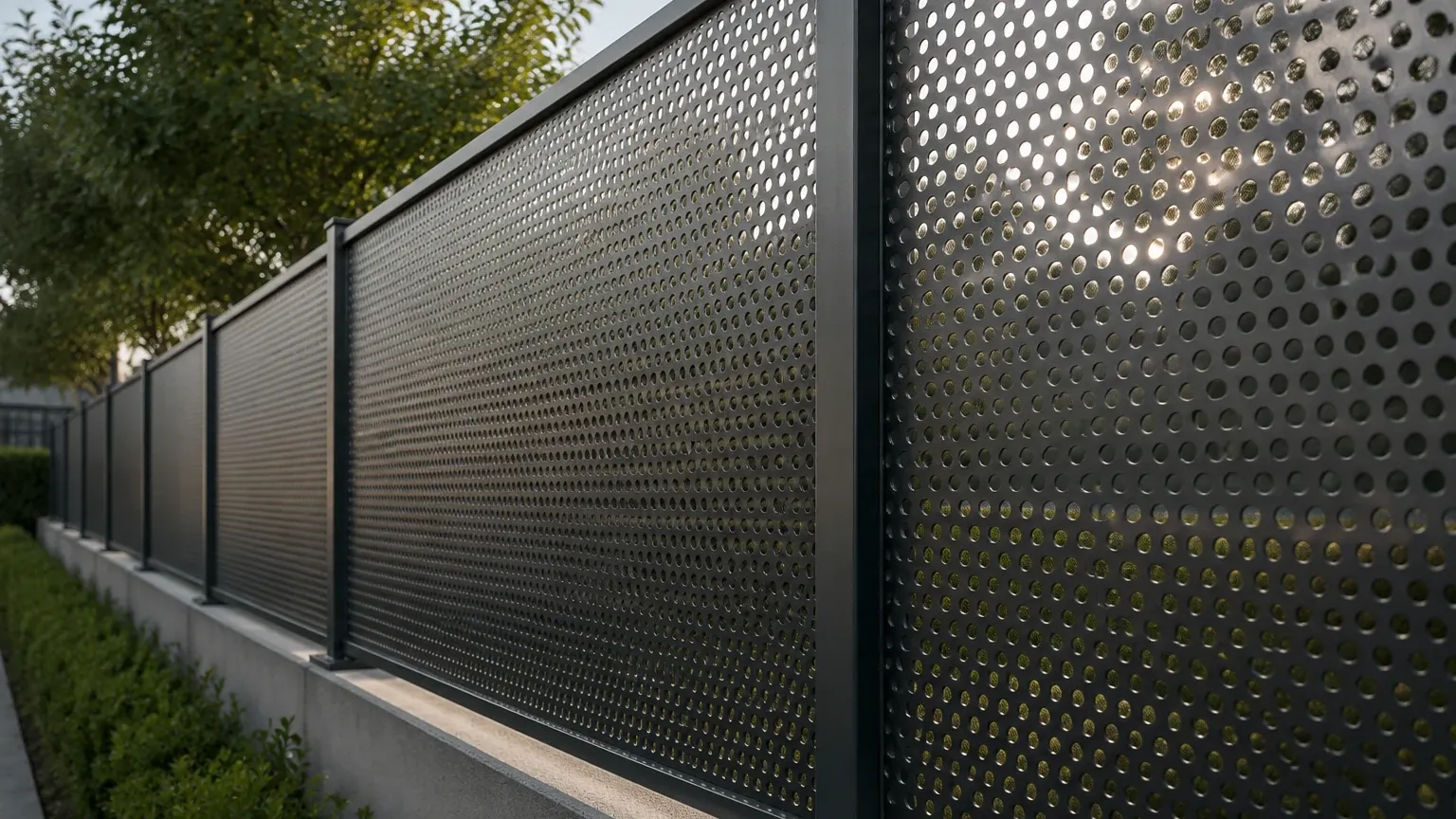
Perforated metal is produced through a mechanical punching or laser-cutting process that creates a pattern of holes, slots, or decorative shapes in a metal sheet. When used for fencing, these panels serve as the primary infill or the structural skin of the barrier. The engineering value of perforated metal for fence systems lies in its versatility; by adjusting the hole size, shape, and spacing, engineers can dictate exactly how much light, air, and visibility passes through the barrier.
Material Selection and Corrosion Resistance
The choice of substrate is the most critical factor in determining the lifespan of a fence, especially in corrosive industrial or coastal environments.
1. Stainless Steel (Grades 304 and 316): For environments involving chemical processing or high salt exposure, stainless steel is the gold standard. Grade 316, containing molybdenum, offers superior resistance to pitting and chloride-induced corrosion.
2. Galvanized Steel: This provides a cost-effective alternative for general industrial use, where a zinc coating protects the underlying carbon steel from oxidation.
3. Aluminum: Valued for its high strength-to-weight ratio and natural oxide layer that resists corrosion, aluminum is often used in applications where weight reduction is necessary for large-span gate systems.
Engineering Design: Hole Patterns and Open Area
The performance of a perforated metal fence is largely defined by its "open area"—the percentage of the sheet that is comprised of holes. This calculation is vital for two reasons: wind load management and privacy control.
Calculating Open Area
For a standard staggered round hole pattern, the open area percentage is calculated using the formula:
OA% = (D² × 90.69) / R²
*Where D is the hole diameter and R is the center-to-center distance (pitch).*
An open area of 30% to 50% is common for fencing. A lower open area provides greater privacy and security but increases the wind load on the support posts. Conversely, a higher open area allows for better airflow and visibility but may reduce the physical strength of the panel.
Pattern Types
* Round Holes: The most common and economical pattern, providing excellent structural strength and a wide range of open area options.
* Square Holes: Often selected for a modern aesthetic or when a higher open area is required for maximum airflow.
* Slotted Holes: Useful for applications requiring directional visibility or specific drainage requirements.
Structural Integrity and Wind Load Considerations
One of the primary engineering challenges in fence design is wind load. A solid wall acts as a sail, catching wind and transferring immense pressure to the foundation and support posts. Perforated metal for fence panels mitigates this risk by allowing air to pass through the material.
Engineers must conduct wind load calculations based on local building codes and the specific open area of the chosen perforated pattern. In high-wind zones, increasing the open area or using a thicker gauge of metal can prevent structural failure. Typically, industrial fencing utilizes gauges ranging from 11 to 16, depending on the span between support posts and the required impact resistance.
Industrial and Security Applications
Perforated metal is utilized across various sectors due to its ability to provide security without creating a complete visual or atmospheric blackout.
1. Machinery and Equipment Enclosures
In manufacturing facilities, perforated metal fences are used to cordone off high-voltage areas or moving machinery. The perforations allow maintenance personnel to visually inspect equipment from a safe distance while ensuring adequate ventilation to prevent overheating.
2. Data Centers and Infrastructure
Security is paramount for data centers. Perforated panels provide a formidable physical barrier that is difficult to climb or cut, while the airflow properties support the massive cooling requirements of server rooms.
3. Acoustic Barriers
In some industrial settings, perforated metal is combined with sound-absorbent materials to create acoustic fencing. The perforations allow sound waves to enter the panel, where they are trapped by the insulation, reducing noise pollution in surrounding areas.
Customization and OEM Manufacturing Capabilities
Every industrial site has unique requirements, which makes customization a vital part of the procurement process. Kaifil’s expertise in Perforated & Expanded Metal allows for the production of panels tailored to specific dimensions and performance metrics.
Precision Punching and Edge Margins
When ordering perforated metal for fence applications, specifying the "margins" is essential. Margins are the unperforated areas along the edges of the sheet. Providing clear margins simplifies the welding or bolting process during installation and enhances the overall structural rigidity of the panel. Custom OEM manufacturing ensures that holes do not terminate abruptly at the edge, which can create sharp points and structural weaknesses.
Finishing and Coating
Beyond the base material, secondary finishes play a role in both durability and branding.
* Powder Coating: Provides an additional layer of UV protection and allows the fence to match corporate color schemes.
* Anodizing: Specifically for aluminum, this process hardens the surface and increases wear resistance.
* Passivation: For stainless steel, this chemical process removes free iron from the surface, maximizing the material's natural corrosion resistance.
Installation and Maintenance Best Practices
To ensure the longevity of a perforated metal fence, proper installation and maintenance protocols must be followed.
Mounting Systems
Perforated panels are typically mounted using one of three methods:
1. U-Channel Framing: The panel is slid into a perimeter frame, which protects the edges and provides a clean look.
2. Bolt-on Tabs: Tabs are welded to the support posts, and the panels are bolted directly to them, allowing for easier replacement if a panel is damaged.
3. Stand-off Mounts: Used primarily for architectural screens, these create a gap between the panel and the structure, adding depth and allowing for backlighting.
Maintenance Cycles
While stainless steel and high-quality coatings are low-maintenance, regular inspections are recommended. In industrial environments, dust and chemical residues can accumulate in the perforations. Periodic pressure washing or cleaning with mild detergents prevents the buildup of corrosive agents and ensures the open area remains unobstructed for airflow.
Total Cost of Ownership (TCO)
When evaluating perforated metal for fence projects, procurement teams should look beyond the initial purchase price. The Total Cost of Ownership includes installation labor, maintenance requirements, and the expected lifespan of the material.
Choosing a high-grade stainless steel or a precision-manufactured panel from a reliable supplier like Kaifil may involve a higher upfront investment compared to standard chain-link. However, the reduction in replacement frequency, the elimination of frequent painting or rust treatment, and the enhanced security profile often result in a lower TCO over a 10-to-20-year cycle.
Conclusion: Selecting the Right Partner
Designing and implementing a perforated metal fence system requires a deep understanding of material science and structural engineering. By selecting the appropriate hole pattern, open area, and material grade, engineers can create a barrier that is both functional and durable in the most demanding industrial environments.
Kaifil remains committed to delivering high-performance filtration and metal solutions. Our technical team works closely with global customers to develop customized Perforated & Expanded Metal components that meet exact application requirements. Whether the goal is security, airflow, or aesthetic consistency, our manufacturing precision ensures that every panel contributes to the efficiency and safety of the facility.
