


Perforated Metal for Gate
In industrial and commercial architecture, the selection of materials for perimeter security and access control requires a balance between structural durability, environmental resistance, and functional transparency. Perforated metal has emerged as a primary choice for gate construction, offering a versatile alternative to solid plating or traditional tubular steel bars. By utilizing precision-engineered Perforated & Expanded Metal, engineers can specify components that meet exact requirements for airflow, visibility, and weight distribution without compromising the security of the facility.
The Role of Perforated Metal in Gate Engineering
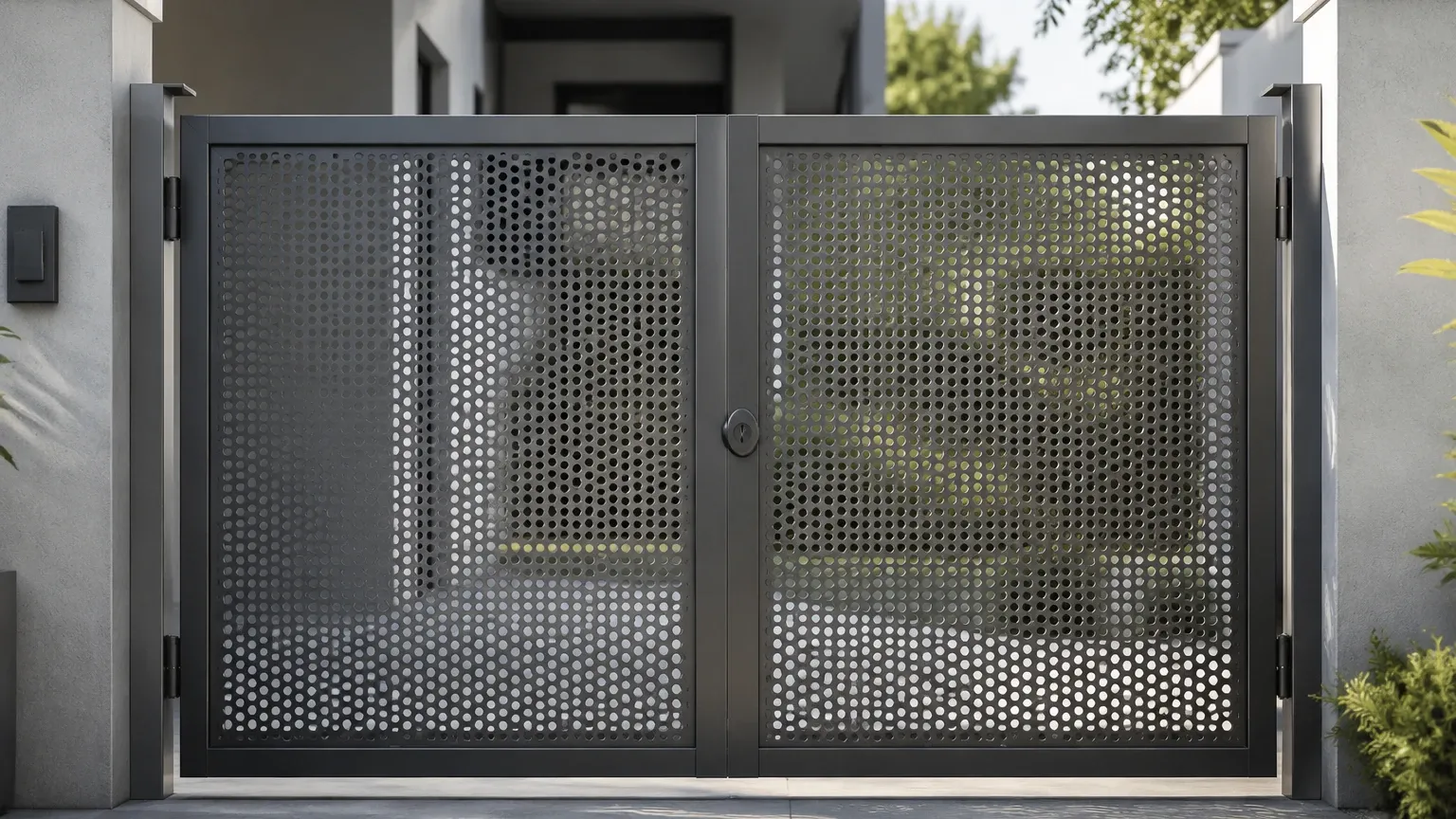
When designing a gate for an industrial site, chemical processing plant, or high-traffic commercial zone, the material must perform multiple roles simultaneously. Unlike solid sheet metal, perforated metal for gate applications allows for controlled passage of light and air. This is not merely an aesthetic choice; it is a critical engineering consideration for wind loading. Solid gates act as large sails during high-wind events, exerting immense pressure on hinges, motors, and support posts. Perforated panels mitigate this pressure by allowing wind to pass through the material, thereby extending the service life of the gate’s mechanical components.
Furthermore, perforated metal provides a unique security advantage. It allows security personnel or automated surveillance systems to maintain visibility through the gate while still preventing unauthorized physical entry. The choice of hole size and pitch determines whether the gate is "climb-resistant" or if it provides complete privacy. For industrial environments where ventilation is required—such as enclosures for generators or HVAC systems—perforated gates ensure that equipment remains secure while receiving adequate cooling.
Technical Specifications: Material and Pattern Selection
The performance of perforated metal for gate systems is largely dictated by the base material and the specific perforation pattern. Selecting the correct combination is essential for ensuring long-term reliability in demanding environments.
Material Options
1. Stainless Steel (Grade 304 and 316): For environments prone to corrosion, such as coastal areas or chemical processing facilities, stainless steel is the standard. Grade 316 offers superior resistance to chlorides and industrial chemicals, making it ideal for harsh outdoor applications.
2. Aluminum: When weight is a primary concern—particularly for large sliding gates or cantilevered systems—aluminum provides a high strength-to-weight ratio. It is naturally corrosion-resistant and can be powder-coated for additional protection and branding.
3. Galvanized Steel: This is a cost-effective solution for general industrial use. The zinc coating provides sacrificial protection against rust, though it may require more frequent inspection than stainless steel in high-moisture environments.
Hole Patterns and Open Area
The "open area" refers to the percentage of the sheet that is comprised of holes. This metric is vital for calculating both visibility and wind resistance. Common patterns include:
* Round Holes: The most popular and structurally stable pattern. Round holes offer the best distribution of stress across the metal sheet.
* Square Holes: Often selected for a modern aesthetic or when a higher open area percentage is required for maximum visibility.
* Slotted Holes: Useful for specific directional visibility or airflow requirements.
Engineers must calculate the open area carefully. A higher open area reduces the weight of the gate and wind resistance but may decrease the structural rigidity of the panel if the "bridges" (the metal between the holes) are too narrow.
Structural Integrity and Performance Metrics
Integrating Perforated & Expanded Metal into a gate frame requires an understanding of the material's mechanical properties. Unlike a solid plate, a perforated sheet has different directional strengths depending on the hole arrangement (staggered vs. straight line).
Staggered vs. Straight Patterns
A staggered hole pattern is generally preferred for gate panels because it provides higher strength and more uniform stress distribution. This is particularly important for gates that will experience frequent vibration or mechanical shock during operation. Straight-line patterns, while easier to align with certain architectural features, may create "weak lines" where the metal is more prone to bending or fatigue over time.
Margin Considerations
In B2B procurement, specifying "margins" is a critical technical detail. Margins are the unperforated areas along the edges of the sheet. For gate construction, having solid margins allows for easier welding or bolting to the gate frame. Without specified margins, the perforation pattern may run to the very edge, making it difficult to achieve a clean, strong weld without damaging the delicate hole structure. Engineers should define the width of the top, bottom, and side margins to match the dimensions of the gate's structural tubing.
Customization and Fabrication for Gate Assemblies
Industrial gates are rarely "one-size-fits-all." Customization is necessary to accommodate specific site dimensions, security levels, and operational requirements. When sourcing perforated metal for gate projects, several fabrication steps must be considered to ensure the final product is fit for purpose.
Precision Cutting and Leveling
Perforated sheets can experience internal stresses during the punching process, which may cause the metal to curl or warp. For gate applications, where panels must sit flush within a frame, precision leveling is required to ensure the sheets are perfectly flat. Advanced manufacturing facilities utilize roller levelers to neutralize these stresses before the material is shipped.
Surface Treatments
Beyond material selection, surface treatments play a significant role in the durability of the gate. For aluminum and galvanized steel, powder coating is a common choice. It provides a thick, protective layer that is resistant to UV radiation and physical abrasion. For stainless steel, electropolishing or pickling can be used to enhance the material's natural corrosion resistance and provide a uniform finish. These treatments are especially important in perforated metal because the edges of the holes are potential sites for the onset of corrosion if not properly treated.
Maintenance and Environmental Considerations
The longevity of a perforated metal gate is dependent on a regular maintenance schedule, tailored to the specific environment in which it is installed. While stainless steel and high-grade aluminum are low-maintenance, they are not "no-maintenance."
Cleaning Cycles
In industrial zones, airborne particulates and pollutants can accumulate within the perforations. If left uncleaned, these deposits can trap moisture against the metal, leading to localized pitting or crevice corrosion. A simple wash with low-pressure water and mild detergents is usually sufficient. In coastal environments, cleaning should be performed more frequently to remove salt deposits.
Inspection for Mechanical Wear
Because perforated metal panels are often lighter than solid panels, they can be more susceptible to damage from heavy impacts. Regular inspections should focus on the attachment points (welds or fasteners) and the integrity of the bridges between the holes. Any signs of cracking or deformation should be addressed immediately to prevent the failure of the entire panel.
Procurement and Selection Checklist for Engineers
Before finalizing a purchase order for perforated gate components, procurement teams and engineers should confirm several technical parameters with the manufacturer. This ensures that the supplied material meets the safety and performance standards of the project.
1. Gauge Thickness: Ensure the metal thickness is sufficient to withstand the expected physical impact and environmental loads. For most industrial gates, a gauge between 11 and 16 is standard, depending on the material.
2. Hole Size and Pitch: Confirm that the hole diameter and the distance between hole centers (pitch) provide the desired open area and security level. For instance, small holes (under 1/4 inch) are effective at preventing people from gaining a foothold on the gate.
3. Flatness Tolerances: Specify the required flatness to avoid issues during the framing and welding process.
4. Burr Removal: In high-traffic or pedestrian areas, it is essential that the perforated sheets are deburred. The punching process can leave sharp edges on the exit side of the hole, which can be a safety hazard.
5. Compliance Standards: Verify that the material meets relevant ASTM or ISO standards for metal composition and perforation accuracy.
By focusing on these technical details, businesses can ensure that their investment in perforated metal for gate systems results in a durable, secure, and low-maintenance solution. Whether the goal is to improve facility aesthetics or to solve a specific engineering challenge like wind load, Perforated & Expanded Metal provides the flexibility needed for modern industrial infrastructure.
Conclusion
Perforated metal is more than just a decorative element; it is a high-performance engineering material that addresses the complex needs of modern gate design. By understanding the relationship between material grade, hole patterns, and structural margins, engineers can specify gate panels that offer superior longevity and functionality. As industrial requirements continue to evolve toward more efficient and sustainable designs, the use of precision-manufactured perforated metal will remain a cornerstone of effective perimeter security and access control.
