


Perforated Metal Garden Edging
In commercial landscaping and industrial site management, the selection of edging materials is a critical decision that impacts both structural integrity and long-term maintenance costs. While traditional materials like wood, plastic, or solid steel strips are common, perforated metal garden edging has emerged as a superior technical solution for projects requiring precise moisture management, soil stabilization, and architectural distinction. This guide examines the engineering considerations, material specifications, and performance characteristics of using perforated and expanded metal in high-end landscaping applications.
The Engineering Logic Behind Perforated Metal Edging
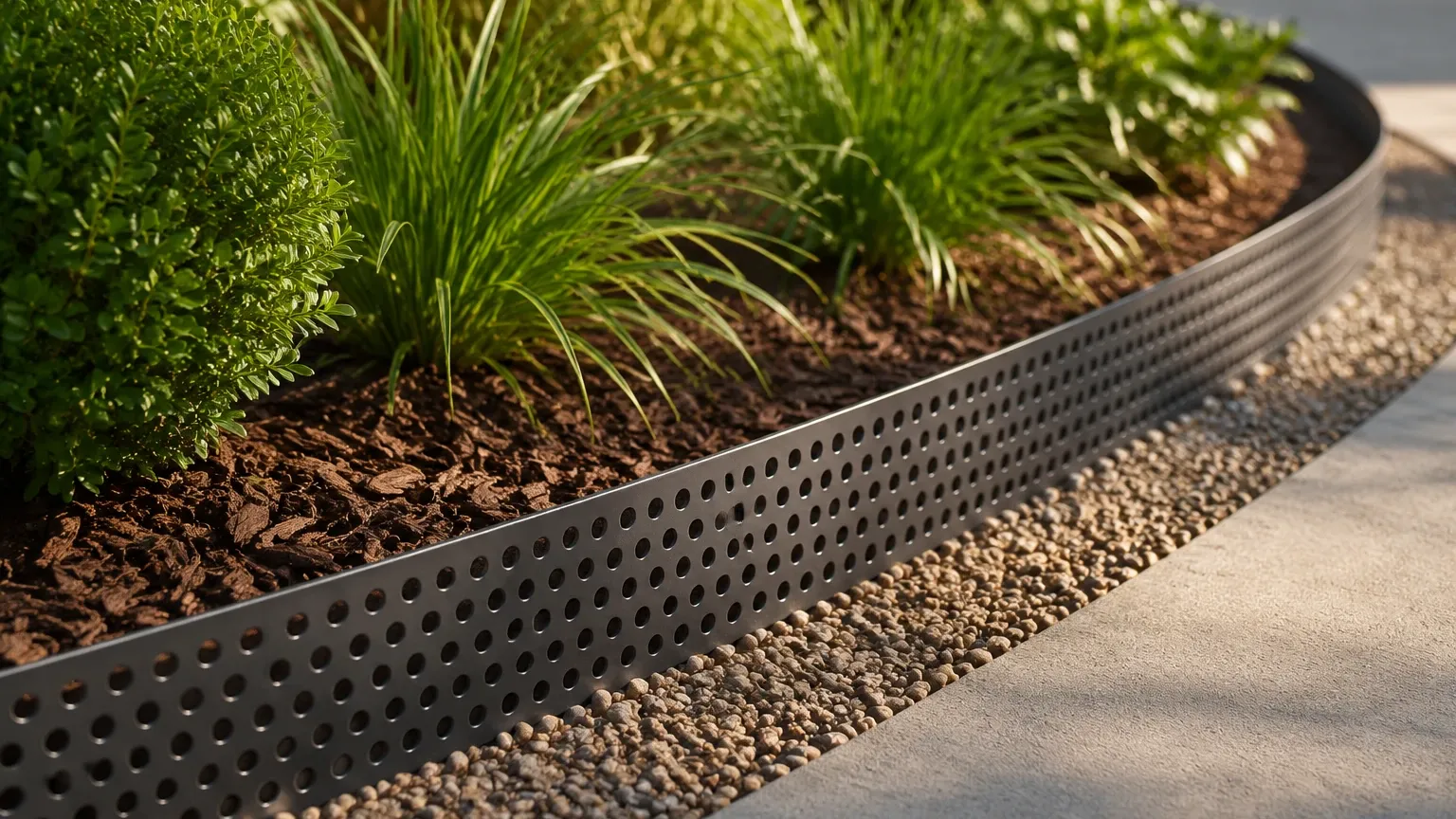
Unlike solid barriers, perforated metal garden edging serves a dual purpose: it provides a rigid physical boundary for pathways and planting beds while allowing for lateral water movement. In large-scale commercial developments, managing sub-surface drainage is essential to prevent soil saturation and localized flooding.
Perforated metal allows water to permeate through the barrier, reducing the hydrostatic pressure that often causes solid edging to lean or heave over time. By selecting specific hole patterns and open area percentages, engineers can calibrate the rate of drainage to suit the local soil composition and irrigation requirements. This technical advantage makes it an ideal choice for rain gardens, bioswales, and urban green spaces where water runoff must be carefully controlled.
Material Selection: Durability and Corrosion Resistance
When specifying Perforated & Expanded Metal for outdoor applications, material chemistry is the most significant factor in determining the product's lifecycle. Edging is constantly exposed to moisture, soil microbes, fertilizers, and varying pH levels, all of which can accelerate corrosion.
Stainless Steel (Grades 304 and 316)
Stainless steel is the gold standard for industrial-grade edging. Grade 304 offers excellent corrosion resistance for most inland environments. However, for coastal projects or areas where de-icing salts are frequently used, Grade 316 is recommended due to its molybdenum content, which provides superior resistance to chloride-induced pitting. Stainless steel edging maintains its structural integrity for decades and does not require protective coatings that can chip or peel.
Galvanized Steel
Hot-dipped galvanized steel provides a cost-effective alternative for large-scale industrial perimeters. The zinc coating acts as a sacrificial anode, protecting the underlying steel from oxidation. While it lacks the extreme longevity of stainless steel, it is highly durable and develops a matte grey patina that blends well with industrial aesthetics.
Weathering Steel (Corten)
Often used for its distinct rusted appearance, weathering steel forms a stable oxide layer that inhibits further corrosion. When perforated, Corten steel provides a rugged, organic look suitable for public parks and corporate campuses, though designers must account for potential rust runoff onto adjacent light-colored pavements during the initial weathering phase.
Technical Specifications: Hole Patterns and Open Area
The performance of perforated metal garden edging is dictated by its geometric configuration. Engineers must balance the need for permeability with the requirement for structural stiffness.
1. Round Hole Staggered: This is the most common pattern for industrial edging. The 60-degree staggered orientation provides maximum strength and a uniform appearance. It is highly effective at retaining mulch and gravel while allowing water to pass through.
2. Square Holes: Offering a higher open area percentage, square holes are often selected for modern architectural designs. However, they may offer slightly less resistance to bending compared to round hole patterns of the same gauge.
3. Slotted Perforations: Slotted patterns are particularly useful when the edging must follow a curved path. The orientation of the slots can be engineered to facilitate easier bending without compromising the vertical rigidity of the strip.
Calculating Open Area:
The "Open Area" percentage is the ratio of the area of the holes to the total area of the sheet. For most landscaping applications, an open area of 20% to 40% is sufficient to provide adequate drainage without allowing fine soil particles or decorative aggregates to migrate through the barrier.
Perforated vs. Expanded Metal: Which is Best for Edging?
Choosing between perforated and expanded metal depends on the specific project requirements regarding weight, cost, and visual texture.
* Perforated Metal: Manufactured by punching holes into a solid sheet. This process allows for precise control over hole size and placement, leaving solid "margins" at the edges of the strip for safer handling and easier installation. It is generally more rigid and offers a cleaner, more refined aesthetic.
* Expanded Metal: Created by simultaneously slitting and stretching the metal sheet. This process results in a diamond-shaped mesh with no material waste, making it a more sustainable and often more economical choice. Expanded metal has a three-dimensional texture that provides excellent grip for soil and roots, making it ideal for slope stabilization projects where the edging is partially buried to prevent erosion.
Installation Engineering and Stability
For perforated metal garden edging to perform effectively in a B2B or industrial context, the installation method must account for thermal expansion and soil movement. Unlike residential plastic edging, metal edging requires robust anchoring systems.
Anchoring Systems
Heavy-duty stakes, typically made from the same material as the edging to prevent galvanic corrosion, should be driven through the perforations or attached via welded clips. In high-traffic commercial areas, concrete haunching may be required at the base of the edging to prevent displacement by maintenance equipment or heavy foot traffic.
Joining and Seaming
To maintain a continuous line, individual sections of metal edging must be joined securely. Overlapping the ends and securing them with stainless steel fasteners is the standard approach. For a seamless look, some projects utilize interlocking tabs or custom-welded joints, though the latter increases on-site labor costs.
Managing Curves and Angles
The thickness (gauge) of the metal determines its flexibility. For intricate designs with tight radii, a thinner gauge (such as 14 or 16 gauge) is preferable. For straight runs in industrial yards where heavy machinery might come into contact with the edging, a thicker 10 or 12 gauge material is necessary to prevent deformation.
Maintenance and Lifecycle Cost Analysis
From a procurement perspective, the total cost of ownership for perforated metal garden edging is often lower than cheaper alternatives when viewed over a 15-to-20-year horizon.
* Maintenance Requirements: Metal edging requires virtually no maintenance once installed. Unlike wood, it will not rot or attract termites. Unlike plastic, it will not become brittle under UV exposure or crack during freeze-thaw cycles.
* Replacement Cycles: While the initial material cost of stainless steel perforated edging is higher, the elimination of frequent replacement cycles provides a significant return on investment (ROI) for facility managers and municipal developers.
* Sustainability: Metal is 100% recyclable. At the end of its long service life, perforated metal edging can be reclaimed, contributing to the circular economy goals of modern green building certifications like LEED.
Sourcing Custom Solutions for Large-Scale Projects
Standard off-the-shelf edging products often fail to meet the specific technical requirements of complex engineering projects. Sourcing from a manufacturer with OEM capabilities allows for the customization of height, gauge, hole pattern, and material grade.
When evaluating a supplier for perforated metal components, technical professionals should confirm the following:
* Precision Tolerances: Ensure the manufacturer can maintain tight tolerances on strip width and hole alignment to facilitate easy on-site assembly.
* Edge Finishing: In public-facing areas, the edges of the perforated strips must be deburred or hemmed to prevent injury.
* Material Certification: For industrial applications, request Mill Test Reports (MTRs) to verify the chemical composition and grade of the stainless steel or galvanized coating.
For projects requiring specialized filtration or structural metal components, consulting with experts in metal fabrication is essential. Specialized manufacturers like Kaifil provide the engineering support necessary to move from a design concept to a high-performance installation. To explore technical specifications and material options, you can Review product options and application support to ensure your project meets its durability and performance targets.
Conclusion
Perforated metal garden edging represents a sophisticated intersection of form and function. By providing superior drainage, exceptional durability, and a clean industrial aesthetic, it addresses the primary challenges of commercial and industrial landscaping. Whether the priority is managing sub-surface water flow in a bioswale or ensuring a permanent, crisp boundary for a corporate campus, the technical advantages of perforated and expanded metal make it a premier choice for engineers and landscape architects alike. Investing in high-quality materials and precise specifications ensures that the landscape infrastructure remains functional and visually appealing for decades.
