


Perforated Metal Handrail
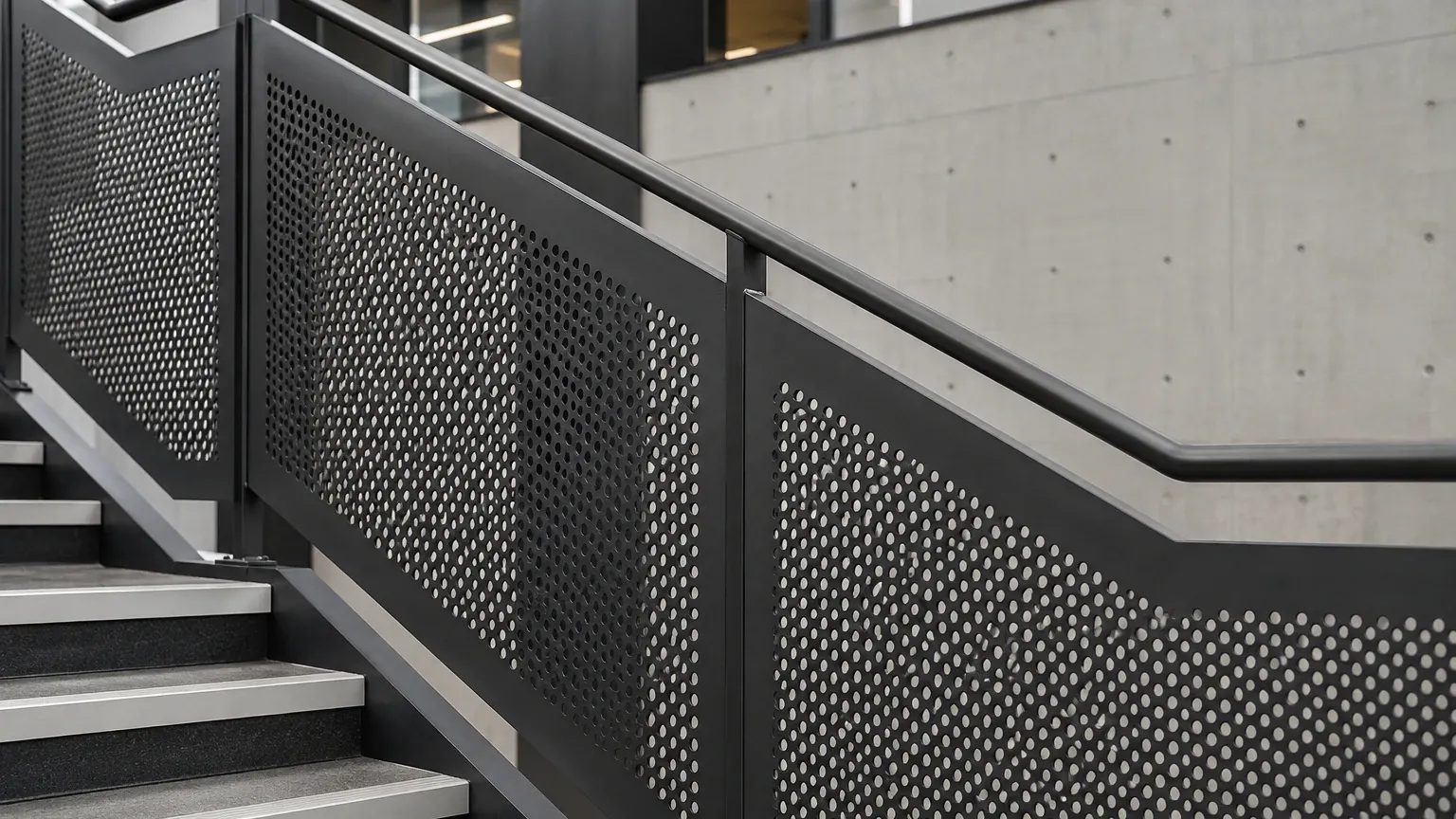
In industrial and commercial architecture, the selection of infill materials for safety barriers is a critical decision that balances structural integrity, safety compliance, and environmental durability. A perforated metal handrail system utilizes metal sheets—typically stainless steel or aluminum—that have been mechanically punched or laser-cut to create a pattern of holes. These panels serve as the protective infill between handrail posts and top rails, providing a robust alternative to traditional glass, wire mesh, or vertical pickets. For engineers and facility managers, understanding the technical nuances of these systems is essential for ensuring long-term performance in demanding environments such as chemical processing plants, water treatment facilities, and offshore platforms.
Technical Specifications and Engineering Considerations
The performance of a perforated metal handrail is primarily determined by the geometric configuration of the perforations and the physical properties of the base material. When specifying panels for industrial use, engineers must evaluate three primary factors: the hole pattern, the open area percentage, and the material gauge.
Hole Patterns and Geometry
Round holes are the most common specification due to their structural stability and ease of manufacturing. They can be arranged in a 60-degree staggered pattern, which provides the highest strength-to-weight ratio, or a straight-line pattern for specific aesthetic requirements. Square and slotted holes are also available, often used when specific ventilation or visibility requirements are dictated by the application. Slotted patterns, for instance, are frequently utilized in environments where directional airflow or drainage is necessary.
Open Area Calculations
The "open area" refers to the percentage of the panel that consists of holes versus solid metal. This is a critical engineering metric. A higher open area reduces the weight of the panel and allows for better visibility and airflow, which is vital for wind-load calculations on outdoor mezzanines or stairways. However, a higher open area also reduces the overall rigidity of the panel. Most industrial handrail infills maintain an open area between 30% and 50% to balance safety with structural performance.
Material Gauge and Thickness
For handrail applications, the thickness of the Perforated & Expanded Metal is typically specified between 11-gauge and 16-gauge (approximately 1.5mm to 3.0mm). Thicker gauges are required for high-traffic areas or environments where the panels may be subject to impact, such as loading docks or warehouse walkways. The gauge must be sufficient to prevent oil-canning (buckling) under pressure while remaining light enough for efficient installation.
Material Selection for Industrial Environments
The choice of material is the most significant factor in determining the service life of a perforated metal handrail system. While carbon steel and aluminum are options, stainless steel remains the industry standard for high-performance filtration and safety components due to its inherent resistance to corrosion and mechanical wear.
Grade 304 vs. Grade 316 Stainless Steel
Grade 304 stainless steel is the standard choice for indoor industrial applications and controlled environments. It offers excellent corrosion resistance and weldability. However, in environments exposed to chlorides, such as coastal facilities or chemical processing plants, Grade 316 stainless steel is required. The addition of molybdenum in Grade 316 provides superior resistance to pitting and crevice corrosion, ensuring the handrail retains its structural integrity and appearance over decades of service.
Surface Finishes and Passivation
In B2B industrial procurement, the surface finish is not merely aesthetic; it is a functional requirement. A brushed or satin finish (such as a #4 finish) is common because it hides minor scratches and fingerprints. For maximum corrosion resistance, stainless steel panels should undergo passivation—a chemical process that removes free iron from the surface and enhances the protective chromium oxide layer. In food and beverage or pharmaceutical applications, an electropolished finish may be specified to ensure a smooth, easy-to-clean surface that prevents bacterial growth.
Safety and Compliance Standards
Designing a perforated metal handrail requires strict adherence to international safety standards, including OSHA (Occupational Safety and Health Administration) in the United States and various ISO standards globally. These regulations dictate the dimensions and strength of the infill panels to prevent falls and injuries.
The 4-Inch Sphere Rule
One of the most critical safety requirements for handrail infills is the gap size. In many jurisdictions, the infill must be designed so that a 4-inch (102mm) diameter sphere cannot pass through any opening. While the individual perforations in a metal sheet are usually much smaller than this, the spacing between the panel and the supporting posts or rails must be carefully managed to meet this requirement. Perforated panels are inherently safer than horizontal cable rails in this regard, as they do not create a "ladder effect" that could encourage climbing.
Load-Bearing Requirements
Handrail systems must be capable of withstanding concentrated loads. OSHA generally requires handrails and top rails to withstand a force of at least 200 pounds (890 N) applied in any downward or outward direction. While the posts and top rails bear the brunt of this load, the perforated infill panels must be securely fastened to ensure they do not pop out or deform under pressure. This requires engineered mounting clips or continuous U-edging to distribute the load evenly across the panel edges.
Customization and Fabrication Options
Industrial projects often require bespoke solutions that go beyond standard off-the-shelf panels. The versatility of perforated metal allows for significant customization to meet specific project footprints and functional needs.
Precision Cutting and Shaping
Modern CNC punching and laser cutting technologies allow for the production of panels with precise dimensions, including cut-outs for pipes, electrical conduits, or structural beams. This precision is essential for maintaining a seamless safety barrier in complex industrial layouts. Panels can also be radiused or curved to follow the contour of circular platforms or spiral staircases.
Edge Treatments and Framing
Raw perforated sheets have sharp edges that pose a safety risk to personnel. To mitigate this, panels are typically finished with a U-profile frame or a solid metal border. Framing not only protects workers from sharp edges but also provides a solid surface for welding or mechanical fastening to the handrail posts. For high-vibration environments, such as those near heavy machinery, specialized mounting gaskets can be used within the frame to dampen noise and prevent metal-to-metal wear.
Installation and Maintenance Best Practices
The longevity of a perforated metal handrail system is heavily dependent on proper installation and a consistent maintenance schedule. Incorrect installation can lead to galvanic corrosion or structural failure, while neglect can result in the buildup of contaminants that compromise the metal's surface.
Installation Techniques
When installing stainless steel perforated panels, it is vital to use compatible fasteners. Using carbon steel bolts with stainless steel panels will trigger galvanic corrosion, leading to rapid rust at the connection points. Stainless steel bolts and isolation washers should always be used. Furthermore, panels should be installed with a slight clearance to allow for thermal expansion and contraction, particularly in outdoor applications where temperature fluctuations are significant.
Cleaning and Inspection Cycles
In industrial settings, perforated panels can accumulate dust, oils, and chemical residues. Regular cleaning with mild detergents or specialized stainless steel cleaners is necessary to maintain the passive layer. The frequency of cleaning depends on the environment; a chemical plant may require monthly inspections, while an indoor mezzanine may only need annual maintenance. During inspections, facility managers should check for loose fasteners, signs of localized corrosion, and any deformation in the panels caused by impact.
Evaluating the Total Cost of Ownership
When purchasing perforated metal handrails, purchasing teams must look beyond the initial material cost and consider the total cost of ownership (TCO). While perforated stainless steel may have a higher upfront cost compared to painted carbon steel or wooden alternatives, its lifecycle value is significantly higher.
1. Reduced Maintenance: Stainless steel does not require repainting or recoating, saving thousands in labor and material costs over the lifetime of the facility.
2. Durability: Metal panels are resistant to rot, pests, and fire, making them ideal for high-risk industrial zones.
3. Sustainability: Stainless steel is 100% recyclable. At the end of its service life, the material retains significant scrap value, contributing to the circular economy and corporate sustainability goals.
4. Safety Reliability: The consistent strength of metal ensures that safety standards are met without the risk of degradation associated with organic materials.
Conclusion
Perforated metal handrails represent a sophisticated engineering solution for industrial safety and architectural design. By carefully selecting the appropriate hole patterns, material grades, and fabrication methods, engineers can create a barrier system that provides exceptional protection while facilitating visibility and airflow. Whether for a high-tech pharmaceutical lab or a rugged wastewater treatment plant, the use of high-quality Perforated & Expanded Metal ensures a durable, compliant, and cost-effective handrail solution that stands up to the rigors of industrial use. Prioritizing technical specifications and material integrity during the procurement phase is the most effective way to ensure the safety and efficiency of any industrial facility.
