


Perforated Metal Hanger
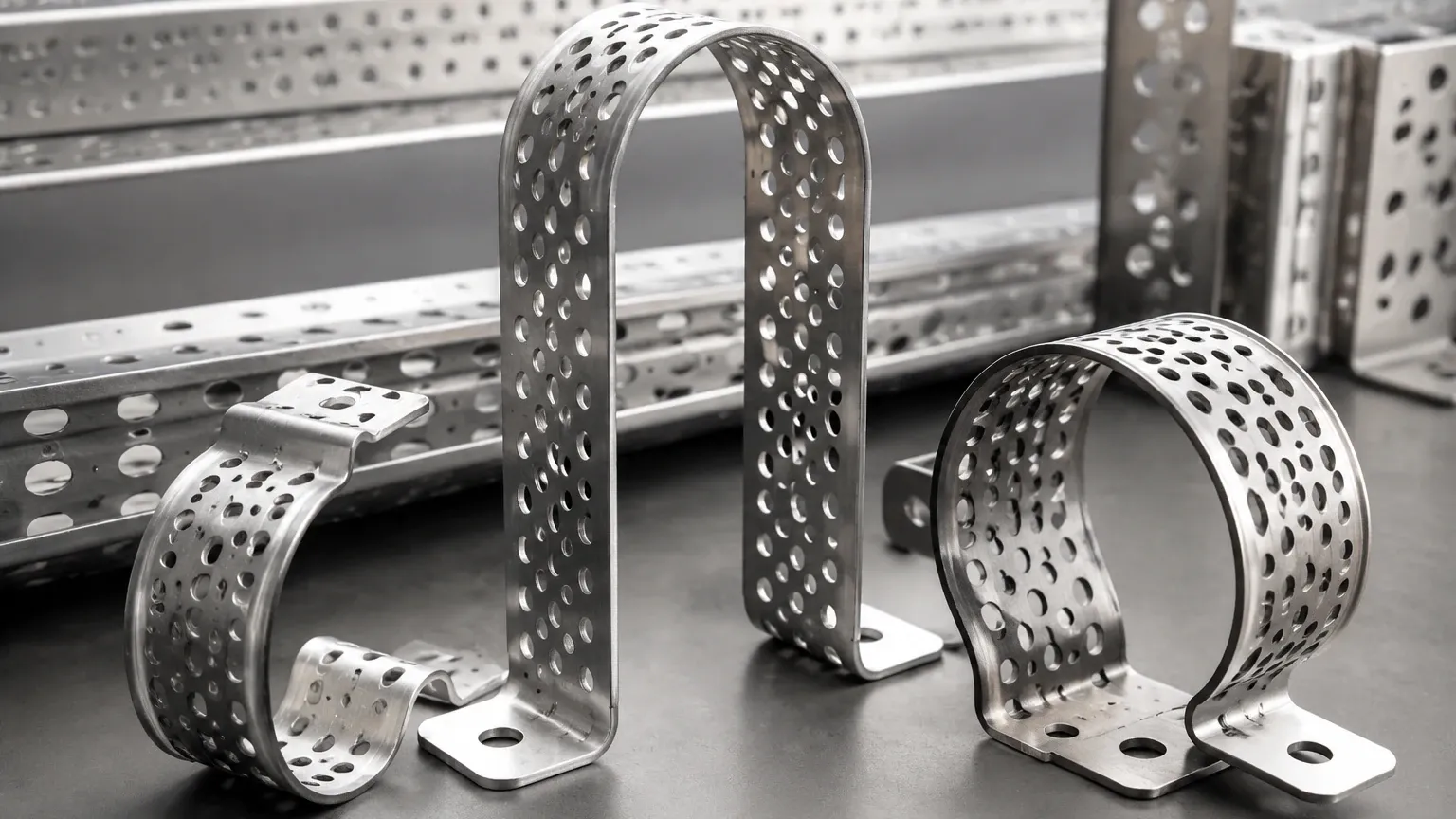
In industrial engineering and facility management, the structural integrity of support systems is as critical as the primary equipment they hold. A perforated metal hanger serves as a specialized support component designed to secure piping, ductwork, filtration housings, and electrical conduits in demanding environments. Unlike solid metal supports, perforated hangers offer a unique balance of strength-to-weight ratio, ventilation, and drainage capabilities, making them indispensable in sectors ranging from chemical processing to food and beverage production.
Selecting the right Perforated & Expanded Metal solution for hanger applications requires a deep understanding of material science, load-bearing dynamics, and environmental compatibility. As industrial systems become more complex, the demand for customized, high-precision hangers has grown, pushing manufacturers like Kaifil to provide engineered solutions that exceed standard off-the-shelf specifications.
Understanding the Mechanics of Perforated Metal Hangers
A perforated metal hanger is essentially a strip, bracket, or strap of metal—typically stainless steel—that has been punched or stamped with a specific pattern of holes. In industrial contexts, these are used to suspend heavy components from ceilings, beams, or secondary steel structures. The "perforation" is not merely aesthetic; it serves several functional purposes:
1. Weight Reduction: By removing material through perforation, the overall weight of the support system is reduced without a proportional loss in structural stiffness. This is vital in large-scale installations where cumulative weight impacts the building's structural load.
2. Drainage and Airflow: In wash-down environments, such as food processing plants, solid hangers can trap moisture and debris, leading to bacterial growth or accelerated corrosion. Perforated designs allow fluids to pass through, ensuring the support remains dry and clean.
3. Adjustability: The hole patterns in a perforated metal hanger often double as mounting points, allowing for fine-tuned adjustments during installation without the need for on-site drilling.
Material Selection: Why Stainless Steel Dominates
For most industrial B2B applications, the choice of material for a perforated metal hanger is dictated by the operating environment. While galvanized steel is common in HVAC applications, high-performance industries prioritize stainless steel (SS304 and SS316).
SS304 vs. SS316 in Hanger Applications
SS304 is the standard for general industrial use, offering excellent corrosion resistance and mechanical strength. However, in environments involving high chloride exposure—such as marine applications or chemical plants—SS316 is the preferred choice. The addition of molybdenum in SS316 provides superior resistance to pitting and crevice corrosion, which is often a failure point in perforated components where the edges of the holes are exposed to the atmosphere.
Heat Resistance and Thermal Expansion
In high-temperature fluid processing or steam systems, the perforated metal hanger must maintain its tensile strength at elevated temperatures. Stainless steel alloys retain their structural properties better than carbon steels or aluminum, ensuring that the suspended load remains secure even during thermal cycling. Engineers must also account for the coefficient of thermal expansion to prevent the hangers from buckling or putting undue stress on the connected piping.
Engineering Considerations: Hole Patterns and Load Limits
The performance of a perforated metal hanger is heavily influenced by its geometric configuration. When specifying these components, engineers must evaluate the following technical parameters:
Open Area Percentage
The "open area" refers to the ratio of the area of the holes to the total area of the sheet. For hangers, a balance must be struck. A higher open area improves drainage and reduces weight but decreases the cross-sectional area available to carry the load. Typically, industrial hangers utilize a lower open area (20% to 40%) compared to acoustic panels or decorative screens to ensure maximum tensile strength.
Hole Shape and Orientation
* Round Holes: The most common and cost-effective pattern. They provide the most uniform stress distribution around the perforation, reducing the risk of stress concentration cracks.
* Slotted Holes: Often used in hangers to provide lateral or longitudinal adjustability. While useful for installation, slotted patterns can introduce directional weaknesses that must be factored into the load calculation.
* Staggered vs. Straight Row: Staggered patterns generally offer higher strength and more consistent material properties across the width of the hanger strap.
Tensile Strength and Yield
Before purchasing, it is essential to confirm the safe working load (SWL) of the hanger. This calculation must account for the "net section" of the metal—the area remaining after the holes are punched. A perforated metal hanger with a 30% open area will have significantly different yield characteristics than a solid bar of the same dimensions.
Integration with Filtration and Fluid Systems
As a specialist in filtration solutions, Kaifil often integrates perforated metal components into broader industrial assemblies. The perforated metal hanger plays a specific role in the support of filtration housings and large-scale filter cartridges.
In heavy-duty hydraulic or water treatment systems, filter housings can reach significant weights when filled with fluid. A standard support may not suffice. Perforated hangers are used here to:
* Support Manifolds: Holding the distribution pipes that feed into multi-cartridge filter housings.
* Vibration Damping: The inherent flexibility of certain perforated patterns can help absorb micro-vibrations from pumps, preventing the transmission of stress to the pipe joints.
* Modular Mounting: In custom OEM filtration skids, perforated hangers allow for the modular mounting of sensors, gauges, and bypass valves directly onto the support structure.
Common Risks and Quality Failures
When sourcing perforated metal hangers, purchasing teams must be aware of common manufacturing defects that can lead to system failure:
1. Burrs and Sharp Edges: Inadequately finished perforations can have sharp burrs. In applications where the hanger is in contact with plastic tubing or electrical cables, these burrs can cause abrasion and eventual failure of the supported line.
2. Work Hardening: The process of punching holes can work-harden the area around the perforation. If the material is not properly annealed or if the tooling is dull, this can lead to brittleness and stress-corrosion cracking over time.
3. Inconsistent Pitch: If the distance between holes (the pitch) is inconsistent, the hanger may not align with standard mounting hardware, leading to forced fits that introduce internal stress into the assembly.
To mitigate these risks, it is crucial to partner with a manufacturer that maintains tight tolerances and provides material certifications (MTRs) to verify the chemical composition and mechanical properties of the steel.
Selection Guide for Engineers and Purchasing Teams
To ensure the long-term reliability of a perforated metal hanger installation, the following checklist should be completed during the procurement phase:
* Environmental Assessment: Is there exposure to acids, salts, or extreme temperatures? (Choose SS316 for high-corrosion areas).
* Static vs. Dynamic Load: Will the hanger support a static pipe, or is there significant fluid surge or mechanical vibration? (Increase safety factors for dynamic loads).
* Dimensional Compatibility: Confirm the width, thickness, and hole diameter. Standard widths often range from 19mm to 50mm, with thicknesses varying based on the required SWL.
* Finish Requirements: Does the application require a 2B mill finish, a polished surface for sanitary applications (food/pharma), or a passivated finish for maximum corrosion resistance?
* Customization Needs: Does the project require non-standard hole spacing or specific bending angles to fit a proprietary housing design?
The Total Cost of Ownership (TCO)
While a perforated metal hanger may seem like a commodity item, the total cost of ownership is heavily weighted toward durability and maintenance. A cheaper, low-grade galvanized hanger may save on initial costs but can lead to catastrophic failure if it corrodes through in a chemical environment. Choosing high-quality Perforated & Expanded Metal components ensures that the support system matches the lifespan of the primary equipment, reducing downtime and replacement labor costs.
In many industrial facilities, the cost of replacing a failed hanger—including the labor, safety equipment, and potential system shutdown—far exceeds the price of the component itself. Investing in precision-manufactured stainless steel hangers is a proactive strategy for risk management.
Conclusion
The perforated metal hanger is a vital, though often overlooked, component of industrial infrastructure. By providing a lightweight, adjustable, and corrosion-resistant support solution, it enables the safe and efficient operation of complex fluid and filtration systems. Whether you are designing a new chemical processing line or upgrading a water treatment facility, understanding the technical nuances of perforated metal—from material grades to open area calculations—is essential for engineering success.
For those requiring specialized designs or high-volume OEM production, working with a manufacturer like Kaifil ensures that every component is engineered to meet the specific demands of the application, providing peace of mind and long-term structural integrity.
