


Perforated Metal Modesty Panel
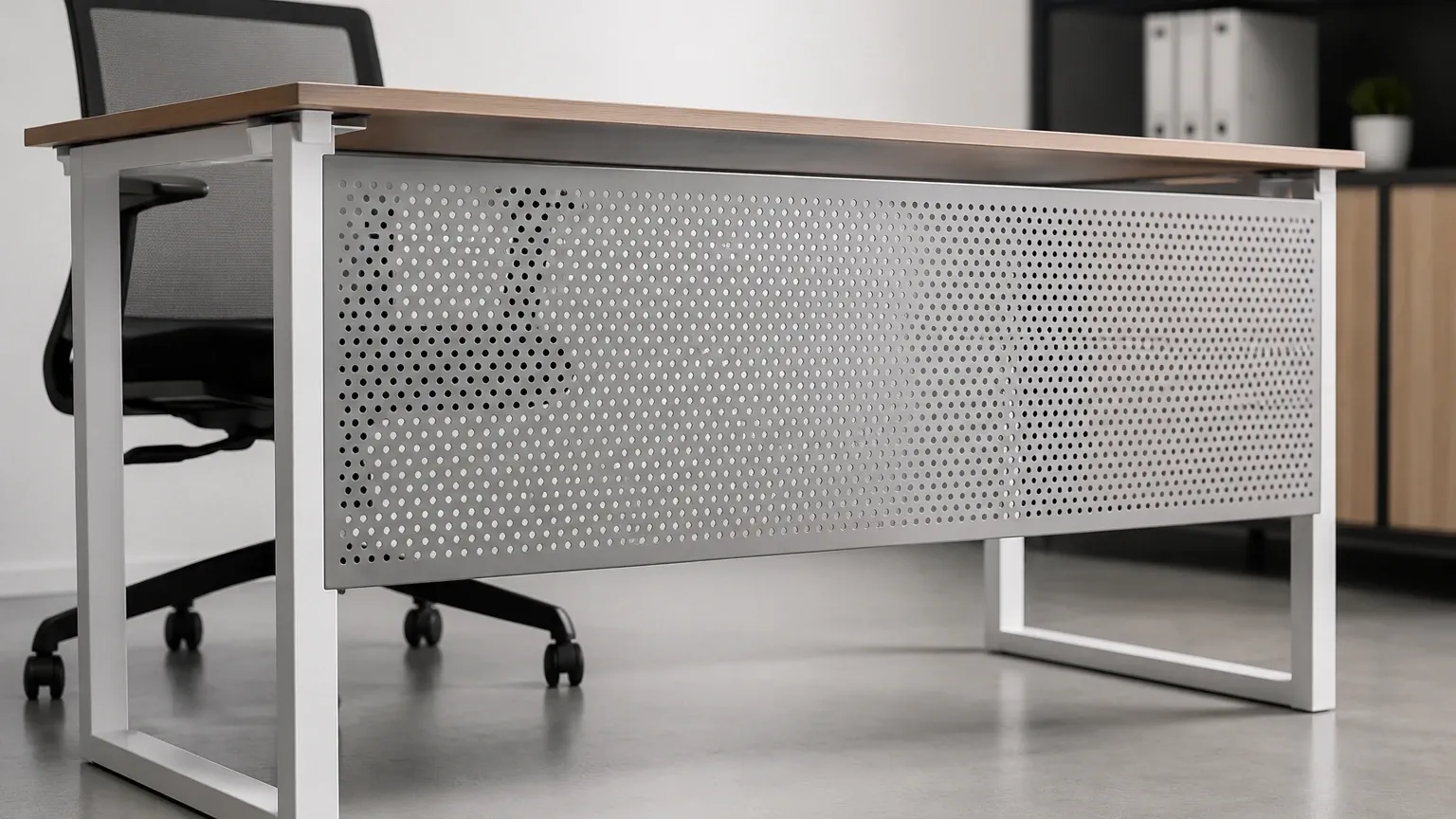
In modern industrial design and office furniture engineering, the perforated metal modesty panel has evolved from a simple privacy screen into a multifunctional component that addresses structural integrity, airflow management, and aesthetic requirements. For engineers and procurement professionals, selecting the right panel involves understanding the technical nuances of metal fabrication, material properties, and the specific performance characteristics of Perforated & Expanded Metal.
This guide explores the engineering considerations, material selections, and customization options essential for integrating perforated metal modesty panels into large-scale commercial and industrial projects.
Technical Fundamentals of Perforated Metal Modesty Panels
A modesty panel is primarily designed to provide visual privacy for users of desks, workstations, or elevated walkways. However, when manufactured from perforated metal, these panels offer several technical advantages over solid wood or plastic alternatives. The use of perforated sheets allows for the passage of light and air while maintaining a physical barrier.
Open Area Percentage
The most critical technical specification for a perforated metal modesty panel is the "open area." This refers to the percentage of the sheet that is occupied by holes versus the solid metal. For modesty panels, an open area between 30% and 50% is typical. This range provides a balance: it is dense enough to obscure the view of cables and legs behind the panel, yet open enough to allow HVAC systems to circulate air efficiently, preventing heat buildup around electronic equipment.
Hole Patterns and Arrangement
The arrangement of perforations significantly affects both the visual density and the structural rigidity of the panel.
- Staggered Centers: Usually at a 60-degree angle, this is the most popular pattern because it provides high strength and a uniform appearance.
- Straight Lines: Holes aligned in rows and columns. While aesthetically clean, straight-line patterns can sometimes result in lower structural stability compared to staggered patterns of the same gauge.
- Decorative and Custom Patterns: For high-end architectural applications, custom CNC-punched patterns can be designed to match brand identities or specific geometric themes.
Material Selection for Durability and Performance
Choosing the correct substrate for a perforated metal modesty panel depends on the environment in which it will be installed and the required lifespan of the product. At Kaifil, we prioritize materials that offer a balance of machinability and long-term durability.
Stainless Steel
For environments requiring high corrosion resistance or a premium aesthetic, stainless steel (typically Grade 304 or 316) is the preferred choice. It is exceptionally durable and maintains its structural integrity even in thinner gauges. Stainless steel panels are often used in medical facilities, laboratories, or high-traffic public spaces where frequent cleaning with harsh chemicals is necessary.
Carbon Steel
Cold-rolled carbon steel is the most cost-effective option for standard office furniture and industrial workstations. While it lacks inherent corrosion resistance, it provides excellent strength. To prevent oxidation, carbon steel modesty panels must be finished with a high-quality powder coating or electroplating.
Aluminum
When weight is a primary concern—such as in mobile workstation units or height-adjustable desks—aluminum is an ideal material. It is naturally resistant to corrosion and is approximately one-third the weight of steel. However, because aluminum is softer, engineers must often specify a thicker gauge to achieve the same rigidity as a steel panel.
Engineering Considerations: Rigidity and Safety
Integrating a perforated metal modesty panel into a furniture system requires careful attention to mechanical properties to ensure the panel does not vibrate, oil-can (pop in and out), or present safety hazards.
Gauge and Thickness
The thickness of the metal, or gauge, must be proportional to the overall dimensions of the panel. A large, unsupported panel made from thin-gauge metal will lack the necessary stiffness. Common thicknesses for modesty panels range from 1.0mm to 2.0mm. If a thinner material is required for weight savings, engineers often specify "returned edges" or flanges—bending the edges of the metal at 90 degrees—to significantly increase the moment of inertia and overall rigidity.
Edge Treatment and Deburring
In any B2B application where users come into contact with the equipment, safety is paramount. The perforation process can leave sharp burrs on the exit side of the punch. High-quality Perforated & Expanded Metal components undergo a rigorous deburring process. Furthermore, modesty panels should be designed with "safe edges," meaning the perforation pattern stops before reaching the edge of the panel, leaving a solid metal border (margins) for safe handling and mounting.
Mounting and Hardware Compatibility
Modesty panels must be securely attached to the desk frame or work surface. Common mounting methods include:
- Keyhole Slots: For easy installation and removal.
- Welded Studs: Providing a clean, fastener-free appearance on the front of the panel.
- Integrated Brackets: Where the panel itself is bent to form the mounting interface.
Functional Benefits in Industrial and Commercial Spaces
Beyond simple privacy, the perforated metal modesty panel serves several functional roles that contribute to the efficiency of a workspace.
Cable Management Integration
Modern workstations are cluttered with power and data cables. Perforated panels allow for the easy attachment of cable ties, hooks, and management trays directly through the holes. This keeps cables organized and off the floor, reducing trip hazards and simplifying maintenance for IT departments.
Thermal Regulation
In server rooms, control centers, or workstations with high-performance computing needs, airflow is critical. Solid panels can trap heat around the user's legs and the computer tower. The perforations in a metal modesty panel facilitate passive airflow, ensuring that heat is dissipated effectively, which can extend the lifespan of electronic components.
Acoustic Diffusion
While metal is a reflective surface, a perforated panel can contribute to acoustic management when paired with sound-absorbing materials. In some architectural designs, an acoustic fleece or foam is placed behind the perforated metal modesty panel. The holes allow sound waves to pass through to the absorbent material rather than bouncing back into the room, helping to reduce ambient noise levels in open-plan offices.
Customization and OEM Capabilities
For manufacturers of office systems and industrial equipment, a one-size-fits-all approach is rarely sufficient. Customization is where the technical expertise of a manufacturer like Kaifil becomes invaluable.
Precision Manufacturing
Utilizing advanced CNC punching and laser cutting technology, perforated metal modesty panels can be produced to exact tolerances. This ensures that mounting holes align perfectly with the furniture frames every time, reducing assembly time and labor costs for the OEM partner.
Finishing Options
The finish of the panel is not just about color; it is about protection and texture.
- Powder Coating: Offers a wide range of colors (RAL system) and textures (matte, gloss, sand-textured). It provides a durable, impact-resistant layer.
- Anodizing: Specifically for aluminum, this electrochemical process hardens the surface and provides a sophisticated metallic finish.
- Brushed or Polished: For stainless steel, these finishes highlight the natural quality of the metal without the need for additional coatings.
Prototyping and Scaling
In the B2B sector, the ability to move from a CAD drawing to a physical prototype is essential for verifying fit and function. Kaifil supports engineers through the prototyping phase, allowing for adjustments in hole size, pitch, or mounting points before moving into high-volume production.
Evaluating Quality and Total Cost of Ownership
When sourcing perforated metal modesty panels, procurement teams should look beyond the initial unit price and consider the total cost of ownership (TCO). A lower-quality panel may suffer from several issues:
1. Poor Flatness: If the metal is not properly leveled after the perforation process, the panels will arrive warped, making installation difficult and resulting in a poor final appearance.
2. Inconsistent Coating: Thin or uneven powder coating can lead to premature scratching or rusting, requiring costly replacements.
3. Burrs and Sharp Edges: These present a liability risk and can damage cables or user clothing.
By partnering with a specialist in Perforated & Expanded Metal, companies ensure they receive components that meet strict industrial standards for flatness, deburring, and finish quality.
Conclusion
The perforated metal modesty panel is a sophisticated engineering solution that balances form and function. Whether the goal is to improve airflow in a high-tech control room or to provide a durable, modern aesthetic for a corporate office, the technical specifications—material, gauge, open area, and finish—must be carefully aligned with the application’s requirements.
For engineers and purchasing managers, understanding these variables is the key to selecting a product that offers long-term reliability and performance. As a professional manufacturer, Kaifil provides the technical support and manufacturing precision necessary to deliver customized filtration and metal solutions that meet the most demanding industrial standards.
