


Perforated Metal Ontario
In the industrial landscape of Ontario, from the food processing plants of the Greater Toronto Area to the heavy manufacturing and mining sectors in the north, the demand for high-precision separation and filtration components is constant. Selecting the right materials and configurations for perforated metal is a critical engineering decision that impacts the efficiency, safety, and longevity of industrial systems. Whether used as a support structure for filter media or as a primary screening element, the technical specifications of these components must align with the rigorous demands of modern production environments.
Understanding the Role of Perforated and Expanded Metal in Industrial Filtration
Industrial filtration relies on the structural integrity and precise aperture control provided by metal substrates. In Ontario's diverse industrial sectors, Perforated & Expanded Metal serves as the backbone for various filtration systems. These materials are not merely screens; they are engineered components designed to withstand pressure differentials, corrosive chemicals, and mechanical stress.
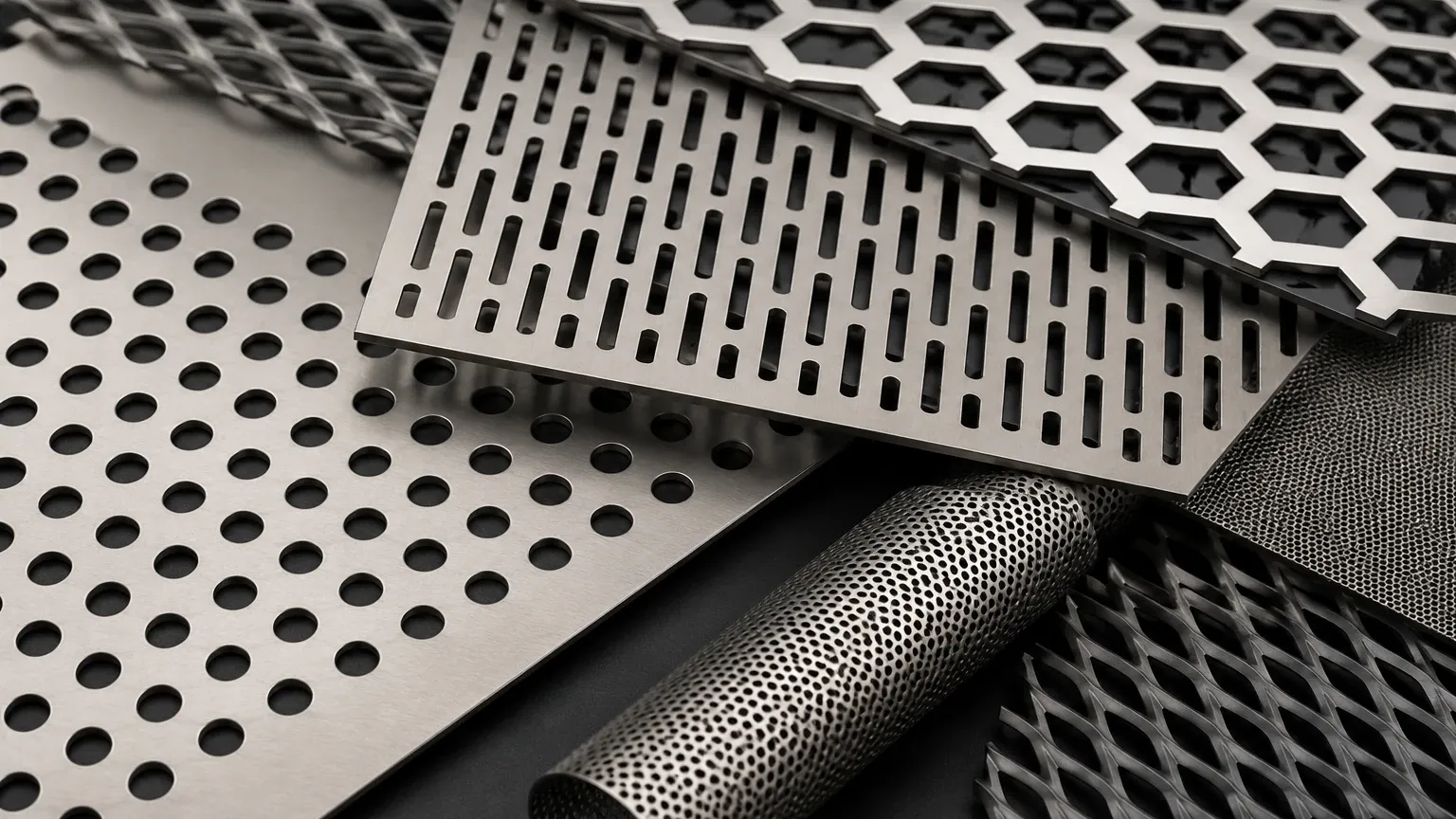
Perforated metal is created through a punching process that removes material to create a specific pattern of holes. This process allows for high precision in hole size and spacing, which is essential for applications requiring exact flow rates and particle retention. Expanded metal, conversely, is produced by slitting and stretching the metal sheet simultaneously. This creates a diamond-shaped mesh without any material waste, offering a high strength-to-weight ratio that is ideal for support cages and protective guards.
Technical Differences: Perforated vs. Expanded Metal
For engineers and procurement teams, choosing between perforated and expanded metal requires an understanding of their mechanical properties and manufacturing nuances.
Perforated Metal Characteristics
Perforated metal offers the greatest versatility in terms of hole shapes, including round, square, slotted, and hexagonal patterns. Because the material is punched, the remaining "bridge" between holes remains flat and retains the original thickness of the sheet. This flatness is crucial when the metal needs to be rolled into cylinders for filter cartridges or when a smooth surface is required to prevent material buildup in food and beverage applications.
Expanded Metal Characteristics
Expanded metal is often more cost-effective because the manufacturing process does not produce scrap. The stretching process creates a "raised" profile where the strands are at an angle to the plane of the sheet. While this provides excellent grip and structural rigidity, it may require a "flattening" process if a smooth surface is needed. In filtration, expanded metal is frequently used as an outer guard or an inner support core for pleated filter elements, providing high open areas with minimal weight.
Material Selection Criteria for Ontario’s Industrial Environments
The environmental conditions in Ontario—ranging from high-humidity food plants to chemically aggressive wastewater treatment facilities—necessitate careful material selection. Stainless steel remains the industry standard for its durability and resistance to oxidation.
Stainless Steel 304 vs. 316
* Type 304: This is the most common grade of stainless steel used in perforated metal. It offers excellent corrosion resistance and formability, making it suitable for general industrial use, HVAC systems, and architectural applications.
* Type 316: For more demanding environments, Type 316 stainless steel is preferred. It contains molybdenum, which significantly enhances resistance to pitting and crevice corrosion, particularly in chloride-rich environments. This is the primary choice for chemical processing, pharmaceutical manufacturing, and marine-adjacent industrial sites in the Great Lakes region.
Specialty Alloys
In specific high-temperature or highly acidic applications, engineers may opt for duplex stainless steel or nickel alloys. These materials ensure that the perforated metal components do not fail prematurely due to stress corrosion cracking or thermal degradation.
Engineering Specifications: Open Area, Hole Patterns, and Pitch
When specifying perforated metal for an Ontario-based project, three technical parameters are paramount: the hole pattern, the pitch, and the resulting open area percentage.
The Importance of Open Area
The "open area" is the total area of the holes divided by the total area of the sheet, expressed as a percentage. This figure directly dictates the flow rate and pressure drop across the filter. A higher open area reduces resistance to flow but may compromise the structural strength of the sheet. Engineers must balance these two factors based on the operating pressure of the system.
Hole Patterns and Pitch
* Staggered Pattern: The most common configuration is the 60-degree staggered round hole pattern. This arrangement provides the highest open area and uniform strength across the sheet.
* Straight Pattern: Holes are aligned in rows and columns. While easier to align for certain structural applications, it generally offers lower strength than staggered patterns.
* Pitch: This refers to the distance from the center of one hole to the center of the adjacent hole. By adjusting the pitch and the hole diameter, manufacturers can precisely tune the filtration characteristics of the metal.
Application-Specific Solutions for Ontario Industries
Food and Beverage Processing
In Ontario's robust food and beverage sector, perforated metal must meet sanitary standards. Stainless steel components are used in grain drying, fruit processing, and brewery filtration. The smooth surface of perforated stainless steel allows for effective Clean-in-Place (CIP) procedures, ensuring that no organic matter is trapped in the mesh or perforations.
Chemical and Pharmaceutical Manufacturing
Precision is critical in pharmaceutical separation processes. Perforated metal with micro-perforations (holes smaller than the thickness of the material) is often used here. These components must be free of burrs and have a high-quality surface finish to prevent contamination and ensure consistent flow characteristics.
Water Treatment and Desalination
Ontario’s municipal and industrial water treatment plants utilize perforated metal for intake screens and as support structures for fine wire mesh filters. The ability of 316L stainless steel to resist the corrosive effects of treated water and chemicals makes it an essential material for these long-term infrastructure assets.
Customization and OEM Manufacturing Capabilities
Standard off-the-shelf perforated sheets rarely meet the specific needs of complex industrial machinery. Customization is often required to ensure a perfect fit and optimal performance. Kaifil specializes in providing tailored solutions that go beyond simple sheet production.
Precision Fabrication
Customization includes more than just hole patterns. It involves secondary operations such as:
* Shearing and Notching: Cutting sheets to exact dimensions with specific margins (blank areas around the edges) to facilitate welding or mounting.
* Forming and Rolling: Shaping perforated metal into cylinders, cones, or baskets for use in filter housings.
* Welding: Utilizing TIG, MIG, or spot welding to create robust, leak-proof filtration components.
* Surface Finishing: Options such as electropolishing, passivation, or specialized coatings to enhance corrosion resistance and aesthetic appeal.
Engineering Support for Purchasing Teams
When sourcing perforated metal in Ontario, purchasing teams should confirm the manufacturer's ability to provide material certifications (MTRs) and adhere to tight tolerances. Technical support during the design phase can prevent costly errors, such as selecting a hole size that is too small for the material thickness (a common manufacturing constraint) or choosing an open area that leads to structural failure under vacuum or pressure.
Evaluating Quality and Performance for Long-Term Reliability
The total cost of ownership for perforated metal components is determined by their service life and maintenance requirements, not just the initial purchase price. High-quality manufacturing ensures that the holes are uniform and free of "slugs" (punched-out metal bits) that could dislodge and damage downstream equipment.
Quality Control Measures
Reliable manufacturers implement strict quality control protocols, including:
* Dimensional Inspection: Verifying hole diameters, pitch, and sheet flatness.
* Material Verification: Ensuring the alloy composition matches the specification through X-ray fluorescence (XRF) or other testing methods.
* Burr Removal: Ensuring all edges are smooth to prevent turbulence in fluid flow and to facilitate safe handling during installation.
Replacement Cycles and Maintenance
In filtration applications, perforated metal is often the "permanent" part of a filter assembly, supporting a disposable mesh or fabric. However, even these metal components eventually wear due to erosion or chemical attack. Regular inspection for signs of thinning, hole enlargement, or stress cracks is essential for maintaining system integrity. Choosing a supplier that understands these wear patterns can help in developing more durable designs that extend replacement cycles.
Conclusion: Selecting the Right Partner for Perforated Metal
For industrial operations in Ontario, the selection of perforated and expanded metal is a foundational element of system design. By focusing on technical specifications—such as material grade, open area, and fabrication precision—engineers can ensure their filtration and separation processes operate at peak efficiency.
Whether you are designing a new chemical processing line or upgrading a water treatment facility, the right metal substrate provides the necessary balance of flow performance and structural durability. For more information on technical specifications and custom options, you can Review product options and application support to find the ideal solution for your specific industrial requirements.
