


Perforated Metal Plus
In the landscape of industrial filtration, standard off-the-shelf components rarely meet the rigorous demands of high-pressure, corrosive, or high-temperature environments. When engineers specify filtration media, they often look beyond basic structural sheets toward what can be termed "perforated metal plus"—a combination of precision-engineered perforated or expanded metal integrated with specialized secondary processing, custom geometries, and advanced material science. This approach ensures that the filtration component does not merely serve as a barrier but functions as a high-performance asset within a complex mechanical system.
At its core, Perforated & Expanded Metal serves as the backbone for many industrial filtration solutions. Whether used as a standalone filter, a support core for pleated wire mesh, or an outer protective shroud, the selection of the base material and the precision of its perforation pattern are critical. This article explores the technical nuances of these materials, the engineering considerations for their selection, and the value-added processes that transform standard metal into a specialized industrial tool.
Understanding the Fundamentals of Perforated and Expanded Metal
To effectively implement perforated metal plus solutions, one must first distinguish between the two primary manufacturing methods: perforation and expansion. While both create open areas for fluid or gas passage, their mechanical properties and applications differ significantly.
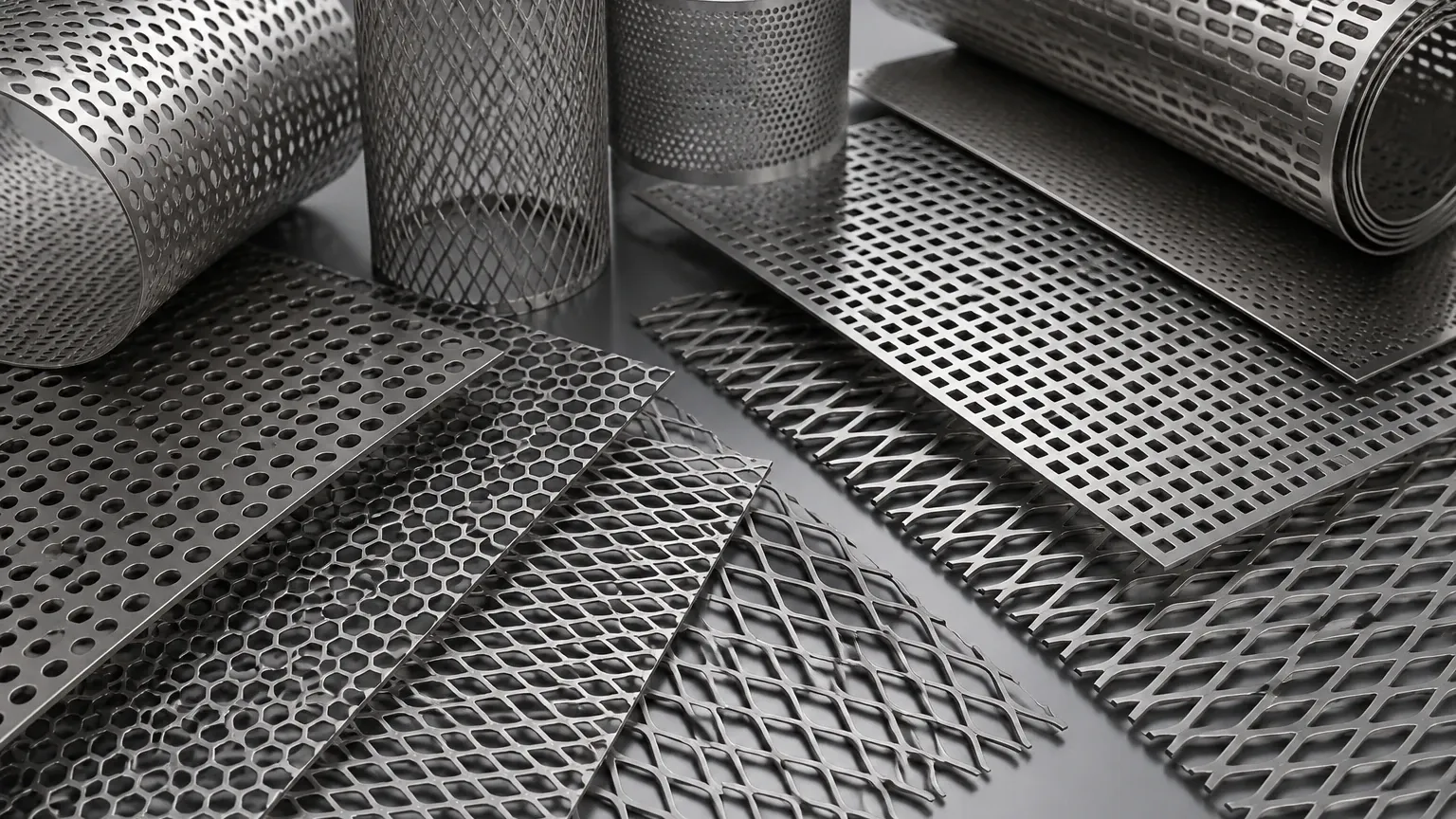
Perforated Metal is manufactured by punching a series of holes into a solid metal sheet. This process allows for extreme precision in hole size, shape, and spacing. Engineers can specify round, square, or slotted holes in staggered or straight patterns. The primary advantage of perforated metal is its structural integrity; the solid "bridges" between the holes provide predictable mechanical strength, making it ideal for high-pressure filter cores.
Expanded Metal, on the other hand, is produced by simultaneously slitting and stretching a metal sheet. This creates a diamond-shaped mesh pattern without any material waste. Because the metal is stretched rather than punched, the resulting mesh has a three-dimensional texture that can enhance turbulence in certain filtration applications. Expanded metal is often lighter than perforated metal of the same thickness and provides an excellent strength-to-weight ratio, though it may offer less structural rigidity under extreme radial loads compared to a thick-walled perforated tube.
Material Selection and Grade Specifications for Industrial Filters
In industrial filtration, the environment dictates the material. A "perforated metal plus" strategy involves selecting alloys that can withstand specific chemical exposures and temperature fluctuations. Kaifil specializes in stainless steel solutions, which are the industry standard for durability and hygiene.
1. Stainless Steel 304: The most common grade, offering excellent formability and weldability. It is suitable for general industrial applications where moderate corrosion resistance is required.
2. Stainless Steel 316L: The "L" stands for low carbon, which improves weldability and reduces the risk of intergranular corrosion. This grade is essential for pharmaceutical, food and beverage, and marine applications due to its superior resistance to chlorides and organic acids.
3. Duplex Stainless Steels: For highly aggressive chemical processing or high-salinity environments, Duplex grades provide significantly higher yield strength and pitting resistance than the 300-series alloys.
4. High-Temperature Alloys: In applications like hot gas filtration, specialized alloys that maintain mechanical properties at temperatures exceeding 500°C are required to prevent sagging or structural failure of the filter element.
Technical Parameters: Hole Patterns and Open Area Calculations
The performance of a filter is largely determined by its open area percentage. This metric dictates the flow rate, the pressure drop (delta P), and the particle retention capability. When designing a perforated metal plus component, engineers must balance the need for high flow rates with the requirement for structural stability.
Calculating Open Area:
For a standard staggered round hole pattern, the formula for open area percentage is:
*Open Area % = (D² × 90.69) / P²*
Where *D* is the hole diameter and *P* is the pitch (the distance between the centers of two adjacent holes).
In high-viscosity applications, such as hydraulic oil filtration, a higher open area is often prioritized to minimize energy loss. However, if the perforated metal is serving as a support for a fine wire mesh, the pitch must be calculated to ensure the mesh does not "blind" or sag into the holes under pressure. Precision in these calculations is what separates a standard component from a custom-engineered solution.
The "Plus" Factor: Customization and Secondary Processing
The term "perforated metal plus" refers to the additional manufacturing steps that turn a flat sheet into a finished industrial component. Standard sheets are rarely usable in their raw state for high-end filtration. The secondary processes provided by professional manufacturers like Kaifil include:
* Precision Forming and Rolling: Perforated sheets are rolled into cylinders or cones with tight tolerances to ensure they fit perfectly within filter housings. This requires specialized equipment to prevent the deformation of the hole patterns during the rolling process.
* Advanced Welding Techniques: Longitudinal seams are typically joined using TIG (Tungsten Inert Gas), plasma, or laser welding. For filtration applications, these welds must be smooth, burr-free, and fully penetrated to prevent bypass and ensure the structural integrity of the filter core.
* Surface Finishing: Depending on the application, components may undergo electropolishing, passivating, or pickling. In the food and pharmaceutical industries, a smooth surface finish (measured in Ra) is mandatory to prevent bacterial growth and ensure ease of cleaning (CIP/SIP).
* Integration with Mesh: Often, perforated metal is combined with layers of stainless steel wire mesh. The perforated metal provides the mechanical strength, while the mesh provides the micronic filtration rating. This multi-layer construction is a hallmark of high-performance filter cartridges.
Engineering Considerations for High-Performance Filtration
When specifying perforated metal plus components, engineers must look beyond the initial purchase price and consider the total cost of ownership and system reliability. Several critical factors influence the long-term performance of these components:
Structural Rigidity and Collapse Pressure
In hydraulic and high-pressure liquid systems, the filter core must withstand significant differential pressure. If the perforated metal is too thin or the open area is too high, the core may collapse, leading to catastrophic system failure. Engineering teams must calculate the required wall thickness and hole distribution based on the maximum expected pressure spikes.
Burr Removal and Media Integrity
The punching process naturally creates burrs on the exit side of the metal. In precision filtration, these burrs can break off and contaminate the downstream fluid or damage the delicate wire mesh layered against the perforated metal. High-quality perforated metal plus solutions involve rigorous deburring processes, such as vibratory finishing or chemical deburring, to ensure a clean, safe product.
Compatibility with Cleaning Protocols
Many industrial filters are designed to be reused. This requires them to withstand aggressive cleaning agents or high-pressure backwashing. The choice of material and the quality of the welds are paramount here. A poorly welded seam may fail during ultrasonic cleaning or high-pressure steam sterilization.
Application-Specific Solutions in Critical Industries
Customized perforated and expanded metal components are utilized across a vast array of sectors, each with unique requirements:
* Chemical Processing: Filters must resist a wide range of pH levels and temperatures. Perforated metal plus solutions often utilize 316L or exotic alloys to ensure longevity in corrosive environments.
* Food and Beverage: Compliance with FDA and 3-A Sanitary Standards is non-negotiable. This involves using materials that are non-toxic and manufacturing processes that eliminate any crevices where organic matter could accumulate.
* Water Treatment: Large-scale intake screens and desalination pre-filters rely on the durability of perforated metal to handle high flow volumes while resisting biofouling and saltwater corrosion.
* Hydraulic Systems: Perforated tubes serve as the inner support for high-pressure oil filters, preventing the pleated media from collapsing under the force of thick, cold oil during system startup.
Procurement and Quality Assurance: What Engineers Should Verify
To ensure the success of a filtration project, purchasing teams and engineers should confirm several key data points before finalizing a specification for perforated metal plus components:
1. Dimensional Tolerances: Confirm the acceptable variance in diameter, length, and roundness. For automated assembly lines, even a 0.5mm deviation can cause downtime.
2. Material Certification: Request Mill Test Reports (MTRs) to verify the chemical composition of the stainless steel. This is the only way to guarantee that the material will perform as expected in corrosive environments.
3. Weld Integrity: Inquire about the welding standards used. For critical applications, non-destructive testing (NDT) such as dye penetrant inspection may be necessary.
4. Hole Quality: Ensure the manufacturer has a process for monitoring tool wear, as dull punches can lead to irregular hole shapes and excessive burring.
Conclusion
Selecting the right filtration component is not merely about finding a piece of metal with holes in it. It is about understanding the synergy between material science, mechanical engineering, and precision manufacturing. The concept of "perforated metal plus" represents a commitment to this synergy, providing industrial operators with components that are durable, efficient, and tailored to their specific operational challenges.
By partnering with a manufacturer like Kaifil, which offers extensive OEM capabilities and a deep understanding of stainless steel filtration, engineers can ensure that their Perforated & Expanded Metal solutions are engineered for performance. Whether you are designing a new system or looking to optimize an existing filtration process, focusing on the technical details of the "plus" factor will lead to more reliable and cost-effective outcomes.
