


Perforated Metal Round
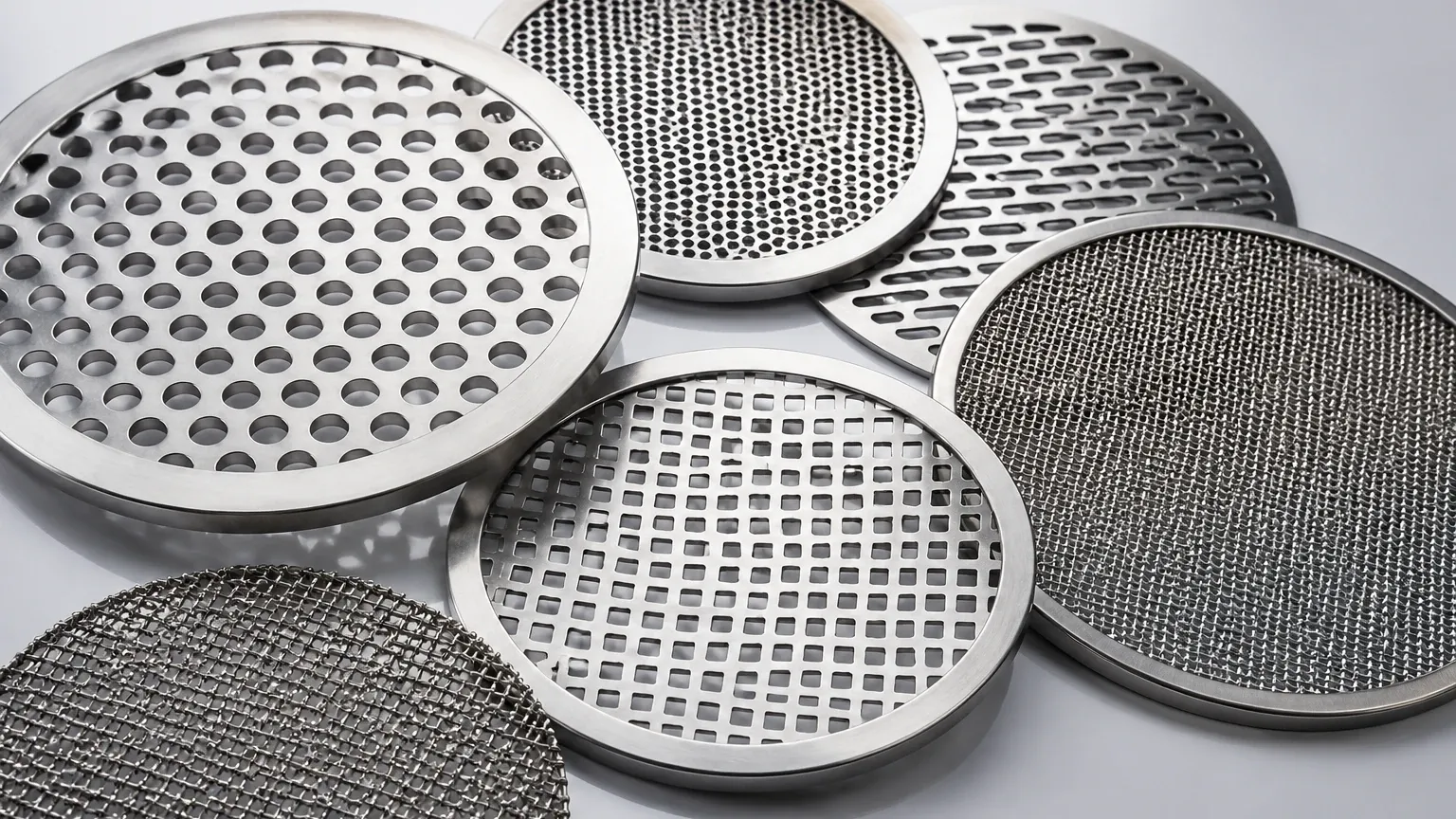
In the landscape of industrial filtration and structural support, perforated metal round hole patterns represent the most versatile and widely utilized configuration. As a fundamental component in the manufacturing of filter cartridges, strainers, and protective screens, the geometry of the round hole offers a unique balance of mechanical strength, open area, and ease of fabrication. For engineers and procurement specialists, selecting the correct specifications for perforated metal involves a deep understanding of how hole diameter, pitch, and material properties interact with the specific demands of the application environment.
Kaifil specializes in the production of high-precision Perforated & Expanded Metal solutions, designed to meet the rigorous standards of the chemical, pharmaceutical, and food processing industries. By focusing on technical accuracy and material integrity, these components ensure long-term reliability in demanding filtration systems.
Understanding Round Hole Geometry and Patterns
The "round hole" is the industry standard for perforated materials primarily because it is the easiest shape to punch with high precision and consistency. However, the performance of the metal sheet is determined not just by the hole itself, but by how those holes are arranged. There are two primary configurations used in industrial settings: staggered and straight.
Staggered Patterns (60-Degree)
The 60-degree staggered pattern is the most popular choice for industrial filtration. In this arrangement, each row of holes is offset from the previous one, creating an equilateral triangle between the centers of three adjacent holes. This configuration provides several engineering advantages:
* Uniform Strength: The staggered layout distributes mechanical stress more evenly across the sheet, reducing the risk of tearing or deformation under pressure.
* Maximum Open Area: This pattern allows for the highest possible percentage of open area while maintaining structural integrity, which is critical for minimizing pressure drop in fluid systems.
* Flow Dynamics: The offset nature of the holes creates a more turbulent flow at the surface, which can be beneficial in certain mixing or heat exchange applications.
Straight Patterns
In a straight pattern, the holes are aligned in both horizontal and vertical rows. While simpler to visualize, this pattern is generally weaker than the staggered version and is often reserved for aesthetic applications or specific screening processes where a linear alignment is required for mechanical sorting. For high-pressure filtration, the staggered pattern is almost always the preferred technical choice.
Technical Specifications: Diameter, Pitch, and Bridge
When specifying a perforated metal round component, three primary measurements define the functionality of the product. Precision in these measurements is what separates a standard industrial screen from a high-performance filtration component.
1. Hole Diameter (D): This is the actual size of the opening. In filtration, the hole diameter determines the size of the particles that will be retained. For support cores in filter cartridges, the diameter must be large enough to allow high flow but small enough to provide adequate surface area for the filter media (such as wire mesh) to rest against without sagging.
2. Pitch (P): This is the distance from the center of one hole to the center of the adjacent hole. The pitch determines the density of the perforations.
3. Bridge (B): The bridge is the amount of metal remaining between the holes. A wider bridge increases the strength of the sheet but decreases the open area. Finding the "sweet spot" between a narrow bridge (for high flow) and a wide bridge (for structural support) is a key engineering challenge.
Calculating Open Area and Its Impact on Filtration
The percentage of open area is perhaps the most critical metric for any engineer designing a filtration system. It directly influences the flow rate and the pressure drop across the filter element. For a standard 60-degree staggered round hole pattern, the formula for calculating the open area is:
Open Area % = (D² × 90.69) / P²
Where D is the hole diameter and P is the pitch.
In industrial applications, an open area ranging from 30% to 60% is common. If the open area is too low, the system will experience a significant pressure drop, forcing pumps to work harder and increasing energy costs. Conversely, if the open area is too high (exceeding 70%), the structural integrity of the metal may be compromised, leading to collapse under the differential pressure that occurs as the filter media becomes loaded with contaminants.
Material Selection for Corrosive and High-Temperature Environments
Kaifil emphasizes the use of high-grade materials to ensure that perforated metal components can withstand the harsh conditions often found in B2B industrial sectors. While carbon steel and aluminum are available for light-duty applications, stainless steel remains the gold standard for filtration.
* Stainless Steel 304: Offers excellent corrosion resistance and is suitable for most water treatment and general industrial applications. It provides a cost-effective solution for environments where extreme chemical exposure is not a factor.
* Stainless Steel 316L: The "L" stands for low carbon, which improves weldability and prevents sensitization to intergranular corrosion. This material is essential for the pharmaceutical and chemical processing industries, where resistance to chlorides and acids is mandatory.
* Specialty Alloys: For extreme environments involving high temperatures or highly aggressive chemicals, alloys such as Monel, Inconel, or Hastelloy may be used. These materials ensure that the perforation pattern remains dimensionally stable even under thermal expansion or chemical attack.
Manufacturing Excellence: Punching and Finishing
The process of creating perforated metal round holes involves high-speed punching presses. However, the punching process itself can introduce technical flaws if not managed correctly. Engineers should look for several quality markers during the manufacturing phase:
Flatness and Leveling
The punching process naturally causes the metal sheet to curl due to the internal stresses released during perforation. High-quality manufacturers utilize roller leveling to ensure the finished sheet is perfectly flat. This is crucial if the perforated metal is to be rolled into a cylinder for a filter cartridge core; an unlevel sheet will result in an uneven cylinder that is difficult to weld and fit into housings.
Burr Control and Deburring
Punching through metal inevitably creates a "burr" on the exit side of the hole. In filtration, these burrs can be catastrophic. They can tear the delicate wire mesh wrapped around the support core or break off and contaminate the downstream fluid. Kaifil employs advanced deburring and polishing techniques to ensure that all surfaces are smooth and safe for contact with sensitive filter media.
Margins and Unperforated Areas
In many custom designs, it is necessary to have "margins"—areas around the edges of the sheet that remain unperforated. These solid borders provide a clean surface for welding or mounting the component into a frame. Specifying exact margin dimensions is a key step in the design process to ensure the final part integrates seamlessly into the larger assembly.
Applications of Perforated Metal Round in Industrial Systems
Because of its structural reliability, the round hole pattern is found in nearly every stage of industrial fluid management.
Support Cores for Filter Cartridges
In high-pressure hydraulic or process fluid systems, the primary filter media (such as pleated paper or fine wire mesh) is not strong enough to withstand the flow on its own. A perforated metal round tube acts as the internal skeleton, providing the necessary rigidity to prevent the media from collapsing under pressure.
Strainers and Pre-filters
In the food and beverage industry, perforated metal is used as a primary strainer to remove large particulates (such as fruit seeds or pulp) before the liquid moves to finer filtration stages. The round holes are easy to clean and sanitize, meeting the strict hygienic requirements of the industry.
Acoustic Dampening and Protective Guards
Beyond filtration, perforated metal is used in industrial machinery as protective guards that allow for airflow and cooling while protecting operators from moving parts. The round hole pattern is also effective in acoustic panels used to reduce noise levels in manufacturing plants.
Engineering Checklist for Procurement
Before finalizing a purchase order for perforated metal components, engineering teams should confirm the following technical details to avoid costly integration issues:
1. Hole Size vs. Material Thickness: As a general rule of thumb, the hole diameter should not be smaller than the thickness of the material. Attempting to punch holes smaller than the material thickness can lead to tool breakage and irregular hole shapes.
2. Tolerance Requirements: Standard commercial tolerances may not be sufficient for precision filtration. Specify the allowable variance in hole diameter and pitch.
3. Surface Finish: Determine if the application requires passivating (to enhance corrosion resistance), electropolishing (for a mirror-like, sanitary finish), or simple degreasing.
4. End Pattern: Specify whether the pattern should be "finished" (meaning the holes stop before the edge) or "unfinished" (where the holes are cut off at the edge). For components that will be welded, finished margins are typically required.
Conclusion: Why Precision Matters
While perforated metal round patterns may seem like a simple commodity, their role in industrial performance is foundational. A slight deviation in open area can lead to system-wide inefficiency, and a poorly deburred edge can ruin an entire batch of pharmaceutical products. By focusing on material quality, geometric precision, and application-specific customization, Kaifil provides the reliable filtration components necessary for modern industrial operations.
For those seeking technical guidance on selecting the right hole pattern or material for a specific filtration challenge, reviewing professional Perforated & Expanded Metal options is the first step toward optimizing system longevity and performance.
