


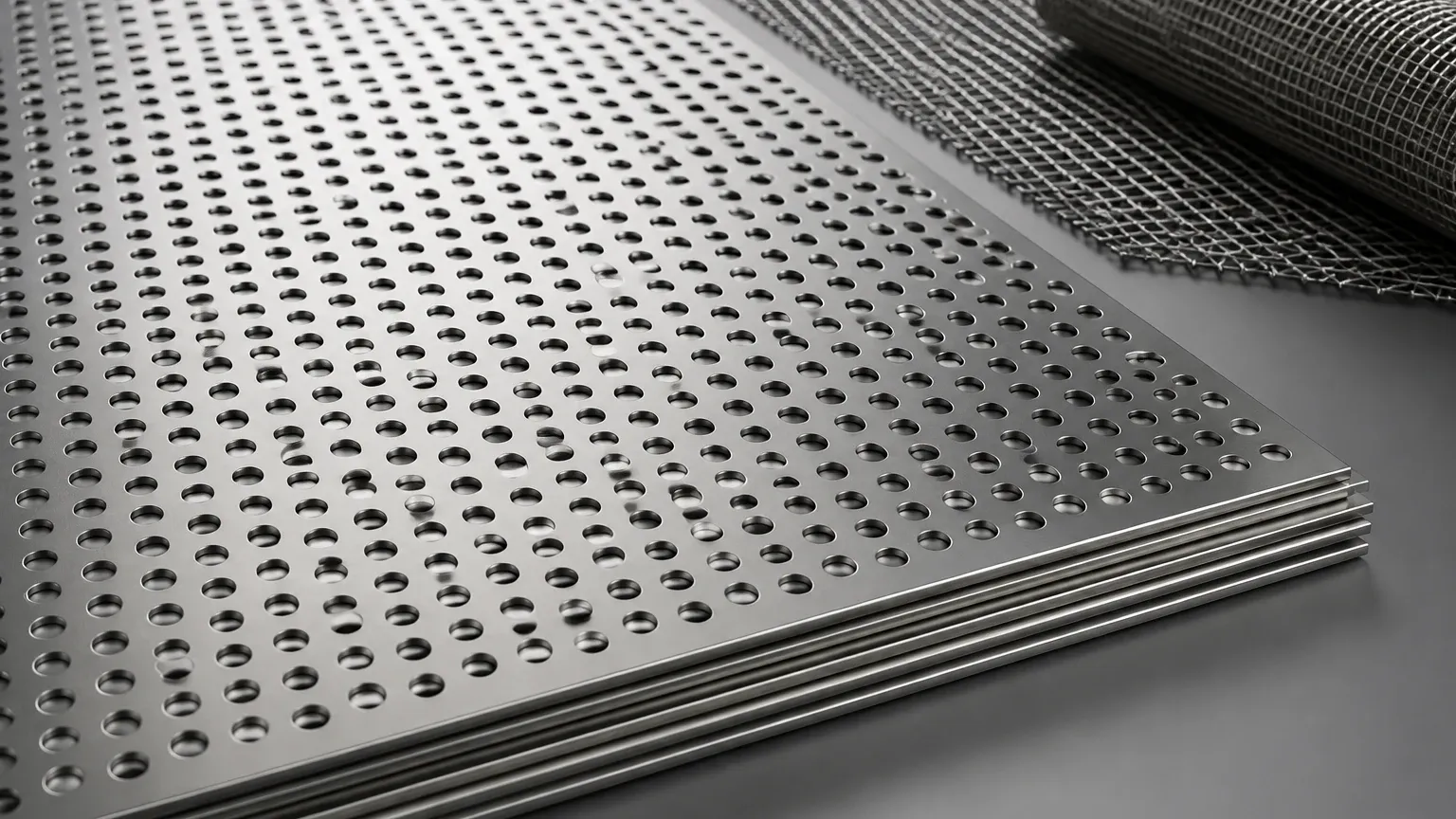
Perforated Metal Sheet 2mm
In industrial engineering and manufacturing, the selection of material thickness is a critical decision that impacts structural integrity, filtration efficiency, and total cost of ownership. The perforated metal sheet 2mm is a widely utilized specification across various sectors, offering a balanced profile between mechanical strength and workable weight. For engineers and procurement specialists, understanding the technical nuances of this specific gauge is essential for optimizing system performance, particularly in demanding filtration and separation environments.
As a specialized manufacturer, Kaifil provides precision-engineered Perforated & Expanded Metal solutions designed to meet the rigorous standards of chemical processing, food and beverage, and pharmaceutical industries. This guide examines the technical characteristics, application considerations, and selection criteria for 2mm perforated metal components.
Understanding the Engineering Specifications of 2mm Perforated Metal
A perforated metal sheet 2mm (approximately 14 gauge in some standards) occupies a functional "sweet spot" in industrial design. It is thick enough to provide significant resistance to deformation under pressure but thin enough to be formed into cylinders, cones, or custom shapes without requiring specialized heavy-duty machinery.
Material Density and Weight
When calculating the load-bearing requirements of a filtration system or a structural walkway, the weight of the material is a primary factor. For a standard stainless steel grade, a solid 2mm sheet weighs approximately 15.8 kg/m². However, the actual weight of a perforated sheet is determined by its open area percentage. Engineers must calculate the "yield weight" by subtracting the percentage of material removed during the punching process. This calculation is vital for determining the support structures needed for large-scale industrial installations.
The 1:1 Rule in Perforation
In mechanical punching—the most common method for creating perforated sheets—a fundamental engineering rule is that the hole diameter should generally not be smaller than the material thickness. For a perforated metal sheet 2mm, this means that a minimum hole diameter of 2mm is typically recommended to ensure tool longevity and prevent sheet distortion. While laser cutting can achieve smaller apertures in 2mm material, mechanical punching remains the most cost-effective method for high-volume industrial production, provided the 1:1 ratio is respected.
Material Selection: Stainless Steel Grades for Industrial Filtration
The performance of a perforated metal sheet 2mm is heavily dependent on the alloy used. At Kaifil, we focus on high-performance stainless steels to ensure durability in corrosive or high-temperature environments.
Grade 304 Stainless Steel
Grade 304 is the most common choice for general industrial applications. It offers excellent formability and weldability. In 2mm thickness, it provides sufficient rigidity for protective screens, ventilation grilles, and primary filtration stages in water treatment. It is resistant to atmospheric corrosion and many organic and inorganic chemicals, making it a standard for the food and beverage industry.
Grade 316 Stainless Steel
For more demanding environments, such as chemical processing plants or marine applications, Grade 316 is the preferred material. The addition of molybdenum enhances its resistance to pitting and crevice corrosion in chloride-rich environments. When specifying a perforated metal sheet 2mm for pharmaceutical or chemical filtration, Grade 316 ensures that the component maintains its structural integrity and surface finish even when exposed to aggressive cleaning agents or corrosive process fluids.
Hole Patterns and Open Area Calculations
The functionality of perforated metal is defined by its pattern and the resulting open area. This determines the flow rate, pressure drop, and the size of particles that can be retained or passed through the media.
Round Hole Patterns
Round holes are the most popular choice due to their versatility and the strength of the remaining metal "bridges" (the space between holes). They are typically arranged in a 60-degree staggered pattern, which provides the highest open area and uniform strength in all directions. For a perforated metal sheet 2mm, a common configuration might be 3mm holes on a 5mm pitch, resulting in approximately a 32% open area. This is ideal for liquid filtration where a balance of flow and strength is required.
Square and Slotted Holes
Square holes offer a higher open area (up to 90% in some configurations) but result in lower structural strength compared to round holes. Slotted holes are often used in sorting and sizing applications, particularly in the agricultural and food processing industries. In 2mm sheets, slotted patterns are frequently employed as support layers for finer wire mesh filters, providing the necessary mechanical backing without significantly impeding flow.
Calculating Open Area
The formula for a 60-degree staggered round hole pattern is:
Open Area % = (d² × 90.69) / p²
Where *d* is the hole diameter and *p* is the pitch (center-to-center distance). For engineers, selecting the correct open area is a trade-off: a higher open area reduces pressure drop but also reduces the mechanical strength of the sheet.
Manufacturing Capabilities and Precision Processing
Producing a high-quality perforated metal sheet 2mm requires advanced CNC punching technology and meticulous post-processing. The manufacturing process at Kaifil involves several critical steps to ensure the final product meets industrial tolerances.
CNC Punching and Precision
Modern CNC turret presses allow for high-speed perforation with extreme accuracy. For 2mm material, maintaining the flatness of the sheet during the punching process is a challenge, as the impact of the punch introduces internal stresses into the metal. Advanced equipment compensates for this, but post-perforation leveling is often required.
Leveling and Deburring
After the perforation process, the sheet often exhibits "oil canning" or bowing due to the stresses mentioned above. Roller leveling is used to restore the sheet to a precision-flat state. Furthermore, the punching process can leave sharp burrs on the exit side of the hole. For applications in the pharmaceutical or food industries, deburring and polishing are essential to prevent material entrapment and ensure a hygienic surface.
Custom Fabrication
Beyond flat sheets, 2mm perforated metal is often fabricated into complex components. This includes rolling into filter cylinders, welding into conical strainers, or forming into U-sections for architectural use. The 2mm thickness is particularly well-suited for TIG and MIG welding, allowing for strong, leak-proof seams in filtration cartridges.
Key Applications in Industrial and Filtration Systems
The versatility of the perforated metal sheet 2mm makes it a staple in various engineering designs. Its primary roles involve protection, separation, and structural support.
Industrial Filtration and Strainers
In hydraulic and process industries, 2mm perforated metal serves as a robust primary filter or a support core for finer filter media. In high-pressure applications, a thin wire mesh would collapse without the rigid backing provided by a 2mm perforated cylinder. This configuration is common in basket strainers and duplex filters used in oil and gas processing.
Acoustic Damping and Ventilation
In power generation and HVAC systems, perforated sheets are used for sound attenuation. The 2mm thickness provides enough mass to absorb and reflect sound waves effectively when combined with acoustic insulation. Similarly, in electronic enclosures, these sheets provide essential ventilation while maintaining a barrier against electromagnetic interference (EMI) and physical ingress.
Food and Pharmaceutical Processing
Due to its durability and ease of cleaning, 2mm stainless steel perforated sheet is used in drying trays, sorting screens, and centrifugal liners. The smooth surface finish of high-grade stainless steel prevents bacterial growth and allows for Clean-in-Place (CIP) procedures, which are mandatory in these sectors.
Selection Criteria for Engineers and Purchasing Teams
When sourcing a perforated metal sheet 2mm, several technical factors must be confirmed to ensure the component is fit for purpose. Engineers should provide detailed specifications to the manufacturer to avoid performance failures.
1. Hole Size and Pitch: Define the exact diameter and center-to-center distance. Ensure the 1:1 ratio is maintained if cost-effectiveness is a priority.
2. Margins: Specify the "blank" areas around the edges of the sheet. Standard sheets often have minimal margins, but custom components may require specific unperforated areas for welding or mounting.
3. Surface Finish: Determine if a standard mill finish is sufficient or if the application requires electropolishing, powder coating, or pickling to enhance corrosion resistance.
4. Flatness Tolerances: For automated assembly lines or precision filtration housings, standard commercial flatness may not be sufficient. Specify precision leveling if required.
5. Quantity and Lead Time: Perforation is a high-speed process, but setup times for custom patterns can be significant. Bulk orders typically offer better unit pricing due to the amortization of tooling and setup costs.
Maintenance and Durability in Demanding Environments
A perforated metal sheet 2mm is designed for longevity, but its service life depends on proper maintenance and the operating environment. In filtration applications, the primary risk is "blinding" or clogging of the apertures.
Cleaning Protocols
For filters, regular backwashing or ultrasonic cleaning can remove trapped particulates. Because 2mm stainless steel is robust, it can withstand high-pressure cleaning cycles that would damage thinner materials. In chemical environments, it is essential to monitor for signs of localized corrosion, particularly in the heat-affected zones (HAZ) near welds.
Replacement Cycles
While 2mm perforated metal is durable, it is not infinite. In abrasive environments, such as mining or slurry processing, the edges of the holes will eventually wear down, changing the filtration characteristics and reducing the structural thickness. Regular inspections should measure the remaining thickness and hole integrity to determine the optimal replacement cycle, preventing catastrophic failure of the filtration system.
Conclusion
The perforated metal sheet 2mm is a fundamental component in modern industrial infrastructure. Its ability to provide structural strength while facilitating precise flow control makes it indispensable for filtration, ventilation, and protective applications. By selecting the appropriate material grade, hole pattern, and manufacturing finish, engineers can ensure that their systems operate with maximum efficiency and minimal downtime.
Kaifil continues to support global industries with high-quality Perforated & Expanded Metal products, leveraging technical expertise to deliver customized solutions for the most demanding environments. Whether you require standard sheets or complex, fabricated filtration components, understanding the technical boundaries of 2mm perforated metal is the first step toward a successful engineering outcome.
