


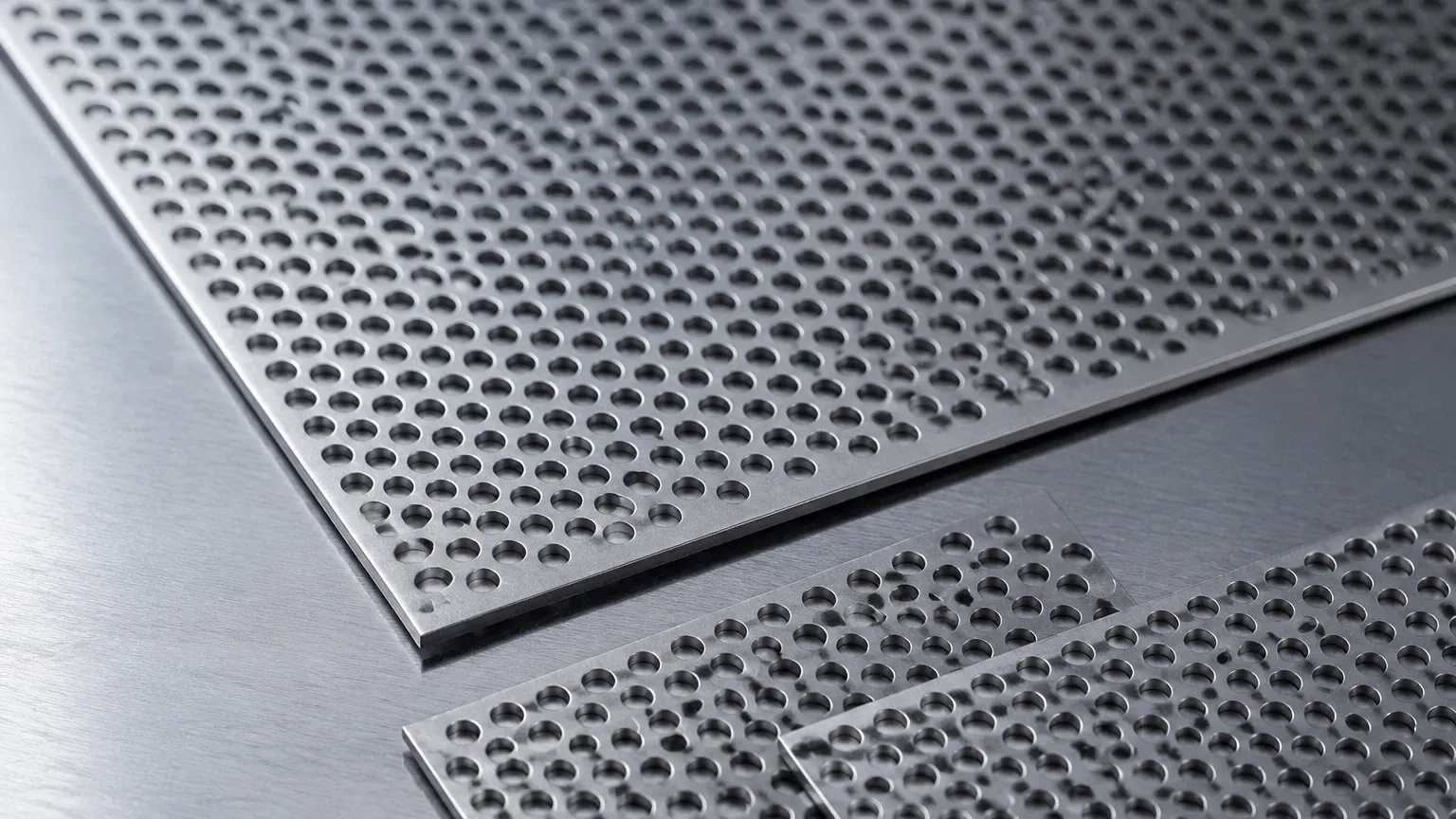
Perforated Metal Sheet 5mm
In industrial filtration and structural engineering, the specification of a perforated metal sheet 5mm represents a critical intersection of mechanical strength and functional permeability. Whether the 5mm dimension refers to the hole diameter or the sheet thickness, these components serve as the backbone for diverse applications ranging from heavy-duty fluid separation to the structural reinforcement of fine mesh filters. For engineers and procurement specialists, selecting the correct perforated media requires a deep understanding of material properties, open area calculations, and the environmental stresses the component will face.
Kaifil specializes in the precision manufacturing of Perforated & Expanded Metal solutions, ensuring that every specification—including the perforated metal sheet 5mm—meets the rigorous demands of chemical processing, water treatment, and food production. This guide examines the technical considerations essential for integrating these components into industrial systems.
Technical Specifications: Understanding the 5mm Dimension
When discussing a perforated metal sheet 5mm in a B2B context, the dimension typically refers to one of two critical parameters: the hole diameter or the plate thickness. Both play distinct roles in the performance of a filtration system.
5mm Hole Diameter
A 5mm aperture is categorized as a medium-to-coarse perforation. In filtration, this size is often utilized for primary screening or as a protective barrier to prevent large debris from entering sensitive downstream equipment. It is frequently employed in the intake valves of water treatment plants or as a pre-filter in industrial cooling systems.
5mm Sheet Thickness
A sheet thickness of 5mm indicates a heavy-duty industrial grade. At this gauge, the metal provides exceptional structural integrity and resistance to mechanical deformation. In high-pressure hydraulic systems or large-scale chemical reactors, a 5mm thick perforated plate often serves as the support core for finer wire mesh layers, preventing the mesh from collapsing under the force of fluid flow.
Material Selection: Stainless Steel Grades
Material choice is the primary determinant of a filter's lifespan. Kaifil primarily utilizes stainless steel due to its superior corrosion resistance and thermal stability:
* Grade 304: The standard for general industrial use, offering excellent formability and resistance to atmospheric corrosion.
* Grade 316/316L: Essential for marine environments, pharmaceutical production, and chemical processing where resistance to chlorides and acids is mandatory.
* Specialty Alloys: For extreme temperatures or highly aggressive chemical environments, high-nickel alloys may be required to maintain the integrity of the perforated pattern.
Engineering the Open Area: Balancing Flow and Strength
The "open area" is the percentage of the sheet that is comprised of holes. This figure is the most important metric for engineers calculating pressure drop and flow rates. For a perforated metal sheet 5mm, the open area is determined by the hole diameter and the "pitch" (the distance between the centers of adjacent holes).
Calculation for Staggered Patterns
The most common configuration is the 60-degree staggered pattern, which provides the highest structural uniformity. The formula for calculating the open area percentage is:
Open Area % = (D² × 90.69) / P²
*(Where D = Hole Diameter and P = Pitch)*
For a 5mm hole diameter, increasing the pitch improves the strength of the "bridge" (the metal between holes) but increases the resistance to flow (pressure drop). Conversely, a tighter pitch maximizes throughput but may lead to material fatigue if the sheet is subjected to high-frequency vibrations or heavy physical loads. Engineers must find the equilibrium point where the sheet facilitates the required flow rate without compromising its role as a structural member.
Structural Roles in Industrial Filtration Systems
A perforated metal sheet 5mm is rarely used in isolation within high-performance filtration. Instead, it typically functions as a component in a multi-stage assembly.
Support Cores for Filter Cartridges
In stainless steel filter cartridges, the perforated sheet acts as the internal or external cage. A 5mm thick plate or a plate with 5mm perforations provides the necessary rigidity to withstand high differential pressures. By supporting a fine stainless steel wire mesh, the perforated sheet allows the system to achieve micron-rated filtration while maintaining the durability of a heavy-duty metal component.
Coarse Screening and Scalping
In the food and beverage industry, 5mm perforated sheets are used for "scalping"—the removal of oversized contaminants from raw materials. The smooth surface of a precision-punched stainless steel sheet is easier to clean and sanitize than woven wire, making it ideal for applications requiring strict adherence to hygiene standards.
Diffusers and Flow Distributors
In chemical reactors, perforated plates are used to distribute gas or liquid flow evenly across a catalyst bed. The 5mm specification allows for a robust distribution plate that can withstand the weight of the catalyst and the thermal expansion cycles of the reactor without warping.
Manufacturing Precision and Customization Options
The performance of a perforated metal sheet 5mm depends heavily on the precision of the manufacturing process. Kaifil utilizes advanced CNC punching and laser cutting technologies to ensure that hole patterns are consistent and margins are exact.
Hole Geometry
While round holes are the industrial standard due to their structural efficiency, other shapes are available for specific technical requirements:
* Square Holes: Provide a higher open area but reduced structural strength compared to round holes.
* Slotted Holes: Ideal for the separation of elongated particles or for use in vibrating screens where blinding (clogging) is a concern.
Margins and Blank Areas
Customization allows for the inclusion of "unperforated" margins or solid zones within the sheet. These blank areas are essential for welding the sheet into a frame or housing. Precise margins prevent the structural weakness that occurs when a hole is cut too close to the edge of the component.
Surface Finishes and Post-Processing
To enhance the performance of the perforated metal sheet 5mm, various post-processing steps can be applied:
* Electropolishing: Removes surface imperfections and creates a passive layer, significantly increasing corrosion resistance in pharmaceutical and food applications.
* Degreasing: Ensures the component is free from manufacturing oils, which is critical for oxygen service or high-purity chemical filtration.
* Leveling: Ensures the sheet is perfectly flat, which is vital for integration into automated machinery or precision filter housings.
Evaluating Performance: Risks and Maintenance
When integrating a perforated metal sheet 5mm into a system, engineers must account for potential failure modes and maintenance requirements.
Pressure Drop and Clogging
If the open area is insufficient for the flow rate, the resulting pressure drop can damage pumps or lead to premature failure of the filter media. Furthermore, if the 5mm holes become clogged (blinded) by debris, the effective open area decreases rapidly. Selecting a staggered pattern often helps mitigate blinding by allowing particles to slide off the bridges and into the apertures.
Mechanical Stress and Fatigue
In applications involving reciprocating pumps or high-velocity fluid pulses, the perforated sheet is subject to cyclic loading. If the bridge width (the metal between the 5mm holes) is too narrow, stress concentrations can lead to hairline fractures. Kaifil’s engineering team assists clients in determining the optimal bridge-to-hole ratio to ensure long-term mechanical stability.
Cleaning Cycles
One of the primary advantages of stainless steel perforated sheets is their cleanability. Unlike synthetic media, these metal components can be cleaned using backwashing, high-pressure steam, or ultrasonic baths. This reusability significantly lowers the total cost of ownership compared to disposable filtration solutions.
Procurement Considerations for Engineers
Before finalizing a specification for a Perforated & Expanded Metal component, several technical details must be confirmed to ensure the product is fit for purpose:
1. Exact Dimensions: Specify the length, width, and thickness (e.g., 1000mm x 2000mm x 5mm).
2. Hole Specification: Confirm the hole diameter (5mm) and the pitch (e.g., 8mm staggered).
3. Margin Requirements: Define the width of the solid borders on all four sides.
4. Flatness Tolerances: For high-precision applications, specify the maximum allowable bow or warp.
5. Certification: Determine if the application requires material mill certificates (MTRs) to verify the chemical composition of the stainless steel.
By addressing these factors during the design phase, purchasing teams can avoid costly delays and ensure that the filtration components provide reliable service in demanding industrial environments.
Kaifil remains committed to providing technical expertise and high-quality manufacturing for custom filtration needs. Whether you require a standard perforated metal sheet 5mm or a complex, multi-layered filter assembly, our engineering team is prepared to support your project from material selection to final production.
