


Perforated Metal Sheet Decorative
In industrial and architectural engineering, the selection of materials often requires a balance between structural integrity, functional performance, and aesthetic presentation. A perforated metal sheet decorative in nature is not merely a visual component; it is a precision-engineered product designed to meet specific technical requirements while maintaining a high-quality finish. For engineers and procurement specialists, understanding the intersection of metallurgy, perforation patterns, and mechanical properties is essential when sourcing these components for demanding environments.
Kaifil, as a specialist in custom stainless steel filtration and metal components, provides high-performance Perforated & Expanded Metal solutions that cater to both industrial utility and architectural design. This guide examines the technical considerations, material specifications, and application criteria necessary for selecting the right perforated metal products.
Understanding Perforated and Expanded Metal in Industrial Design
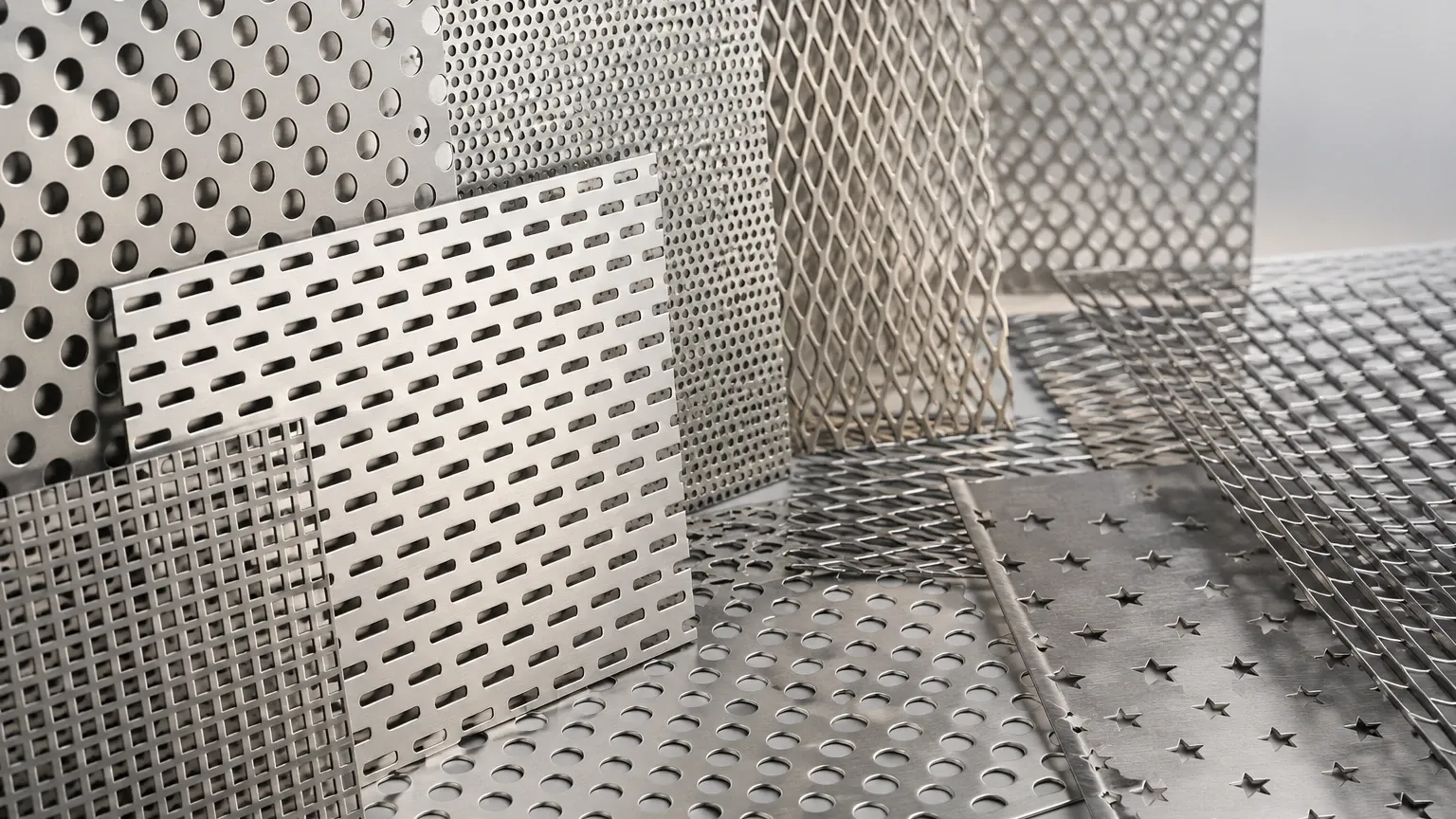
Perforated metal is produced by mechanically punching or laser-cutting holes into a metal sheet. This process allows for a high degree of customization regarding hole shape, size, and distribution. Conversely, expanded metal is created by simultaneously slitting and stretching the material, resulting in a diamond-shaped mesh pattern. While both are used in decorative applications, their mechanical behaviors differ significantly.
When a perforated metal sheet decorative project is initiated, the primary focus is often on the "open area" percentage. This metric determines how much light, air, or fluid can pass through the medium. In industrial settings, such as HVAC systems or chemical processing enclosures, the decorative aspect must not compromise the flow dynamics or the structural rigidity of the assembly. Engineers must evaluate the yield strength of the remaining metal (the "ligaments") to ensure the sheet can withstand operational stresses.
Engineering Specifications for Decorative Perforated Metal Sheets
To achieve a successful implementation, several technical parameters must be defined during the design phase. These specifications dictate both the performance and the final appearance of the metal sheet.
Hole Patterns and Geometry
The geometry of the perforations is the most visible aspect of a decorative sheet. Common patterns include:
* Round Holes: The most versatile and cost-effective pattern, offering high structural strength and a wide range of open area percentages.
* Square Holes: Often selected for high visibility and high open area, though they may have lower structural resistance to bending compared to round holes.
* Slotted Holes: Frequently used in filtration and sorting applications where elongated apertures are required for specific flow characteristics.
* Hexagonal (Honeycomb) Patterns: Provide a high open area (up to 80%) while maintaining significant structural integrity, often used in high-end architectural facades and speaker grilles.
Pitch and Orientation
The pitch refers to the center-to-center distance between adjacent holes. Patterns can be "staggered" (usually at 60 degrees) or "straight." Staggered patterns are generally preferred in industrial applications because they provide higher strength and more uniform stress distribution across the sheet.
Material Selection: Balancing Aesthetics with Durability
The choice of alloy is critical when specifying a perforated metal sheet decorative component. Since these sheets are often exposed to the environment or corrosive industrial fluids, the material must offer long-term resistance to degradation.
Stainless Steel (304 and 316)
Stainless steel is the industry standard for high-performance perforated metal. Grade 304 offers excellent corrosion resistance and formability for most indoor and mild outdoor applications. For marine environments or chemical processing plants, Grade 316 is recommended due to its increased molybdenum content, which provides superior resistance to pitting and chloride-induced corrosion.
Aluminum and Specialized Alloys
Aluminum is frequently chosen for decorative facades due to its lightweight nature and natural oxide layer that resists corrosion. However, in heavy industrial filtration or high-pressure hydraulic systems, the higher tensile strength of stainless steel is usually required to prevent deformation of the perforated pattern under load.
Manufacturing Capabilities: Customization and Precision
Precision manufacturing is the hallmark of a reliable B2B supplier. At Kaifil, the production of Perforated & Expanded Metal involves advanced CNC punching and laser technology to ensure that every aperture meets tight dimensional tolerances.
Margins and Blank Areas
One technical detail often overlooked is the "margin." This refers to the unperforated area along the edges of the sheet. Custom margins are essential for welding, bolting, or framing the sheet into a larger assembly. Engineers must specify whether they require "finished" margins (where the pattern stops cleanly before the edge) or "unfinished" margins (where the pattern is sheared through).
Flatness and Leveling
The perforating process introduces internal stresses into the metal, which can cause the sheet to curl or bow. High-quality decorative sheets undergo a secondary leveling process to ensure they meet flatness specifications, which is critical for seamless installation in architectural panels or precision machinery housings.
Performance Metrics: Open Area and Filtration Efficiency
In B2B applications, the decorative nature of a perforated sheet is often secondary to its functional performance. The "Open Area" is calculated using specific formulas based on the hole diameter and pitch. For example, in a 60-degree staggered round hole pattern, the formula is:
Open Area % = (D² × 90.69) / R²
*(Where D is hole diameter and R is the center-to-center pitch)*
This calculation is vital for engineers designing filtration systems or protective screens. If the open area is too low, it may cause excessive pressure drop; if it is too high, the material may lose the structural integrity required to support its own weight or resist impact.
Industrial and Architectural Applications
Perforated metal sheet decorative solutions are utilized across a broad spectrum of industries, providing both utility and a professional finish.
1. Architectural Facades and Sunscreens: Large-scale perforated panels provide shade and privacy while allowing for natural ventilation. The pattern choice can significantly impact the building's energy efficiency.
2. Acoustic Enclosures: Perforated metals are used as the outer facing for sound-absorbing materials in power plants, engine rooms, and recording studios. The holes allow sound waves to pass through to the absorbing media while protecting the interior components.
3. Food and Beverage Processing: Decorative but functional screens are used in grain drying, fruit sorting, and brewery mash tuns. In these cases, the smooth, burr-free finish of the perforations is essential for hygiene and ease of cleaning.
4. Electronic Equipment Housings: Precision-perforated sheets provide EMI/RFI shielding while allowing for heat dissipation in server racks and high-end audio equipment.
Procurement Checklist: What Engineers Must Confirm
Before placing an order for perforated metal components, purchasing teams and engineers should confirm the following technical details to avoid costly errors and ensure the product is fit for purpose:
* Material Grade: Is 304 sufficient, or does the environment demand 316 stainless steel?
* Gauge/Thickness: Does the sheet thickness provide enough rigidity for the span it will cover?
* Hole Size and Shape: Are the dimensions compatible with the required filtration accuracy or airflow?
* Pattern Arrangement: Is a 60-degree staggered pattern required for maximum strength?
* Open Area Percentage: Has the pressure drop or light transmission been calculated?
* Margin Requirements: Are specific unperforated borders needed for mounting?
* Secondary Finishes: Does the application require degreasing, deburring, powder coating, or electro-polishing?
Total Cost Considerations and Quality Assurance
When evaluating the cost of perforated metal, it is important to look beyond the initial price per sheet. Total cost of ownership includes the longevity of the material, maintenance requirements, and the ease of integration into the final product. Low-quality perforations with burrs or inconsistent hole sizes can lead to premature clogging in filtration applications or structural failure in load-bearing designs.
Kaifil’s commitment to quality ensures that every Perforated & Expanded Metal component is manufactured to exacting standards. By focusing on material purity and manufacturing precision, we help our global partners achieve reliable performance in the most demanding industrial environments. Whether the requirement is for a high-end architectural facade or a critical industrial filter housing, selecting a manufacturer with deep technical expertise is the most effective way to ensure project success.
By following these engineering guidelines and focusing on the technical specifications of the perforated metal sheet decorative options available, procurement teams can secure components that offer the perfect synergy of form and function.
