


Perforated Metal Sheet Kenya
In the industrial landscape of East Africa, the demand for high-quality filtration and structural components has grown significantly. Specifically, the use of a perforated metal sheet in Kenya has become a cornerstone for sectors ranging from large-scale agricultural processing to architectural engineering. Selecting the correct material and configuration is not merely a procurement task but a critical engineering decision that impacts the efficiency, durability, and total cost of ownership of industrial systems.
Industrial perforated metal is produced through a mechanical punching or laser-cutting process that creates a pattern of holes, slots, or decorative shapes in metal sheets. For engineers and technical professionals, understanding the relationship between hole geometry, pitch, and material thickness is essential for optimizing performance in filtration, separation, and structural applications.
Technical Specifications of Perforated Metal Sheets
When sourcing Perforated & Expanded Metal for industrial use, the technical specifications define the component's functionality. The primary variables include material grade, hole pattern, and the percentage of open area.
Material Selection
For the Kenyan climate and industrial environment—which often involves high humidity in coastal regions like Mombasa or specific chemical exposures in processing plants—material selection is paramount.
* Stainless Steel (304/316): These are the most common grades for filtration. Grade 316 is preferred for environments with high chloride exposure or acidic processing conditions due to its superior corrosion resistance.
* Carbon Steel: Often used for structural applications where corrosion is less of a concern or where the material will be coated/galvanized.
* Aluminum: Selected for its high strength-to-weight ratio and natural resistance to atmospheric corrosion, making it ideal for architectural facades and HVAC systems.
Hole Patterns and Geometry
The geometry of the perforation dictates how the sheet interacts with fluids or solids.
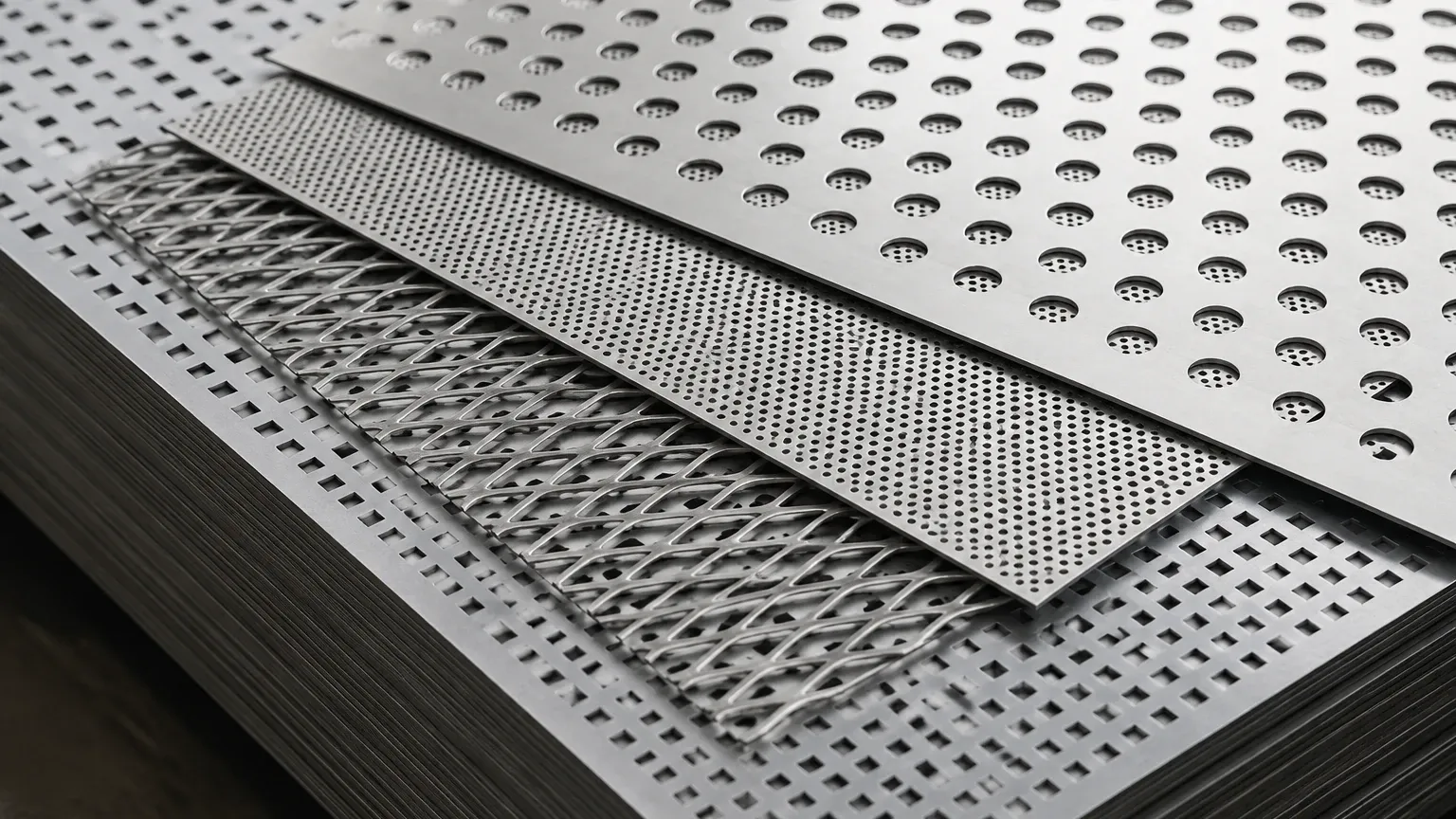
* Round Holes: The most versatile and common pattern, offering a balance of structural strength and open area. They are typically arranged in a 60-degree staggered pattern to maximize the number of holes per square inch.
* Square Holes: Provide a higher open area compared to round holes, which is beneficial for applications requiring high airflow or visibility.
* Slotted Holes: Frequently used in sorting and sifting applications, such as grain processing, where elongated particles must be separated based on width.
Industrial Applications for Perforated Metal Sheet in Kenya
The versatility of perforated metal allows it to serve various specialized functions within the Kenyan economy. By analyzing specific industry needs, engineers can better specify the required tolerances and designs.
Agricultural Processing and Sorting
Kenya is a global leader in the production of tea, coffee, and various grains. Perforated metal sheets are integral to the machinery used in cleaning, drying, and grading these products. For instance, in coffee processing, perforated screens are used to separate beans by size, ensuring uniformity which is critical for the roasting process. The precision of the hole diameter is vital here; even a fraction of a millimeter in deviation can result in inconsistent product quality.
Mining and Aggregate Separation
The mining sector requires robust materials capable of withstanding abrasive forces. Perforated sheets serve as heavy-duty screens for sorting minerals and crushed stone. In these high-impact environments, the thickness of the sheet and the hardness of the metal (often high-carbon steel or specialized stainless alloys) are the primary considerations to prevent premature wear and deformation.
Architectural and HVAC Systems
In Nairobi’s growing commercial construction sector, perforated metal is increasingly used for sunshades, balcony railings, and acoustic ceiling panels. Beyond aesthetics, these sheets provide functional benefits such as solar heat gain reduction while maintaining natural ventilation. In HVAC systems, they act as diffusers and protective guards for industrial fans and cooling towers.
Engineering Selection Criteria for Filtration Performance
For filtration applications, the performance of a perforated metal sheet is measured by its ability to retain specific particle sizes while maintaining a manageable pressure drop. Engineers must calculate the "Open Area Percentage" to predict flow characteristics.
Calculating Open Area
The open area is the total area of the holes divided by the total area of the sheet, expressed as a percentage. A higher open area results in a lower pressure drop but may compromise the structural integrity of the sheet. For example, a 60-degree staggered round hole pattern's open area is calculated using the formula:
`Open Area % = (D² x 90.69) / R²`
*(Where D is the hole diameter and R is the center-to-center pitch)*
Structural Integrity and Load Bearing
Unlike woven wire mesh, perforated metal is a single piece of material, which often provides better structural stability. However, the "bridge" (the distance between holes) must be sufficient to support the mechanical loads of the application. In high-pressure hydraulic systems or large-scale water treatment filters, the sheet must resist bursting or collapsing under the weight of the filtered media.
Comparing Perforated Metal and Expanded Metal
While often discussed together, Perforated & Expanded Metal serve different technical niches. Understanding the distinction is crucial for procurement teams in Kenya looking to optimize costs.
* Perforated Metal: Created by punching holes. It offers higher precision in hole size and shape, making it superior for fine filtration and sorting. It also maintains a flat surface, which is easier to clean and integrate into mechanical assemblies.
* Expanded Metal: Created by slitting and stretching the metal. This process produces no waste, making it a more cost-effective solution for structural applications like walkways, security fencing, or coarse debris guards. However, it lacks the precise filtration accuracy of perforated sheets.
In many industrial setups, a perforated sheet may act as the primary filter medium, while expanded metal provides the outer support cage, combining the precision of one with the rigidity and cost-efficiency of the other.
Customization and OEM Solutions for Kenyan Projects
Standard off-the-shelf perforated sheets may not meet the specific requirements of specialized industrial equipment. This is where OEM (Original Equipment Manufacturer) capabilities become essential. Customization options include:
1. Margin Requirements: Standard sheets often have holes running to the edge. For welding or mounting into frames, engineers may specify "safe margins" (unperforated borders) to ensure a clean finish and structural strength at the attachment points.
2. Bolt Hole Integration: Custom sheets can be manufactured with pre-punched bolt holes or specific mounting patterns, reducing the need for secondary onsite fabrication in Kenya, which can save significant labor costs.
3. Forming and Welding: Perforated sheets can be rolled into cylinders for filter cartridges or folded into trays. Professional manufacturers like Kaifil provide these secondary operations to deliver ready-to-install components.
Procurement and Quality Assurance in the Kenyan Market
When importing or purchasing a perforated metal sheet in Kenya, technical professionals should verify several quality markers to ensure the longevity of the installation. Substandard materials can lead to rapid oxidation or mechanical failure, resulting in costly downtime.
Material Certification
Always request Mill Test Reports (MTRs). These documents confirm the chemical composition of the metal. For instance, if a project specifies Grade 316 stainless steel for a chemical plant in Eldoret, the MTR ensures the molybdenum content is sufficient to provide the required corrosion resistance.
Tolerance Standards
Industrial perforated metal should adhere to international standards such as those set by the Industrial Perforators Association (IPA). These standards define acceptable tolerances for hole diameter, pitch, and sheet flatness. In precision filtration, even a 5% deviation in hole size can allow bypass of contaminants, compromising the entire process.
Logistics and Lead Times
For B2B buyers in Kenya, logistics play a major role in project timelines. Working with manufacturers who understand international shipping and can provide clear lead times for custom fabrications is essential. Whether the material is arriving via the Port of Mombasa or through air freight to Jomo Kenyatta International Airport, proper packaging (such as seaworthy wooden crates) is necessary to prevent bending or surface damage during transit.
Maintenance and Durability Considerations
The total cost of a perforated metal sheet is not just the purchase price but its lifespan. In many Kenyan industrial applications, maintenance is a key factor.
* Cleaning Protocols: In food and beverage or pharmaceutical applications, perforated sheets must be easy to clean to prevent bacterial growth. Stainless steel’s smooth surface and the lack of overlapping wires (unlike mesh) make it highly compatible with Clean-in-Place (CIP) systems.
* Surface Treatments: Depending on the application, additional treatments like passivating (for stainless steel), galvanizing (for carbon steel), or powder coating can be applied to enhance durability and resistance to specific environmental stressors.
Conclusion
For engineers and procurement managers, the selection of a perforated metal sheet in Kenya requires a deep dive into technical variables. From the precise calculation of open areas for filtration to the selection of corrosion-resistant alloys for harsh environments, every detail contributes to the success of the industrial application. By focusing on high-quality Perforated & Expanded Metal and partnering with experienced manufacturers, Kenyan businesses can ensure their systems operate with maximum efficiency and minimal maintenance requirements.
Confirming material grades, hole tolerances, and customization needs before ordering will mitigate risks and ensure that the final product meets the rigorous demands of the modern industrial sector.
