


Perforated Metal Sheet Near Me
For engineers and procurement specialists in the industrial sector, searching for a "perforated metal sheet near me" is often the first step in addressing a critical filtration or structural requirement. However, in the context of high-precision industrial applications—such as chemical processing, pharmaceuticals, or food and beverage production—the proximity of a supplier is only one variable in a complex selection process. Understanding the technical specifications, material properties, and manufacturing tolerances of perforated and expanded metal is essential for ensuring long-term performance and system reliability.
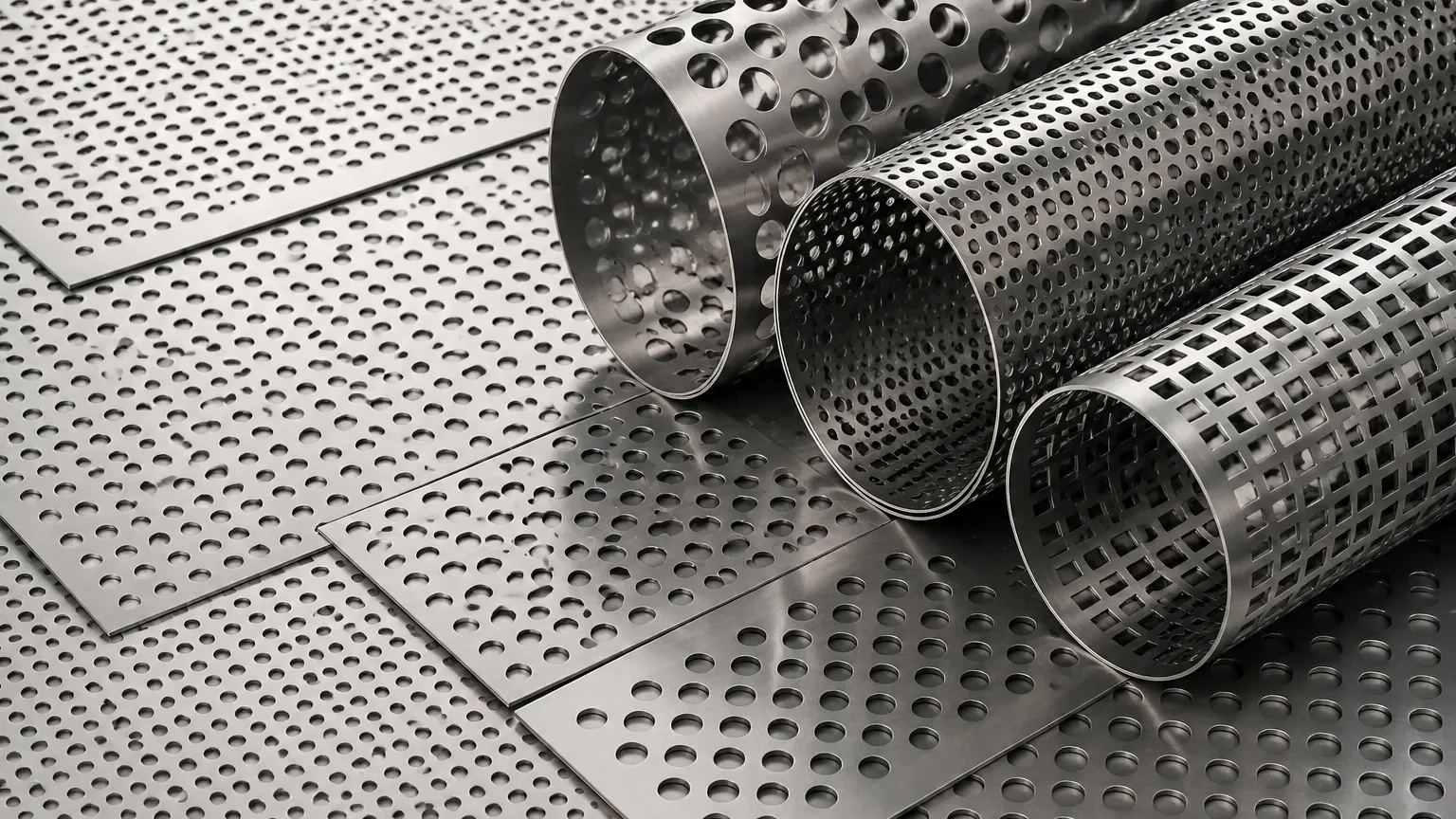
Perforated metal sheets are produced by mechanically punching or laser-cutting holes into a metal plate. Expanded metal, conversely, is created by slitting and stretching the material simultaneously, resulting in a diamond-shaped mesh without any material waste. Both serve as foundational components in industrial filtration, but their selection depends heavily on the specific engineering demands of the application.
Technical Specifications and Engineering Considerations
When evaluating a Perforated & Expanded Metal solution, technical professionals must look beyond standard dimensions. The performance of these materials is dictated by the geometry of the openings and the structural integrity of the remaining metal.
Open Area Calculations
The "Open Area" percentage is perhaps the most critical metric for filtration and airflow applications. It determines the flow rate, pressure drop across the medium, and the efficiency of particle retention. For a standard 60-degree staggered round hole pattern, the open area is calculated using the formula:
Open Area % = (D² × 90.69) / P²
Where *D* is the hole diameter and *P* is the center-to-center pitch. A higher open area reduces pressure drop but can compromise the structural rigidity of the sheet. Engineers must balance these two factors based on the operating pressure of the system.
Hole Patterns and Pitch
* Round Holes: The most common and versatile pattern, offering the best balance of strength and open area. Staggered patterns are generally preferred over straight-row patterns for better structural uniformity.
* Square Holes: Often used when a higher open area is required, though they may lead to stress concentrations at the corners.
* Hexagonal Holes: Provide the highest possible open area (up to 80% or more), making them ideal for high-flow applications such as architectural ventilation or specialized industrial cooling.
* Slotted Holes: Frequently used in screening and sorting applications where the shape of the media (e.g., grain or fiber) requires a specific orientation.
Material Selection for Industrial Filtration
The search for a "perforated metal sheet near me" often leads to local stockists who carry standard carbon steel or galvanized options. However, for industrial filtration, material selection is paramount to prevent premature failure due to corrosion or mechanical fatigue.
Stainless Steel (304 and 316L)
Stainless steel is the industry standard for filtration components. Grade 304 offers excellent corrosion resistance for general industrial use. However, for environments involving chlorides, high temperatures, or acidic chemicals—such as in pharmaceutical or marine applications—Grade 316L is required. The "L" denotes low carbon content, which minimizes carbide precipitation during welding, ensuring the integrity of the filter cartridge or screen.
Specialized Alloys
In extreme environments, such as petrochemical refining or high-temperature gas filtration, specialized alloys like Monel, Inconel, or Hastelloy may be necessary. These materials provide superior resistance to oxidation and chemical attack that standard stainless steels cannot withstand.
Evaluating Local vs. Global Sourcing
While finding a "perforated metal sheet near me" can reduce shipping costs and lead times for small, non-critical projects, industrial-scale OEM requirements often necessitate a partnership with a specialized manufacturer like Kaifil. There are several factors to weigh when choosing between a local distributor and a dedicated filtration component manufacturer.
Customization vs. Stock Sizes
Local distributors typically stock standard 4'x8' or 5'x10' sheets with common hole patterns. If your application requires specific margins (unperforated areas), custom hole sizes, or precise thickness-to-hole-diameter ratios, a specialized manufacturer is required. For example, when the hole diameter is smaller than the material thickness, specialized punching or laser techniques are necessary to prevent tool breakage and ensure hole quality.
Quality Control and Certification
Industrial filtration requires strict adherence to tolerances. A local general-purpose metal shop may not provide the necessary documentation, such as material test reports (MTRs), ISO 9001 compliance, or precise flatness certifications. For filtration systems, even a slight deviation in hole diameter can lead to bypass or system contamination.
Secondary Processing
Most industrial applications require more than just a flat sheet. Components often need to be rolled into cylinders, welded into cartridges, or fitted with end caps and flanges. A specialized manufacturer provides these integrated services, ensuring that the perforated or expanded metal is correctly formed without compromising the hole geometry or structural integrity.
Perforated vs. Expanded Metal: Choosing the Right Medium
Engineers must determine whether perforated or expanded metal is better suited for their specific project. While they are often grouped together, their mechanical properties differ significantly.
Characteristics of Perforated Metal
* Precision: Offers exact hole sizes and spacing, critical for precise filtration ratings.
* Uniformity: Provides a consistent surface that is easy to clean and maintain, making it ideal for food-grade applications.
* Versatility: Can be produced in a vast range of thicknesses, from thin foils to heavy plates.
Characteristics of Expanded Metal
* Cost-Effectiveness: Because the metal is slit and stretched rather than punched, there is no scrap loss. This makes it a more economical choice for large-scale structural or support applications.
* Strength-to-Weight Ratio: The interconnecting strands of expanded metal provide high rigidity while remaining lightweight. It is excellent for use as a support layer for finer wire mesh in multi-layer filter elements.
* Grip and Diffusion: The raised profile of standard expanded metal (non-flattened) is useful for breaking up flow or providing mechanical grip in industrial walkways.
Engineering Challenges and Solutions
When integrating perforated metal sheets into a filtration system, several engineering challenges must be addressed during the design phase.
Pressure Drop and Resistance
As fluid or gas passes through the perforated sheet, the reduction in the flow area causes an increase in velocity and a subsequent drop in pressure. If the pressure drop is too high, it can lead to cavitation in pumps or reduced efficiency in HVAC systems. Engineers must specify an open area that accommodates the maximum flow rate while maintaining the structural strength to resist the differential pressure.
Burrs and Surface Finish
The punching process naturally creates a "die side" and a "punch side." The punch side often has slight burrs that can trap contaminants or cause turbulence. For high-purity applications, such as pharmaceutical manufacturing, the metal must undergo secondary finishing processes like deburring or electropolishing to ensure a smooth, sterile surface.
Fatigue and Mechanical Stress
In systems with pulsating flow or mechanical vibration, the perforated sheet is subject to cyclic loading. The areas between the holes (the bridges) are potential points of failure. Proper material thickness and bridge width must be calculated to ensure the component can withstand the expected lifecycle of the equipment.
Total Cost of Ownership (TCO) in Procurement
When searching for a "perforated metal sheet near me," it is easy to focus on the initial purchase price. However, the total cost of ownership (TCO) is a more accurate measure of value. TCO includes the purchase price, shipping, installation, maintenance costs, and the cost of downtime if the component fails prematurely.
Investing in a high-quality stainless steel perforated sheet with precise tolerances and superior corrosion resistance may have a higher upfront cost but significantly lower TCO. Reduced replacement frequency and protected downstream equipment (like pumps and valves) provide long-term financial benefits to the facility.
Confirming Requirements Before Purchase
Before finalizing an order with a supplier, technical teams should confirm the following parameters to ensure the product meets the application's needs:
1. Material Grade: Confirm the specific alloy (e.g., 304, 316L) and request MTRs.
2. Hole Specification: Define the diameter, pitch, and pattern (staggered vs. straight).
3. Sheet Dimensions and Margins: Specify the overall size and the width of any unperforated borders.
4. Flatness Requirements: Standard commercial flatness may not be sufficient for automated assembly or precision welding.
5. Surface Treatment: Determine if the application requires degreasing, pickling, or electropolishing.
By focusing on these technical details rather than just geographic proximity, engineers can ensure that their search for a "perforated metal sheet near me" results in a solution that optimizes performance and reliability in demanding industrial environments.
