


Perforated Metal Sheet Uses
In industrial engineering and manufacturing, the selection of filtration and structural components is dictated by the specific mechanical and chemical demands of the application. Perforated metal sheets, characterized by a precise pattern of holes punched into a metal substrate, serve as a fundamental material in these environments. Unlike woven wire mesh, which offers flexibility and fine filtration, perforated metal provides superior structural rigidity and high mechanical strength, making it indispensable for heavy-duty separation, protection, and support tasks.
Understanding the diverse range of perforated metal sheet uses requires an analysis of how hole geometry, material properties, and open area percentages influence performance. For engineers and procurement teams, selecting the right configuration is critical to ensuring the longevity and efficiency of industrial systems.
Core Perforated Metal Sheet Uses in Filtration and Separation
The primary application for perforated metal in B2B sectors is filtration. Because the manufacturing process allows for precise control over hole size and spacing, these sheets are often the first line of defense in complex filtration systems.
Primary Filtration and Straining
In many liquid processing systems, perforated metal acts as a coarse filter or strainer. It is used to remove large particulates from fluid streams before they reach more sensitive components like pumps or fine-mesh secondary filters. This is common in water intake systems, where perforated baskets capture debris, preventing mechanical wear on downstream equipment.
Support Media for Fine Filters
One of the most critical Perforated & Expanded Metal applications is providing a rigid skeleton for finer filtration media. High-precision wire mesh or synthetic filter fabrics often lack the structural integrity to withstand high-pressure differentials. In these cases, a perforated metal cylinder or sheet acts as a support cage or core. By providing this internal or external reinforcement, the perforated metal prevents the finer mesh from collapsing or deforming under the force of the flow.
Centrifugation and Dewatering
In the chemical and food processing industries, perforated metal sheets are used in centrifuge baskets. The high rotational speeds of a centrifuge require materials that can withstand extreme G-forces while allowing liquid to escape through the perforations. The smooth surface of a perforated sheet, compared to a woven mesh, often facilitates easier cake discharge and cleaning, which is vital for maintaining process throughput.
Applications Across Key Industrial Sectors
The versatility of perforated metal allows it to be adapted to the unique regulatory and environmental requirements of various sectors.
Food and Beverage Processing
In the food industry, hygiene and corrosion resistance are paramount. Perforated metal sheets, typically manufactured from Grade 304 or 316L stainless steel, are used for sorting, drying, and drainage. In grain processing, specific hole patterns are used to separate seeds by size. In industrial ovens and dryers, the perforated surface allows for uniform airflow, ensuring consistent heat distribution while supporting the weight of the product.
Chemical and Petrochemical Industries
Chemical processing environments often involve exposure to aggressive solvents, acids, and high temperatures. Perforated metal is used here for catalyst support grids and internal tower components. The ability to specify thick-gauge materials ensures that the components can endure corrosive environments for extended periods, reducing the frequency of maintenance shutdowns.
Pharmaceutical and Biotechnology
In pharmaceutical manufacturing, perforated metal is utilized in fluid bed dryers and granulators. The precision of the perforation ensures that airflow is controlled with extreme accuracy, which is necessary for maintaining the integrity of sensitive chemical compounds. Furthermore, the cleanability of stainless steel perforated sheets meets the stringent sanitary standards required by the FDA and other regulatory bodies.
Engineering Parameters: Hole Patterns and Open Area
When evaluating perforated metal sheet uses, engineers must consider the geometric configuration of the perforations. The pattern not only affects the filtration accuracy but also the mechanical strength of the sheet.
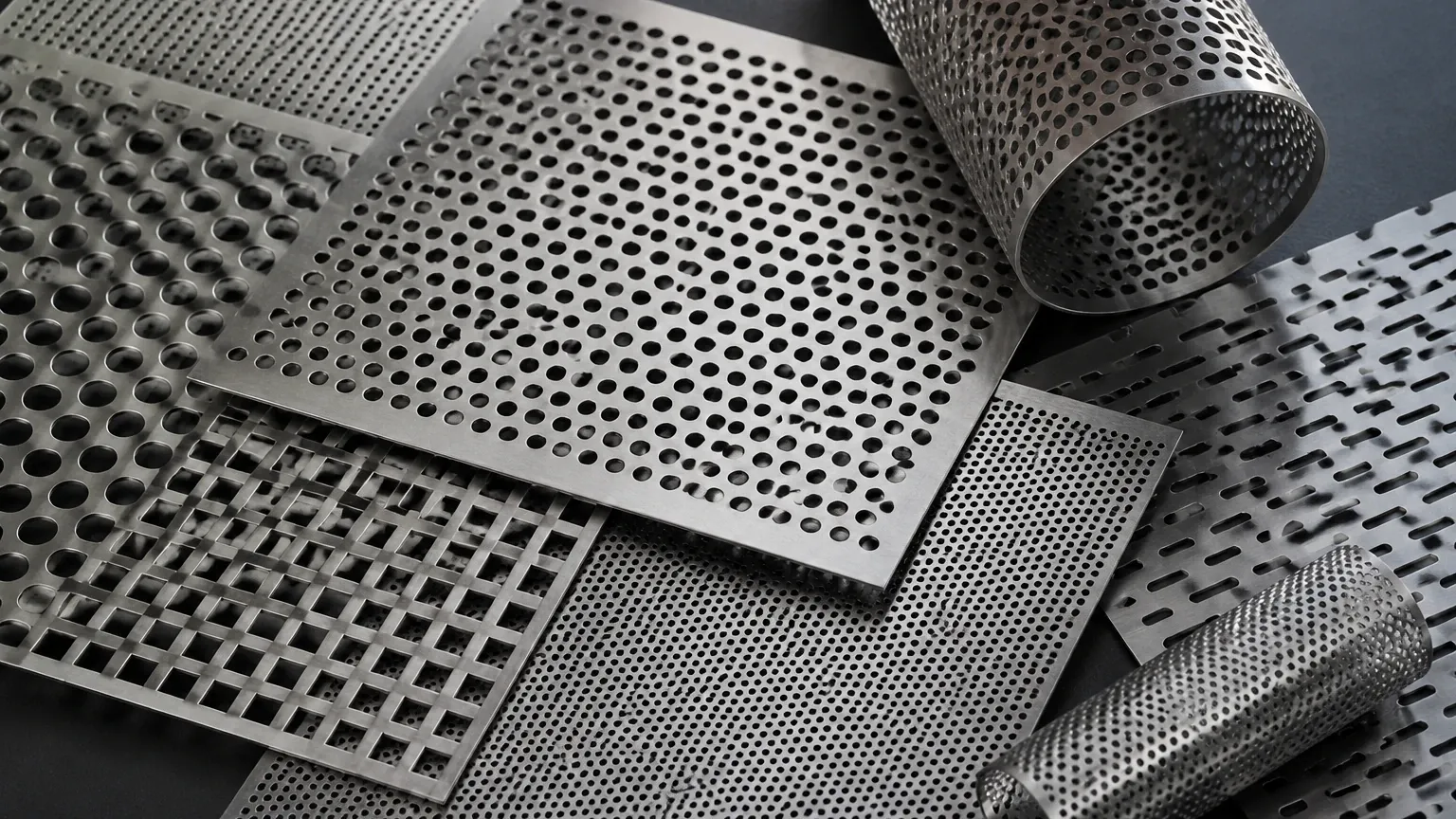
1. Round Holes: The most common and cost-effective pattern. Round holes offer the best balance of structural strength and open area. They are typically arranged in a 60-degree staggered pattern, which maximizes the number of holes per square inch and ensures uniform stress distribution.
2. Square Holes: Often used when a higher open area is required. Square holes provide a larger clear opening for airflow or liquid passage but may result in lower structural rigidity compared to round holes.
3. Slotted Holes: These are ideal for sorting and straining elongated materials. In filtration, slotted perforations are often used to prevent blinding (clogging) when processing fibrous materials.
The Open Area Calculation
The "open area" is the percentage of the sheet that is comprised of holes. It is a critical metric for determining flow rates and pressure drops. A higher open area allows for greater flow but reduces the load-bearing capacity of the sheet. Engineers must calculate the minimum required open area to satisfy flow requirements without compromising the structural integrity of the filter housing or support system.
Material Selection for Demanding Environments
The performance of perforated metal is heavily dependent on the alloy used. While carbon steel and aluminum are used in architectural or light-duty applications, industrial filtration almost exclusively relies on stainless steel and high-performance alloys.
* Stainless Steel 304: Suitable for general industrial use where moderate corrosion resistance is required. It is a cost-effective choice for water treatment and basic food processing.
* Stainless Steel 316/316L: Contains molybdenum, which provides superior resistance to chlorides and pitting. This is the standard choice for marine environments, chemical processing, and pharmaceutical applications.
* Specialty Alloys: In extreme cases involving high-temperature oxidation or highly acidic environments, materials like Monel, Inconel, or Hastelloy may be perforated to provide the necessary durability.
Structural Support and Protective Uses
Beyond filtration, perforated metal sheets serve vital protective and structural roles in industrial equipment.
Machine Guarding and Safety
In manufacturing facilities, perforated sheets are used as safety guards for moving machinery. They allow operators to visually inspect the equipment while providing a physical barrier against contact. The use of perforated metal instead of solid sheets ensures that the machinery remains ventilated, preventing overheating.
Acoustic Dampening and HVAC
In power plants and industrial HVAC systems, perforated metal is used as a facing material for acoustic insulation. The holes allow sound waves to pass through into absorbing material behind the sheet, effectively reducing noise pollution in the workspace. Additionally, in air handling units, perforated plates are used to diffuse airflow, preventing turbulence and ensuring a steady supply of air to cleanrooms or combustion chambers.
Critical Factors for Procurement and Customization
When sourcing perforated metal for industrial projects, purchasing teams and engineers should confirm several technical details with the manufacturer to ensure the component is fit for purpose.
* Margins and Edges: Standard perforated sheets often have a "minimal margin" where the pattern runs to the edge. However, for components that need to be welded into a frame or filter housing, specifying "plain margins" (unperforated borders) is essential for structural integrity and ease of assembly.
* Flatness and Stress Relieving: The punching process introduces internal stresses into the metal, which can cause the sheet to curl. For precision applications, it is important to confirm that the manufacturer uses leveling rollers to ensure the finished product is perfectly flat.
* Burr Removal: In filtration, burrs (small metal protrusions) can trap particles and make cleaning difficult. Specifying de-burring or polishing processes is necessary for pharmaceutical and food-grade applications.
Conclusion
Perforated metal sheet uses extend far beyond simple screening. From providing the structural backbone of high-pressure filter cartridges to ensuring safety in heavy machinery, these components are vital to modern industrial operations. By carefully selecting the material grade, hole pattern, and open area, engineers can optimize their systems for both performance and durability.
For those developing custom filtration solutions, collaborating with a manufacturer that understands the nuances of metal perforation and industrial requirements is the most effective way to ensure project success. Whether the goal is to improve filtration efficiency or enhance the structural integrity of a processing unit, perforated metal remains a versatile and reliable engineering choice.
