


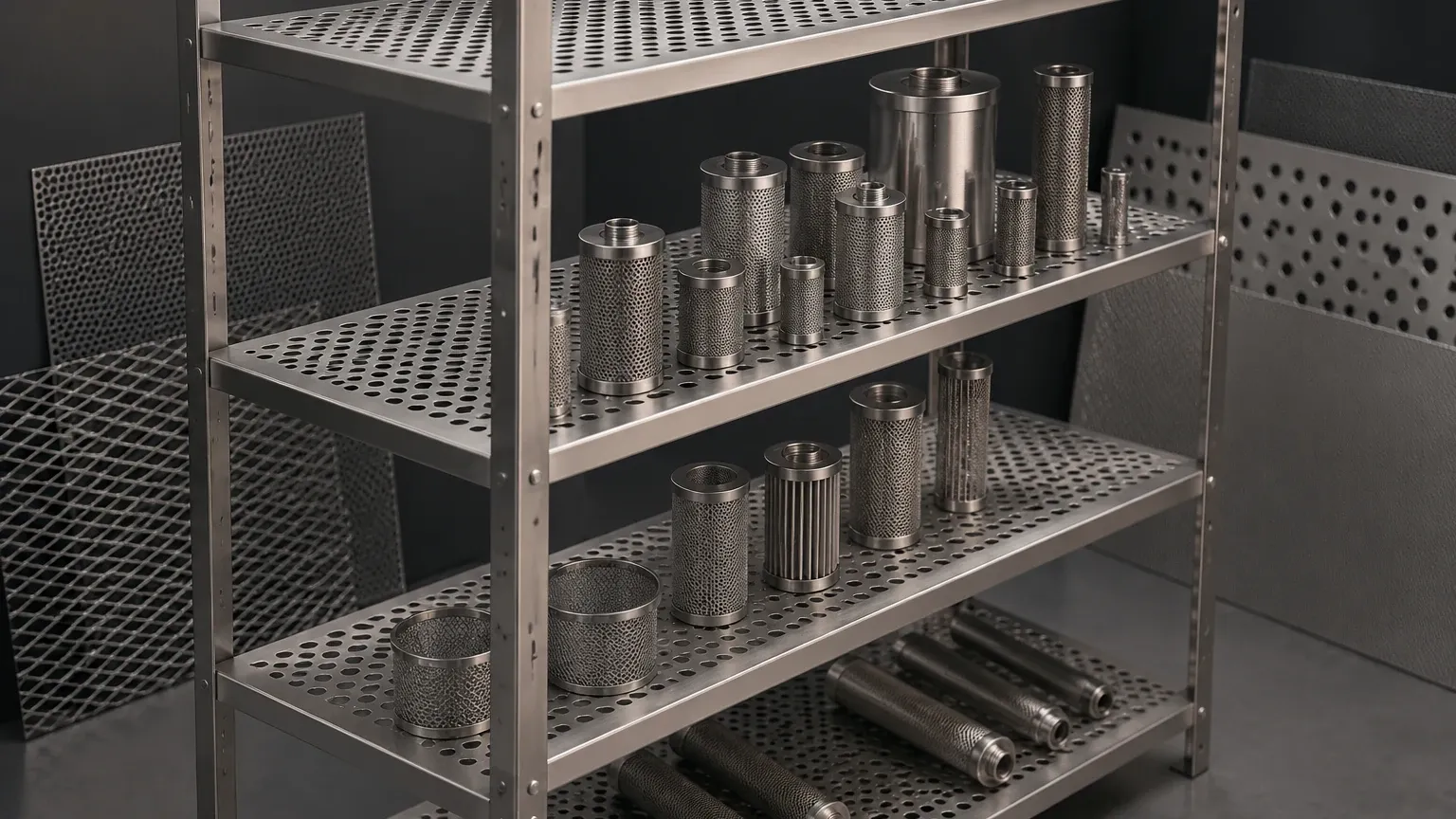
Perforated Metal Shelving Unit
In industrial environments, storage solutions must transcend basic organization to address complex operational requirements such as ventilation, hygiene, safety, and structural durability. The implementation of a perforated metal shelving unit represents a strategic engineering choice for facilities where solid surfaces would impede performance. By utilizing precision-engineered Perforated & Expanded Metal, these shelving systems provide a unique combination of high strength-to-weight ratios and functional transparency.
Unlike standard solid shelving, perforated designs allow for the free passage of air, light, and liquids. This is not merely a matter of convenience; in sectors ranging from pharmaceutical manufacturing to chemical processing, the ability to maintain consistent airflow and ensure effective drainage is a critical safety and compliance factor. Understanding the technical nuances of material selection, hole patterns, and load-bearing capacities is essential for engineers and procurement teams tasked with optimizing facility infrastructure.
The Engineering Advantages of Perforated & Expanded Metal in Shelving
The choice between different types of metal mesh—specifically perforated versus expanded—depends largely on the intended application and the specific mechanical stresses the shelving will endure. Both materials offer distinct advantages that make them superior to solid sheet metal in industrial contexts.
Airflow and Thermal Management
In environments such as cold storage or server rooms, thermal management is paramount. A perforated metal shelving unit facilitates omnidirectional airflow, preventing the formation of stagnant air pockets or "hot spots." This ensures that temperature-sensitive materials, such as biological samples or volatile chemicals, remain within their specified thermal ranges. The percentage of open area in the Perforated & Expanded Metal directly correlates to the efficiency of the HVAC or cooling system, allowing for lower energy consumption and more precise environmental control.
Visibility and Safety Compliance
Industrial safety standards often require that fire suppression systems, such as overhead sprinklers, have an unobstructed path to all levels of a storage rack. Solid shelves can act as umbrellas, shielding lower levels from water or suppressing agents. Perforated surfaces ensure that water can penetrate through the entire shelving stack. Furthermore, the transparency of the mesh allows operators to inspect inventory from below, improving warehouse management and reducing the need for ladders or heavy machinery for routine visual checks.
Weight Reduction without Structural Compromise
By removing material through punching (perforating) or slitting and stretching (expanding), the overall weight of the shelving unit is significantly reduced. This reduction in tare weight makes the units easier to install, relocate, and integrate into mobile shelving systems. Despite the reduction in mass, the structural integrity remains high, especially when using high-grade stainless steel which maintains its modulus of elasticity even when perforated.
Material Selection: Stainless Steel vs. Carbon Steel
The performance of a perforated metal shelving unit is fundamentally tied to its metallurgy. While various metals can be used, industrial applications typically demand materials that can withstand corrosive cleaning agents, high humidity, or chemical exposure.
Stainless Steel (Grades 304 and 316)
Stainless steel is the industry standard for high-performance filtration and storage components. Grade 304 offers excellent corrosion resistance for most food-grade and general industrial applications. However, in environments involving high salinity or exposure to chlorides—such as coastal facilities or specific chemical processing plants—Grade 316 is preferred due to its molybdenum content, which provides superior pitting resistance.
At Kaifil, we emphasize the importance of surface finishing in stainless steel shelving. Processes such as electropolishing or passivation are critical. Passivation removes free iron from the surface of the metal, enhancing the protective chromium oxide layer and ensuring the shelving remains rust-free even after years of rigorous use.
Carbon Steel and Specialized Coatings
For dry-storage applications where cost is a primary constraint, carbon steel may be used. However, it must be protected by powder coating or galvanization to prevent oxidation. While these coatings provide an initial barrier, they can chip or wear over time, potentially leading to contamination in sensitive environments. For this reason, stainless steel remains the recommended choice for long-term durability and total cost of ownership (TCO) considerations.
Understanding Hole Patterns and Open Area Calculations
The functionality of a perforated metal shelving unit is defined by its hole pattern. Engineers must calculate the "Open Area Percentage" to balance the need for airflow with the requirement for structural support.
Round vs. Square vs. Slotted Holes
* Round Holes: The most common and cost-effective pattern. Round holes provide the best structural stability and are the easiest to clean, as they lack sharp corners where debris or bacteria can accumulate.
* Square Holes: These offer a higher open area percentage, which is ideal for maximum visibility and airflow. However, they can be more susceptible to stress concentrations at the corners.
* Slotted Holes: Often used when the shelving must also serve a secondary purpose, such as drainage for specific elongated components or as a mounting surface for specialized brackets.
Staggered vs. Straight Centers
Holes are typically arranged in a 60-degree staggered pattern, which maximizes the strength of the remaining metal "bridges." A straight-line pattern is available but generally offers lower load-bearing capacity for the same open area percentage. When selecting Perforated & Expanded Metal for shelving, the ratio of hole diameter to the thickness of the sheet (the "1:1 rule") should be maintained to ensure the punching process does not compromise the material's integrity.
Load-Bearing Capacity and Structural Design
One of the primary concerns for engineers is the deflection of the shelf under load. A perforated metal shelving unit must be designed to support static and dynamic loads without permanent deformation.
Gauge Thickness and Reinforcement
The thickness of the metal sheet, measured in gauges, is the primary determinant of strength. For heavy-duty industrial shelving, 14-gauge to 18-gauge stainless steel is common. To further enhance the load capacity without increasing the gauge (and thus the cost), manufacturers often incorporate "box-beam" reinforcements or welded support channels beneath the perforated surface. This allows the shelf to handle significant weight—often exceeding 600 lbs per level—while maintaining the benefits of the perforated design.
Edge Treatment and Safety
In a B2B context, the finish of the edges is as important as the surface. Precision manufacturing involves deburring every hole and ensuring that the perimeter of the shelf is hemmed or rolled. This prevents injury to personnel and protects the integrity of stored items, such as flexible packaging or protective gear, from snags and tears.
Specialized Applications: From Cleanrooms to Chemical Storage
The versatility of the perforated metal shelving unit makes it indispensable across several specialized sectors:
* Pharmaceutical and Biotech: In cleanrooms (ISO 5 or higher), laminar airflow must be maintained. Perforated shelving allows air to flow vertically through the shelves, ensuring that particles are swept away from sensitive work surfaces and towards HEPA filtration systems.
* Food and Beverage: Hygiene is the top priority. Stainless steel perforated shelves do not harbor moisture, reducing the risk of mold or bacterial growth. They are also compatible with high-pressure washdowns and caustic sanitizers.
* Hydraulic and Mechanical Shops: Perforated shelves allow oils and lubricants to drip through to collection trays, keeping the storage surface dry and reducing slip hazards.
* Electronics (ESD Environments): Metal shelving is inherently conductive. When properly grounded, a stainless steel perforated unit helps dissipate static electricity, protecting sensitive electronic components from ESD damage.
Procurement and Customization: Working with Kaifil
Selecting the right filtration or storage component requires more than just picking a part from a catalog. At Kaifil, we specialize in providing customized solutions that align with specific engineering requirements. Whether you need a specific hole size for a unique filtration process or a custom-dimensioned perforated metal shelving unit for a constrained laboratory space, our manufacturing expertise ensures precision and reliability.
When evaluating suppliers for Perforated & Expanded Metal, engineers should confirm the following technical details:
1. Material Certification: Ensure the grade of stainless steel is verified by mill test reports.
2. Tolerances: Confirm that the dimensional tolerances meet the requirements of your existing racking systems.
3. Customization Options: Check if the manufacturer can provide custom margins (unperforated borders) to facilitate easier welding or mounting.
4. Lead Times and OEM Capabilities: For large-scale projects or integrated equipment manufacturing, reliable OEM support is vital for maintaining project timelines.
By focusing on high-quality materials and precise fabrication, Kaifil helps purchasing teams and engineers achieve optimized filtration and storage performance. To explore the full range of specifications and customization options for your next project, Review product options and application support.
Conclusion: Total Cost of Ownership
While the initial investment in a high-quality perforated metal shelving unit may be higher than that of plastic or carbon steel alternatives, the long-term value is significantly greater. The durability of stainless steel, combined with the functional advantages of the perforated design, results in lower maintenance costs, fewer replacements, and enhanced operational safety. By selecting the correct material and pattern for your specific industrial environment, you ensure a storage solution that supports both your immediate logistical needs and your long-term facility goals.
